

The Trans-Siberian Railway is the world’s longest rail line, spanning 9,289 km from Moscow to Vladivostok across eight time zones. For independent travellers, this guide walks you through how to travel the Trans-Siberian Railway independently: booking strategy, class options, payment methods that work for foreigners, and practical tips for the six-day non-stop journey or multi-week journey with stops.
Most first-time visitors break the journey into segments, stopping in cities like Yekaterinburg, Irkutsk (gateway to Lake Baikal), and Ulan-Ude over 2–4 weeks. This approach requires booking separate tickets for each leg rather than one continuous ticket.
Quick answer: Tickets open 90 days before departure, and prices climb with demand. Domestic tickets go on sale 90 days before departure, and each leg requires a separate ticket; foreign Visa or Mastercard will not work inside Russia, so buy everything before you land. Book through English-language agencies like RussianTrain or at station ticket offices in cash.
At a Glance
| Total time | 6 days and 2 hours non-stop (Moscow to Vladivostok); 2–4 weeks with stops in cities |
|---|---|
| Typical cost | ₽₽ |
What You Need Before You Start
- Valid passport (required for booking and boarding)
- Russian visa (apply well in advance)
- Booking made 60–90 days ahead for best availability, especially in summer
- Payment method: foreign credit card via agency, or cash in roubles upon arrival in Russia
- Separate ticket for each leg of the journey (no single through ticket)
- Luggage: soft-sided bags recommended for ease in narrow compartments; locks for compartment door
- Toiletries and medications (train facilities are basic)
Compare Your Options
| Option | Duration | Price | Notes |
|---|---|---|---|
| Complete Moscow–Vladivostok non-stop (Rossiya train, daily) | 6 days and 2 hours | ₽₽ | No stops except station halts (2–30 minutes). The flagship Rossiya train (Train 1 eastbound, Train 2 westbound) runs daily year-round. Cheapest option per km. Best for travellers with limited time or who love continuous train life. The Rossiya covers Moscow to Vladivostok in approximately 6 days and 2 hours with around 60 stops. |
| Segmented journey with 1–3 day stops (separate tickets per leg) | 2–4 weeks total | ₽₽ | Most travellers break the journey into segments with stops of 1–5 days in cities along the route, making the full journey typically 2–4 weeks. Each leg requires a separate ticket booked individually. Allows exploration of Lake Baikal, Irkutsk, Yekaterinburg, and other cities. Most popular for independent travellers. |
| Trans-Mongolian route (Moscow–Ulaanbaatar–Beijing) | 5 days 21 hours to Beijing | ₽₽ | The Trans-Mongolian takes roughly 5 days 21 hours; the Trans-Manchurian around 6 days 2 hours. Shorter than the pure Trans-Siberian but requires Mongolian and Chinese visas. Branches south from Ulan-Ude. Best for travellers heading to Asia. |
| Partial journey: Moscow to Irkutsk or Yekaterinburg | 26 hours (Yekaterinburg); 75 hours (Irkutsk) | ₽ | Shorter segments for time-limited visitors. Single overnight train experiences. Yekaterinburg is known for the Urals and Siberian gateway. Irkutsk offers Lake Baikal access. |
| Luxury private trains (Golden Eagle, etc.) | 14–16 days with multiple stops | ₽₽₽₽ | All-inclusive tours with onboard guides, meals, and organized stops. Luxury private trains are a splurge (₽₽₽₽) for all-inclusive trips. For travellers prioritizing comfort and guided experiences over independent exploration. |
₽ budget · ₽₽ moderate · ₽₽₽ upscale · ₽₽₽₽ splurge. Price levels are estimates compared with typical prices for visitors.
Step-by-Step Instructions
Step 1: Arrange your visa at least two months ahead
Obtain a Russian visa from your nearest Russian embassy or consulate. Processing typically takes 2–4 weeks. For visitors staying under 16 days, the Russian e-visa is simpler to obtain than a traditional visa. You will need an invitation letter, which some agencies can provide. Bring your passport and ticket confirmation to the visa interview.
Tip: Some travel agencies issue invitation letters as part of their package.
Step 2: Plan your route and break points
Decide whether to travel Moscow to Vladivostok non-stop (6–7 days) or break the journey into segments. Key stop cities include Yekaterinburg (26 hours from Moscow), Novosibirsk (44 hours), Irkutsk (75 hours), and Ulan-Ude (80 hours). Each stop requires a separate ticket. Most independent travellers book 3–5 day stops in major cities to explore and rest.
Tip: Break the journey with 1–3 day stops—book separate tickets for flexibility.
Step 3: Book tickets 60–90 days in advance through an agency
Foreign-issued Visa, Mastercard and Amex no longer work on RZD's own website (which accepts only the Russian MIR card), so most international travellers book through an English-language agency such as RussianTrain, via Belarusian Railways, or in cash at a station ticket office. RussianTrain (russiantrain.com) and similar agencies have English-language websites, accept foreign credit cards, and issue official RZD e-tickets. These agencies add a commission but eliminate the payment barrier.
Tip: Book the full route first, then add overnight stops in cities once you have your skeleton itinerary.
Step 4: Choose your class of accommodation
Platskartny (3rd/open dorm) is cheapest, social. Kupe (2nd/4-berth compartment) is comfortable, popular. SV (1st/2-berth) is private, luxurious. In kupe class (most popular), a closed compartment sleeps four: two upper berths and two lower berths. You may share with strangers unless you purchase all four tickets. Bedding is provided.
Tip: Lower berths are more comfortable but cost slightly more; upper berths are confined but cheaper. Many solo travellers prefer kupe for the balance of privacy and social connection.
Step 5: Receive your e-tickets and save locally
After booking, you will receive e-tickets by email as PDF documents showing your car number, berth location, and departure time. Save these offline (phone screenshot, printed copy, and email backup). The ticket shows Moscow time even for trains running in eastern Russia, so note the actual local arrival time separately. You do not need to print tickets in most cases—show them on your phone or present your passport to the conductor.
Tip: Russian train schedules are printed in Moscow time regardless of your actual location, which causes confusion. Check the local arrival time posted on the platform before boarding.
Step 6: Arrive at the station 60–90 minutes before departure
The Trans-Siberian Railway links Moscow's Yaroslavsky station with the Pacific port of Vladivostok. Yaroslavsky Station is served by Metro Komsomolskaya (Red Line). Find your platform (posted 30 minutes before departure), then locate your car and berth. The conductor will check your ticket and passport. Compartments lock from inside; you have a small shelf and hooks for luggage.
Tip: The station is vast; allow extra time. Station facilities include basic cafes and kiosks. Bring water and snacks for the first segment.
Step 7: Understand onboard life and station stops
Stops range from two minutes to half an hour, the longer ones long enough to stretch your legs on the platform. Longer stops happen multiple times daily. The conductor will tell you how long you have—just don't miss the departure whistle! The dining car serves hot meals and drinks (payable in cash or card). Basic breakfast and snacks are available. Toilets are at the end of each carriage. Shower facilities are limited.
Tip: Bring your own snacks, especially non-perishable Russian favourites from stops. Water is drinkable from the samovar in each carriage.
Step 8: Exchange money on arrival in Moscow
No Western card works in Russia. Cash in euros or dollars can be changed into rubles on arrival, or a Russian MIR card sorted out beforehand. Airport exchanges offer fair rates. Exchange enough rubles for your journey: food, tips, and small purchases at stops. ATMs are available in major stations and cities, but may not accept foreign cards.
Tip: Bring both euros and dollars; exchange rates vary slightly. Some platforms at stops have small kiosks for currency exchange.
Step 9: Plan overnight stops in main cities
At Irkutsk, book separate accommodation (hostel or hotel) for 2–3 nights. Luggage storage is available at the station for daytime exploration. Return to the station to catch your onward train. The undisputed highlight is Irkutsk and Lake Baikal. Travelers typically spend 3–5 days here, using the city as a base for lake stops in nearby Listvyanka or Olkhon Island. Similar stops work in Yekaterinburg and Ulan-Ude.
Tip: Book the next leg of your journey before you leave the station, especially in summer, to avoid getting stranded.
Common Mistakes to Avoid
- Booking only one ticket for the entire journey: There is no single ticket from Moscow to Vladivostok. Each leg requires a separate ticket. Buying one ticket to Irkutsk does not allow a multi-day stop there; you must book the next leg before boarding.
- Attempting to pay with a foreign credit card on RZD.ru: RZD.ru only accepts cards from the Russian MIR system. Any Visa, Mastercard, Maestro or American Express issued outside Russia is rejected at the payment step. Use an agency or buy in cash at the station instead.
- Confusing Moscow time with local time: Trains run on Moscow time regardless of which of Russia's eleven time zones you're actually in. A train printed to arrive at 11:00 may arrive at 17:00 local time in Vladivostok. Check platform signs for local time.
- Not exchanging currency before boarding: No Western card works in Russia. Cash in euros or dollars, changed into rubles on arrival, or a Russian MIR card sorted out beforehand. Onboard facilities only accept cash. Stations in remote areas have no ATMs.
- Booking too close to travel dates: Book as early as you can — tickets open 90 days before departure on RZD and prices climb with demand. Summer travel (June–August) sells out weeks ahead. Winter (January–March) is cheaper but colder.
- Failing to plan for minimal luggage space: Compartments are small. Soft-sided bags fit better than rigid suitcases. Bring only essentials. Luggage racks fill quickly in shared compartments.
- Skipping stops due to perceived inconvenience: Most independent travellers regret not exploring Irkutsk and Lake Baikal. These stops are worth the extra booking complexity and are easily bookable via the same agencies.
Tickets, Payment and Booking
Official booking methods for foreign visitors (as of October 2026):
- RussianTrain (russiantrain.com): English-language intermediary agency. Accepts foreign Visa and Mastercard. Adds a commission but provides the simplest path for international travellers. E-tickets are official RZD tickets.
- Belarusian Railways (rw.by): Sells Russian tickets at near-official prices. Accepts some foreign cards. English interface available.
- RZD.ru (eng.rzd.ru) directly: Only accepts the Russian MIR card; Visa, Mastercard, Maestro or American Express issued outside Russia are rejected at the payment step. Not practical for most visitors.
- Station ticket offices in Russia: Buy in cash (roubles) at any railway station. Cheaper than agencies but no English support and no guarantee of seat availability.
Book 60–90 days in advance for summer travel. Each leg of a multi-stop journey requires a separate ticket purchased individually. E-tickets are sent by email as PDF documents.
Helpful Links
Advertisement: these are partner links. If you book or buy through them, we may earn a commission at no extra cost to you.
Russia Vibes Tips
- Book your next leg before leaving a major station during a stop, especially in summer, to ensure seat availability. Many popular trains on popular dates fill 4–6 weeks ahead.
- The dining car serves meals but is often crowded and closes unpredictably. Buy fresh bread, cheese, fruit, and canned goods at station stops. The samovar (hot water dispenser) in each carriage provides free boiling water for tea and instant noodles.
- Winter travel (January–March) is dramatically cheaper and offers frozen Baikal experiences, but trains sometimes run late due to cold. Summer (June–August) is most expensive and coldest berths sell out months ahead.
- Your compartment mates will likely be other travellers or local Russians. Bring a gift from your home country (chocolate, tea, alcohol) to share; this creates goodwill and memorable conversations. Russians appreciate small gestures.
- Conductors do not speak English. Learn basic Russian phrases like "Where is the toilet?" (Gde tualet?) and "What time do we depart?" (Vo skol'ko vykhodit pozd?) Pointing at your ticket and itinerary communicates well enough.
- Bring a sleeping mask, earplugs, and a lightweight blanket. Compartments are dim but not soundproof, and some fellow passengers snore. Train-provided pillows and blankets are minimal.
Explore Nearby How to Travel the Trans-Siberian Railway Independently, Trans-Siberian Railway
Sights near How to Travel the Trans-Siberian Railway Independently, Trans-Siberian Railway
 Olkhon Island, Lake Baikal · typical visit: 2–3 days
Main image: AI-generated illustration. It may not show the place exactly as it looks.
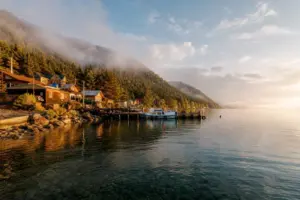 Listvyanka, Lake Baikal · typical visit: 2–3 days
Main image: AI-generated illustration. It may not show the place exactly as it looks.
Related guides
 How to Book Trans-Siberian Railway Tickets, Trans-Siberian Railway: Booking Guide
Main image: AI-generated illustration. It may not show the place exactly as it looks.
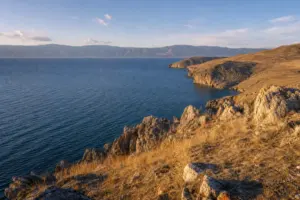 Lake Baikal: Where to Go, What to See and How to Visit
Main image: AI-generated illustration. It may not show the place exactly as it looks.
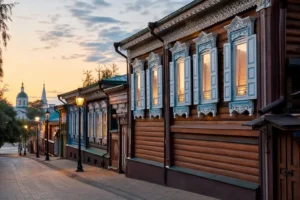 Irkutsk: 130 Kvartal, Decembrists and Gateway to Lake Baikal
Main image: AI-generated illustration. It may not show the place exactly as it looks.
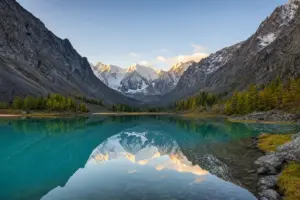 Multinsky Lakes Hiking Route: 8-12 Day Trek in the Altai
Main image: AI-generated illustration. It may not show the place exactly as it looks.
 Aktash and Altai Mars Day Trip: Colored Mountains and Thermal Springs
Main image: AI-generated illustration. It may not show the place exactly as it looks.
Browse more: All How-To · All How-To in Trans-Siberian Railway · All Metro and Trains · All Trans-Siberian Railway
FAQ
Can I buy one ticket that covers the entire Moscow-to-Vladivostok journey?
No. Each leg of the journey requires a separate ticket: there is no single ticket that lets you hop on and off whenever you want. If you want to stop in Irkutsk for 3 days, you book Moscow–Irkutsk as one ticket, then Irkutsk–Vladivostok as a second ticket. This flexibility is intentional, allowing independent planning.
What payment methods work for booking tickets as a foreign visitor?
RZD.ru only accepts the Russian MIR card; any Visa, Mastercard, Maestro or American Express issued outside Russia is rejected at the payment step. Use RussianTrain or Belarusian Railways (both accept foreign cards), or buy at station ticket offices in cash upon arrival in Russia.
How many people can share a kupe (4-berth compartment)?
A kupe is designed for four people: two upper berths and two lower berths. You may share with strangers unless you buy all four berths. If travelling in a group of two, you can either buy two berths and share with two strangers or pay for all four berths for privacy. Bedding is provided.
Do I need to print my e-ticket?
No. Show your PDF e-ticket on your phone or present your passport to the conductor. Most modern trains scan your phone screen. Have a backup (printed or screenshot) in case your phone runs out of battery.
How do I pay for food and drinks on the train?
What is the actual local time when my ticket says the train departs?
Trains run on Moscow time regardless of which of Russia's eleven time zones you're actually in. Your e-ticket shows Moscow time. Check the platform sign at each station for the correct local departure time. Ask the conductor or other passengers to confirm.
Can I get off the train at stops to explore?
Yes, but with caution. Longer stops happen multiple times daily. The conductor will tell you how long you have—just don't miss the departure whistle! Stops range from 2 minutes to 30 minutes. Short stops are risky for exploration; use them to stretch your legs on the platform. For real exploration, book a separate overnight stop in a major city.
Can I take luggage with me off the train at stops?
Yes. Travelers typically spend 3–5 days at Irkutsk, using the city as a base for lake stops. Station luggage storage services are available. Soft-sided bags and backpacks are more practical than rigid suitcases for train compartments.
Russia Vibes is a one-person project. A coffee keeps it going
Not legal advice. This is general information for visitors. Rules on visas, entry, registration, customs and similar matters change often and can depend on your nationality. Check the official source and, if in doubt, ask your embassy or a qualified adviser.
How we research and update our guides
About this guide: AI assistance and accuracy
This guide is created with the help of AI and is based on official sources where available. Mistakes can still happen. Opening hours, prices, rules and other details are given to the best of our knowledge as of the date shown and can change without notice. It offers general recommendations only, not professional, legal or travel advice. Please confirm important details with the official source before you travel; you are responsible for your own plans and decisions.
Packing for this trip
* Affiliate link: as an Amazon Associate we earn from qualifying purchases at no extra cost to you.

Take this guide with you
Get a free PDF of this guide to print or read offline: key facts, tips and a map link on a few clean pages.
Report an issue on this page
Paying for your trip: please read
International sanctions affect payments between Russia and many other countries. In practice, cards issued in the EU, the UK, the US and several other countries often do not work in Russia, Russian cards usually do not work abroad, and some booking platforms, airlines and payment providers limit or suspend their services for Russia. The situation changes frequently.
We do not give legal or financial advice, and this site does not encourage anyone to break or circumvent sanctions. Whatever you plan, you are responsible for following the laws and regulations that apply to you, including those of your country of residence and citizenship.
Many travelers still organise their stay lawfully. It is worth asking your bank or payment provider what is currently permitted, contacting hotels, tour operators and carriers directly about the payment methods they accept, and checking which services are open to customers from your country. Clarify payment, cancellation and refund terms before you commit to a booking, and keep your plans flexible.
Partner links on this site may not be available in every country, and prices, availability and rules in our guides can differ from what you see when you book.