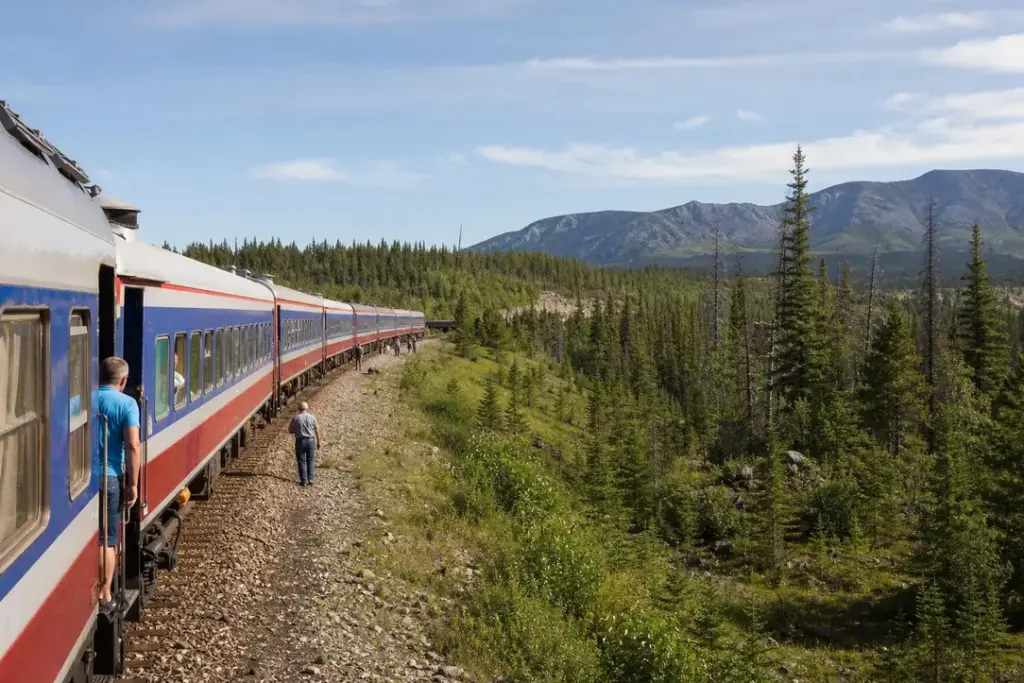
Traveling the Trans-Siberian Railway with children requires careful planning but is entirely doable for families willing to break the journey into segments with city stops. This guide shows you how to travel the Trans-Siberian Railway with children by choosing a manageable route, selecting the right train class, and building stopovers into major Siberian cities where children can explore between train legs.
The recommended approach for families is to split the journey over 2–3 weeks: take the daily Rossiya train from Moscow with planned stops in Yekaterinburg, then fly or take a separate train to Irkutsk to visit Lake Baikal, and break up the final leg to Vladivostok. This way children have time to rest, move around, and see something beyond train compartments.
Current access notice: As of October 2026: The classic Moscow–Vladivostok Trans-Siberian (Rossiya train) operates daily year-round. The Trans-Mongolian line runs with train changes in Irkutsk and Ulaanbaatar (resumed June 2025); the Trans-Manchurian (Beijing via Manchuria) remains suspended. Check the official RZD website (rzd.ru) or licensed booking partners for current departures and any seasonal schedule changes.
Quick answer: Book second-class four-berth compartments (kupé) or purchase all four berths for privacy. Plan 2–3 weeks total with stops in Yekaterinburg (Day 2), Lake Baikal region (Days 4–7), and Ulan-Ude or shorter stretches to Vladivostok. Expect ₽₽ to ₽₽₽ per person for tickets depending on distance and class chosen.
At a Glance
| Total time | 7 days non-stop Moscow to Vladivostok; 2–3 weeks recommended with stops in major cities |
|---|---|
| Typical cost | ₽₽–₽₽₽ |
What You Need Before You Start
- Valid Russian visa for adults and children (may not be required for citizens of some countries; check before booking)
- All passengers, including infants and babies, must have booked tickets even if traveling free
- Pack lightweight luggage—compartments have limited space and frequent packing/unpacking with children is exhausting
- Entertainment supplies: books, tablets with downloaded content, travel games, snacks and favorite foods not always available on board
- Comfortable shoes for station stops and walking in cities where you break the journey
- Medications, first-aid supplies, and any prescription items children need
- Bedding is provided but bring a favorite pillow or comfort item for children
- Small amounts of cash for station vendors and cities (some onboard services may not accept cards)
Compare Your Options
| Option | Duration | Price | Notes |
|---|---|---|---|
| Full Moscow–Vladivostok journey on Rossiya train (continuous) | 6–7 days non-stop | ₽₽–₽₽₽ | Daily departures year-round. Most realistic for older children (10+) or very independent toddlers who can entertain themselves. Monotonous for younger children; few are recommended to travel this way with kids under 8. No shower facilities; hygiene becomes an issue after several days. Cheapest ticketed option if booked in advance. |
| Segmented journey with 2–3 week itinerary and city stops (recommended for families) | 2–3 weeks total including city stays | ₽₽₽ | Moscow → Yekaterinburg (1–2 nights) → Irkutsk/Lake Baikal by fly or train (3–5 nights) → continue east by separate train. Allows children to rest, move freely, and explore. Best for ages 4–14. Costs more in total but far more enjoyable and manageable. Flexible timing. |
| Trans-Mongolian route: Moscow to Beijing via Ulaanbaatar | 6 days non-stop; 2–3 weeks with stops | ₽₽₽ | Scenic through Mongolia; shorter than full Trans-Siberian to Vladivostok. Requires Russian, Mongolian, and Chinese visas (visa requirements vary by nationality). More varied landscapes and cultural change appeals to older kids. June 2025 onwards: requires train changes in Irkutsk and Ulaanbaatar. Good for adventurous families aged 8+. |
| Short segment: Moscow to Lake Baikal region | 3–4 days total (1–2 train days + city time) | ₽₽ | Accessible intro for younger children or families new to trains. Rossiya to Irkutsk or fly Moscow–Irkutsk to save time. Focuses on Lake Baikal's natural beauty and Olkhon Island culture. Good for families with children 3–7. Can be extended or kept short. |
| Luxury tourist trains (Tsar's Gold, Golden Eagle) | Varies, typically 10–16 days | ₽₽₽₽ | All-inclusive cruises on rails with multiple restaurants, organized excursions, entertainment, private cabins with showers. Many have on-board activities for children. Best for families who want no logistical stress. Significantly pricier. Available summer season mainly. |
₽ budget · ₽₽ moderate · ₽₽₽ upscale · ₽₽₽₽ splurge. Price levels are estimates compared with typical prices for visitors.
Step-by-Step Instructions
Step 1: Decide your route based on children's ages and journey tolerance
The classic Trans-Siberian runs Moscow to Vladivostok (9,289 km, 6–7 days non-stop). For families with young children (under 8), breaking it into 2–3 shorter train segments with city stops is much more practical. Consider flying to Irkutsk after the Moscow–Yekaterinburg leg to visit Lake Baikal, then taking a separate train onward. This reduces the longest continuous train journey to 1–2 days and lets children recover between segments.
Tip: Traveling in summer (June–August) offers better weather and daylight for exploring stops, though trains are more crowded.
Step 2: Book tickets through an official channel for domestic journeys
For journeys within Russia only (Moscow to Vladivostok or segments), purchase tickets directly through Russian Railways (RZD) via their website (rzd.ru) if you have a Russian payment card, or book through licensed travel agencies that specialize in Trans-Siberian tickets. For international routes like Trans-Mongolian or if domestic booking proves difficult, use reputable third-party booking sites that partner with RZD. Avoid touts at stations. Booking several weeks ahead secures better availability and prices, especially in summer.
Tip: Children under 4 travel free on international trains if sharing a berth; children 4–11 pay 75% of adult fare. For domestic journeys, children under 5 may travel free on some trains; always verify with your booking.
Step 3: Select second-class (kupé) compartments or book all four berths for privacy
Second-class compartments (kupé) are the standard choice and accommodate four people: two lower berths and two upper berths with good luggage storage, a table, and a window. For families with young children, consider paying for all four berths to guarantee privacy and avoid sharing with strangers. First-class (spalny vagon) offers only two berths and costs more but eliminates the problem of unexpected compartment-mates. Second class is more social and easier for children to handle if they're comfortable with others.
Tip: Some trains have a special children's compartment with toys and books—ask when booking if this matters to your family.
Step 4: Plan your city stops: Yekaterinburg (Day 2), Lake Baikal (Days 4–7), and Ulan-Ude before Vladivostok
The Rossiya train departs Moscow daily and reaches Yekaterinburg after about 24 hours. Stop here for 1–2 nights to let children explore the Ural Mountains, visit the Church on the Blood, and rest. Continue to Irkutsk (arriving around Day 3–4) or fly there to reach Lake Baikal. Spend 3–5 days based in Listvyanka or Olkhon Island for water activities and nature. Then board another train segment to Vladivostok or spend time in Ulan-Ude. This breaks the journey so children aren't confined for more than 24–30 hours at a stretch.
Tip: Book accommodation in advance at popular stops like Irkutsk, especially in summer.
Step 5: Prepare children for confined spaces and long hours of boredom
Bring adequate entertainment: books, audiobooks, tablets with downloaded movies or games (download everything before boarding—no reliable internet), drawing supplies, travel games, and favorite snacks. The window views of Siberian landscapes and small town stations provide some distraction, but expect quiet periods. Some families allow extra screen time on trains as a practical compromise. The rhythm of the train itself (motion, rhythm, stops) often helps children sleep, which is your best tool for managing restlessness.
Tip: Pack a mix of surprises—small new toys or books revealed during low moments help reset energy.
Step 6: Understand compartment facilities and daily routines on board
Each train compartment has basic berths with full clean bedding, a table, and a small window. The corridor has Western-style toilets at each end and a samovar (hot water dispenser) for tea and drinks. There are no showers in standard classes (first-class luxury trains excepted), so plan showers during city stops. The provodnitsa (female carriage attendant) manages the car and is there to help. Restaurant cars serve meals, but many families bring food from stations or pack supplies. Trains are air-conditioned and have power outlets in compartments.
Tip: Bring wet wipes and hand sanitizer—toilet facilities are clean but basic.
Step 7: Board at the correct time and locate your carriage
Arrive at the station at least 30–45 minutes before departure. Check your ticket for the carriage (wagon) number. Platforms can be crowded; have a conductor or station staff help you identify the right carriage. The carriage number is written on the exterior. Once aboard, find your compartment number and introduce yourself to the provodnitsa, who will explain where things are and answer questions. Many families find Russian passengers helpful and friendly, especially when traveling with children.
Tip: Station stops typically range from 2 to 30 minutes—check your itinerary before the journey starts so you know which stops offer time to explore or buy food.
Step 8: Pack light luggage and store strategically in your compartment
Large suitcases are exhausting to move on and off trains repeatedly with children underfoot. Use soft, lightweight bags or medium wheeled luggage instead of rigid cases. Luggage fits under the lower berths or in the overhead rack. Keep frequently needed items (change of clothes for children, medications, documents, snacks) in an easily accessible small bag. Do not leave the compartment unattended during stops; the provodnitsa can watch for brief periods but compartment doors are lockable for your security.
Tip: Many families with small children pack only 5–7 days' worth of clothes and do laundry at major stops rather than hauling everything.
Step 9: Adjust gradually to time zone changes and maintain basic routines
The Trans-Siberian crosses eight time zones, but the trains run on Moscow time, so the clock on the wall slowly drifts from the sun outside—a surreal but useful indicator of distance traveled. Your body adjusts gradually as you travel east and gain daylight hours. Maintain bedtimes and mealtimes roughly on Moscow time to minimize disruption. Children often sleep well on trains due to the motion and rocking; lean into this and don't stress about strict scheduling.
Tip: Expect children to be tired and hungry at unexpected times—have snacks and flexibility ready.
Common Mistakes to Avoid
- Traveling non-stop Moscow to Vladivostok with children under 8: most families regret not breaking the journey. Even a stop after 24 hours makes an enormous difference in child behavior and parental sanity. Plan at least one city stop.
- Overpacking luggage: parents often bring too many clothes, toys, and supplies thinking comfort requires abundance. Compartments are small; excess luggage gets in the way and makes changing trains stressful. Pack light and do laundry at major stops.
- Underestimating boredom on moving train: screens and games are essential, not luxuries. If children have no entertainment backup beyond train windows, days become very long. Download content before boarding and pack books and activities.
- Booking tickets through unofficial resellers or touts: avoid stations agents offering cheap tickets—they may be counterfeit or subject to cancellation. Use RZD's official website or licensed agencies only.
- Not clarifying free/discounted child ticket policies in advance: children's fares vary by age and route (domestic vs. international). Some children travel free, others at 50–75% of adult fare. Check your specific train and booking when you reserve.
- Forgetting that babies and infants still need booked tickets even if traveling free: RZD requires a ticket in the system for every person including those who pay nothing. This often surprises families.
- Arriving at the station too close to departure: platforms are chaotic during boarding; locating the right carriage with luggage and children is stressful. Arrive 30–45 minutes early to find your carriage calmly.
Tickets, Payment and Booking
Booking tickets officially: Russian Railways (RZD) operates the Rossiya and other Trans-Siberian trains. For journeys within Russia, book directly at rzd.ru (Russian payment card required) or through licensed international booking agencies such as Seat61.com, Russian Train, Trans-Siberian Express, or specialized tour operators.
Payment methods: Foreign visitors can use booking agencies accepting international credit cards. Direct RZD website purchase requires a Russian bank card; buy tickets in cash at a station ticket office instead. Be cautious of third-party resellers; confirm legitimacy before payment.
International routes (Trans-Mongolian): Book through specialized agencies; direct ticketing is complex due to multiple countries’ railways involved.
Booking timing: Reserve 4–8 weeks ahead for summer travel to secure good compartment availability and prices. Peak season (June–August) fills quickly.
Avoid touts: Unofficial ticket agents at stations may offer attractive prices but sell counterfeit or invalid tickets. Use only official or authorized channels.
Russia Vibes Tips
- Choose summer (June–August) for maximum daylight through Siberia, though trains are busier. Shoulder months (May, September) offer slightly fewer crowds and pleasant temperatures. Winter journeys are harder on young children due to shorter daylight and cold air outside.
- Consider flying Moscow to Irkutsk to skip the longest initial train stretch, then continue east by train or flights. Costs more than train tickets but saves 2 days of confinement and lets children rest in a proper hotel before multi-day train segments.
- Book all four berths in a second-class (kupé) compartment for a family of 3–4 rather than sharing with strangers. Privacy and predictability matter hugely with children, and the cost per person is often only slightly higher.
- Russian passengers are generally kind to children. Don't hesitate to ask compartment-mates or the provodnitsa for advice. Most travelers have children themselves and offer practical help—borrowing items, sharing food, offering tips about upcoming stops.
- Spend a full day exploring each major stop (Yekaterinburg, Irkutsk, Ulan-Ude) even if you could catch the next train. Hotels are affordable, laundry services available, and children benefit enormously from solid ground, a shower, and a chance to burn energy before the next train leg.
- Download maps, guidebooks, and entertainment content before boarding—internet on trains is unreliable. Bring a power bank for charging tablets and phones; compartments have outlets but they are limited.
Keep reading
Next steps


FAQ
Do young children (under 5) travel free on the Trans-Siberian?
On international trains (Trans-Mongolian, Trans-Manchurian), children under 4 travel free if sharing a berth; children 4–11 pay 75% of adult fare. For domestic Russian journeys, fares vary by train operator—some children under 5 travel free, others at reduced rates. Always confirm with your booking because fares change. Importantly: even free-fare children must have a booked ticket in the system.
How long is too long for children to spend on a train without a break?
Most child development experts and experienced families suggest no more than 24–30 continuous hours for children under 12. After that, restlessness, boredom, and conflict rise sharply. Even very patient children benefit from a break to walk, shower, and sleep in a stationary bed. Plan city stops every 1–2 train days for best results.
Are there showers on Trans-Siberian trains?
No. Standard second and third-class compartments have no shower facilities—only toilets and a basin for washing hands and face. Some luxury first-class compartments on premium trains (mostly summer tourist trains) have en-suite showers. This is a major reason families break journeys in cities like Yekaterinburg, Irkutsk, and Ulan-Ude. Plan daily showers during city stops.
Can I bring my own food on the train, or must I buy from the restaurant car?
You can absolutely bring your own food. Most families pack snacks, bread, cheese, fruit, and meals from station markets and supermarkets. The restaurant car serves basic hot meals at moderate prices, but selection is limited and not always appealing to children. Bringing familiar foods your children like is wise, as onboard options are unpredictable.
What time do trains depart and how early should I arrive at the station?
Rossiya and most Trans-Siberian trains depart in late afternoon or evening (typically 16:00–19:00). Arrive 30–45 minutes before departure. Stations are crowded, signage can be unclear, and locating the correct carriage with luggage and children takes time. Arriving early avoids stress and ensures you find your compartment comfortably.
Do I need a Russian visa for my children?
Yes, all children need a Russian visa for any journey on the Trans-Siberian within Russia, regardless of age. Visa requirements depend on your nationality; some countries' citizens do not require visas for Russia, but you must verify this for your specific country before booking. Check with a Russian embassy or consulate or a visa service. International routes (Trans-Mongolian, Trans-Manchurian) require visas for all countries you traverse.
Is the Trans-Siberian Railway safe for families traveling alone?
Yes. The Trans-Siberian is widely used by families and is considered safe. Each carriage has two attendants (conductors), trains have security personnel, and compartment doors lock. Fellow passengers are generally respectful. Solo parents and families with children travel regularly without incident. The main safety concern is managing luggage and children on crowded platforms, not the train itself.
Can I break my journey and return to the same train days later, or do I lose my ticket?
Once you disembark, your ticket expires for that train. To continue, you must book a separate ticket for the next train leg. Plan stopovers in advance and book connecting trains or flights separately. You cannot pause a journey and resume the same train days later—always treat city stops as separate bookings.
Russia Vibes is a one-person project. A coffee keeps it going
Not legal advice. This is general information for visitors. Rules on visas, entry, registration, customs and similar matters change often and can depend on your nationality. Check the official source and, if in doubt, ask your embassy or a qualified adviser.
Planning your trip? Russia Travel Guide

Take this guide with you
Get a free PDF of this guide to print or read offline: key facts, tips and a map link on a few clean pages.
About this page
Report an issue on this page
Paying for your trip: please read
Payments and bookings between Russia and many other countries are currently restricted. In practice, cards issued in the EU, the UK, the US and several other countries often cannot be used in Russia, Russian cards usually cannot be used abroad, and some booking platforms, airlines and payment providers limit or pause their services for Russia. The situation changes frequently.
We do not give legal or financial advice, and this site does not encourage anyone to break any rule that applies to them. Whatever you plan, you are responsible for following the laws and regulations that apply to you, including those of your country of residence and citizenship.
Many travelers still organise their stay without problems. It is worth asking your bank or payment provider what is currently possible, contacting hotels, tour operators and carriers directly about the payment methods they accept, and checking which services are open to customers from your country. Clarify payment, cancellation and refund terms before you commit to a booking, and keep your plans flexible.
Partner links on this site may not be available in every country, and prices, availability and rules in our guides can differ from what you see when you book.
How we research and update our guides
About this guide: AI assistance and accuracy
This guide is created with the help of AI and is based on official sources where available. Mistakes can still happen. Opening hours, prices, rules and other details are given to the best of our knowledge as of the date shown and can change without notice. It offers general recommendations only, not professional, legal or travel advice. Please confirm important details with the official source before you travel; you are responsible for your own plans and decisions.
* Affiliate link: as an Amazon Associate we earn from qualifying purchases at no extra cost to you.