
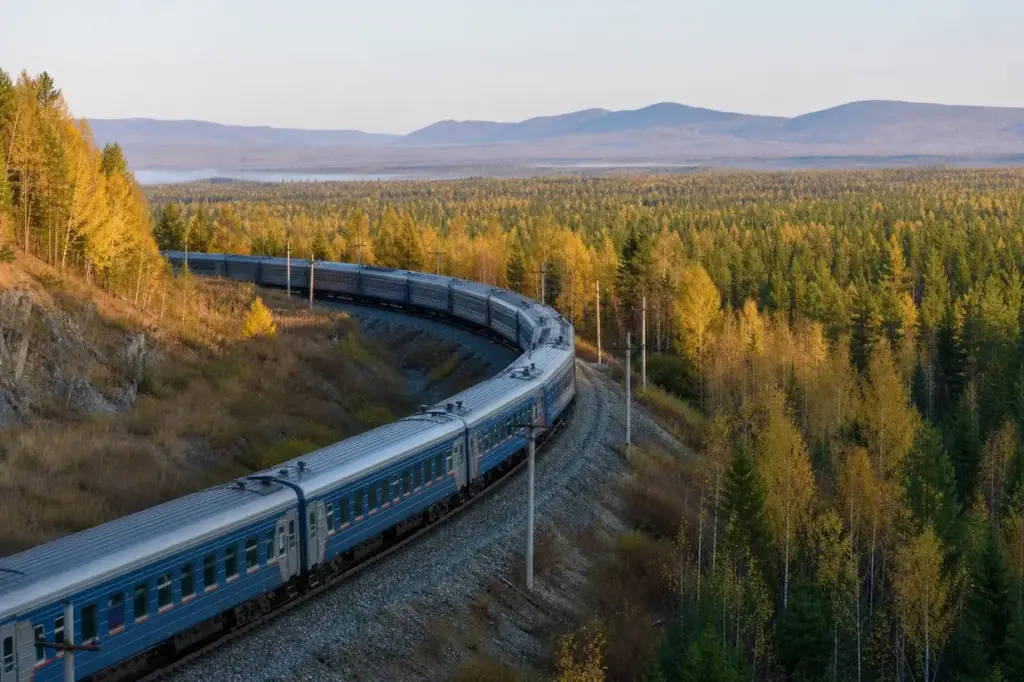
The Trans-Siberian Railway crosses Russia from Moscow to Vladivostok, connecting European Russia, the Ural Mountains, Siberia and the Pacific coast. Built in stages from 1891 to 1916, the railway became one of the world’s great engineering achievements. Its appeal lies not in a single attraction but in the gradual transformation of landscapes, cities and everyday life visible from a train window.
A journey may include historic railway stations, broad rivers, industrial cities, Siberian forests and the southern shore of Lake Baikal. Travellers can explore selected sections rather than attempting the entire route. The railway is also a functioning passenger and freight corridor, not simply a dedicated tourist train. This distinction matters when planning connections, overnight accommodation and sightseeing stops. Understanding the main route, available train categories and distances between cities makes it easier to turn an ambitious railway journey into a manageable travel experience.
Quick Facts
| Russian name | Транссибирская магистраль |
|---|---|
| Best time to visit | Summer is generally the most straightforward season for combining the railway with sightseeing in Siberian cities and outdoor destinations. Longer daylight hours improve opportunities to see scenery from the train, while warmer conditions make station stops and local excursions more comfortable.
Autumn brings changing forest colours, particularly in Siberian landscapes, but temperatures fall as the season progresses. Spring offers a transitional experience with variable weather and lingering snow in some regions. Winter provides a different view of the railway, with snow-covered settlements, frozen rivers and cold continental landscapes. Travellers should prepare carefully for outdoor conditions during station transfers and sightseeing stops. There is no single best season for every part of the route. Consider the weather at your planned stopping points, not only conditions in Moscow or Vladivostok. |
| Website | rzd.ru |
Why Visit Trans-Siberian Railway?
The Trans-Siberian Railway offers a distinctive way to understand the enormous geographical scale of Russia. Travellers see landscapes change gradually rather than arriving directly at a destination by air. The route crosses the Urals, continues through western and eastern Siberia and eventually reaches the Russian Far East.
Railway enthusiasts can discover historic stations, major river crossings and engineering associated with the line’s original construction. Nature lovers can combine the journey with Lake Baikal or other destinations accessible from established railway hubs.
The experience also reveals ordinary long-distance train travel. Compartments become temporary living spaces, stations provide opportunities to stretch your legs, and views change over successive days. It is particularly rewarding for travellers who enjoy slow travel and have enough time to explore selected stops.
Highlights of Trans-Siberian Railway
Moscow: The Western Starting Point
Moscow provides the best-known western starting point for the Trans-Siberian journey. Yaroslavsky Railway Terminal is traditionally associated with the route to Vladivostok and stands on Komsomolskaya Square, alongside other major railway terminals. Its historic architecture makes it a recognisable departure location, although passengers must follow the station shown on their actual ticket. Long-distance services can use different routes and departure arrangements. Before boarding, travellers can observe the contrast between the busy railway concourse and the prospect of spending several days crossing the country.
Tip: Check the exact Moscow departure terminal rather than assuming every eastbound long-distance service uses Yaroslavsky.
Yekaterinburg and the Ural Mountains
Yekaterinburg is a major railway city near the geographical transition between Europe and Asia. The surrounding Ural region forms an important stage of the journey from Moscow toward Siberia. Travellers can stop to explore the city and arrange a separate excursion to an established Europe–Asia boundary monument. The railway station also provides an opportunity to appreciate the scale of regional rail connections. The crossing of the continental boundary is a geographical milestone rather than a dramatic change in scenery visible at one precise moment.
Tip: Plan the Europe–Asia boundary excursion as a separate outing rather than expecting a long-distance train to stop at a monument.
Novosibirsk and the Ob River
Novosibirsk developed into a major Siberian railway centre after the railway reached the Ob River in the late nineteenth century. Its main railway station is notable for its large historic-inspired architectural form and importance as a regional transport hub. The city offers a substantial urban stop between the Urals and eastern Siberia. Travellers who leave the train can explore its central streets, cultural institutions and riverfront areas. The Ob crossing also recalls the engineering challenges faced by the railway's early builders.
Tip: Allow a proper city stop if you want to explore Novosibirsk; a routine station halt is not enough for sightseeing.
Krasnoyarsk and the Yenisei River
Krasnoyarsk sits beside the Yenisei, one of Siberia's great rivers. The railway's crossing of the river became an important achievement during the construction of the Central Siberian section. The city combines railway history with access to distinctive natural landscapes, including the rock formations of Krasnoyarsk Stolby National Park. Travellers can break their journey here to explore the riverside and take a separate nature excursion. The surrounding terrain begins to feel more varied than the broad plains of western Siberia.
Tip: Choose a daylight arrival or departure where possible if views of the Yenisei crossing are important to you.
Irkutsk: Gateway to Lake Baikal
Irkutsk is a historic Siberian city and an established gateway for excursions to Lake Baikal. Its central districts contain traditional wooden houses, substantial nineteenth-century buildings and cultural institutions. The railway station stands across the Angara River from much of the historic centre, so sightseeing requires a local transfer. Travellers commonly use Irkutsk as a base for visiting Listvyanka or travelling onward to Olkhon Island. A brief station stop should not be confused with a proper Baikal excursion, which requires separate transport and additional time.
Tip: Keep Irkutsk sightseeing and Lake Baikal excursions on different days if your schedule allows.
Lake Baikal and the Southern Shore
Lake Baikal is the world's deepest freshwater lake and one of the most memorable natural landscapes associated with the Trans-Siberian Railway. The present mainline follows part of its southern shoreline, with wooded mountain slopes rising above the water. Depending on the route and available daylight, passengers may see the lake from the train. The historic Circum-Baikal Railway is a separate railway experience with tunnels and stone engineering structures along another shoreline section. It should not be confused with the normal passage of long-distance trains.
Tip: Check which section of the lake your train traverses in daylight, and book a separate historic railway excursion if that experience matters most.
Ulan-Ude and Eastern Siberia
Ulan-Ude is a major city east of Lake Baikal and an important railway junction. The surrounding region introduces travellers to landscapes and cultural traditions associated with Buryatia. The city is also connected with the railway route continuing toward Mongolia, although international passenger services must be checked separately. Visitors who stop here can explore the centre and arrange excursions to cultural or natural destinations outside the city. Ulan-Ude provides a useful contrast with Irkutsk, particularly for travellers interested in regional traditions.
Tip: Treat an onward journey toward Mongolia as a separate international itinerary, not an automatic extension of the Moscow–Vladivostok ticket.
Khabarovsk and the Amur River
Khabarovsk is a major railway destination in the Russian Far East, standing beside the Amur River. The historic railway crossing near the city was crucial to establishing a continuous route across Russian territory. Its completion in 1916 marked a major stage in the development of the Trans-Siberian Mainline. Travellers stopping in Khabarovsk can explore the city and its riverfront before continuing toward the Pacific. The broad Amur landscape represents a striking geographical change from the forests and inland cities encountered earlier.
Tip: If the Amur River is a highlight of your journey, examine the train's scheduled crossing time before selecting a service.
Vladivostok: The Pacific Terminus
Vladivostok is the traditional eastern terminus of the Trans-Siberian Railway. Its railway station stands close to the waterfront, making the arrival feel distinctly different from inland Siberian stations. The station's historic architecture and its connection with the long-distance route are attractions in their own right. The city also offers harbour views, hills and coastal scenery. Travellers completing the classic route can spend time exploring Vladivostok rather than treating the railway station as the final sightseeing stop.
Tip: Reserve additional time for Vladivostok itself; completing the rail journey and seeing the city are two different experiences.
Atmosphere
A Trans-Siberian journey alternates between long stretches of quiet travel and short periods of activity at stations. Inside the carriage, passengers settle into compartments, make hot drinks, read and watch the scenery pass. The sound of wheels, occasional announcements and movement through corridors becomes familiar over time.
Outside, the view changes gradually. Large cities give way to forests, rivers, agricultural landscapes and mountain areas. At some stops, platforms are busy with passengers boarding or leaving; at others, the station is surrounded by relatively small settlements.
Night travel is part of the experience. Long-distance trains continue through landscapes passengers may never see in daylight. This makes choosing a route with worthwhile daytime sections particularly important for travellers whose primary interest is scenery rather than simply completing the journey.
History of Trans-Siberian Railway
Early railway ambitions. During the nineteenth century, railway development transformed transport across European Russia. Connecting distant Siberian settlements with the western railway network became a major engineering objective. Surveying teams examined routes through forests, mountains, river valleys and sparsely settled territory.
1891: Construction begins. Work on the Great Siberian Railway began in 1891. Construction was organised across different sections rather than progressing continuously from a single starting point. This approach allowed engineers and workers to develop western and eastern parts of the route simultaneously. The project required extensive earthworks, bridges, stations and supporting infrastructure.
The western and central sections. During the 1890s, railway construction advanced across western Siberia and toward Irkutsk. The West Siberian Railway reached important settlements along the route, while the Central Siberian section faced more complicated terrain and river crossings. The railway helped establish the transport connections that shaped the subsequent growth of cities such as Novosibirsk.
1897: The Ussuri section. The railway connecting Khabarovsk and Vladivostok became operational during the 1890s. Its development created an important eastern section of the intended transcontinental connection, even though substantial construction remained elsewhere.
1898–1899: Progress toward Irkutsk. The railway reached Irkutsk during the final years of the nineteenth century. Lake Baikal presented an unusually difficult obstacle. Its steep shores and surrounding mountains complicated the construction of a continuous railway route, while crossing the lake required a special transport solution.
The Lake Baikal crossing. Before the southern railway connection was completed, railway ferries carried passengers and railway equipment across Lake Baikal. This temporary arrangement allowed broader transport connections to function while engineers continued developing the difficult coastal section.
1903: Regular transcontinental connections. By the early twentieth century, a connection between western Russia and the Pacific had become possible using a combination of railway sections and intermediate crossings. Russian Railways identifies July 1903 as the beginning of regular service, although the infrastructure did not yet correspond to the complete modern route entirely within Russian territory.
The Circum-Baikal Railway. Construction around the lake demanded tunnels, retaining walls and bridges through difficult rocky terrain. The line became known for its concentration of engineering structures. The historic section remains significant today, although ordinary long-distance trains now use a different arrangement around the southern lake area.
1916: Continuous route across Russia. Completion of the railway bridge across the Amur near Khabarovsk enabled a continuous connection between the western railway network and Vladivostok across Russian territory. This milestone is commonly associated with completion of the original Trans-Siberian project.
Twentieth-century development. The railway continued to evolve through improvements in track, bridges, signalling, locomotives and passenger facilities. Electrification and later modernisation changed the experience of travelling across Siberia. The network also developed additional connections to major industrial and regional centres.
The railway today. The Trans-Siberian Mainline remains an important transport corridor for passenger and freight services. Modern journeys combine historic railway infrastructure, contemporary stations and working railway operations. For visitors, this continuity is part of the attraction: the railway is not merely a preserved monument but an active connection across an enormous country.
Tickets and Booking for Trans-Siberian Railway
The Trans-Siberian Railway is a route rather than a single train or attraction. Travellers must select specific passenger services and departure stations. Moscow is the traditional western starting point, while Vladivostok is the eastern terminus. Major intermediate stations include Yekaterinburg, Novosibirsk, Krasnoyarsk, Irkutsk, Ulan-Ude and Khabarovsk.
Russian Railways operates the principal national railway booking system. Check available departures, accommodation classes, passenger-document requirements and connections through the official railway operator. Booking separate journey segments may be necessary when planning extended city stops. Do not assume that one ticket permits unlimited stopovers.
As of October 2026, international travellers should also verify current entry-document requirements with the appropriate Russian consular authority. Requirements can depend on nationality and may change. Train availability, booking windows and station arrangements must be confirmed with the official operator before travel.
How to Get to Trans-Siberian Railway
Starting in Moscow: The traditional departure point is Yaroslavsky Railway Terminal. Travellers arriving by air must first transfer from the relevant Moscow airport to the city and then to the departure station shown on their ticket.
Starting elsewhere: The journey can begin at intermediate railway hubs such as Yekaterinburg, Novosibirsk, Krasnoyarsk, Irkutsk or Ulan-Ude. These cities may be reached through separate domestic railway or air connections.
Travelling along the route: Long-distance trains provide the main connection between major stations. Local transfers, public transport and taxis are needed for attractions outside railway station areas.
Important distinction: The Trans-Siberian Mainline, Baikal–Amur Mainline and historic Circum-Baikal Railway are not interchangeable routes. Check the stations and complete route of the actual passenger service before arranging excursions.
Accessibility
Accessibility depends on the individual train, carriage type and stations used. The journey includes numerous railway stations with different platform arrangements, pedestrian routes and transfer facilities. Some older carriages may have narrow corridors, steps and compact compartments.
Travellers who require step-free boarding, accessible sleeping accommodation or assistance at stations should arrange requirements directly with Russian Railways before booking. Do not assume that accessible facilities available on one train are provided on every service.
Long periods aboard a train also require consideration. Passengers with limited mobility should assess compartment suitability, toilet access, opportunities to move around and assistance during extended journeys.
Food Nearby
Major stations along the Trans-Siberian route are surrounded by different dining options depending on the city. Large railway hubs generally provide convenient access to cafés, shops and restaurants, while smaller stops may offer fewer choices.
Food arrangements aboard long-distance trains depend on the specific service. Some trains offer dining facilities or food services, but their availability should be checked rather than assumed. Passengers commonly carry snacks and supplies suitable for a long journey.
Extended stops in cities provide opportunities to explore regional cuisine. Siberian dishes include pelmeni, soups and local preparations, while areas around Lake Baikal have Buryat culinary traditions. Plan proper dining excursions during scheduled overnight stops rather than depending on short platform halts.
What to Bring
Pack a small overnight bag containing items needed inside the carriage, rather than repeatedly opening large luggage. Comfortable clothing, slippers, personal toiletries, medication, tissues and a reusable drinking cup can make long-distance travel easier.
Bring a power bank, charging cables, downloaded maps, reading material and entertainment that does not depend on continuous internet access. Mobile coverage may be interrupted between settlements.
For winter journeys, keep warm outer clothing, gloves and appropriate footwear readily accessible when leaving the train. Carry essential documents separately from luggage stored in the compartment.
Observe the railway operator's current luggage and carriage rules.
Photography Rules
Photographing landscapes and ordinary travel scenes from passenger areas is generally different from photographing restricted railway infrastructure. Follow station signs and staff instructions. Do not enter tracks, service areas or railway property beyond passenger access. Drone photography may be restricted by aviation rules and local limitations. Ask permission before photographing identifiable passengers at close range.
Family Suitability
The Trans-Siberian Railway can be suitable for families who are comfortable with extended train journeys. Sleeping compartments allow travellers to rest while moving between destinations, but children may find continuous travel over several days demanding.
Families should plan entertainment, snacks and opportunities for proper breaks during longer city stops. Consider the available space in the selected carriage and the suitability of shared facilities.
Young children require supervision on station platforms, in carriage corridors and near doors. A journey divided into manageable segments may be more enjoyable than travelling continuously from Moscow to Vladivostok.
Russia Vibes Tips
- Do not confuse the complete railway route with a single sightseeing train. The experience depends heavily on the specific scheduled service and its stopping pattern.
- Plan daylight carefully around Lake Baikal. Travelling through a scenic section at night can mean missing one of the most distinctive landscapes of the journey.
- Choose your longest city stops before planning smaller excursions. Irkutsk, Krasnoyarsk and Yekaterinburg offer different experiences that cannot be covered adequately during routine station halts.
- Download maps and essential travel information before entering remote sections. Mobile connectivity may be intermittent, especially away from large settlements.
- Learn to recognise the Russian names of your principal railway stations. Large cities may have several terminals, and similar destination names can appear on different services.
- Use a separate small bag for carriage essentials. Keeping frequently needed items within reach makes shared-compartment travel more convenient.
Explore Nearby Trans-Siberian Railway
Browse more: All Cities · All Railway Journeys · All Trans-Siberian Railway
FAQ: Trans-Siberian Railway
How long does the Trans-Siberian Railway journey take?
A continuous journey between Moscow and Vladivostok generally takes about six to seven days, depending on the train and route. This does not provide time for substantial sightseeing outside stations. Travellers who want to explore Siberian cities, Lake Baikal and other destinations should allow considerably longer. The recommended duration section distinguishes continuous travel from a journey with extended stops.
Does one train travel the entire Trans-Siberian Railway?
Long-distance services have historically connected Moscow and Vladivostok, but the railway itself is a network used by many different passenger and freight trains. Not every train continues across the entire country. Travellers should verify the operating route and service dates rather than assuming all Trans-Siberian journeys use one named train.
Can I get off the train and continue later?
Travellers can organise journeys with extended stops by arranging suitable tickets for separate segments. A normal long-distance ticket should not be treated as an unlimited travel pass. If you intend to spend several days in Irkutsk or another city, plan the onward service as a separate part of the itinerary. See the booking section for official ticket arrangements.
Does the Trans-Siberian Railway pass Lake Baikal?
Yes. The mainline follows part of Lake Baikal's southern shore. However, the famous historic Circum-Baikal Railway is a separate railway experience and should not be confused with the regular long-distance route. Travellers wishing to see the historic tunnels and coastal engineering should plan an additional excursion rather than expecting their normal train to cover that line.
Is the Trans-Siberian Railway a luxury train?
The Trans-Siberian Railway is a railway route, not a luxury train product. Ordinary long-distance services offer different accommodation arrangements, while specialist tourist trains may provide separate experiences. The level of comfort depends on the actual train and carriage selected. Travellers should compare the official accommodation descriptions before booking.
Can I travel only part of the Trans-Siberian Railway?
Yes. Travellers can use individual sections between major railway stations. Popular planning options include journeys involving Yekaterinburg, Novosibirsk, Krasnoyarsk or Irkutsk. Shorter journeys can provide a meaningful experience without requiring the full transcontinental crossing. The best section depends on whether your priority is railway history, city sightseeing or natural landscapes.
Is the Baikal–Amur Mainline the same as the Trans-Siberian Railway?
No. The Baikal–Amur Mainline, commonly called the BAM, is a separate railway corridor across Siberia and the Russian Far East. It follows a more northerly route in significant sections and serves different destinations. The two railway systems connect within the broader Russian railway network, but passengers should not assume that trains on one automatically follow the other.
Do I need a guided tour for the Trans-Siberian Railway?
A guided tour is not inherently required for ordinary scheduled passenger services. Independent travellers can plan railway segments and accommodation themselves. Guided arrangements may be useful for visitors who want organised sightseeing, language assistance or specialist excursions. The important distinction is between travelling on a regular passenger train and purchasing a separate organised railway holiday.
Russia Vibes is a one-person project. A coffee keeps it going
How we research and update our guides
About this guide: AI assistance and accuracy
This guide is created with the help of AI and is based on official sources where available. Mistakes can still happen. Opening hours, prices, rules and other details are given to the best of our knowledge as of the date shown and can change without notice. It offers general recommendations only, not professional, legal or travel advice. Please confirm important details with the official source before you travel; you are responsible for your own plans and decisions.
Packing for this trip
* Affiliate link: as an Amazon Associate we earn from qualifying purchases at no extra cost to you.

Take this guide with you
Get a free PDF of this guide to print or read offline: key facts, tips and a map link on a few clean pages.
Report an issue on this page
Paying for your trip: please read
International sanctions affect payments between Russia and many other countries. In practice, cards issued in the EU, the UK, the US and several other countries often do not work in Russia, Russian cards usually do not work abroad, and some booking platforms, airlines and payment providers limit or suspend their services for Russia. The situation changes frequently.
We do not give legal or financial advice, and this site does not encourage anyone to break or circumvent sanctions. Whatever you plan, you are responsible for following the laws and regulations that apply to you, including those of your country of residence and citizenship.
Many travelers still organise their stay lawfully. It is worth asking your bank or payment provider what is currently permitted, contacting hotels, tour operators and carriers directly about the payment methods they accept, and checking which services are open to customers from your country. Clarify payment, cancellation and refund terms before you commit to a booking, and keep your plans flexible.
Partner links on this site may not be available in every country, and prices, availability and rules in our guides can differ from what you see when you book.