
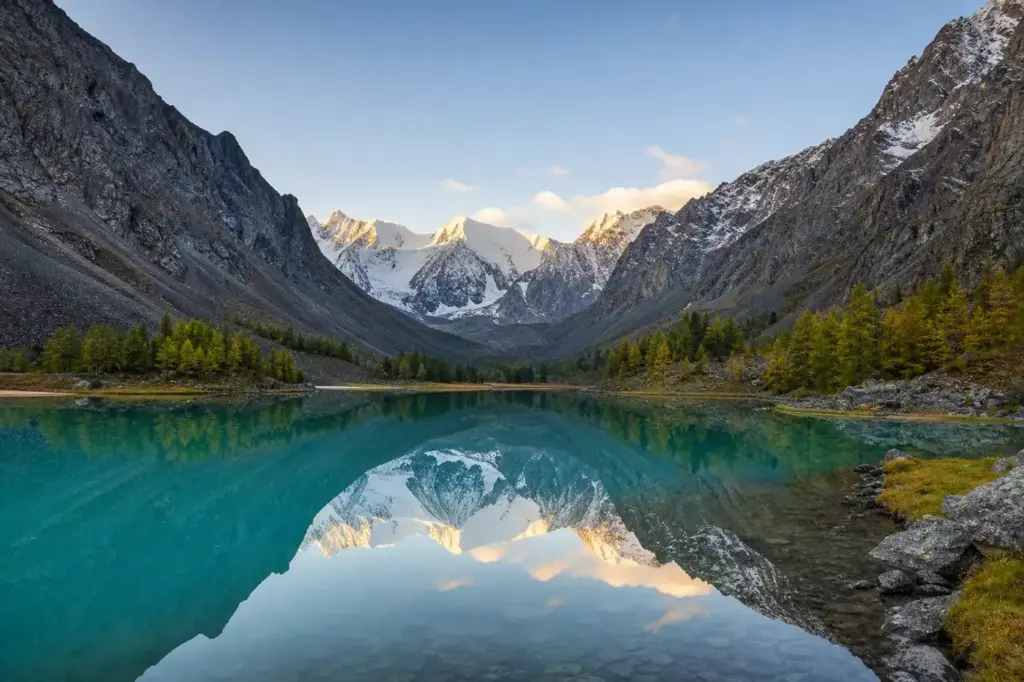
The Multinsky Lakes Hiking Route is one of the classic treks in Russia’s Altai Mountains, suited to intermediate to experienced hikers with moderate fitness. This route traces a chain of glacial lakes strung along the upper Multa River valley on the south-facing slope of the Katun Range. A typical Multinsky Lakes hiking route in the Altai Mountains spans 8–12 days depending on the variant; shorter versions focus on the lower and middle lakes, while longer treks add the high passes and remote upper lakes. By the end, you will have seen three main lakes ringed by snow-capped peaks and cedar forests, walked beneath 25 m waterfalls, and reached passes above 2,500 m.
The route is remote—a minimum 4–6 hour drive from the nearest town—and accessible only in summer when the trails are clear. Most trekkers hire horses to carry camp gear, making the 120 km journey feasible for people without mountaineering experience.
At a glance: The route departs from Multa village and climbs along the river to the Lower Multinsky Lake, then continues past the Middle and Upper lakes, swinging via high passes through the Akchan and Kyrgyz valleys before descending back to the starting point. Most 8-day versions visit the main three lakes and Kuyguk Waterfall; 12-day variants add the remote northern reaches and mountain passes.
Day 1: Arrival and acclimatization in Gorno-Altaysk
Arrive in Gorno-Altaysk airport and transfer to your base camp or lodging in the Altai foothills. Use this day to collect permits, check equipment and meet your trekking group. Afternoon walk to familiarize yourself with the landscape and adjust to the altitude.
- Gorno-Altaysk – Mountain town and regional hub (morning arrival)
- Altai base camp or guesthouse – Equipment check and briefing (afternoon to evening)
- Local trails around base – Easy acclimatization walk (2–3 hours)
Tip: Confirm your guide, porter and horse arrangements on this day. Ask your guide about recent snow levels on the high passes—they can advise whether the full route is walkable or if variants are safer.
Day 2: Drive to Multa village and first camp
Long drive south through the Chuisky Highway along the Chui steppe into the Uimon Valley. You'll follow the Multa River upstream and reach Multa village, the trailhead. Establish camp near the river or stay in a local shelter. First group dinner and safety briefing.
- Gorno-Altaysk – Starting point (morning departure)
- Chuisky Highway – Main road through South Altai (3–4 hours driving)
- Uimon Valley – Broad steppe landscape (scenic transition)
- Multa village – Trailhead and last supply point (late afternoon)
- First camp by Multa River – Camp setup (evening)
Tip: Stock any last-minute supplies in Multa—there are no stores further up the valley. Eat well at camp; tomorrow you begin climbing steadily.
Day 3: Multa village to Lower Multinsky Lake
The main hiking day up the Multa River valley through cedar forest. The path climbs alongside the river, passing mushrooms and berry plants in season (July–August). You gain roughly 600 m elevation to reach the Lower Multinsky Lake at 1,710 m. The water's glacial blue and the surrounding peaks come into view in late afternoon.
- Multa village – Trail start (morning)
- Multa River valley – Forest path with river views (5–7 hours walk)
- Lower Multinsky Lake – First major lake, 1,710 m (camp arrival)
- Cedar forest camp – Overnight camp (evening)
Tip: Leave early (7–8 am) to reach camp by afternoon and have time to explore the lake shore. The trail is well marked but muddy in wet years; wear proper hiking boots. Do not swim—the water remains very cold year-round.
Day 4: Lower lake to Middle Multinsky Lake via the Shumy
Short day (3–4 hours) crossing the Shumy—a narrow isthmus between the Lower and Middle lakes formed by a natural dam of house-sized boulders. Water rushes through gaps, creating small waterfalls. The Middle lake sits higher (1,860 m) and is equally beautiful. Spend the afternoon resting and exploring the camp area.
- Lower Multinsky Lake camp – Start (early morning)
- The Shumy (Noise) – Boulder-strewn channel (1 hour crossing)
- Middle Multinsky Lake – Second major lake (camp arrival)
- Middle Lake shore – Rest and exploration (afternoon)
Tip: The boulders at the Shumy are large and the ground uneven—move carefully. If carrying a large pack, your guide may suggest leaving it at the Lower Lake camp and making this crossing light-loaded. The Middle Lake is the most photographed spot on the route—arrive by early afternoon for the best light.
Day 5: Radial hike to Upper Multinsky Lake
A full-day round trip from Middle Lake camp (8–10 hours total). Hike south along the eastern shore, cross the Poperechnaya River and climb steeply into the rocky upper cirque. The Upper Lake sits at 1,860 m in a deep basin at the foot of a small glacier. Return to camp by evening. Alternative: rest day at Middle Lake camp.
- Middle Multinsky Lake camp – Start (early morning)
- Poperechnaya River crossing – Bridge or ford (2 hours)
- Upper Multinsky Lake – Highest of main lakes, glacier view (midday)
- Rocky cirque – Alpine tundra and ice patches (high point)
- Middle Lake camp – Return to base (evening)
Tip: Start at sunrise to maximize daylight. Bring extra water and snacks. The trail is steep and loose in places; use trekking poles. If weather turns bad, descend immediately. Some tours replace this day with a rest day or add an easier walk to a viewpoint.
Day 6: Middle Lake to Kuyguk Lake via Kuyguk Pass
Long, challenging day (8–10 hours) tackling a category 1A pass at 2,520 m. The trail climbs through alpine meadow, then steepens to the pass. From the top, you descend to the emerald Kuyguk Lake, ringed by a spectacular 25 m waterfall and set among ancient cedars. Camp at Kuyguk Lake (2,270 m elevation).
- Middle Multinsky Lake camp – Start (dawn)
- Alpine meadow zone – Gradual climb (3–4 hours)
- Kuyguk Pass – Summit, 2,520 m (midday)
- Kuyguk Lake – Emerald water and waterfall (late afternoon)
- Cedar camp by waterfall – Camp setup (evening)
Tip: This is the most exposed and technical section. Start before dawn; the pass can be windy and cold even in summer. Your guide may secure packs with ropes if the terrain is difficult. The descent to Kuyguk can be slippery—move cautiously. Reward yourself with the view of the 25 m waterfall—one of Altai's most dramatic.
Day 7: Kuyguk Lake to Akchan Lake
Descend from Kuyguk and continue to the high-altitude Akchan Lake (2,219–2,300 m). This is a quiet, remote section where you're likely to see wildlife such as pikas and marmots. The valley narrows and the scenery becomes more austere—bare rock, lichen and low grasses. Camp by Akchan Lake.
- Kuyguk Lake camp – Start (morning)
- Kuyguk River valley – Descent through high tundra (3–4 hours)
- Akchan Lake – Turquoise water in high valley (midday)
- Akchan valley camp – Overnight near lake (evening)
Tip: Weather in this valley can change rapidly. Stay alert for storms. The lake's turquoise color is due to glacial silt—watch for the afternoon light hitting the water. If you have energy, ascend a small rise nearby for a panoramic view of the surrounding peaks.
Day 8: Akchan to Kyrgyz Lake via Kyrgyz River
Descend from Akchan via the Kyrgyz River valley, passing through varied terrain from high alpine to lower forest. The Kyrgyz Lake sits at 2,219 m in a rocky basin. This day connects two of the route's remotest and most pristine lakes. Camp by Kyrgyz Lake or in the valley below.
- Akchan Lake camp – Start (morning)
- Akchan River and valley – Descent through tundra (3–4 hours)
- Kyrgyz River – Fast-flowing glacial meltwater (crossing)
- Kyrgyz Lake – Final high lake, rocky cirque (midday or afternoon)
- Valley camp near Kyrgyz – Overnight (evening)
Tip: The Kyrgyz River can be swift in early summer; your guide will choose the safest crossing. This section is rarely visited by trekkers—expect pristine wilderness and minimal trail markings. Trust your guide's route-finding.
Day 9: Kyrgyz Lake to Multa River descent
Long descent (6–8 hours) down the Kyrgyz River valley back to the Multa River. The trail drops steeply at first through scattered forest, then flattens as you rejoin the main valley. Re-join the river and camp near the Multa.
- Kyrgyz Lake camp – Start (early morning)
- Kyrgyz River canyon – Steep descent through forest (4–5 hours)
- Multa River valley – Lower elevation, denser forest (1–2 hours)
- Multa River camp – Return to familiar valley (evening)
Tip: Descents are harder on knees than ascents—use trekking poles and take breaks. Your horses should be waiting at a rendezvous point. This day closes the loop; confirm the exact meeting point with your guide on Day 1.
Day 10: Rest day and return to Multa village
Easy final day (2–3 hours) walking back down the Multa River to Multa village. Pack up camp slowly and say goodbye to your local guide and horses. Celebrate completing the trek. Transfer back to Gorno-Altaysk in the afternoon or evening.
- Multa River camp – Start (morning)
- Multa River trail – Downhill walk (2–3 hours)
- Multa village – End of trek (midday)
- Gorno-Altaysk – Return transfer (evening)
Tip: You may be tired; take this day slowly. The downhill is easier but can still strain your legs. Once back in Multa village, treat yourself to a hot meal and wash in a proper shower—you've earned it. Ask your guide for photos from the trek to remember your companions.
Russia Vibes Tips
- Book horse rental 2–4 weeks in advance. July and August are peak season and horses fill quickly. Confirm the number of pack horses with your operator (typically 1 per 2–3 trekkers). A guide who speaks English is worth the small extra cost if you don't speak Russian.
- Summer (mid-June to August) is the only realistic hiking season; passes below this window carry snow, and above it storms are frequent. July and August are warmest and driest. Book early June or late August only if you're confident in your weather reading and equipment.
- The Lower and Middle lakes are the crown jewels; many first-timers shorten the trek to visit only these two and Kuyguk Waterfall (8 days total). If you're less experienced, this variant is more realistic than the full 12-day loop to Akchan and Kyrgyz lakes.
- Water is always available from glacial streams, but it's cloudy with silt and cold. Bring a lightweight filter or purification tablets. Boiling takes a long time at altitude. Do not count on hot water facilities at camp—fires are the only heat source.
- Nights can drop to freezing even in July and August. A quality three-season sleeping bag rated to –5°C is essential. Your tent must be sturdy and waterproof; afternoon thunderstorms are common in July and August. Wet gear is dangerous—practice setting up your tent in the dark before the trek.
- Grayling fish live in the lakes and lower Multa River. If you fish, ask your guide about regulations and prime spots. Early morning and evening are best. The rivers are too cold and fast for swimming, but some camp areas have shallow, warmer pools—ask locals.
Explore Nearby Multinsky Lakes Hiking Route, Altai Mountains
Related guides
 Altai Mountains: Best Places, Scenic Routes and Travel Tips
Main image: AI-generated illustration. It may not show the place exactly as it looks.
 Best Hiking Trails and Nature Walks, Lake Baikal: Coastal Routes and Alpine Treks
Main image: AI-generated illustration. It may not show the place exactly as it looks.
 How to Travel the Trans-Siberian Railway Independently: Booking, Payment & Route Planning
Main image: AI-generated illustration. It may not show the place exactly as it looks.
Browse more: All Altai Mountains · All Itineraries · All Itineraries in Altai Mountains · All Themed Routes
FAQ
What is the total distance and how many days does the full route take?
The full loop covers approximately 120 km with 45+ hours of walking time spread over 8–12 days depending on the route variant and acclimatization days. Shorter 8-day versions focus on the three main lakes; longer 12-day routes add the remote passes and northern lakes.
Do I need mountaineering experience or special climbing skills?
No. The route is graded moderate difficulty and does not require rock climbing or ice axes. You need good hiking fitness, comfortable boots and altitude tolerance. The highest pass (Kuyguk, 2,520 m) is steep and exposed but not technical if you take it slowly.
Can I do this trek without a guide or horses?
Technically yes, but not recommended for first-timers. Horses carry group gear and personal belongings, making the trek accessible to non-mountaineers. A Russian-speaking guide ensures you don't get lost on faint sections and helps navigate river crossings. Going solo saves money but adds risk.
What is the best time of year to go?
Summer runs from late May to September, but July, August and early September offer the warmest and driest conditions. Daytime temperatures can reach 25–30°C, but nights drop to +10–15°C, and weather changes very quickly. June can have snow on high passes; after mid-September, afternoon storms increase.
How much does the trek cost?
Most tour operators price 8–12 day treks with guide, horses, meals and camp accommodation at a moderate to upscale level. Costs vary by group size and operator; check the official website of your chosen tour company for current rates and what is included.
What should I pack?
Bring a warm fleece, windproof rain jacket, warm synthetic hat, gloves, and a down jacket for early June or late August (snow can fall even in late summer). A good three-season sleeping bag, headlamp and waterproof pack cover are essential. Leave fancy gear at home—focus on durability and weight.
Are there toilets and shower facilities at camps?
Most camps are basic tent sites with no electricity, poor mobile signal and no showers. Toilet facilities are simple pits dug away from the lake. Wash in the glacial streams (cold but refreshing). Some base camps have better amenities; confirm with your tour operator.
What happens if I get sick or injured during the trek?
Your guide carries a first aid kit and knows basic treatment. In serious cases, evacuation is by horse to the nearest village, then by road to Gorno-Altaysk hospital (6–8 hours away). Trekking insurance covering mountain rescue is strongly recommended. Notify your tour operator of any pre-existing medical conditions.
Russia Vibes is a one-person project. A coffee keeps it going

Take this guide with you
Get a free PDF of this guide to print or read offline: key facts, tips and a map link on a few clean pages.
Report an issue on this page
Paying for your trip: please read
International sanctions affect payments between Russia and many other countries. In practice, cards issued in the EU, the UK, the US and several other countries often do not work in Russia, Russian cards usually do not work abroad, and some booking platforms, airlines and payment providers limit or suspend their services for Russia. The situation changes frequently.
We do not give legal or financial advice, and this site does not encourage anyone to break or circumvent sanctions. Whatever you plan, you are responsible for following the laws and regulations that apply to you, including those of your country of residence and citizenship.
Many travelers still organise their stay lawfully. It is worth asking your bank or payment provider what is currently permitted, contacting hotels, tour operators and carriers directly about the payment methods they accept, and checking which services are open to customers from your country. Clarify payment, cancellation and refund terms before you commit to a booking, and keep your plans flexible.
Partner links on this site may not be available in every country, and prices, availability and rules in our guides can differ from what you see when you book.
How we research and update our guides
About this guide: AI assistance and accuracy
This guide is created with the help of AI and is based on official sources where available. Mistakes can still happen. Opening hours, prices, rules and other details are given to the best of our knowledge as of the date shown and can change without notice. It offers general recommendations only, not professional, legal or travel advice. Please confirm important details with the official source before you travel; you are responsible for your own plans and decisions.
* Affiliate link: as an Amazon Associate we earn from qualifying purchases at no extra cost to you.