
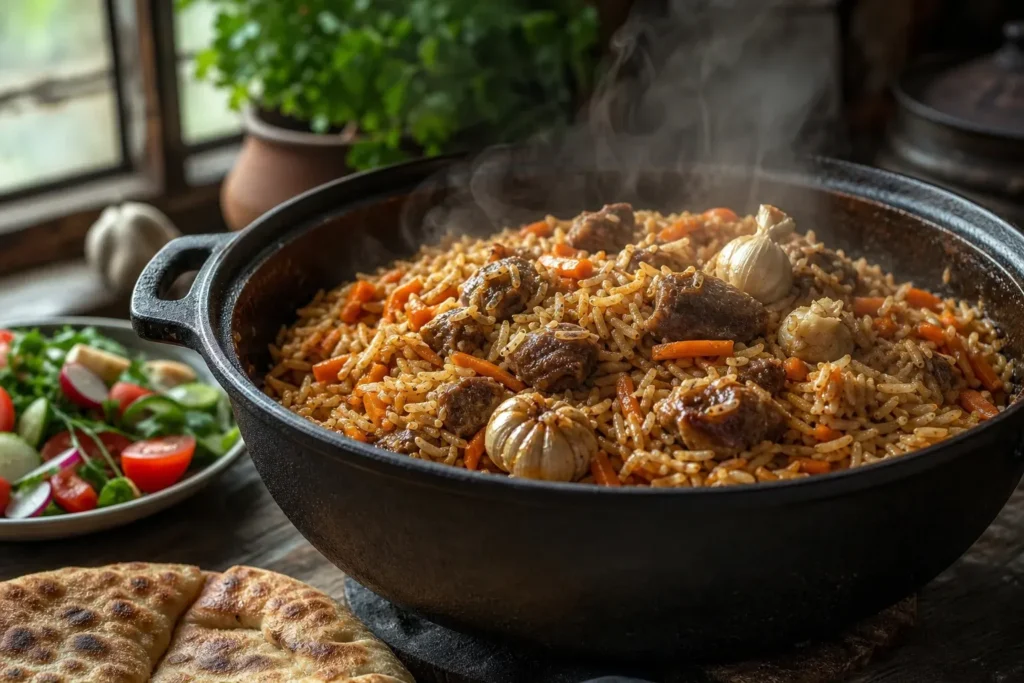
Plov is the defining one-pot dish of Central Asia, but it has become equally beloved in Russia and across the former Soviet Union. In Yekaterinburg, whether dining at a restaurant or cooking at home, how to cook plov at home is something many locals know well. This guide teaches you how to make this aromatic rice pilaf the traditional way.
By following these steps, you’ll create a hearty, deeply savoury meal from simple ingredients: meat, rice, carrots, onions and spices. The result—tender meat, fluffy rice infused with fat and broth—takes about two hours from start to finish. We recommend the Uzbek method, which builds flavor through a fried base called zirvak before adding the rice.
Quick answer: Fry onions and meat until browned, add carrots and spices to create a base called zirvak, then layer uncooked rice on top and simmer until the liquid evaporates. Total time: about 1.5 to 2 hours. Cost is moderate, depending on meat choice.
At a Glance
| Type | Dishes |
|---|---|
| Local name | Плов |
| Origin | Pilaf is believed to have originated in Persia and was spread throughout Central Asia along the Silk Road, settling particularly in what is now Uzbekistan. The first written reference to plov comes from a 10th century work on medicine and nutrition by Persian scholar Abu Ali Ibn Sina, known as Avicenna, from Bukhara. Over many centuries, it became well established in Uzbek culture and is found prepared traditionally for weddings, holidays and communal gatherings as a symbol of hospitality. Plov found its way into kitchens all over the Soviet Union, including Russia, where it remains popular today. |
| Servings | 4 people |
| Total time | 1 hour 45 minutes to 2 hours |
| Difficulty | Medium |
History and Story of Plov, Yekaterinburg
Pilaf is believed to have originated in Persia and throughout history was spread throughout Central Asia along trade routes of the ancient Silk Road. The first written reference to plov is found in a 10th century work by Avicenna, the Persian scholar. Over centuries, the dish evolved into distinctive regional forms. Uzbek plov specifically evolved distinctive characteristics in Uzbekistan, such as a zirvak base and layering method in a kazan. Plov’s popularity was cemented by the official Soviet culinary bible, “The Book of Tasty and Healthy Food,” though the 1939 edition identified plov as a dish from the Caucasus. Today, plov remains central to Russian and post-Soviet food culture, prepared regularly in Yekaterinburg homes and restaurants.
Ingredients
- 800–1000 g lamb or beef shoulder, cut into cubes (with some fat)
- 2 cups long-grain rice (basmati, jasmine or similar), rinsed
- 3–4 large carrots, julienned into thin matchsticks
- 2–3 medium onions, thinly sliced
- 4–5 garlic cloves, whole and unpeeled
- 1 teaspoon ground cumin
- 1 teaspoon ground coriander
- 1/2 teaspoon black pepper
- 1 teaspoon paprika (optional)
- Salt to taste
- 3–4 cups water or broth
- 1/3 cup vegetable oil or lamb fat
How Plov, Yekaterinburg Is Made
Step 1: Soak and prepare ingredients
Rinse the rice under cold water until the water runs clear. Soak it for 20–30 minutes, then drain. Cut the meat into bite-sized cubes. Slice the onions thinly and cut the carrots into thin matchsticks—aim for roughly equal amounts of each. Leave the garlic cloves whole and unpeeled.
Tip: Yellow or orange carrots work well; in Central Asia, yellow carrots are traditional and turn slightly sweet when braised.
Step 2: Fry the meat and onions
Heat the oil or fat in a large, heavy-bottomed pot (preferably cast iron) over medium-high heat. Add the sliced onions and fry for 2–3 minutes until they turn translucent and begin to brown. Add the meat cubes and fry, stirring occasionally, until all sides are browned—about 5–8 minutes. Do not fully cook the meat; browning creates flavor.
Tip: Use a heavy pot that can hold the weight of the final dish. Cast iron kazan or a Dutch oven works best for even heat distribution.
Step 3: Build the zirvak base
Add the julienned carrots, cumin, coriander, black pepper and paprika to the meat and onions. Stir well and fry for 3–4 minutes to coat everything in oil and allow spices to bloom. Add 1 to 1.5 cups of water or broth. Bring to a simmer, cover and let cook for 5 minutes so the carrots begin to soften slightly. This aromatic mixture is called the zirvak.
Tip: This layering of flavor is what distinguishes authentic plov. Don't rush this stage.
Step 4: Add the rice
Spread the drained rice evenly over the zirvak without stirring. Pour the remaining 2 to 2.5 cups of water or broth around the rice—it should just cover the rice surface. Arrange the whole garlic cloves on top of the rice. Add salt to taste.
Tip: Do not stir the rice into the meat and vegetables. Keeping the layers separate allows the rice to cook evenly and stay fluffy.
Step 5: Simmer covered
Bring the pot to a boil over medium-high heat. Once it reaches a boil, reduce heat to low, cover the pot tightly with a lid, and simmer for 30–35 minutes. The rice will absorb the liquid gradually. Resist the urge to stir or lift the lid to check progress.
Tip: If you hear hissing or smell toasted rice after 20 minutes, reduce the heat slightly to prevent the bottom from burning. A little browning on the bottom is desired; it's called tahdig or socarrat.
Step 6: Rest before serving
When all the liquid has been absorbed and the rice is tender, remove from heat and leave covered for 10 minutes. This allows the rice to finish cooking gently and any remaining steam to be absorbed. Gently fluff with a fork, breaking up any clumps.
Tip: The whole garlic cloves will have softened and can be eaten or removed according to preference. Many Yekaterinburg cooks leave them in, as they mellow significantly during cooking.
Step 7: Serve
Turn out onto a large serving platter or leave in the pot and serve directly to guests. In Russia and Central Asia, plov is traditionally accompanied by fresh salads—cucumber and tomato, or a pickled vegetable mix called achichuk. Bread such as flatbread is often served alongside.
Tip: Plov is meant for sharing. In Central Asian and Russian tradition, it's a dish of hospitality, often cooked for gatherings.
Variants
- Samarkand plov: yellow carrots, chickpeas, often quince or garlic, ingredients layered rather than mixed
- Fergana plov: deep browning, local devzira rice variety, all ingredients cooked together with deep roasting
- Bukhara plov: includes raisins and dried fruit, softer and sweet-savoury character
- Wedding plov (to'y osh): cooked in enormous quantities for celebrations, darker and more intensely savoury
- Chicken plov: made with chicken instead of lamb or beef, popular in some regions
- Vegetarian plov: chickpeas replace meat, more carrots and often dried fruit, a fasting or Friday dish in some traditions
Common Mistakes to Avoid
- Stirring the rice too much: the rice should layer over the meat and vegetables, not mix with them. Constant stirring breaks the grains and creates a mushy texture.
- Adding too much water: if the liquid level is too high, the rice becomes soggy. Add just enough to cover the rice—it will absorb this during cooking.
- Removing the lid repeatedly: each time you lift the lid, steam escapes and the rice takes longer to cook evenly. Resist checking until the time is up.
- Using the wrong rice: long-grain varieties like basmati or jasmine work best. Short-grain rice becomes too starchy and sticky. Some cooks soak the rice beforehand to help it cook evenly.
- Undercooking the meat: the meat should be tender, not tough. Browning comes first, but allow it to cook through in the broth and steam.
- Skipping the zirvak: jumping straight from frying meat to adding raw rice misses the depth of flavor that comes from caramelizing meat, vegetables and spices together first.
How to Order and Eat It
Plov is traditionally served directly from the pot or plated individually and eaten while hot. It’s typically accompanied by fresh vegetable salads—sliced cucumber and tomato, or pickled vegetable combinations. In Yekaterinburg, as across Russia, bread is served alongside. The dish is meant for sharing and communal eating; it’s rare to serve plov to just one person. Plov is hearty enough to be a complete meal and is often the centerpiece of family gatherings, celebrations and dinners with guests.
To order: Плов [Plov], пожалуйста [pozhaluysta] (Plov, please)
Where to Try Plov, Yekaterinburg
Kazan
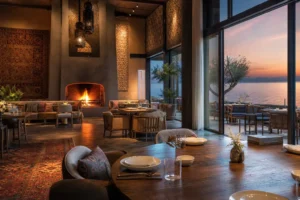 Pashmir Restaurant, Kazan Uzbek, Tatar, European, Middle Eastern
Main image: AI-generated illustration. It may not show the place exactly as it looks.
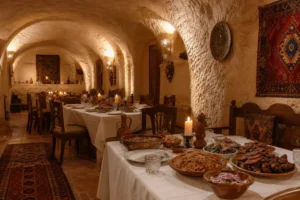 Drevnyaya Buhara, Kazan Central Asian, European, Middle Eastern
Main image: AI-generated illustration. It may not show the place exactly as it looks.
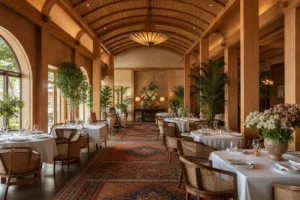 Eshak, Kazan Uzbek, Georgian, Armenian, European, Kazakh
Main image: AI-generated illustration. It may not show the place exactly as it looks.
Sochi
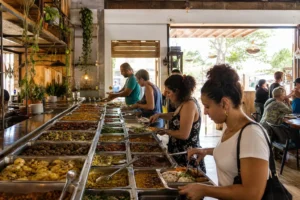 Red-Buffet, Sochi Mixed (European, Russian, Caucasian, Asian, vegetarian)
Main image: AI-generated illustration. It may not show the place exactly as it looks.
Russia Vibes Tips
- If cooking for guests, prepare the zirvak stage (everything up to adding rice) a few hours ahead or the night before. Keep it in the refrigerator covered. When ready to serve, reheat gently, add the soaked rice and liquid, and proceed from there. This cuts the cooking time in half on the day.
- A heavy cast-iron pot or Dutch oven is worth the investment if you plan to make plov regularly. The even heat distribution prevents burning on the bottom and ensures the rice cooks evenly. In Russia, a traditional kazan (deep iron cauldron) is ideal, though not essential.
- Use broth instead of water if you have it—chicken, beef or vegetable broth deepens the flavor significantly. Leftover plov can be reheated gently with a splash of water or broth added, though it's best eaten fresh.
- The quantity of cumin and coriander is important to the flavor profile of plov. Don't skip these spices or replace them with curry powder. Paprika adds a subtle sweetness but is optional; the dish works without it.
- If you live in Yekaterinburg and want to buy pre-made plov to compare with your homemade version, look for restaurants or cafes serving Uzbek, Kazakh or Russian cuisine. Many offer plov at lunch service. Note what spices and texture you prefer, then adjust your home recipe accordingly.
- Plov keeps well in the refrigerator for 3–4 days covered. Reheat in a pot over low heat with a little water added, or in the microwave covered. It also freezes well for up to 3 months.
Where to Find Plov, Yekaterinburg in Russia
Related guides
 Local Food & Market Walk, Yekaterinburg: Central Market, Pelmeni and Street Eats
 Malinovka: Traditional Russian Cuisine and a Working Stove in Yekaterinburg
 Stolovaya Maslenitsa: A Transit Traveler’s Honest Canteen
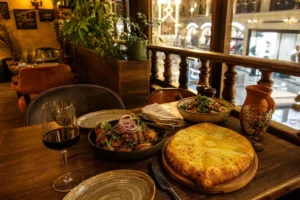 Restaurant Schastye, Yekaterinburg: Georgian Cuisine in Grinvich Mall
Browse more: All Food & Drink · All Food & Drink in Yekaterinburg · All Other · All Yekaterinburg
FAQ
Can you make plov with beef instead of lamb?
Plov is typically made with meat (usually fatty lamb cuts), but beef works well. Beef shoulder or chuck cut into chunks is ideal; choose a cut with some marbling for better flavor. The cooking time and technique remain the same.
What is zirvak?
Zirvak is a rich aromatic base created by frying meat and carrots in oil or lamb fat. It's made by browning onions and meat, then adding carrots and spices, before the rice is layered on top. This base is what gives plov its distinctive deep flavor.
Why should I soak the rice?
Soaking rice for 20–30 minutes before cooking helps it absorb liquid evenly and cook through without becoming mushy. It also helps the grains stay separate and fluffy. If your rice is a premium variety, soaking is less critical, but it still helps.
Can you stir plov while it cooks?
No. Once you add the rice and bring the pot to a boil, resist stirring. The rice should remain layered over the meat and vegetables. Stirring breaks the grains and can result in a mushy texture. The layering technique allows flavours to meld together, while keeping the rice fluffy and separate.
What do I serve with plov?
Plov is usually accompanied by fresh salads—sliced cucumber and tomato dressed simply, or a pickled vegetable mix called achichuk. Flatbread or regular bread is traditional. The salad cuts through the richness of the dish and aids digestion.
Is plov typically gluten-free?
Pure plov made from rice, meat, vegetables and oil is naturally gluten-free. However, if served in a restaurant, check with staff whether any thickeners or additives have been used. Bread served alongside is not gluten-free unless specifically marked.
How much plov should I make for guests?
A standard recipe with 800g–1kg of meat and 2 cups of rice serves 4 people generously as a main course. For a gathering of 8–10, double the recipe. Plov scales well, and many Yekaterinburg cooks make large batches for family meals or celebrations.
Can I make plov in advance?
Yes. Prepare the zirvak (meat, onions, carrots and spices fried together) a few hours or a day ahead and refrigerate it covered. When ready to serve, reheat gently, add the soaked rice and liquid, and cook as normal. This significantly cuts the cooking time on the day of serving.
Russia Vibes is a one-person project. A coffee keeps it going
How we research and update our guides
About this guide: AI assistance and accuracy
This guide is created with the help of AI and is based on official sources where available. Mistakes can still happen. Opening hours, prices, rules and other details are given to the best of our knowledge as of the date shown and can change without notice. It offers general recommendations only, not professional, legal or travel advice. Please confirm important details with the official source before you travel; you are responsible for your own plans and decisions.

Take this guide with you
Get a free PDF of this guide to print or read offline: key facts, tips and a map link on a few clean pages.
Report an issue on this page
Paying for your trip: please read
International sanctions affect payments between Russia and many other countries. In practice, cards issued in the EU, the UK, the US and several other countries often do not work in Russia, Russian cards usually do not work abroad, and some booking platforms, airlines and payment providers limit or suspend their services for Russia. The situation changes frequently.
We do not give legal or financial advice, and this site does not encourage anyone to break or circumvent sanctions. Whatever you plan, you are responsible for following the laws and regulations that apply to you, including those of your country of residence and citizenship.
Many travelers still organise their stay lawfully. It is worth asking your bank or payment provider what is currently permitted, contacting hotels, tour operators and carriers directly about the payment methods they accept, and checking which services are open to customers from your country. Clarify payment, cancellation and refund terms before you commit to a booking, and keep your plans flexible.
Partner links on this site may not be available in every country, and prices, availability and rules in our guides can differ from what you see when you book.