
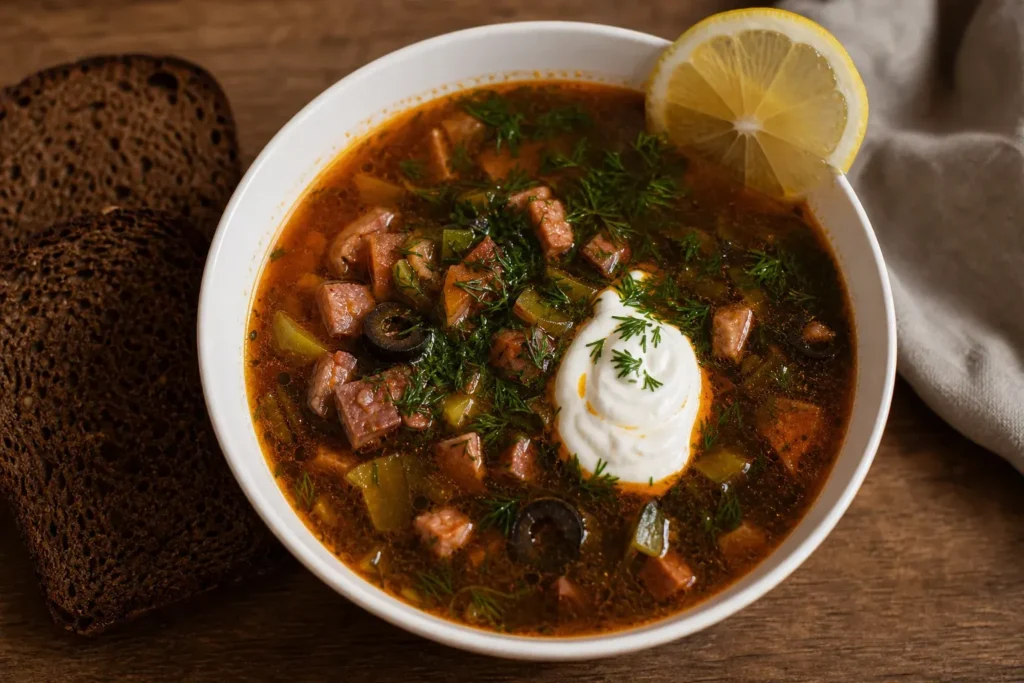
Solyanka is a traditional Russian soup that any visitor to Yekaterinburg will encounter in restaurants and home kitchens across the city. If you want to understand this iconic dish or attempt to cook Solyanka Yekaterinburg style at home, this guide shows you exactly how.
This thick, sour soup begins with a rich meat broth and gets its character from multiple layers of cured meats, pickled cucumbers, olives, and tomato. The sourness is fundamental—it comes from brined vegetables and pickle juice, not vinegar. The result is a bold, savory soup that warms you from the inside and is said to be particularly restorative. You will find it served in nearly every traditional Russian restaurant in Yekaterinburg, often recommended to visitors.
Quick answer: Start with a rich meat broth simmered for 1.5 to 2 hours. Prepare the broth base with sautéed onions and carrots, tomato paste, then combine with cured meats (ham, sausages, salami), pickled cucumbers, olives and brine. Simmer everything together for 10–15 minutes so the flavors meld. Total time: 2–2.5 hours. Serve hot with a dollop of sour cream, fresh dill and a lemon slice.
At a Glance
| Type | Dishes |
|---|---|
| Local name | Солянка |
| Origin | First documented in the 1840s, solyanka began as a peasant dish that used leftover meats and pickled vegetables—a practical way to use what was available during long Russian winters. The 19th-century distinction between solyanka (urban tavern soup) and selyanka (rural version) reflected social differences, though both contained pickled cucumbers, brine, and whatever meat or fish the cook had on hand. In the second half of the 19th century, solyanka received the modern form of its name. By the Soviet era, the soup became standardized into three official types: meat, fish, and mushroom. |
| Servings | 2–4 servings |
| Total time | 2–2.5 hours |
| Difficulty | Medium |
History and Story of Solyanka, Yekaterinburg
Solyanka dates back as far as the 15th century and was especially popular among Russian peasants as a way to use up leftover ingredients—various leftover meats and pickled vegetables. The original name selyanka can be translated as ‘settler’s soup’. It was regarded as a dish unworthy to grace the tables of the aristocracy but by the 19th century it was embraced by the population at large. By the 18th century it was widespread and referred to by two names—’solyanka’ and ‘pohmelka’ (a greasy and hearty soup served as snack with vodka or as an entrée). Since mid-19th century tomatoes or tomato paste became a new common ingredient, greatly enriching the taste of the soup which began being served with sour cream.
Ingredients
- 750 g beef chuck or beef ribs (for broth)
- 250 g ham or smoked pork belly
- 200 g kielbasa or smoked sausage
- 150 g salami (sliced thin)
- 200 g dill pickles (brined, not vinegar-pickled)
- 150 ml pickle brine or juice from the jar
- 120 g black or green olives (pitted)
- 1 large onion
- 1 carrot
- 2 tbsp tomato paste
- 1 bay leaf
- 1 tsp paprika
- Salt and black pepper to taste
- Fresh dill
- Sour cream for serving
- Lemon slices for serving
How Solyanka, Yekaterinburg Is Made
Step 1: Make the broth
Place beef chuck or ribs, one whole onion, one whole carrot, bay leaf and black peppercorns in a large pot with 2 liters of cold water. Bring to a boil, skim off any foam, then reduce heat to low and simmer for 1.5 to 2 hours until the meat is very tender. Strain the broth and discard the whole vegetables and seasonings. Cut the cooked meat into small cubes and set aside.
Tip: Use beef ribs or chuck for a richer broth with more collagen; this gives solyanka its characteristic body.
Step 2: Prepare the aromatics and tomato base
Heat 2 tbsp oil in a large pot over medium heat. Slice one large onion thinly and sauté until translucent, about 3–4 minutes. Grate a carrot and add it to the pot; cook for 2 more minutes. Stir in 2 tbsp tomato paste and cook for 1–2 minutes, stirring constantly to cook out the raw tomato flavor.
Tip: Cooking the tomato paste briefly mellows its sharpness and deepens the soup's color.
Step 3: Add the cured meats
Cut the ham and salami into small cubes or thin strips. Cut the kielbasa or smoked sausage into bite-sized pieces. Add all the cured meats to the pot with the tomato base and cook over medium heat for 2–3 minutes, stirring occasionally. The heat will release the smoky flavors into the broth.
Tip: Using at least three different types of cured meat creates the authentic layered, savory character of solyanka.
Step 4: Combine with broth
Pour the strained beef broth into the pot with the meat and tomato mixture. Add the cooked beef cubes. Season with salt and black pepper to taste, plus 1 tsp paprika. Stir well to combine.
Tip: Taste the broth at this point before adding pickles and olives; adjust salt if needed.
Step 5: Add pickles, olives and brine
Peel and dice the dill pickles into half-circles or small chunks. Pit the olives and add them to the pot along with the pickles. Pour in 150 ml of pickle brine or pickle juice straight from the jar. Stir everything together and bring to a gentle simmer.
Tip: Use brined cucumbers (salted), not vinegar-pickled ones—brining creates the authentic tart, sour note without sharp vinegar flavor.
Step 6: Simmer and finish
Reduce heat to medium-low and simmer for 10–15 minutes, stirring occasionally, until all the flavors have melded together. The soup should taste bold and balanced: savory from the meats, sour from the pickles and brine, salty from the olives, and slightly sweet from the tomato. Do not boil hard or the broth will become cloudy.
Tip: The longer you simmer, the more the flavors integrate, but 10–15 minutes is enough for the broth to absorb the pickled flavors without becoming overly concentrated.
Variants
- Meat solyanka (myasnaya) – the most common version, made with beef, ham, sausages, salami and bacon
- Fish solyanka (rybnaya) – made with salt-cured and smoked fish such as salmon or sturgeon, especially popular during Russian Orthodox fasting periods
- Mushroom solyanka (gribovaya) – made with pickled mushrooms instead of meat, also served during fasting
- Assorted solyanka – made with a combination of multiple meat types (beef, pork, chicken) in one pot
Common Mistakes to Avoid
- Using vinegar-pickled cucumbers instead of brined ones. Brining (salt and water) creates the authentic sour taste; vinegar makes it sharp and unbalanced. Look for jars labeled 'brined' or 'salted' when buying pickles.
- Skipping the initial long simmer of the broth. A quick 20-minute broth will taste thin and watery. Solyanka depends on a rich, collagen-heavy broth made by simmering beef for at least 1.5 hours.
- Adding all the meats at once at the beginning instead of layering them. Cured meats benefit from separate treatment: the raw or fresh meat goes into the broth, the cured meats go into the aromatics to release their flavors.
- Overcooking the soup after adding pickles and olives. More than 20 minutes of simmering can make the pickles mushy and oversour the entire pot. A gentle 10–15 minute simmer is plenty.
- Using plain water instead of a proper meat broth. Solyanka without a rich broth base becomes a thin, tasteless pickle soup. The broth is the foundation.
- Forgetting to serve with sour cream and fresh dill. These are not garnish extras—they are essential. Sour cream cools the soup slightly, adds richness, and tones down the sourness; dill is the aromatic finish that defines the dish.
How to Order and Eat It
Solyanka is served very hot in deep bowls, with a large spoonful of sour cream, a slice of lemon, and usually black olives or capers. It is normally consumed as a main meal and not a starter because it is rich. In Yekaterinburg, as across Russia, it is typically accompanied by dark rye bread or piroshki (small baked pastries). Solyanka is a post-celebratory dish in Russian culture and is notoriously known as a restorative, next-day soup. It is usually served with dark rye bread or piroshki, and occasionally vodka. Add a squeeze of fresh lemon juice to each spoonful to brighten the broth.
To order: Солянка мясная, пожалуйста [Solyanka myasnaya, pozhaluysta] (for meat solyanka)
Diet and Allergens
- Contains pork
- Contains gluten (if served with bread)
Russia Vibes Tips
- Solyanka tastes even better the next day after the flavors have fully merged. Make it a day ahead if you have time, refrigerate it, and reheat gently. This is traditionally how it was made in Russian homes—as a practical use-everything soup prepared after a feast.
- When ordering solyanka in Yekaterinburg restaurants, specify which type: 'мясная' (myasnaya/meat), 'рыбная' (rybnaya/fish), or 'грибная' (gribovaya/mushroom). Most restaurants will have meat solyanka, but some offer fish or mushroom versions, especially on Orthodox fasting days.
- The sourness of solyanka depends entirely on the pickle juice. If the soup tastes flat, add a few more tablespoons of pickle brine or juice. If it tastes too sour, add more broth or sour cream to balance it. There is no fixed amount—taste as you go.
- Do not throw away the meat cooking water after making the broth. Strain it carefully to remove impurities and use it as your soup base. This 'stock' contains gelatin and collagen that make solyanka thick and satisfying in a way plain broth cannot.
- Solyanka freezes well. Make a double batch, freeze half in portions, and you have a quick restorative meal ready for cold Yekaterinburg days. Thaw overnight in the refrigerator and reheat gently on the stove—do not microwave, as the delicate flavors will flatten.
Where to Find Solyanka, Yekaterinburg in Russia
Related guides
 Local Food & Market Walk, Yekaterinburg: Central Market, Pelmeni and Street Eats
 Red Line Historic Center Walk: 9 km Through Yekaterinburg’s Heart
 Iset River Embankment & Plotinka Walk: Yekaterinburg’s Historic Heart
 Best Restaurants by Budget, Yekaterinburg: Where to Eat at Every Price Level
 Downtown Yekaterinburg: History, Walking Routes and What to See
Browse more: All Food & Drink · All Food & Drink in Yekaterinburg · All Other · All Yekaterinburg
FAQ
Is solyanka the same as borscht or shchi?
No. Solyanka is a distinct soup with pickled cucumbers, olives and cured meats as its base; borscht is built on beets; shchi on cabbage. All three are Russian soups, but solyanka has a unique salty-sour character and uses preserved ingredients rather than fresh vegetables.
What makes solyanka different from regular meat soup?
The key feature is a distinctive sourness from brined cucumbers, olives and capers. These sour notes enliven the hearty solyanka, cutting through the richness and fats of the broth. Regular meat soups are mild and savory; solyanka is bold and briny.
Why is solyanka called a hangover soup?
Because of its astringent/sour qualities it earned the nickname 'hangover soup' because it was thought to help alleviate hangovers. The salty, sour broth and minerals from the pickles and olives are restorative after heavy drinking.
Can I make solyanka without cured meats?
You can make a mushroom or vegetarian version with pickled mushrooms, but it will taste quite different—less savory and smoky. The cured meats are essential to authentic solyanka. Fish solyanka uses salt-cured smoked fish instead of meat, which is a more common alternative than vegetarian versions.
What's the difference between selyanka and solyanka?
Solyanka and selyanka were variant spellings that once distinguished urban and rural versions of the same soup. Vladimir Dal's 1863 dictionary noted the social distinction; by 1900, solyanka had become the dominant spelling.
Can I use any pickles, or do I need a specific type?
Brined, not pickled cucumbers are needed. Brining uses salt water, whereas pickling uses vinegar. Brined cucumbers create that tart, sour taste that solyanka is famous for, without adding acidity.
How long does solyanka keep?
Solyanka keeps in the refrigerator for 3–4 days in an airtight container. It freezes well for up to 2–3 months. Thaw overnight in the refrigerator and reheat gently over medium heat on the stove; the soup reheats better than it cooks initially.
What should I drink with solyanka?
Solyanka is traditionally served with dark rye bread or piroshki. In Russia, it is classically paired with chilled vodka or beer. The salt and sourness of the soup cut through the richness of alcohol and make the pairing satisfying.
Russia Vibes is a one-person project. A coffee keeps it going
How we research and update our guides
About this guide: AI assistance and accuracy
This guide is created with the help of AI and is based on official sources where available. Mistakes can still happen. Opening hours, prices, rules and other details are given to the best of our knowledge as of the date shown and can change without notice. It offers general recommendations only, not professional, legal or travel advice. Please confirm important details with the official source before you travel; you are responsible for your own plans and decisions.

Take this guide with you
Get a free PDF of this guide to print or read offline: key facts, tips and a map link on a few clean pages.
Report an issue on this page
Paying for your trip: please read
International sanctions affect payments between Russia and many other countries. In practice, cards issued in the EU, the UK, the US and several other countries often do not work in Russia, Russian cards usually do not work abroad, and some booking platforms, airlines and payment providers limit or suspend their services for Russia. The situation changes frequently.
We do not give legal or financial advice, and this site does not encourage anyone to break or circumvent sanctions. Whatever you plan, you are responsible for following the laws and regulations that apply to you, including those of your country of residence and citizenship.
Many travelers still organise their stay lawfully. It is worth asking your bank or payment provider what is currently permitted, contacting hotels, tour operators and carriers directly about the payment methods they accept, and checking which services are open to customers from your country. Clarify payment, cancellation and refund terms before you commit to a booking, and keep your plans flexible.
Partner links on this site may not be available in every country, and prices, availability and rules in our guides can differ from what you see when you book.