
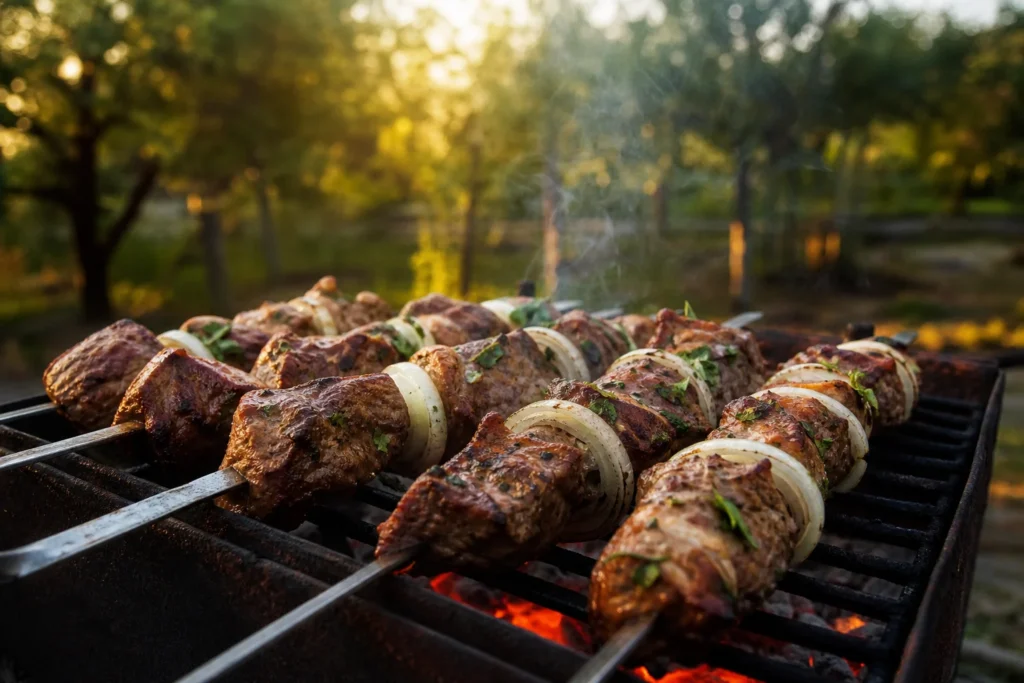
Shashlik appeals to visitors interested in authentic Russian outdoor cooking and Caucasian food traditions. By the end of this guide, you’ll know how to prepare this marinated meat dish at home, from selecting the meat to grilling it properly over heat.
The key to great shashlik is the marinade and time: how to make shashlik at home requires patience to let flavors develop, then careful attention over hot coals. The recommended approach is pork or lamb marinated overnight in onion and vinegar, then grilled until charred.
Quick answer: Prepare shashlik by cutting meat into 2-inch cubes, marinating it overnight in onion, vinegar, and spices, threading onto skewers with onion slices, and grilling over charcoal or high heat for 10–15 minutes, turning frequently until cooked through.
At a Glance
| Type | Dishes |
|---|---|
| Local name | Шашлык |
| Origin | Shashlik is a specific preparation from the Caucasus: meat (classically lamb) marinated in onion, vinegar, and spices, then grilled over wood charcoal. From the 19th century it became popular as shashlik across much of the Russian Empire and later across much of the former Eastern Bloc. The Crimean Tatar word entered Russian through long historical contact between Russian speakers and Turkic peoples, particularly during the 18th and 19th centuries as the Russian Empire expanded south. |
| Servings | 2–4 servings |
| Total time | 15–20 minutes active prep; overnight or 4–12 hours marinating; 10–15 minutes grilling |
| Difficulty | Easy |
History and Story of Shashlik, Yekaterinburg
The Russian word shashlik comes from Crimean Tatar şışlıq, a derivation of şış meaning ‘skewer’ or ‘spit,’ which entered Russian through long historical contact between Russian speakers and Turkic peoples, particularly during the 18th and 19th centuries. From the 19th century it became popular as shashlik across much of the Russian Empire and later across the former Eastern Bloc. What shashlik named in Russian culture was a specific preparation from the Caucasus—meat marinated in onion, vinegar, and spices, then grilled over wood charcoal. The Georgian, Armenian, and Azerbaijani traditions of skewered meat were absorbed into Russian culinary vocabulary under this Tatar-derived term.
Ingredients
- 600–800 g pork shoulder, lamb or beef, boneless
- 3 medium onions
- 100 ml vinegar (wine or apple cider)
- 2–3 cloves garlic
- 2 bay leaves
- 1 tsp salt
- 1 tsp black pepper
- 2 tbsp vegetable oil
- Water or mineral water as needed
- Metal or wooden skewers (soak wooden ones 30 minutes before use)
How Shashlik, Yekaterinburg Is Made
Step 1: Cut the meat into cubes
Cut pork shoulder, lamb or beef into 2-inch cubes. Remove excess fat but leave some marbling for juiciness. Aim for uniform size so pieces cook evenly.
Tip: Pork shoulder and lamb neck are ideal cuts because they have enough fat to stay tender during grilling.
Step 2: Prepare the marinade
Slice onions thinly. In a large bowl, combine meat, onion slices, minced garlic, vinegar, bay leaves, salt, pepper, oil and about 1 cup of water or mineral water. Mix well with your hands so every piece is coated. The onion acts as a natural acid to tenderize the meat.
Tip: Some cooks use mineral water (Borjomi) for a subtle mineral taste, but regular tap water works fine.
Step 3: Marinate the meat
Cover the bowl and refrigerate. For best flavor, marinate overnight (8–12 hours). If you're short on time, a minimum of 4 hours will still give good results. The longer it sits, the more tender and flavorful the meat becomes.
Tip: Never marinate at room temperature; keep it in the refrigerator to prevent bacterial growth.
Step 4: Thread onto skewers
Remove meat from marinade and pat dry with paper towels (this helps browning). Thread meat pieces onto metal skewers, leaving small gaps between pieces for heat to circulate. You can intersperse pieces of fresh onion if desired.
Tip: If using wooden skewers, soak them in water for 30 minutes before using to prevent burning.
Step 5: Prepare your heat source
Heat a grill (charcoal is traditional and gives best flavor, but gas or a hot grill pan works too). The coals or heat should be very hot. You want a temperature where you can hold your hand 4 inches above for only 2–3 seconds.
Tip: Charcoal grilling is the most authentic method and produces the smoky, charred exterior that defines good shashlik.
Step 6: Grill the skewers
Place skewers on the hot grill and cook for 10–15 minutes total, turning with tongs every 2–3 minutes so meat cooks evenly on all sides. The exterior should be lightly charred and crispy while the inside stays juicy. Add a pinch of salt as they cook.
Tip: Do not move skewers constantly—rotate only 3–4 times total to develop a nice crust. Constant turning prevents browning.
Step 7: Rest and serve
Transfer to a serving plate and let rest 2–3 minutes. Serve hot with fresh onion slices (some traditional recipes include raw onion rings marinated in vinegar), fresh herbs like dill or parsley, lemon wedges, and bread.
Tip: In Russia, shashlik is often eaten wrapped in flatbread with grilled onions and a dollop of sour cream or adjika (red pepper sauce).
Variants
- Pork shashlik (most common in Russia)
- Lamb shashlik (traditional in Caucasus)
- Chicken shashlik (lighter, quicker-cooking option)
- Beef shashlik
- Fish shashlik with sturgeon or other firm white fish
- Mixed meat and vegetable skewers with bell peppers and mushrooms
- Shashlik with alternating meat and fat (traditional Caucasian style)
Common Mistakes to Avoid
- Not marinating long enough: Shashlik needs time for the acid and onion to penetrate and tenderize the meat. Rushing the marinade to 1–2 hours results in tough, bland meat.
- Cutting meat pieces too small or uneven: Chunks smaller than 1.5 inches dry out quickly on high heat. Uneven sizes mean some pieces overcook while others remain raw.
- Overloading the skewer: Crowding meat pieces prevents heat from circulating. Space pieces ½ inch apart so all sides cook evenly.
- Moving skewers too frequently: Constant turning prevents the exterior from developing the characteristic charred crust. Rotate only 3–4 times during cooking.
- Using low or medium heat: Shashlik requires high, direct heat to sear the outside while keeping the inside juicy. Low heat leads to dry, gray meat.
- Forgetting to pat the meat dry: Wet meat steams instead of searing. Always pat marinated meat dry with paper towels before grilling.
How to Order and Eat It
Shashlik is eaten hot, usually by sliding the meat off the skewer onto a plate or directly into bread. In Russia, it’s commonly wrapped in flatbread with grilled or raw onion slices (marinated in vinegar), fresh herbs like dill and parsley, lemon juice, and sour cream or adjika sauce. It’s a finger-food dish at outdoor gatherings, often accompanied by fresh salads and soft drinks or beer.
To order: Шашлык [shashlik]
Where to Try Shashlik, Yekaterinburg
Sochi
 Vostochny Kvartal, Sochi Uzbek, Eastern, Caucasian
Main image: AI-generated illustration. It may not show the place exactly as it looks.
 Belye Nochi, Sochi Georgian, Caucasian
Main image: AI-generated illustration. It may not show the place exactly as it looks.
Yekaterinburg
 Khmeli Suneli, Yekaterinburg Georgian
Main image: AI-generated illustration. It may not show the place exactly as it looks.
Russia Vibes Tips
- The best time to make shashlik is in warm months (May–September) when grilling is convenient. In winter, Russians grill shashlik indoors using a cast iron grill pan or makeshift mangal stove, though the authentic smoky outdoor flavor is lost.
- Oversalting is a common mistake: do not salt the meat in the marinade. Add salt only during the last few minutes of grilling to preserve meat juices and texture. Traditional technique adds salt as the meat cooks, not before.
- Quality of meat matters more than the marinade time. Buy meat from a trusted source—poor-quality meat won't improve with marinating. Shoulder cuts with marbling (interspersed fat) are much better than lean cuts.
- Mineral water (like Borjomi, popular in Caucasus) is a traditional addition to marinades and adds subtle depth. Regular tap water works fine if you can't find it, but mineral water is worth seeking out if you're being traditional.
- Skewers positioned too close to coals burn the outside before cooking the inside. Keep heat at medium-high, not directly over the hottest coals, and maintain a distance of 3–4 inches between skewer and heat source.
- Chilling a cast iron grill pan before use prevents sticking if you're cooking indoors on a stovetop. Shashlik does not require oil on the grill—the meat releases enough fat during cooking.
Where to Find Shashlik, Yekaterinburg in Russia
Related guides
 Local Food & Market Walk, Yekaterinburg: Central Market, Pelmeni and Street Eats
 Iset River Embankment & Plotinka Walk: Yekaterinburg’s Historic Heart
 Plotinka: The Dam Where Yekaterinburg Began
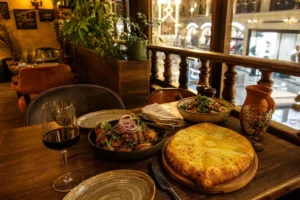 Restaurant Schastye, Yekaterinburg: Georgian Cuisine in Grinvich Mall
Browse more: All Food & Drink · All Food & Drink in Yekaterinburg · All Other · All Yekaterinburg
FAQ
What's the difference between shashlik and shish kebab?
Shashlik is a dish of skewered and grilled cubes of meat, similar to or synonymous with shish kebab. The terms are largely interchangeable, though shashlik specifically refers to the Caucasian and Russian version with its characteristic onion and vinegar marinade, while shish kebab is the broader Turkish or Middle Eastern tradition.
Can I use chicken instead of pork or lamb?
Yes. Chicken, pork, and beef variations are becoming increasingly prominent. Chicken cooks faster (8–10 minutes instead of 12–15), so watch closely to avoid drying out. Use chicken thighs rather than breast meat for juicier results.
How long should I marinate shashlik?
The secret of shashlik is that the meat should soak in a marinade for at least 3 hours. Overnight (8–12 hours) gives the best flavor and tenderness, but a minimum of 4 hours is acceptable. Marinating longer than 24 hours can make meat mushy.
Is vodka required in the marinade?
No. In the Caucasus, mutton is most common and Muslim peoples may abstain from alcohol, but it is not so in Russian culture. Many traditional Russian marinades include vodka, but vinegar and onion alone are sufficient and authentic. Use alcohol only if you prefer—it's optional.
Can I make shashlik in an oven instead of grilling?
Yes, though it won't have the same charred, smoky flavor. Thread meat onto skewers and bake at high temperature (400–425°F / 200–220°C) for 15–20 minutes, turning halfway. For a crust, finish under the broiler for 2–3 minutes. Oven shashlik works in apartments where grilling is not permitted.
What do I serve with shashlik?
Traditionally serve with grilled or raw onion slices (marinated in vinegar), fresh herbs, lemon wedges, flatbread, and sour cream. Vegetable salads (tomato, cucumber, or a mix) and boiled potatoes are common sides. In Caucasus regions, tkemali (sour plum sauce) or adjika (spicy red pepper paste) accompany it.
Can I freeze marinated shashlik?
Yes. Marinate the meat in the usual way, then freeze the whole mixture in a freezer bag for up to 2 months. Thaw in the refrigerator overnight before grilling. The frozen marinade can actually help preserve the meat and allow flavors to develop further during thawing.
Why is my shashlik tough and dry?
Most likely causes: the marinade was too short, heat was too high or too close, or the meat was overcooked. Ensure at least 4 hours of marinating, keep heat at medium-high (not scorching), don't crowd the skewer, and stop cooking when the meat is barely cooked through—it should still be slightly pink inside.
Russia Vibes is a one-person project. A coffee keeps it going
How we research and update our guides
About this guide: AI assistance and accuracy
This guide is created with the help of AI and is based on official sources where available. Mistakes can still happen. Opening hours, prices, rules and other details are given to the best of our knowledge as of the date shown and can change without notice. It offers general recommendations only, not professional, legal or travel advice. Please confirm important details with the official source before you travel; you are responsible for your own plans and decisions.

Take this guide with you
Get a free PDF of this guide to print or read offline: key facts, tips and a map link on a few clean pages.
Report an issue on this page
Paying for your trip: please read
International sanctions affect payments between Russia and many other countries. In practice, cards issued in the EU, the UK, the US and several other countries often do not work in Russia, Russian cards usually do not work abroad, and some booking platforms, airlines and payment providers limit or suspend their services for Russia. The situation changes frequently.
We do not give legal or financial advice, and this site does not encourage anyone to break or circumvent sanctions. Whatever you plan, you are responsible for following the laws and regulations that apply to you, including those of your country of residence and citizenship.
Many travelers still organise their stay lawfully. It is worth asking your bank or payment provider what is currently permitted, contacting hotels, tour operators and carriers directly about the payment methods they accept, and checking which services are open to customers from your country. Clarify payment, cancellation and refund terms before you commit to a booking, and keep your plans flexible.
Partner links on this site may not be available in every country, and prices, availability and rules in our guides can differ from what you see when you book.