
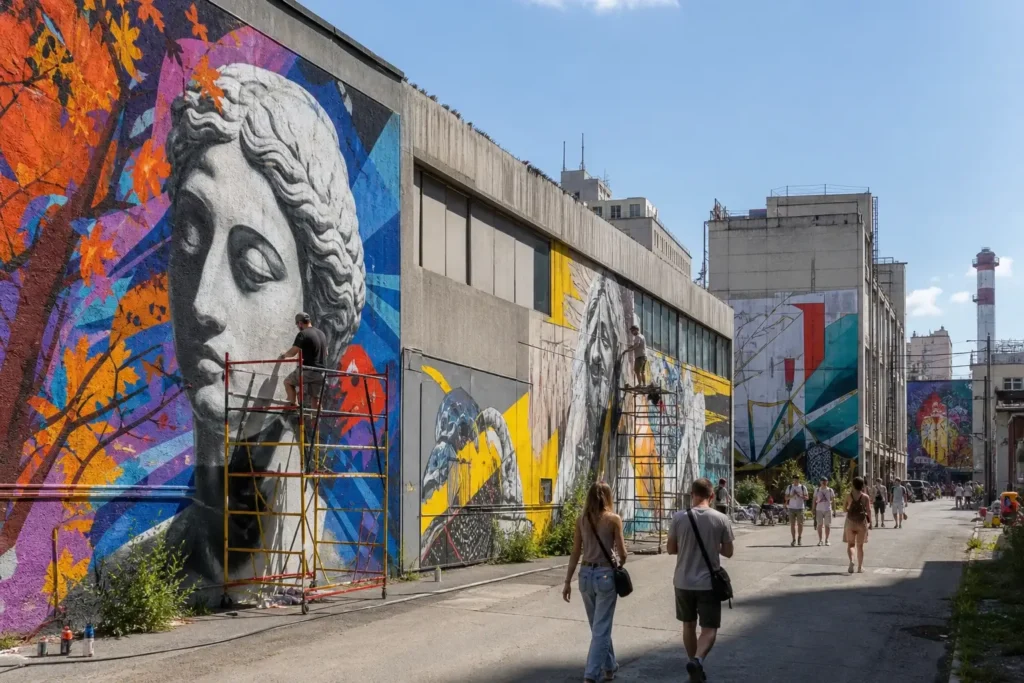
Stenograffia is an international graffiti festival held annually in Yekaterinburg the first weekend in July. The festival has been held in Ekaterinburg since 2010. What began as a single themed street art project has evolved into one of Russia’s largest annual street art events, drawing professional and emerging artists from across Russia and internationally.
The festival transforms Yekaterinburg into a living canvas. Over the course of a decade, more than 500 street art objects have been created on subway walls, embankments, buildings, and public spaces throughout the city. Unlike many street art initiatives, the festival operates with official city support, giving international and Russian artists legal space to work during the event.
Quick Facts
| Russian name | Стенографффия |
|---|---|
| Type | Recurring event |
| When | Every year in early July (first weekend) |
| Typical duration | 3–5 days |
| District | Yekaterinburg |
| Admission | free |
| Best time to visit | The festival occurs every year in early July (the first weekend), so plan a visit to Yekaterinburg during that week if you want to witness active painting and the full festival atmosphere.Summer weather in Yekaterinburg is mild to warm (typically 15–25°C / 59–77°F), making it comfortable to spend hours walking and exploring outdoor art. Early morning and late afternoon offer better light for photography and fewer crowds at active work sites. Weekday mornings tend to have fewer visitors than weekend afternoons.The murals remain visible year-round after the festival ends, so you can visit Yekaterinburg any season to see permanent installations created in previous years. |
| Website | stenograffia.ru |
Dates, programs and prices change from year to year. Always check the official website for the current edition.
Why Visit Stenograffia Festival, Yekaterinburg?
Stenograffia is Russia’s largest street art festival. Visitors experience the city as a constantly evolving gallery, with new murals, installations, and artistic experiments appearing throughout the festival period.
The festival spans themes from the way art relates to social media, optical illusions to the blending of historical and contemporary art styles. The festival features Russian as well as international artists from countries including Germany, the United Kingdom and Spain. Walking the streets during the festival, you witness artists actively painting large-scale works and can interact with the creative process as it happens.
What to Expect at Stenograffia Festival, Yekaterinburg
Stenograffia always starts on the first weekend of July. During the festival, professional graffiti crews, contemporary muralists, and street artists take over designated walls and public spaces across the city to create new works. Each year the festival often explores a specific theme through which artists develop their pieces.
In previous years, the street art created as a part of the festival was painted over by authorities but this time work will not be erased. Organizers have launched a catalogue project to protect or document street art objects. This shift toward permanent installation gives the festival lasting cultural impact. Spectators can walk through neighborhoods and see completed works, meet artists on site, and document the evolving cityscape.
Highlights of Stenograffia Festival, Yekaterinburg
Pokras Lampas's Suprematist Cross
At Stenografia 2019, St. Petersburg artist-calligrapher Pokras Lampas painted his "Suprematist Cross" on Pervaya Pyatiletka square. The artwork covers the entire surface of Pervoy Pyatiletki Square in Yekaterinburg's Uralmash district, an area of some 6,686 square metres. This massive calligraphic work pays tribute to avant-garde artist Kazimir Malevich and demonstrates the scale of ambition at the festival. Look for the dramatic black lettering transforming the entire plaza into a unified composition.
Tip: The square is located in the Uralmash industrial district; check the festival map for exact location and directions.
Festival Lab Experimental Projects
The festival is divided into 2 directions: Lab and Trip. Lab represents experimental work in street art, made by the team that created this festival. These projects have included works like audible street art on fences and pieces created using Braille. The Lab section pushes beyond traditional muralism into conceptual and interactive installations.
Tip: Experimental projects may be temporary or site-specific; confirm their location on the official website before visiting.
International Artist Murals
International artists make a point of integrating local knowledge into the art they leave behind after the festival. Works appear throughout the city on building facades, blending global contemporary art styles with Yekaterinburg's urban landscape. Each year brings new international voices and techniques to the city's walls.
Tip: International artists' work tends to appear in central districts; walking from the city center outward typically reveals the most recent major installations.
Public Embankment and Quay Works
In the summer of 2010 graffiti on the theme "Europe and Asia: the clash of opposites" appeared in the subways, on quay slabs, yards, and on buildings in the Ural capital. The embankments along the Iset River remain a focal point for festival installations, creating a visual dialogue between the river and urban art.
Tip: The riverside embankments can be crowded during the festival; visit early morning or late afternoon for less congestion and better light for photography.
Themed Annual Works
The theme of Stenograffia 2011 was "Images of Happiness". In July 2012 artists from around the world presented their vision of Yekaterinburg using the theme "Global Intelligence". Each festival explores a central concept that shapes the artistic direction, allowing thematic walking tours through the city.
Tip: Check the official website before visiting to learn the current year's theme, which will help you understand and appreciate the artistic choices.
Graffiti in Subway Stations
Yekaterinburg's metro system features commissioned festival works, bringing street art into underground transit spaces. These pieces represent a transition from traditional public mural spaces to infrastructure art, signaling the city's official embrace of the festival.
Tip: Metro stations in central areas like Komsomolskaya and other major hubs are most likely to feature festival works; ask local transit staff for recommendations.
What It Means for Your Visit
During the festival period, Yekaterinburg’s central districts and neighborhoods experience moderate crowding, particularly around active work sites and major completed murals. Museums and indoor attractions see lower visitor traffic as attention focuses on outdoor art spaces. Public squares and embankment areas fill with photographers and art enthusiasts, especially during midday hours.
Street closures are generally minimal; most work occurs on designated walls and permitted surfaces. However, some city areas may have restricted access during active painting. Sidewalk congestion near work sites is common. Most restaurants and shops remain open normally, though some areas directly adjacent to major festival sites may experience foot traffic increases. Plan walking tours around current work locations by checking the festival’s daily updates.
Atmosphere
The festival period fills Yekaterinburg’s streets with creative energy and visual transformation. Walls that were bare concrete or faded paint become vibrant murals overnight. You’ll see spray-painting crews working on scaffolding and lifts, crowds of photographers and art enthusiasts gathering around active work sites, and casual pedestrians stopping to watch the artistic process.
Today Ekaterinburg is considered the capital of street art in Russia. The festival creates a celebratory atmosphere where street art is culturally sanctioned and appreciated rather than controversial. Industrial neighborhoods and suburban streets buzz with activity as artists claim new surfaces. The city feels collaborative, with local volunteers often assisting crews and locals proudly welcoming the international artistic presence.
History of Stenograffia Festival, Yekaterinburg
The International Street Art festival which is held in Ekaterinburg since 2010. In the summer of 2010 graffiti on the theme “Europe and Asia: the clash of opposites” appeared in the subways, on quay slabs, yards, and on buildings in the Ural capital.
Smash137 from Switzerland and the ECB from Germany visited Ekaterinburg in 2010. The second tradition is that Stenograffia always starts on the first weekend of July. In 2011 more than 150 artists visited Ekaterinburg.
The theme of Stenograffia 2011 was “Images of Happiness”. In July 2012 artists from around the world presented their vision of Yekaterinburg using the theme “Global Intelligence”.
The explosion of street art in Yekaterinburg was spurred largely by the Stenograffia street art festival, which first took place in 2010. The team behind Stenograffia worked deliberately on Yekaterinburg’s status as the ‘street art capital’ in order to make it come true. In previous years, the street art created as a part of the festival was painted over by authorities but this time work will not be erased. Organizers have launched a catalogue project to protect or document street art objects.
In 2019 STENOGRAFFIA was held in 13 cities of Russia, inviting artists from all over the world to participate. The festival has grown from a single city event into a multi-city summer initiative, establishing Yekaterinburg as the hub and launch point for international street art expansion across Russia.
Tickets and Booking for Stenograffia Festival, Yekaterinburg
The Stenograffia Festival is free to visit and explore. Entry to street art across the city requires no tickets or registration. The festival typically lasts three to five days starting on the first weekend of July each year. Details about specific dates, featured artists, and exact locations change annually.
For the current edition, visit the official website at stenograffia.ru for the festival schedule, artist roster, and daily updates on where work is taking place. Street art remains permanently on display throughout the year after the festival concludes, so the city’s murals can be visited anytime.
How to Get to Stenograffia Festival, Yekaterinburg
Stenograffia is not centered at a single venue but spreads throughout Yekaterinburg’s public spaces. Festival installations appear across the city in parks, squares, embankments, subway stations, and on building facades in various districts. The most visited concentration of works typically centers on the downtown area and Uralmash district.
Use public transit or walking to explore: the metro connects major zones. Komsomolskaya Metro Station (Red Line) and Dinamo Station (Blue Line) serve central festival areas. Most major works are within walking distance of downtown. Local taxi services are available if you need point-to-point transport between distant festival sites. The festival website provides a map of featured locations updated daily.
Accessibility
Street art is spread throughout Yekaterinburg's public areas, many of which include sidewalks and pedestrian pathways. However, some locations may be on sloped embankments or require walking across uneven urban terrain. Works appear on varying heights of buildings and walls, so viewing distances can accommodate most mobility levels.The metro system is accessible with elevators at major stations. Specific accessibility information for festival sites can be obtained by contacting the festival organizers through their official website.
Food Nearby
Yekaterinburg's downtown and central districts have abundant cafes, restaurants, and street food options. Most neighborhoods with significant festival murals are near dining venues. The Uralmash district has developed a food culture with cafes and casual restaurants supporting the creative community.Bring water and snacks if you plan a full day of walking and viewing works, especially during warm summer weather. Central areas and embankments have commercial food options but not on every street corner.
What to Bring
Comfortable walking shoes are essential—you'll cover significant distance on foot exploring murals across the city. Bring sunscreen and a hat for July heat and a camera or smartphone for photography. Water and snacks sustain full-day exploration. A portable phone charger is useful for navigation and updates on festival locations.Weather in July is typically warm but variable; check the forecast for the specific week and bring a light layer. No security restrictions apply to public areas where art is displayed.
Best Views and Photo Spots of Stenograffia Festival, Yekaterinburg
Pervoy Pyatiletki Square (Pokras Lampas Suprematist Cross)
This massive plaza-scale artwork in the Uralmash district displays dramatic calligraphic lettering covering thousands of square meters. The expansive scale and bold geometric forms create striking compositions from multiple vantage points and elevations.
Best time: Late afternoon (around 5–6 PM) offers angled light that accentuates the letterforms' depth and shadows. Visit during the festival (early July) for active painting documentation or afterward for finished work photography.
Central Embankment (Iset River)
Festival works frequently line the riverside embankment with murals visible from the water's edge and from pedestrian paths. The river backdrop and reflections create dynamic compositions for photography, particularly large-scale murals contrasting with natural landscape.
Best time: Golden hour (sunset, around 8–9 PM in July) produces warm light and long shadows on embankment murals. Visit during festival weekends for active work and crowds, or weekday mornings for quieter, clearer shots.
Downtown Building Facades (Mixed Works)
Central Yekaterinburg contains concentration of new and historic festival murals creating visual corridors on building facades. International artists' works mix with Russian street art traditions in pedestrian-friendly downtown blocks.
Best time: Midday (11 AM–2 PM) provides direct overhead light for vibrant color saturation on vertical murals. Weekday mornings (Tuesday–Thursday) have fewer pedestrians in shots and clearer sightlines.
Metro Station Interiors (Komsomolskaya Station)
Underground transit spaces feature commissioned festival works as part of public infrastructure decoration. These controlled lighting environments create distinct photography opportunities compared to outdoor murals.
Best time: Late afternoon (4–6 PM) produces fewer commuter crowds in stations. Station lighting remains consistent regardless of outdoor weather, making predictable conditions for technical photography.
Subway Passage Walls (Peripheral Works)
Festival installations extend into pedestrian underpasses and connecting corridors between metro stations, creating unexpected art in transitional urban spaces. These contained environments offer intimate scale compared to grand plaza installations.
Best time: Visit during off-peak hours (10 AM–3 PM) for less crowding. Underpass lighting is consistent, making technical camera settings stable across multiple shots.
Photography Rules
Photography of street art and festival works is welcomed and encouraged. No restrictions apply to exterior murals and public installations. Bring a camera or smartphone for documentation. Tripods are generally not needed for still murals but may attract attention if used in crowded areas.
Family Suitability
Stenograffia is an excellent family-friendly event. Street art is accessible from public sidewalks without entrance fees or age restrictions. Children enjoy observing muralists at work and discussing artistic techniques during the festival. The outdoor urban environment allows flexible pacing and rest breaks.Works appear at varying heights, making art visible to all ages. Most neighborhoods with installations have pedestrian zones and parks suitable for strollers, though not every location is smooth terrain. Families should plan walking routes that avoid steep embankments or isolated industrial areas. Central downtown routes and major embankment zones are most accessible and safest for families with young children.
Russia Vibes Tips
- Festival activities concentrate during the first weekend of July, but check the official website before traveling because expanded festival editions sometimes last into mid-July or split across multiple weeks. Planning for the extended window ensures you don't arrive on the day the main event concludes.
- Download or screenshot the festival map from stenograffia.ru in advance. Works spread across multiple districts; without a map you'll waste time locating active sites. GPS navigation between clusters of installations saves walking time and frustration.
- Visit active work sites early in the morning (7–9 AM) before crowds gather and lighting becomes harsh. You'll witness the artistic process with fewer distractions and capture photos of artists actually painting rather than only finished works.
- Some early murals from previous festivals have faded or been painted over; not every past work survives permanently. The festival website lists current viewable works, saving you from searching for pieces that no longer exist.
- Many of the largest installations are in the Uralmash district—an industrial area that feels different from downtown Yekaterinburg. Wear modest, practical clothing and be aware of industrial surroundings. The area is safe during festival periods with many visitors present, but avoid isolated back streets.
- Bring small bills for nearby cafes and street vendors that appear during the festival. Credit card acceptance varies in peripheral areas where some murals are located; having cash prevents unnecessary trips searching for working ATMs.
Explore Nearby Stenograffia Festival, Yekaterinburg
Related guides
 Mekhanika Festival: Electronic Music and Light Shows in Yekaterinburg
Main image: AI-generated illustration. It may not show the place exactly as it looks.
 Old New Rock Festival: Yekaterinburg’s January 13 Rock Tradition
Main image: AI-generated illustration. It may not show the place exactly as it looks.
 City Day of Yekaterinburg: Free Festival Celebrating the City’s 1723 Founding
Main image: AI-generated illustration. It may not show the place exactly as it looks.
Browse more: More in Yekaterinburg · All Entertainment · All Events & Holidays · All Events & Holidays in Yekaterinburg · All Yekaterinburg
FAQ: Stenograffia Festival, Yekaterinburg
What exactly is Stenograffia—is it just painting on walls?
Stenograffia combines traditional street art and graffiti with experimental installations, public art projects, and thematic public programs. While large-scale murals are the most visible element, the festival also includes conceptual works, audible art, interactive installations, and art-focused community events. Each festival explores a central theme guiding artistic expression beyond simple wall painting.
Is Stenograffia the same as illegal graffiti, or is it approved?
Stenograffia is fully authorized and funded by the Yekaterinburg City Administration. Artists work legally on designated permitted surfaces with official support. This distinguishes it from illegal street art: participants have permission, predictable scheduling, and public visibility. The shift toward cataloging and preserving works reflects official cultural status.
When exactly does the festival happen each year?
The festival consistently starts on the first weekend of July (Friday–Sunday) and typically runs 3–5 days. Exact end dates may extend to midweek depending on the edition. Check the official website (stenograffia.ru) for the current year's specific dates before planning travel.
Do I need a ticket or registration to see the street art?
No. All street art is free to view and requires no tickets, registration, or advance planning. Works appear in public spaces anyone can access. Simply walk around the city to explore murals. The festival itself charges nothing for participation or observation.
Can I visit the murals if I can't attend during the festival week?
Yes. Murals created during Stenograffia remain permanently on display after the festival ends (unless later painted over by owners). You can visit Yekaterinburg any time to see works from the current year or previous editions. The city becomes a living gallery year-round, though the festival atmosphere exists only during the event week.
Which neighborhood should I focus on for the most murals?
The downtown central area and Uralmash district contain the highest concentration of festival works. The embankments along the Iset River also feature significant installations. Check the festival map for current featured locations, as specific hotspots vary by year.
Is it safe to explore murals in industrial and peripheral areas?
Festival areas are safe, especially during the festival week when many visitors are present. Downtown and embankment zones are particularly safe. The Uralmash industrial district, while safe during festival periods, feels different from urban downtown. Avoid isolated back streets and narrow alleys; stick to main pedestrian routes and clusters of festival activity.
How do I know where to find active painting during the festival?
The official website (stenograffia.ru) updates daily with locations of active work sites, artist schedules, and featured installations. Download or screenshot the map before the festival. Local cafes and transit hubs may post printed maps. Social media updates (Instagram: @stenograffia) provide real-time notifications of where artists are working.
Russia Vibes is a one-person project. A coffee keeps it going
How we research and update our guides
About this guide: AI assistance and accuracy
This guide is created with the help of AI and is based on official sources where available. Mistakes can still happen. Opening hours, prices, rules and other details are given to the best of our knowledge as of the date shown and can change without notice. It offers general recommendations only, not professional, legal or travel advice. Please confirm important details with the official source before you travel; you are responsible for your own plans and decisions.

Take this guide with you
Get a free PDF of this guide to print or read offline: key facts, tips and a map link on a few clean pages.
Report an issue on this page
Paying for your trip: please read
International sanctions affect payments between Russia and many other countries. In practice, cards issued in the EU, the UK, the US and several other countries often do not work in Russia, Russian cards usually do not work abroad, and some booking platforms, airlines and payment providers limit or suspend their services for Russia. The situation changes frequently.
We do not give legal or financial advice, and this site does not encourage anyone to break or circumvent sanctions. Whatever you plan, you are responsible for following the laws and regulations that apply to you, including those of your country of residence and citizenship.
Many travelers still organise their stay lawfully. It is worth asking your bank or payment provider what is currently permitted, contacting hotels, tour operators and carriers directly about the payment methods they accept, and checking which services are open to customers from your country. Clarify payment, cancellation and refund terms before you commit to a booking, and keep your plans flexible.
Partner links on this site may not be available in every country, and prices, availability and rules in our guides can differ from what you see when you book.