
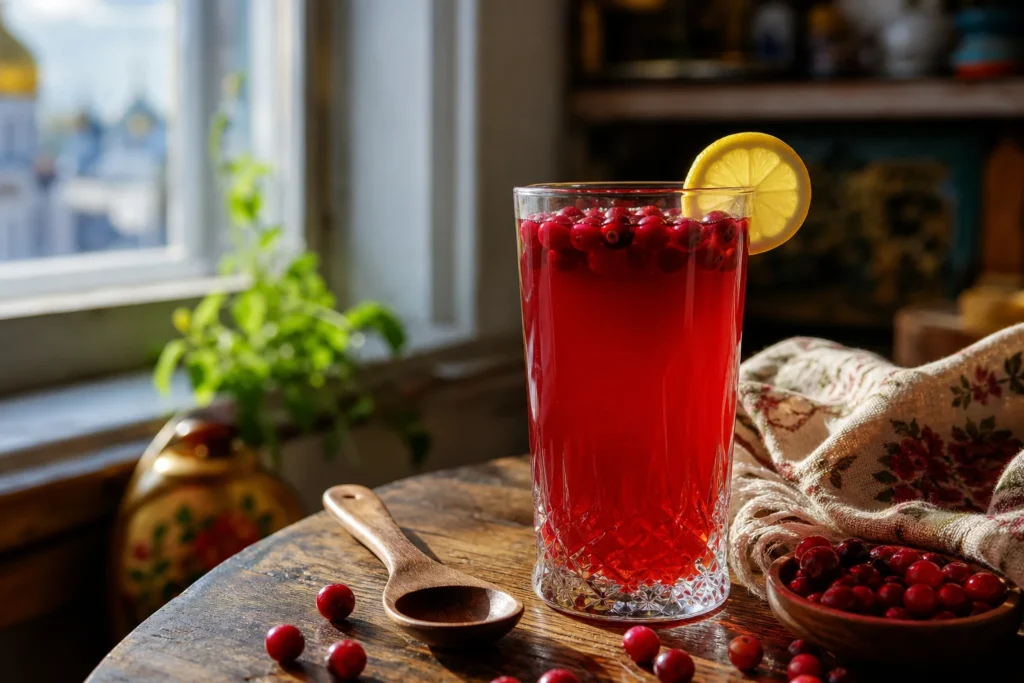
Mors is a Russian non-carbonated fruit drink prepared from berries, generally lingonberries and cranberries (alternatively bilberries, strawberries, raspberries or sea-buckthorn may be used). If you want to make an authentic Russian drink at home or understand what to order at a Russian restaurant, learning to prepare mors is simple and rewarding.
This article walks you through making cranberry mors, the most traditional version, plus variations with other berries. Mors is a light refreshing drink made from berries, water and sugar. The recommended method cooks the berries briefly, then strains and chills the drink before serving.
Quick answer: Making mors at home is quite simple. Start with rinsing cranberries then smashing them with a wooden saucer. Dump the resulting cranberry mass into cheesecloth and squeeze the juice out into a non-oxidizing container. The juice will be mixed into mors later. Total time is 25–35 minutes. Cost is ₽.
At a Glance
| Type | Drinks |
|---|---|
| Local name | Морс |
| Origin | Russia, documented since the 16th century |
| Servings | 2–4 servings |
| Total time | 25–35 minutes |
| Difficulty | Easy |
History and Story of Mors, Yekaterinburg
A recipe for Mors can be found in the Domostroy, a 16th-century Russian set of household rules, but it is likely that the drink existed prior to this. At that time, the sour-sweet berry juices were stored in cold cellars and drunk in winter to avoid vitamin deficiencies. According to one version, the origin of the name mors comes from the German word moosbeere, which means cranberry. Other experts, however, believe that the name comes from the Russian word moroschka (cloudberry), from which the drink was also made. It is worth noting that long ago honey was added to mors as a sweetener.
Ingredients
- 300 g fresh or frozen cranberries, lingonberries, or mixed berries
- 800 ml cold water
- 60–80 g sugar or honey
- 15 ml fresh lemon juice
- Wooden spoon or saucer for crushing berries
- Fine strainer or cheesecloth
- Non-metal pot or bowl
How Mors, Yekaterinburg Is Made
Step 1: Rinse and crush the berries
Start with rinsing cranberries then smashing them with a wooden saucer. Do not use a metal spoon, as it can discolor the drink and affect the taste. Crush the berries in a bowl or directly into a pot until they release their juice.
Tip: Frozen berries work just as well as fresh; thaw them first if you prefer a smoother drink.
Step 2: Strain the juice
Dump the resulting cranberry mass into cheesecloth and squeeze the juice out into a non-oxidizing container. The juice will be mixed into mors later. Keep the strained juice set aside in a cool place.
Tip: Save the pulp—you will boil it with water to extract maximum flavor.
Step 3: Boil the berry pulp with water
Place the crushed berry pulp in a pot and add cold water. Bring to a boil over medium heat, then reduce to a simmer. Cook for 20 minutes. Allow to cool. The liquid will deepen in color and take on the full flavor of the berries.
Tip: Do not boil longer than 20 minutes; extended heat destroys vitamins.
Step 4: Strain the cooked liquid
Pour the cooled berry broth through a fine strainer into a clean pot or bowl, pressing gently on the solids to extract as much liquid as possible. Discard the pulp.
Tip: A cheesecloth or fine mesh strainer prevents sediment and gives a clearer drink.
Step 5: Add sweetener and lemon juice
To the strained hot (or warm) broth, add sugar or honey and stir. Pour in the fresh lemon juice. Stir well until the sugar dissolves completely. The drink should taste balanced between tart and sweet.
Tip: If using honey, add it only to lukewarm liquid to preserve its aroma; adjust sweetness to your taste.
Step 6: Chill and combine
Allow the broth to cool to room temperature, then refrigerate for at least 1 hour. When cool, pour the reserved fresh juice back into the chilled broth and stir gently to combine. Taste and adjust sweetness or lemon juice if needed.
Tip: Mixing the fresh juice only at the end preserves brightness and vitamins.
Step 7: Serve
Pour mors over ice in a tall glass. Berry mors can be served as an independent drink with ice and berries, or mixed in cocktails. The drink keeps refrigerated for up to 5 days.
Tip: Serve at room temperature or chilled, depending on the season.
Variants
- Cranberry mors—the most traditional; tart and refreshing
- Lingonberry mors—milder and slightly sweet
- Red currant mors—delicate color and balanced tartness
- Mixed berry mors—combines cranberries, raspberries, and strawberries for complexity
- Blackcurrant mors—darker and more intense flavor
- Sea buckthorn mors—bright orange, citrusy notes
Common Mistakes to Avoid
- Using metal spoons or containers: Metal reacts with berry acids and darkens the drink. Always use wooden or plastic utensils and glass or ceramic bowls.
- Boiling the fresh juice: The reserved fresh juice should never be heated; add it only after the broth has cooled. Heat destroys the bright flavor and vitamins.
- Straining too aggressively: Pressing the pulp too hard releases bitter compounds from seeds. Squeeze gently and stop when liquid flow slows.
- Adding honey while the drink is hot: Honey loses its aroma when heated. Always add it to warm or cool liquid only.
- Not adjusting sweetness: Every batch of berries differs in tartness. Taste before serving and adjust sugar or lemon juice to balance the drink.
How to Order and Eat It
Today, mors is a popular drink on hot summer days. Serve in a tall glass over ice, optionally garnished with a few fresh berries or a lemon slice. Mors is sometimes mixed with vodka to make an alcoholic cocktail. The drink pairs well with desserts, as its tartness cleanses the palate. Some Russians serve hot mors in winter as a warming, vitamin-rich beverage.
To order: Клюквенный морс, пожалуйста [Klyukvennyi mors, pozhaluysta]
Russia Vibes Tips
- Berry selection matters: Fresh, locally grown berries in season will give you the most authentic flavor. If using frozen berries, check that they contain no added sugar or additives—just berries and nothing else.
- Make a concentrated syrup instead: Reduce the water to 200 ml and boil for only 5 minutes. This creates a thick syrup you can store in the refrigerator for up to two weeks and dilute with water as needed, saving space and allowing flexibility.
- Try the cold method: There are two ways of preparing mors. The first does not involve any heat treatment. Crush berries, strain immediately, then dilute the fresh juice with cold water and sweetener. This keeps all vitamins intact but requires more sugar since the berries aren't cooked.
- Combine berries for balance: A mix of tart and sweet berries—such as cranberries with raspberries or strawberries—creates a more nuanced drink than a single type alone. Avoid mixing more than two flavor profiles or the drink becomes muddy.
- Add spices cautiously: A single cinnamon stick or a few cloves can add warmth, especially for winter mors. Remove them before serving and taste frequently, as spices quickly overpower the delicate berry flavor.
- Don't skip the straining step: Sediment settles if mors sits for hours. Pour carefully into glasses, leaving the last inch in the bottle, or strain again before serving for a clear, refined drink.
Where to Find Mors, Yekaterinburg in Russia
Related guides
 Local Food & Market Walk, Yekaterinburg: Central Market, Pelmeni and Street Eats
 Pay and exchange money in Yekaterinburg: ATMs, banks and payment methods
 Best Restaurants by Budget, Yekaterinburg: Where to Eat at Every Price Level
 Use taxis and ride-share in Yekaterinburg: Yandex Go, payment methods and common mistakes
Browse more: All Food & Drink · All Food & Drink in Yekaterinburg · All Other · All Yekaterinburg
FAQ
Is mors the same as juice or compote?
Mors differs from regular juice in that it is diluted with water and sweetener is added. And it differs from compote by the fact that it consists of fresh berry juice. Mors is lighter and more delicate than both.
Can I use frozen berries?
Mors can be made from fresh and frozen berries. Thaw frozen berries first, and drain any excess liquid before crushing.
What berries work best?
Cherries, blueberries, redcurrants, cranberries, raspberries, gooseberries and sea buckthorn are best suited for mors. You can prepare the drink with a single type of berry or a mixture of different kinds. In any case, the drink will be fragrant and aromatic.
Can I use sugar instead of honey?
Yes. Some mors makers use sugar as a sweetener, some choose to use honey. Both work equally well; honey gives a slightly rounder taste, while sugar is more neutral.
How long does mors keep?
Homemade mors keeps in the refrigerator for 4–5 days in a sealed bottle or pitcher. Commercial mors, which may contain preservatives, lasts much longer. Always check for an off smell or visible mold before drinking.
Can I make mors ahead?
Yes. Prepare the concentrated berry broth and store it in the refrigerator for up to 3 days. Add the fresh juice and final seasoning only when you are ready to serve, so the drink stays bright and fresh.
Is mors alcoholic?
Mors is sometimes mixed with vodka to make an alcoholic cocktail. On its own, mors is a non-alcoholic, family-friendly drink.
What does mors taste like?
It can be sweet, sometimes almost too sweet, or it can be barely sweet. The flavor depends on which berries you use and how much sweetener you add. Cranberry mors is tart and refreshing; other berries are milder and rounder.
Russia Vibes is a one-person project. A coffee keeps it going
How we research and update our guides
About this guide: AI assistance and accuracy
This guide is created with the help of AI and is based on official sources where available. Mistakes can still happen. Opening hours, prices, rules and other details are given to the best of our knowledge as of the date shown and can change without notice. It offers general recommendations only, not professional, legal or travel advice. Please confirm important details with the official source before you travel; you are responsible for your own plans and decisions.

Take this guide with you
Get a free PDF of this guide to print or read offline: key facts, tips and a map link on a few clean pages.
Report an issue on this page
Paying for your trip: please read
International sanctions affect payments between Russia and many other countries. In practice, cards issued in the EU, the UK, the US and several other countries often do not work in Russia, Russian cards usually do not work abroad, and some booking platforms, airlines and payment providers limit or suspend their services for Russia. The situation changes frequently.
We do not give legal or financial advice, and this site does not encourage anyone to break or circumvent sanctions. Whatever you plan, you are responsible for following the laws and regulations that apply to you, including those of your country of residence and citizenship.
Many travelers still organise their stay lawfully. It is worth asking your bank or payment provider what is currently permitted, contacting hotels, tour operators and carriers directly about the payment methods they accept, and checking which services are open to customers from your country. Clarify payment, cancellation and refund terms before you commit to a booking, and keep your plans flexible.
Partner links on this site may not be available in every country, and prices, availability and rules in our guides can differ from what you see when you book.