
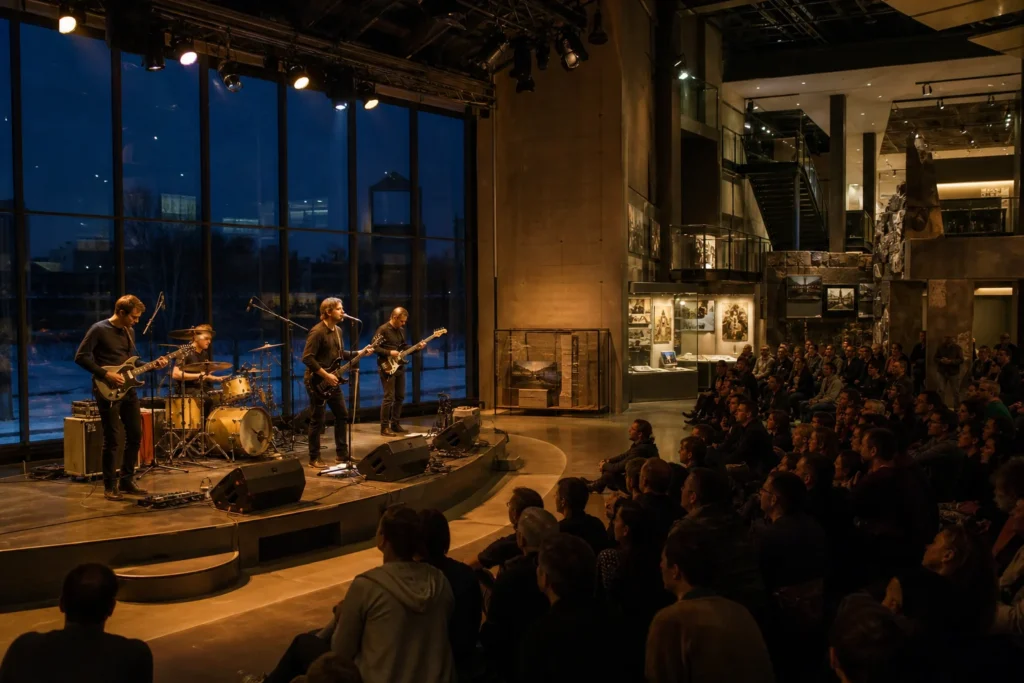
The Old New Rock Festival takes place every year on January 13, when Russia celebrates the New Year according to the Julian calendar, and is staged by musician Yevgeny Gorenburg. This unique celebration marks the intersection of Russia’s rock heritage with its calendar traditions—Old New Year is an observance rooted in the Julian calendar shift, and Yekaterinburg, as Russia’s unofficial rock capital, has made this date synonymous with showcasing emerging and established talent.
Out of hundreds of musicians, only a few dozen are picked: The selection is done by an expert council consisting of the titans of Sverdlovsk rock music including Vladimir Shakhrin and Vladimir Begunov (from Chaif), Aleksey Khomenko (Nautilus Pompilius), and Aleksandr Pantykin. The festival has a family-like friendly atmosphere, drawing rock enthusiasts to celebrate the city’s enduring music culture.
Quick Facts
| Russian name | Старое Новое Rock |
|---|---|
| Type | Recurring event |
| When | Every year on January 13 |
| Next occurrence | January 13 (same date every year) |
| Typical duration | evening |
| Public holiday | No, an observance (regular working day) |
| Address | Boris Yeltsin Presidential Center, Yekaterinburg |
| District | Yekaterinburg |
| Best time to visit | January 13 each year. This is the only date the festival is held. Plan to attend in the evening, as the performance typically occurs after dark. |
Dates, programs and prices change from year to year. Always check the official website for the current edition.
Why Visit Old New Rock Festival, Yekaterinburg?
Among headliners of this event, there are both young musicians carefully selected by legendary Russian rock stars and already famous rock performers and bands. If you want to understand Yekaterinburg’s place in Russian rock history, this is an essential event. The festival brings together multiple generations of musicians in one evening, creating a unique snapshot of the city’s thriving music scene.
The January 13 timing adds cultural meaning: you’re celebrating Old New Year the way Yekaterinburg does—through rock music on a platform judged by the actual architects of the city’s rock legacy. It’s an insider’s view of which voices the community considers important.
What to Expect at Old New Rock Festival, Yekaterinburg
Every year on January 13, musician Yevgeny Gorenburg stages the Old New Rock festival. Out of hundreds of musicians, only a few dozen are picked: The selection is done by an expert council consisting of the titans of Sverdlovsk rock music including Vladimir Shakhrin and Vladimir Begunov (from Chaif), Aleksey Khomenko (Nautilus Pompilius), and Aleksandr Pantykin.
The evening typically features live performances from both newly selected emerging artists and established rock musicians. The festival celebrates January 13, Old New Year on the Julian calendar, a date that carries symbolic weight in Russian culture. Attendance is open to the public, and the atmosphere combines respect for rock tradition with openness to new voices, reflecting Yekaterinburg’s role as a training ground and proving stage for Russian rock musicians.
Highlights of Old New Rock Festival, Yekaterinburg
Expert Selection Panel
The selection is done by an expert council consisting of the titans of Sverdlovsk rock music including Vladimir Shakhrin and Vladimir Begunov (from Chaif), Aleksey Khomenko (Nautilus Pompilius), and Aleksandr Pantykin. This is not a democratic vote or industry algorithm—it's a handpicked process by musicians who shaped Yekaterinburg's rock identity. Watch for how the panel's aesthetic influences which acts make the cut.
Tip: Research the panelists' own bands beforehand to understand the musical values the festival prioritizes.
January 13 Timing
Every year on Jan.13, when Russia celebrates the New Year according to the Julian calendar, musician Yevgeny Gorenburg stages the Old New Rock festival. This date is not arbitrary—Old New Year is a cultural observance in Russia tied to the Julian calendar. The festival deliberately pairs rock music with this historical date, creating a statement about tradition and continuity in the city's music scene.
Tip: If you're in Yekaterinburg around January 13, don't miss this if you value live music—it's one of the city's most culturally rooted annual events.
Emerging and Established Acts
Among headliners of this event, there are both young musicians carefully selected by legendary Russian rock stars and already famous rock performers and bands. The festival is both a discovery platform and a celebration of established acts. This mix means the evening spans different eras and styles of Russian rock, all filtered through the panel's expertise.
Tip: Come prepared to discover artists you may not know—many breakout Russian rock acts have performed here early in their careers.
Yeltsin Center Venue
For the last few years the festival has been held at the Yeltsin Center, a museum dedicated to the disintegration of the USSR and the first years of the new Russia. There one can see empty store shelves – a symbol of shopping (or its absence) in the 1990s – and be photographed against the background of Erik Bulatov's enormous painting inscribed 'Freedom'. The venue itself is a cultural statement—a space about transformation and freedom, hosting music that emerged from the same post-Soviet moment.
Tip: Arrive early to explore the museum's permanent exhibits if you have time; the juxtaposition of 1990s history and contemporary rock is striking.
Family-Friendly Atmosphere
The festival has a family-like friendly atmosphere, and that is one more reason for the popularity of this event. Unlike some rock festivals that skew toward adult late-night crowds, this event maintains an inclusive, community-oriented tone. The emphasis is on musical merit and discovery rather than spectacle or excess.
Tip: The welcoming atmosphere makes it accessible to visitors new to Russian rock, not just longtime fans.
Yevgeny Gorenburg's Curation
Musician Yevgeny Gorenburg stages the Old New Rock festival. Gorenburg is a figure of authority in Yekaterinburg's music world—his role is not just administrative but curatorial. His vision shapes which artists perform and how the evening is structured, making his taste central to the festival's identity.
Tip: Learning about Gorenburg's own musical background helps you understand the festival's priorities and aesthetic.
What It Means for Your Visit
For the last few years the festival has been held at the Yeltsin Center, a major cultural venue. On the evening of January 13, the venue hosts the festival, which may draw moderate crowds of rock enthusiasts and music industry figures. The event does not typically cause city-wide disruptions, though you should expect the venue and its surrounding areas to be busy if you are planning to visit that evening.
Check the organizer’s official channels closer to the date for ticketing information, lineup announcements, and any changes to the schedule or venue. The festival is annual and reliable, but specific details such as start times and admission policies may vary by year.
Atmosphere
The festival unfolds on a winter evening—January 13 in Yekaterinburg is cold, dark, and firmly in the post-holiday period. The atmosphere is reverent but warm: a gathering of rock musicians, enthusiasts, and industry figures united by shared values about what matters in Russian rock. The Yeltsin Center, with its heavy historical resonance and artwork about freedom and transformation, creates a context that elevates the music beyond simple entertainment.
The crowd tends to be knowledgeable and attentive. You’ll hear serious listening—not background music. The performances emphasize musical quality and artistic vision, not spectacle. Because the lineup includes both emerging and established acts, there’s an energy of discovery mixed with respect for proven talent. The family-like atmosphere means people of different ages and backgrounds coexist comfortably, united by the music.
History of Old New Rock Festival, Yekaterinburg
The Old New Rock Festival is rooted in Yekaterinburg’s identity as Russia’s rock capital. In the Soviet period, the industrial city of Yekaterinburg (Sverdlovsk at the time) was one of the capitals of rock music, alongside Moscow and St. Petersburg (Leningrad at the time). Bands such as Nautilus Pompilius, Chaif, and Smyslovye Gallyutsinatsii were born here.
By pairing a rock festival with Old New Year—celebrated on January 13 by the Julian calendar, a date that carries deep roots in Russian folk tradition and Soviet nostalgia—the festival makes a cultural statement. Musician Yevgeny Gorenburg stages the Old New Rock festival, and the selection process itself became a institution: The selection is done by an expert council consisting of the titans of Sverdlovsk rock music including Vladimir Shakhrin and Vladimir Begunov (from Chaif), Aleksey Khomenko (Nautilus Pompilius), and Aleksandr Pantykin.
For the last few years the festival has been held at the Yeltsin Center, a museum dedicated to the disintegration of the USSR and the first years of the new Russia. This venue choice reinforces the festival’s cultural weight: the building itself is a monument to the 1990s, the decade when Yekaterinburg’s rock scene flourished as a counterweight to state control. The festival has remained a reliable annual event, maintaining its curatorial standards and family-friendly approach while continuing to showcase new talent selected by the city’s rock elders.
Tickets and Booking for Old New Rock Festival, Yekaterinburg
The festival is free or ticketed—check official sources for the current year’s admission structure. Entry details typically become available a few weeks before the event on January 13. Since the festival is held at the Yeltsin Center, you may need to enter the museum first or book specific access to the performance space.
General ticketing pattern: The festival is annual and recurring. Specific information such as ticketing price, advance booking requirements, and exact start time vary by year and should be confirmed directly with the Yeltsin Center or through official announcements closer to January 13. Check the Yeltsin Center’s official website (yeltsin.ru) for the current edition’s details, as arrangements may change year to year.
Get Tickets for Old New Rock Festival, Yekaterinburg
How to Get to Old New Rock Festival, Yekaterinburg
The festival is held at the Boris Yeltsin Presidential Center in Yekaterinburg. The center is a major cultural venue accessible by public transport. Use a map application (Yandex Maps or Google Maps) to plan your route based on your starting location in the city. The event takes place indoors at the Yeltsin Center, so arrival by metro, bus, or taxi are all practical options. Verify the exact entrance and arrival time when you confirm your attendance closer to the event date.
Accessibility
Information about wheelchair access, companion policies, and other accessibility features at the Yeltsin Center venue should be confirmed directly with the center's staff. Call ahead or check their official website to confirm any specific access arrangements you may need.
Food Nearby
The Yeltsin Center is located in central Yekaterinburg, which has numerous restaurants, cafés, and food options nearby. Plan to eat before or after the festival, or check whether the venue offers food service during the event.
What to Bring
Warm clothing is essential—January 13 is winter in Yekaterinburg, with temperatures well below freezing. Bring a coat, hat, gloves, and warm layers. The venue is indoors, but you'll need to travel to and from it in cold weather. No special items are required beyond standard winter wear. Check the venue's bag and security rules when you book.
Photography Rules
Photography rules vary by year and venue. Confirm with the Yeltsin Center before the event whether photography or video recording is permitted during performances. Many live music events restrict flash or professional recording, so verify current policies before attending.
Family Suitability
The festival is family-accessible. The festival has a family-like friendly atmosphere, making it welcoming to visitors of various ages. However, the event is a rock music performance in the evening, so consider the attention span and interests of younger children. The Yeltsin Center has museum exhibits that may interest families, so you could combine a visit to the museum with attendance at the festival.
Russia Vibes Tips
- Book or register in advance if required. January 13 is not a widely known date internationally, but it is important in Russian culture (Old New Year), so local crowds can be substantial. Check ticketing arrangements early.
- Arrive with time to explore the Yeltsin Center itself. The venue is a museum dedicated to the 1990s and the transition from Soviet to post-Soviet Russia. The exhibits add meaningful context to a rock festival held in this space—you're literally celebrating music in a building about freedom and transformation.
- Research the selection panel members' own bands before you go. Knowing the musical taste of Shakhrin, Begunov, Khomenko, and Pantykin helps you understand the festival's curatorial vision and appreciate why certain artists were chosen.
- This is a winter event in a cold climate. Dress warmly and plan your journey to the venue in advance, especially if you're unfamiliar with Yekaterinburg. Public transport and taxis are reliable, but weather can affect travel times in January.
- If you speak no Russian, contact the Yeltsin Center ahead of time to ask about any translation or subtitling during performances. Rock music transcends language, but artist announcements and context may be in Russian only.
Explore Nearby Old New Rock Festival, Yekaterinburg
Related guides
 City Day of Yekaterinburg: Free Festival Celebrating the City’s 1723 Founding
Main image: AI-generated illustration. It may not show the place exactly as it looks.
Browse more: More in Yekaterinburg · All Entertainment · All Events & Holidays · All Events & Holidays in Yekaterinburg · All Yekaterinburg
FAQ: Old New Rock Festival, Yekaterinburg
What date is the Old New Rock Festival held?
The festival is held every year on January 13, which marks Old New Year on the Julian calendar—a traditional Russian observance. This date is fixed and does not move.
Where does the festival take place?
The festival is held at the Boris Yeltsin Presidential Center in Yekaterinburg. The center is a museum and cultural venue dedicated to the 1990s and the transition from Soviet to post-Soviet Russia.
Is the festival free to attend?
Admission details vary by year. Check the Yeltsin Center's official website closer to January 13 for current ticketing information, as some years may be free while others require advance booking or payment.
Who selects the performing artists?
An expert council of legendary Yekaterinburg rock musicians selects the performers. The council includes Vladimir Shakhrin and Vladimir Begunov (from the band Chaif), Aleksey Khomenko (Nautilus Pompilius), and Aleksandr Pantykin. Out of hundreds of applicants, only a few dozen are chosen.
Is the festival only for experienced rock fans?
No. The festival has a family-friendly atmosphere and welcomes visitors of all backgrounds. It is a discovery platform for new talent as well as a celebration of established acts, so both newcomers and longtime fans can enjoy it.
What is Old New Year?
Old New Year is celebrated on January 13 according to the Julian calendar, which Russia used until 1918. It is a cultural observance in Russia, not an official public holiday, but it carries symbolic meaning tied to tradition and continuity.
How long does the festival last?
The festival is typically an evening event. Specific start and end times vary by year and should be confirmed when you book or check the official Yeltsin Center website.
Can I visit the Yeltsin Center museum before or after the festival?
Yes. The Yeltsin Center is open as a museum separate from the festival. Depending on the event schedule and your timing, you may have the opportunity to explore the museum's exhibits about the 1990s and the Soviet transition before or after attending the concert.
Russia Vibes is a one-person project. A coffee keeps it going
How we research and update our guides
About this guide: AI assistance and accuracy
This guide is created with the help of AI and is based on official sources where available. Mistakes can still happen. Opening hours, prices, rules and other details are given to the best of our knowledge as of the date shown and can change without notice. It offers general recommendations only, not professional, legal or travel advice. Please confirm important details with the official source before you travel; you are responsible for your own plans and decisions.

Take this guide with you
Get a free PDF of this guide to print or read offline: key facts, tips and a map link on a few clean pages.
Report an issue on this page
Paying for your trip: please read
International sanctions affect payments between Russia and many other countries. In practice, cards issued in the EU, the UK, the US and several other countries often do not work in Russia, Russian cards usually do not work abroad, and some booking platforms, airlines and payment providers limit or suspend their services for Russia. The situation changes frequently.
We do not give legal or financial advice, and this site does not encourage anyone to break or circumvent sanctions. Whatever you plan, you are responsible for following the laws and regulations that apply to you, including those of your country of residence and citizenship.
Many travelers still organise their stay lawfully. It is worth asking your bank or payment provider what is currently permitted, contacting hotels, tour operators and carriers directly about the payment methods they accept, and checking which services are open to customers from your country. Clarify payment, cancellation and refund terms before you commit to a booking, and keep your plans flexible.
Partner links on this site may not be available in every country, and prices, availability and rules in our guides can differ from what you see when you book.