
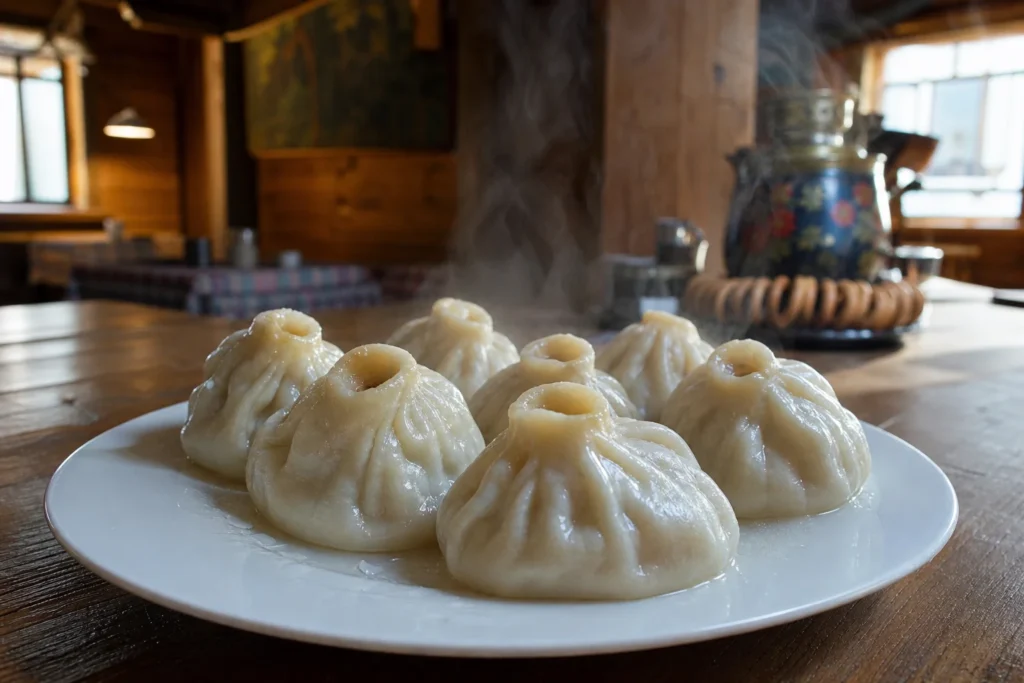
Buuzy—also called pozy in Russian—are the most iconic dish of Buryat cuisine and essential eating in Irkutsk. These large, hand-shaped steamed dumplings resemble a closed pouch with a small opening at the top, designed to hold the flavorful broth from the filling inside. Learn how to make buuzy at home with how to eat Buuzy traditional Buryat dumplings.
Buuzy can be found in specialized restaurants and cafes throughout Irkutsk, but making them yourself is rewarding and follows centuries of Buryat and Mongolian tradition. The key to success is keeping the filling moist and mastering the distinctive folding technique that gives buuzy their characteristic shape and function.
Quick answer: Mix a simple flour-and-water dough, prepare a juicy meat filling with beef, pork, onions and garlic, wrap each dumpling by hand with a small opening at the top, then steam until the dough turns translucent. Total time: 60–75 minutes. Cost: budget ingredient expense.
At a Glance
| Type | Dishes |
|---|---|
| Local name | Буузы |
| Origin | Buryatia, Eastern Siberia; also found in Mongolia |
| Servings | 2–4 servings (makes about 12–15 dumplings) |
| Total time | 60–75 minutes |
| Difficulty | Medium |
History and Story of Buuzy, Irkutsk
Buuzy are traditionally eaten at home during Tsagaan Sar, the Lunar New Year, though they are now enjoyed throughout the year. The quintessential Buryat and Mongol food are buuzy, a type of dumpling, also called pozy, which is a Russification. Buuzy originated within the nomadic pastoralist traditions of the Mongolian people, emerging as a practical, portable food source essential for herders and warriors traversing the vast steppes. A 1330 CE cookbook compiled for the Mongol court included a recipe for dumplings stuffed with finely chopped mutton, sheep fat, and onions. In the Irkutsk region, which neighbors the Buryat Republic, buuzy remain central to local food culture and are served in specialized cafes.
Ingredients
- 300 g all-purpose flour
- 125 ml water (approximately)
- 300 g ground beef
- 200 g ground pork
- 1 medium onion, finely minced
- 2 cloves garlic, minced
- 50 ml cold water or broth for the filling
- 1 tsp salt
- ½ tsp black pepper
How Buuzy, Irkutsk Is Made
Step 1: Make the dough
In a bowl, combine flour and a pinch of salt. Gradually add cold water, mixing with your hands until a soft, smooth dough forms. Knead for about 5–10 minutes until the dough is no longer sticky. Shape into a ball, cover with a damp cloth or plastic wrap, and let rest for at least 30 minutes at room temperature. This resting period allows the gluten to relax, making the dough easier to work with.
Tip: The dough should be soft but not sticky. If it sticks to your hands, dust with a little flour.
Step 2: Prepare the filling
In a bowl, combine the ground beef, ground pork, finely minced onion, minced garlic, salt, and black pepper. Add the cold water or broth—this liquid is crucial for keeping the filling moist and creating the flavorful broth inside each dumpling. Mix everything thoroughly until well combined. The mixture should feel moist and stick together when pressed.
Tip: Traditional cooks use hand-chopped meat rather than ground meat to preserve juiciness. If using pre-ground meat, ensure it is coarse and add a little extra liquid.
Step 3: Shape the dumplings
Divide the dough into 12–15 equal portions and roll each into a ball. On a floured surface, use your palm to flatten each ball into a thin circle about 10 cm (4 inches) across. Place a generous spoonful of filling in the center. Fold the edges up and around the filling, pinching them together at the top to create a pouch shape with a small opening at the top—this opening allows steam to escape and lets the juices remain inside. The traditional technique involves making 30 small pleats or folds around the top, but this is advanced; even simple gathering at the top works.
Tip: Keep your hands lightly oiled or dusted with flour to prevent sticking. The opening at the top should be roughly the size of a small coin.
Step 4: Prepare the steamer
Fill a large pot with water and bring to a boil. Place a bamboo or metal steamer basket over the pot, making sure it sits above the water level. Lightly oil or flour the steamer basket to prevent the dumplings from sticking. If you do not have a steamer basket, you can use a metal colander or improvise with aluminum foil balls at the bottom of the pot to create a platform.
Tip: The water should not touch the steamer basket; it should be just below it.
Step 5: Steam the dumplings
Carefully arrange the dumplings in the steamer basket in a single layer, making sure they do not touch each other. Cover the steamer with a lid and steam over medium-high heat for 15–20 minutes. The dough will turn from opaque to translucent when done, and you may see the meat filling through the thin dough. If you are making a large batch, steam in multiple rounds.
Tip: Do not crowd the basket; if necessary, make multiple batches. Overcrowding causes the dumplings to stick together.
Step 6: Serve hot
Carefully remove the steamed dumplings from the basket using tongs or a slotted spatula. Place them on a serving plate or in bowls while still hot. Serve immediately. In Irkutsk, buuzy are often served with a small bowl of grated carrot on the side or with salad, along with Buryat tea with milk.
Tip: Buuzy are best eaten immediately while the dough is still tender and the filling is hot.
Variants
- Lamb filling: Using minced lamb instead of the beef-pork mixture, traditional in Mongolia
- Horse meat filling: Historically used in nomadic herding communities
- Vegetables added to filling: Modern variations include finely diced carrots or cabbage mixed into the meat
- Khushuur: A related Buryat dish with similar filling but fried in fat instead of steamed
Common Mistakes to Avoid
- Making the filling too dry: The filling must contain liquid (water or broth) to create the juices that collect inside the dumpling. Without it, the filling becomes tough and the eating experience is diminished.
- Sealing the dumpling completely: Many first-time cooks seal the top entirely. This causes steam pressure to build up and the dumpling may burst. The small opening at the top is essential; it lets steam escape gradually while keeping most of the meat juices inside.
- Resting the dough too briefly: Skipping or rushing the 30-minute rest makes the dough elastic and difficult to stretch thin without tearing. This also affects the final texture.
- Overcrowding the steamer: Packing too many dumplings into the basket causes them to stick to each other and cook unevenly. They should have space around them.
- Using ground meat that is too lean: Fat in the filling creates the flavorful broth. Lean meat results in a dry filling and less satisfying broth to drink.
How to Order and Eat It
Eating buuzy uses both hands. No knives and forks are welcomed. Firstly, take a little bite off the dough and drink the juice out of the inside, then take a bite. This technique, traditional in Irkutsk and throughout Buryatia, prevents the hot, flavorful broth from spilling onto your clothing while letting you enjoy the rich meat juices as an integral part of the dish. To get the full experience it is recommended to bite a small hole in the doughy shell and suck out the juice before eating the whole dumpling. This is also a good way to make sure that you don’t dribble the fatty juices on your shirt as you indulge in this traditional Buryat dish.
To order: Буузы, пожалуйста [Buuzy, pozhaluysta]
Diet and Allergens
- Gluten (in dough)
Russia Vibes Tips
- If you have left-over dumplings, freeze them uncooked in a single layer on a baking sheet before transferring to a freezer bag. They can be steamed directly from frozen with no thawing, adding just 5–7 minutes to the cooking time.
- In Irkutsk, most specialist cafes called Poznaya focus only on buuzy (also spelled pozy). These are affordable places to eat buuzy made by experienced cooks if you do not want to prepare them at home.
- The meat filling is traditionally hand-chopped, not ground in a food processor, which can make it dense. If you have a meat grinder, use the large die for a coarse texture closer to traditional buuzy.
- Buryat tea with milk (salted or unsalted) is the traditional drink served alongside buuzy. In colder months, hot tea balances the richness of the meat-filled dumplings.
- The distinctive opening at the top of a buuzy can be shaped in different styles. Traditionally, skilled cooks make 30 small pleats that create a dome-like appearance. Do not worry if yours are less perfect; the technique matters less than keeping the opening small enough to contain the juices.
Where to Find Buuzy, Irkutsk in Russia
Related guides
 Local Food & Market Walk, Yekaterinburg: Central Market, Pelmeni and Street Eats
 Stolovaya Maslenitsa: A Transit Traveler’s Honest Canteen
 Malinovka: Traditional Russian Cuisine and a Working Stove in Yekaterinburg
Browse more: All Food & Drink · All Food & Drink in Irkutsk · All Irkutsk · All Other
FAQ
Is Buuzy the same as Chinese dumplings or pelmeni?
Buuzy consist of a simple dough filled with meat—some combination of beef, pork, and/or horse—and onions. The most unique part is the way they're wrapped, with delicate, beautiful folds that let the air in while they steam and allow you to drink out the juice before biting in. Buuzy are larger and steamed (not boiled like pelmeni), and the opening at the top is integral to the eating experience—a feature that sets them apart from other dumplings.
Can I make Buuzy ahead of time?
Yes. Uncooked buuzy freeze well and can be stored for several months. Arrange them on a baking sheet in a single layer until solid, then transfer to a freezer bag. Steam directly from frozen, adding 5–7 extra minutes to the cooking time. Many cooks in Irkutsk and Mongolia prepare buuzy in large batches weeks in advance and freeze them.
What if my dumplings burst or the filling leaks during steaming?
If the dough was sealed too tightly, steam builds up inside and can cause the dumpling to burst. Ensure that you leave a small opening at the top before steaming. If dumplings are leaking, the filling may also be too loose or the dough too thin. In future batches, add slightly less water to the filling and stretch the dough a little thicker when wrapping.
Why do Buuzy have a small hole at the top?
The opening serves two purposes: it allows steam to escape gradually during cooking (preventing the dumpling from bursting from pressure), and it keeps most of the flavorful meat juices inside the pouch. This design is central to the traditional Buryat eating method, where you drink the broth before eating the dough and filling.
What type of meat is used in traditional Buuzy?
The Buryat version typically consists of a mixture of beef, pork, onion, and garlic. Historically, horse meat was also used. The key is choosing meat with sufficient fat content to create a juicy, flavorful filling when steamed.
How many pleats should Buuzy have?
Traditionally, buuzy will have 30 folds around the top. However, a sign of true mastery that few attain is to make buuz with the classic 33 pinches. For home cooking, the precise number matters less than creating a secure seal with a small opening at the top. Even simpler gathering at the top produces delicious buuzy.
Can I use a different grain for the dough?
Traditional buuzy use a simple wheat-flour dough with water and salt. For authentic results, use all-purpose wheat flour. Whole wheat, cornmeal, or other grains will change the texture and flavor considerably and are not traditional.
Where can I eat authentic Buuzy in Irkutsk?
When you first set foot in Eastern Siberia, which will probably be through Irkutsk or Ulan Ude, you will see a huge number of cafes called 'Poznaya'. The most delicious buuzas can be consumed in Poznaya38. These specialist cafes throughout Irkutsk focus on serving buuzy and other Buryat dishes.
Russia Vibes is a one-person project. A coffee keeps it going
How we research and update our guides
About this guide: AI assistance and accuracy
This guide is created with the help of AI and is based on official sources where available. Mistakes can still happen. Opening hours, prices, rules and other details are given to the best of our knowledge as of the date shown and can change without notice. It offers general recommendations only, not professional, legal or travel advice. Please confirm important details with the official source before you travel; you are responsible for your own plans and decisions.

Take this guide with you
Get a free PDF of this guide to print or read offline: key facts, tips and a map link on a few clean pages.
Report an issue on this page
Paying for your trip: please read
International sanctions affect payments between Russia and many other countries. In practice, cards issued in the EU, the UK, the US and several other countries often do not work in Russia, Russian cards usually do not work abroad, and some booking platforms, airlines and payment providers limit or suspend their services for Russia. The situation changes frequently.
We do not give legal or financial advice, and this site does not encourage anyone to break or circumvent sanctions. Whatever you plan, you are responsible for following the laws and regulations that apply to you, including those of your country of residence and citizenship.
Many travelers still organise their stay lawfully. It is worth asking your bank or payment provider what is currently permitted, contacting hotels, tour operators and carriers directly about the payment methods they accept, and checking which services are open to customers from your country. Clarify payment, cancellation and refund terms before you commit to a booking, and keep your plans flexible.
Partner links on this site may not be available in every country, and prices, availability and rules in our guides can differ from what you see when you book.