
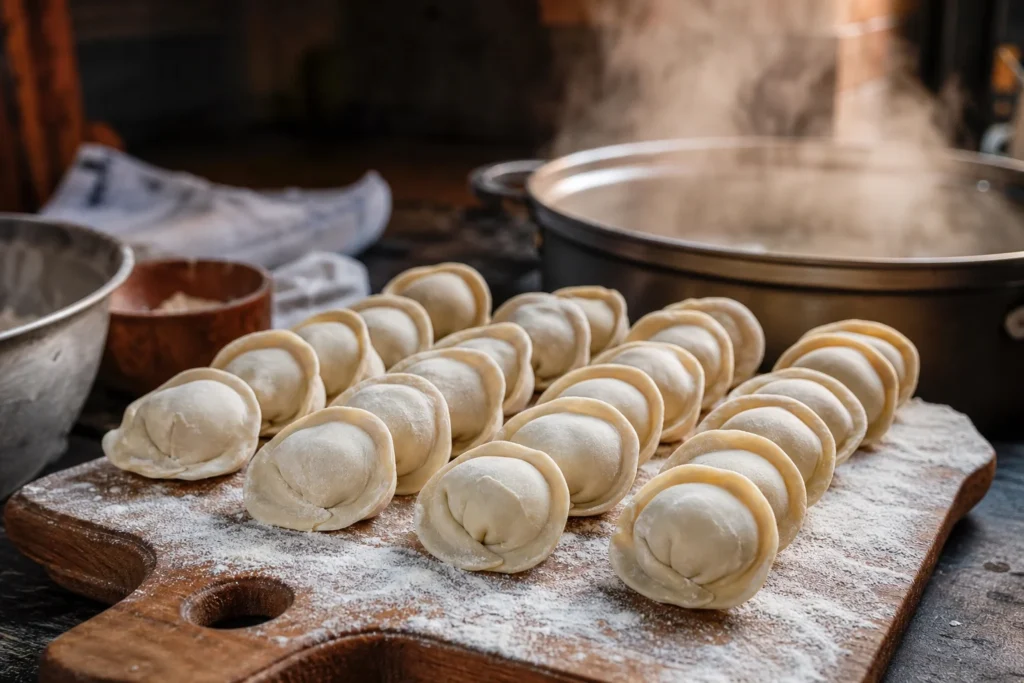
Pelmeni are small, ear-shaped meat dumplings that belong to the kitchen of the Urals and Siberia, though they are eaten across Russia today. The name was borrowed from the languages of the Komi and Udmurts. This guide teaches you how to make pelmeni Russian dumplings from scratch at home.
Making pelmeni is a hands-on task that rewards patience. Before they were widely available for purchase, families would come together for pelmeni-making parties. You will create a simple dough, prepare a seasoned meat filling, shape each dumpling by hand, and boil them until they float. The result is tender, juicy parcels served hot with sour cream, butter, or vinegar.
Quick answer: Make a simple dough of flour, water, salt and egg, roll it thin, cut circles, fill with seasoned ground meat, fold into ear shapes and boil. Total time: 2–3 hours (including dough rest time and shaping). Cost: ₽
At a Glance
| Type | Dishes |
|---|---|
| Local name | пельмени |
| Origin | Pelmeni became a staple of Russian cuisine during expansion into the Ural Mountains and Siberia, with deep roots in the traditions of the Komi and Udmurts; the name itself comes from their languages. The name means "ear bread" because of its shape. Pelmeni were originally a winter dish; frozen pelmeni would be carried by hunters in the Ural and Siberia and cooked on open fires during longer trips. |
| Servings | 2–4 servings (about 40–50 dumplings) |
| Total time | 2–3 hours (including 30–50 minutes dough rest) |
| Difficulty | Medium |
History and Story of Pelmeni, Yekaterinburg
Pelmeni became a staple of Russian cuisine during the period of Russian expansion into the Ural Mountains and Siberia. The word pelmen literally means “ear bread” in local Finno-Ugric languages. Pelmeni were originally a winter dish; when temperatures are low, they could be preserved for months. Hunters in the Ural and Siberia would take pelmeni with them in their sacks while away from home and cook them on the open fire. Families would come together for pelmeni-making parties, with some grinding the meat, others making the dough, and the most dexterous and patient ones shaping the dumplings. Singing and vodka-drinking were often an important part of the ritual.
Ingredients
- 400–500 g (3–4 cups) all-purpose flour
- 250–300 ml water
- 1 large egg
- ½ teaspoon salt (for dough)
- 300–400 g ground meat (beef, pork, or a mix)
- 1 medium onion, finely diced or grated
- Salt and black pepper to taste (for filling)
- Butter or oil (for assembly and serving)
How Pelmeni, Yekaterinburg Is Made
Step 1: Make the dough
Traditionally, the dough is made from water, flour, egg and salt. Combine 400–500 g flour and ½ teaspoon salt in a large bowl. Create a well in the center, crack in 1 egg, and add 250–300 ml cold water. Mix with a fork until a shaggy mass forms. Transfer to a floured surface and knead firmly for 8–10 minutes until the dough is smooth and elastic but not sticky. The secret to great pelmeni dough is to allow it to rest for about an hour after kneading. Cover with plastic wrap and let rest at room temperature for 30–50 minutes.
Tip: Do not flour the work surface heavily during kneading, or the dough will become dry and difficult to roll.
Step 2: Prepare the meat filling
Traditional pelmeni are made with a 50/50 mix of pork and beef. Combine 300–400 g ground meat, 1 finely diced or grated medium onion, salt, and black pepper in a bowl. In most regions, beef and pork are mixed because beef itself is dry. The key is not to have mince too dry. Chopped onion is also added. If using raw onion, it will have a strong flavor; some cooks prefer to sauté the onion gently first to mellow it. Mix the filling thoroughly and refrigerate until ready to use.
Tip: Add a splash of cold water to the filling—this keeps the meat juicy during cooking.
Step 3: Roll and cut the dough
Divide the dough into four pieces. Roll each piece into a thin sheet about 2 millimeters thick. Cut circles using a 3-inch round cutter or a glass. Gather scraps and re-roll once. Keep unused dough covered under an upside-down bowl so it does not dry out. Work on a lightly floured surface to prevent sticking.
Tip: The dough circles must be thin but sturdy enough not to tear. If they tear, discard and cut again from fresh dough.
Step 4: Fill and shape the pelmeni
Place one teaspoon of filling in the center of each dough circle. Fold the dough in half to form a half-moon. Press edges firmly to seal. Then bring the two corners together and pinch to create the classic pelmeni shape. The finished pelmeni should look like a small ear. Be careful not to have the filling touching the edges, or it will not properly seal and fall apart when cooking.
Tip: Work quickly so the dough does not dry out. If the edges become dry, dampen them slightly with water before sealing.
Step 5: Freeze the pelmeni
Place shaped pelmeni on a floured tray or baking sheet. Freeze uncovered for at least 30 minutes until solid. In Siberia, pelmeni are traditionally frozen outdoors in the winter and treated as preserved food. Once frozen, transfer to a freezer bag for storage. They can be kept frozen for several weeks.
Tip: Freezing pelmeni before cooking prevents them from sticking together and makes them easier to cook in batches.
Step 6: Boil the pelmeni
Bring a large pot of salted water to a rolling boil. Add a bay leaf. Drop pelmeni in batches of 15 to 20. Stir gently to prevent sticking. Cook for 3 to 5 minutes after they float to the surface. Remove with a slotted spoon. In the Urals, they are always boiled in water, while in Siberia they are boiled in salted water or sometimes meat or chicken broth.
Tip: Pelmeni will float after 3–5 minutes of cooking; this is when they are almost done. Cook a few minutes more for the filling to heat through completely.
Variants
- Ural pelmeni are prepared with a filling made of a large quantity of onion mixed with three types of ground meat: beef (45 percent), lamb (35 percent) and pork (20 percent).
- Siberian pelmeni are made of flour and salt dough wrapped around a filling of usually ground beef and pork. Before, crushed ice was added to the filling to cool it and make the meat juicier. Today, the filling is usually salted and peppered to taste.
- The filling can be minced meat (pork, lamb, beef, fish or any other kind of meat, venison being particularly traditional for colder regions) or mushrooms, or a combination of the two.
- In Siberia, pelmeni fillings may include game meat like venison or elk.
Common Mistakes to Avoid
- Filling touching the edges of the dough will prevent proper sealing and the dumplings will fall apart during cooking. Place the filling only in the center and seal the edges firmly.
- Overfilling the pelmeni makes them difficult to seal and prone to bursting. Use only about 1 teaspoon of filling per dumpling.
- Not resting the dough long enough results in tough, elastic pelmeni that tear easily. Allow at least 30–50 minutes of rest time after kneading.
- Cooking too many pelmeni at once in a small pot causes them to stick together and cook unevenly. Work in batches of 15–20.
- Skipping the freezing step before boiling fresh pelmeni may cause them to fall apart in the water. Freeze for at least 30 minutes.
- Not using fatty enough meat results in dry filling that lacks juiciness. Choose a blend of beef and pork, or use meat with some fat content.
How to Order and Eat It
Pelmeni are typically served with sour cream, vinegar, butter, or broth—simple accompaniments that highlight the flavor of the meat. Pelmeni can be served as a main dish for lunch or dinner, either smothered in butter or prepared Siberian-style, which involves sprinkling them with vinegar and adding freshly ground pepper for extra flavor. Cold leftover pelmeni with butter are a common next-day lunch.
To order: пельмени [pelmeni]
Diet and Allergens
- Typically contains gluten
- Contains eggs
- Contains pork
- Contains beef
Where to Try Pelmeni, Yekaterinburg
Kaliningrad
 Kavkaz, Kaliningrad Georgian, Armenian, Azerbaijani, Caucasian
Main image: AI-generated illustration. It may not show the place exactly as it looks.
Kazan
 Pashmir Restaurant, Kazan Uzbek, Tatar, European, Middle Eastern
Main image: AI-generated illustration. It may not show the place exactly as it looks.
Nizhny Novgorod
 Khachapuriya, Nizhny Novgorod Georgian
Main image: AI-generated illustration. It may not show the place exactly as it looks.
 Dzhani Restorani, Nizhny Novgorod Georgian and Caucasian
Main image: AI-generated illustration. It may not show the place exactly as it looks.
Saint Petersburg
 Gogol, Saint Petersburg Traditional Russian cuisine, nineteenth-century-inspired Russian cooking, Russian home-style dishes and selected European-influenced classics
Main image: AI-generated illustration. It may not show the place exactly as it looks.
Sochi
 Belye Nochi, Sochi Georgian, Caucasian
Main image: AI-generated illustration. It may not show the place exactly as it looks.
Vladivostok
 Hlopok Chaihona, Vladivostok Uzbek, Caucasian, Georgian
Main image: AI-generated illustration. It may not show the place exactly as it looks.
Russia Vibes Tips
- Make pelmeni in large batches and freeze them. Pelmeni can be stored frozen for a long time and are prepared immediately before eating by boiling in salted water until they float, and then two to five minutes more. This means an easy weeknight dinner is always at hand.
- Handmade pelmeni are the traditional way of making them, though a pelmeni mold (pelmenitsa) can speed up production if you are making a large batch. The hand method gives you better control over sealing.
- Do not thaw frozen pelmeni before cooking. Add them directly to boiling water; they will cook through in 7–10 minutes from frozen. Thawing may cause them to fall apart.
- For the best flavor and juiciness, beef and pork are mixed because beef itself is dry, and the key is not to have mince too dry. Avoid extra-lean ground meat.
- Ural pelmeni are traditionally served with sour cream or butter, while vinegar and mustard define the Siberian style—a sharper, more pungent dressing that cuts the richness of the meat. Try both and find your preference.
Where to Find Pelmeni, Yekaterinburg in Russia
Related guides
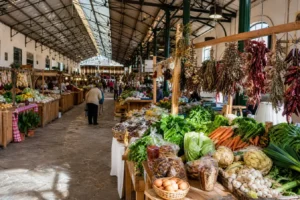 Local Food & Market Walk, Yekaterinburg: Central Market, Pelmeni and Street Eats
 Iset River Embankment & Plotinka Walk: Yekaterinburg’s Historic Heart
 City Center Architecture & Constructivism, Yekaterinburg: A 3-Day Walking Tour
Browse more: All Food & Drink · All Food & Drink in Yekaterinburg · All Other · All Yekaterinburg
FAQ
Can I use only beef or only pork for the filling?
Traditional pelmeni are made with a 50/50 mix of pork and beef. Just like a perfect burger that needs to have the right cut of beef and the right amount of fat, great pelmeni are a result of proper meat selection. Beef alone tends to be dry; pork alone is too rich. The mix creates the best texture and juiciness.
What is the difference between pelmeni and other Russian dumplings?
Pelmeni's defining features are small size, thin dough, and a filling made exclusively of raw minced meat. The meat cooks inside the dough during boiling, releasing savory juices that make pelmeni distinct from other dumplings.
How long do frozen pelmeni keep?
Pelmeni can be stored frozen for a long time and are prepared immediately before eating by boiling in salted water until they float, and then two to five minutes more. In a standard freezer, they will keep well for several weeks.
Do I need to thaw pelmeni before cooking?
No. Cook pelmeni directly from the freezer by dropping them into boiling salted water. They will sink, then float after about 5 minutes, and are done a few minutes after floating. Thawing may cause them to lose their shape or fall apart.
What happens if the filling leaks out during cooking?
This usually means the dough was not sealed tightly enough or the filling was too close to the edge. Be careful not to have the filling touching the edges, or it will not properly seal and fall apart when cooking. Practice sealing the edges firmly before cooking.
Can I make vegetarian pelmeni?
The filling can be minced meat or mushrooms, or a combination of the two. Mushroom and onion fillings are a traditional alternative, though they are less common than meat versions.
Why do some recipes add ice water to the meat filling?
Add ice water and mix until the filling is smooth and slightly sticky. The water keeps the filling juicy during cooking. This is a traditional technique from Siberia to ensure the meat stays moist inside the dumpling.
What broth should I use if I want to cook pelmeni in broth instead of water?
In Siberia pelmeni are boiled in salted water or sometimes meat or chicken broth. Beef, chicken, or vegetable broth all work well. The pelmeni will absorb subtle flavor from the broth as they cook.
Russia Vibes is a one-person project. A coffee keeps it going
How we research and update our guides
About this guide: AI assistance and accuracy
This guide is created with the help of AI and is based on official sources where available. Mistakes can still happen. Opening hours, prices, rules and other details are given to the best of our knowledge as of the date shown and can change without notice. It offers general recommendations only, not professional, legal or travel advice. Please confirm important details with the official source before you travel; you are responsible for your own plans and decisions.

Take this guide with you
Get a free PDF of this guide to print or read offline: key facts, tips and a map link on a few clean pages.
Report an issue on this page
Paying for your trip: please read
International sanctions affect payments between Russia and many other countries. In practice, cards issued in the EU, the UK, the US and several other countries often do not work in Russia, Russian cards usually do not work abroad, and some booking platforms, airlines and payment providers limit or suspend their services for Russia. The situation changes frequently.
We do not give legal or financial advice, and this site does not encourage anyone to break or circumvent sanctions. Whatever you plan, you are responsible for following the laws and regulations that apply to you, including those of your country of residence and citizenship.
Many travelers still organise their stay lawfully. It is worth asking your bank or payment provider what is currently permitted, contacting hotels, tour operators and carriers directly about the payment methods they accept, and checking which services are open to customers from your country. Clarify payment, cancellation and refund terms before you commit to a booking, and keep your plans flexible.
Partner links on this site may not be available in every country, and prices, availability and rules in our guides can differ from what you see when you book.