
This itinerary is for history enthusiasts and anyone curious about Russia’s Arctic industrial heritage and WWII history. It assumes steady walking pace with time for museum exploration. By the end, you’ll understand how Murmansk became Russia’s strategic Arctic gateway, its role in supplying Allied forces during World War II, and its transformation into the Soviet Union‘s nuclear icebreaker and submarine capital during the Cold War.
The route visits three world-class museums, the pioneering Lenin nuclear icebreaker, and monuments that shaped Arctic history.
Current access notice: Murmansk Regional Museum of Local Lore relocated to Pavlova Street, 1A in 2025 and operates Wednesday through Sunday, closed Mondays and Tuesdays (check current schedule). Lenin Nuclear Icebreaker operates Wednesday through Sunday and public holidays, excluding December 31, January 1 and 7. Northern Fleet Naval Museum hours vary; confirm before visiting.
At a glance: Day 1 focuses on the city's naval military history at the Northern Fleet Naval Museum and Alyosha monument overlooking the harbor. Day 2 shifts to civilian Arctic technology with the Lenin icebreaker museum and its interactive exhibitions. Day 3 dives into regional history, WWII heritage, and the Murmansk port's industrial role through the Regional Museum.
Day 1: Naval History and War Monuments
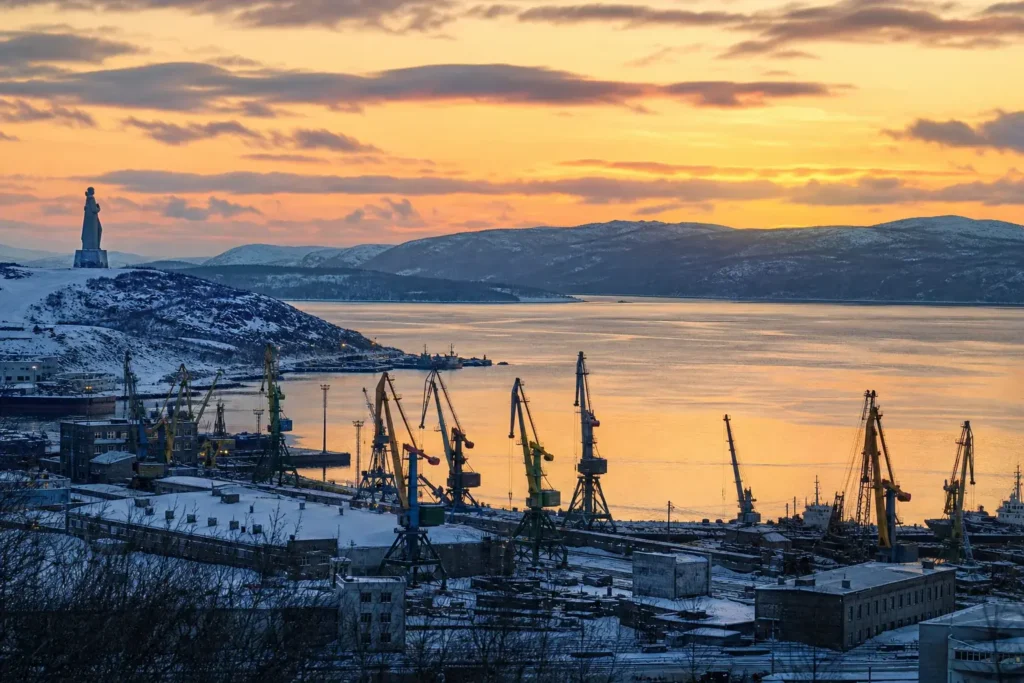
Begin at the Northern Fleet Naval Museum to understand Soviet Arctic naval power and WWII Arctic Convoy history. Walk to the harbor area to see the port infrastructure and industrial landscape. End the day at Alyosha, the 42-meter monument to Arctic defenders, which offers views across Kola Bay. This day emphasizes military history and Cold War strategy.
- Northern Fleet Naval Museum – WWII and Cold War naval exhibits covering Arctic Convoys and Soviet naval operations (2–3 hours)
- Murmansk Port waterfront – Industrial harbor with cranes and moorings; visible from multiple viewpoints (30 minutes)
- Alyosha Monument (Defenders of the Soviet Arctic) – 42-meter statue commemorating WWII Arctic defense; climb or view from base for harbor views (45 minutes)
- Monument to the Waiting Woman – Memorial to seafarers' families, near the port (20 minutes)
Tip: The Northern Fleet Naval Museum has exhibits mostly in Russian; consider hiring a guide or downloading reference materials about Arctic Convoys and Cold War naval operations. Bring a camera for the harbor views from Alyosha—the port's industrial cranes photograph well, especially in late afternoon light.
Day 2: Nuclear Icebreaker and Arctic Technology
Dedicate the day to the Lenin, the world's first nuclear-powered surface ship. Book an English-language guided tour to understand 30 years of Arctic service, the mechanics of nuclear propulsion, and how the ship broke ice for thousands of cargo vessels. Visit the Atomic Energy Information Center exhibition on board. This day is about industrial innovation and Arctic exploration.
- Lenin Nuclear Icebreaker Museum – World's first nuclear icebreaker (launched 1957, service 1959–1989); guided tour of captain's bridge, crew dining, power station, medical unit, and reactor observation (2.5–3 hours)
- Atomic Energy Information Center (on board Lenin) – Interactive exhibition on nuclear icebreaker fleet history, Northern Sea Route development, and Arctic ecology (1 hour)
- Murmansk Sea Terminal waterfront – View the commercial port and ship traffic; visible from the Lenin's observation areas (20 minutes)
Tip: Book your English-language tour of the Lenin in advance—Russian-language tours run regularly, but English tours require booking. Tours operate Wednesday to Sunday (check closing days). The ship's interior is cold; bring warm layers even in summer. Do not miss the view of the illuminated port cranes from the Lenin at dusk.
Day 3: Regional History and Arctic Heritage
Visit the Murmansk Regional Museum of Local Lore, recently reopened in 2025 on Pavlova Street. The four-floor exhibition covers indigenous Sami culture, Arctic exploration, WWII defense, and the city's role in Soviet industrialization. Then explore the city center's Soviet architecture and public spaces, which reflect the mid-20th-century industrial city planning.
- Murmansk Regional Museum of Local Lore – Four floors covering Sami culture, Arctic exploration, geology, WWII 'Wait For Me' exhibition, and Soviet industrialization; museum opened in current location in 2025 (2.5–3 hours)
- Five Corners Square (Ploschad Pyat'uglov) – Central Soviet-era square with historic Meridian and Azimuth hotels and state monuments (30 minutes)
- Central Park (Tsentralnyy Park) – Soviet public space with sculpture garden, statues, and neoclassical buildings (45 minutes)
- Museum of the History of the Murmansk Shipping Company – Maritime history focusing on Arctic shipping and commercial port operations (1–1.5 hours)
Tip: The Regional Museum was completely relocated and reopened in 2025; verify current opening days and hours before visiting, as it is still relatively new in its location. The 'Wait For Me' WWII exhibition and Sami culture displays are highlights that justify the full visit. Allow time to sit in the parks and observe Soviet architecture—the city's stark concrete buildings and grand Soviet monuments are part of the historical narrative.
Russia Vibes Tips
- Book the Lenin icebreaker tour (English-language) at least one day in advance through the official tourism portal or directly. Russian tours operate more frequently, but English-language tours are popular and fill quickly.
- The city was rebuilt after extensive bombing during WWII, so there is limited pre-Soviet architecture. The industrial port, Soviet monuments, and museums are the primary historical attractions; the atmosphere is more stark Arctic industrial port than charming historic center.
- Murmansk's role in Arctic Convoys (the 'Murmansk Run') during WWII brought supplies from the Allies to the Soviet Union; this geopolitical context enriches visits to the naval museum and Alyosha monument. Consider reading about Arctic Convoys before visiting.
- From the Lenin icebreaker and from Alyosha monument, you can see the commercial port with its cargo cranes and ships. Late afternoon and evening light reflects off the harbor and illuminated cranes—ideal for photography.
- The Museum of the Murmansk Shipping Company is smaller and specialized; prioritize it only if maritime commercial history interests you. The Regional Museum and Lenin icebreaker are more essential for a first visit.
- Winter visits (November to February) offer Northern Lights potential but extreme cold; dress very warmly and confirm museum and tour schedules, as some may have reduced hours. Summer (June to August) offers 24-hour daylight and milder temperatures, ideal for harbor walks.
Explore Nearby Industrial/History focus, Murmansk
Browse more: All Itineraries · All Itineraries in Murmansk · All Murmansk · All Themed Routes
FAQ
Is Murmansk a WWII history destination?
Yes. Murmansk was a strategic Arctic Convoy port during WWII, receiving Allied supplies for the Soviet Union. The city endured intense German bombing (1941–1944) and became known as 'City of Heroes.' The Northern Fleet Naval Museum, Alyosha monument, and Regional Museum all cover this period extensively.
Can I tour the inside of the Lenin icebreaker?
Yes. The Lenin is now a museum ship with guided tours of the captain's bridge, crew dining room, power station, medical unit, and reactor observation areas. Tours are typically in Russian; book an English-language guide in advance. The Atomic Energy Information Center exhibition is also on board.
Do I need a guide for the museums?
Not mandatory. Most exhibits in the Regional Museum have some English labels. The Lenin icebreaker tour is offered in Russian by default; guides provide context that enriches the visit. The Northern Fleet Naval Museum is largely in Russian; a guide or prior knowledge of Cold War naval history helps significantly.
What is Alyosha and why is it important?
Alyosha is a 42-meter concrete statue of a Soviet soldier built in 1974 to commemorate the Arctic defense during WWII. It overlooks Kola Bay and the harbor, symbolizing the city's role in defending the Soviet Arctic. It's Murmansk's most recognizable landmark.
How much time do I need for the Lenin icebreaker?
Plan 2.5 to 3 hours total: roughly 2 hours for the guided tour of the ship's interior and reactor observation, and 45 minutes to 1 hour for the Atomic Energy Information Center exhibition. Add time to view the harbor from the ship's observation decks.
What is the Arctic Convoy and why does it matter here?
The Arctic Convoys (1941–1945) were WWII supply missions from Britain and North America to Murmansk and Arkhangelsk, delivering aid to the Soviet Union. Murmansk was the primary destination. Thousands of sailors and soldiers died in Arctic conditions. This history is central to understanding the city's WWII identity.
Are there Soviet-era industrial sites open to visitors?
The Lenin icebreaker, port infrastructure visible from Alyosha and the waterfront, and Soviet architecture in Five Corners Square and Central Park showcase industrial heritage. The Museum of the Murmansk Shipping Company covers commercial Arctic shipping. Heavy industry sites (fishing plants, refineries) are not typically open to tourists.
When is the best time to visit?
Summer (June to August) offers mild weather, 24-hour daylight, and reliable museum hours. Winter (November to February) offers Northern Lights but extreme cold and potential museum closures. Spring and autumn are intermediate. Confirm specific museum schedules before booking.
Russia Vibes is a one-person project. A coffee keeps it going
How we research and update our guides
About this guide: AI assistance and accuracy
This guide is created with the help of AI and is based on official sources where available. Mistakes can still happen. Opening hours, prices, rules and other details are given to the best of our knowledge as of the date shown and can change without notice. It offers general recommendations only, not professional, legal or travel advice. Please confirm important details with the official source before you travel; you are responsible for your own plans and decisions.

Take this guide with you
Get a free PDF of this guide to print or read offline: key facts, tips and a map link on a few clean pages.
Report an issue on this page
Paying for your trip: please read
International sanctions affect payments between Russia and many other countries. In practice, cards issued in the EU, the UK, the US and several other countries often do not work in Russia, Russian cards usually do not work abroad, and some booking platforms, airlines and payment providers limit or suspend their services for Russia. The situation changes frequently.
We do not give legal or financial advice, and this site does not encourage anyone to break or circumvent sanctions. Whatever you plan, you are responsible for following the laws and regulations that apply to you, including those of your country of residence and citizenship.
Many travelers still organise their stay lawfully. It is worth asking your bank or payment provider what is currently permitted, contacting hotels, tour operators and carriers directly about the payment methods they accept, and checking which services are open to customers from your country. Clarify payment, cancellation and refund terms before you commit to a booking, and keep your plans flexible.
Partner links on this site may not be available in every country, and prices, availability and rules in our guides can differ from what you see when you book.