
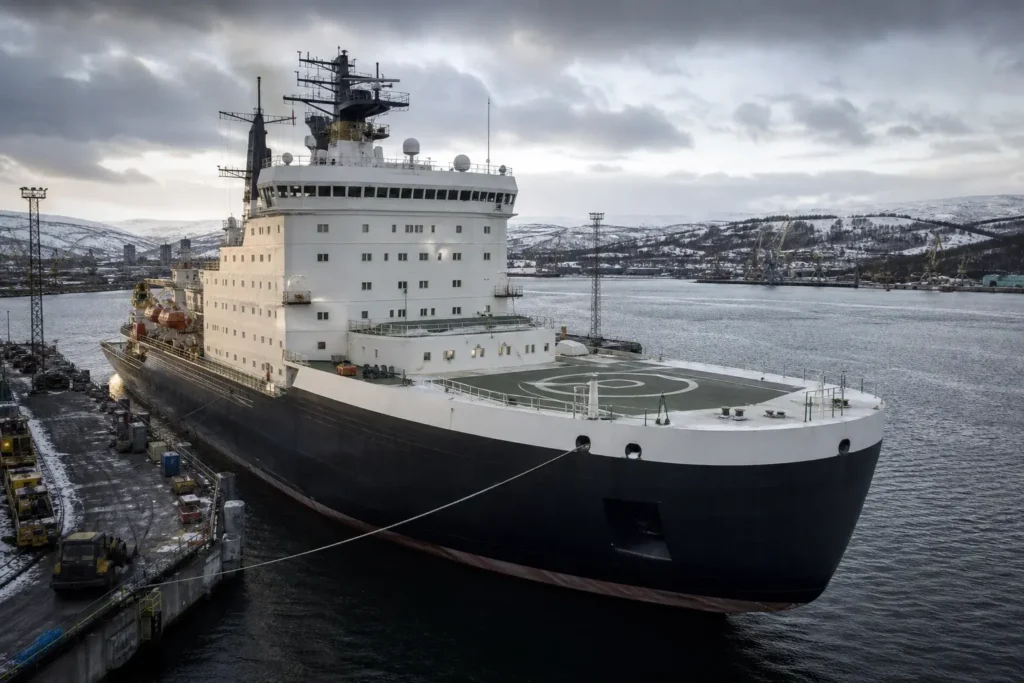
The Lenin Nuclear Icebreaker is the world’s first surface vessel with a nuclear power plant. Built in 1956–1959 at the Admiralty Shipyards in Leningrad and launched in 1957, this pioneering vessel marked a breakthrough in Arctic engineering. On September 12, 1959, it began its first trials, and worked for 30 years before being decommissioned in 1989.
Today, the Lenin is moored in the center of Murmansk near the sea station and has become a landmark of the Murmansk region and one of the most visited tourist sites. The ship is now the only object of cultural heritage of federal significance in the city of Murmansk, operated as the Arctic Exhibition Center by Rosatom’s Atomflot subsidiary.
Current access notice: As of October 2026: Opening hours and tour availability may vary seasonally. Tours operate in limited groups with advance booking strongly recommended, especially during peak travel seasons. Contact the museum directly or check the official website for current schedules and availability.
Quick Facts
| Russian name | Атомный ледокол «Ленин» |
|---|---|
| Built / opened | 1959 |
| Architect(s) | Admiralty Shipyards (Central Design Bureau-15) |
| Address | плавпричал а/л «Ленин», Portovyy Proyezd, 25, Murmansk OpenStreetMap · Google Maps |
| District | Murmansk Oblast |
| Opening hours | Wed-Sat 12:00-16:00; Sun 12:00-16:00; Mon-Tue closed |
| Admission | ₽₽ |
| Best time to visit | Best visited May to September during Murmansk's summer and extended daylight hours. The ship's exterior is accessible year-round, and tours operate in winter, but extreme cold (below −20°C) and heavy snow can make outdoor approach difficult. Weekday visits before mid-June or after late August typically involve shorter wait times and easier tour booking. Early morning tours (if available) are less crowded than midday slots. |
| Recommended duration | 1.5–2 hours |
| Website | rosatomflot.ru |
What Is (and Isn't) Part of a Visit to Lenin Nuclear Icebreaker, Murmansk?
| Part | Status | Notes |
|---|---|---|
| Ship interior tour (guided only) | Included in the standard ticket | All visitors must participate in a guided tour; independent exploration is not allowed. |
| Crew cabins and living quarters | Included in the standard ticket | Preserved original accommodations are part of the standard tour route. |
| Engine room and reactor compartment | Included in the standard ticket | The reactor is safely decommissioned; visitors view it through barriers. |
| Captain's bridge and quarters | Included in the standard ticket | High-level navigation and command areas are part of standard tours. |
| Atom and the Arctic exhibition | Separate ticket or institution | Interactive exhibits on Arctic history and nuclear icebreaking are supplementary; timing and access may vary. |
| Photography | Included in the standard ticket | Personal photography is generally allowed during tours; check with your guide for any restricted areas. |
| Dining and facilities | Not open to visitors | No food or beverage service is available on board; no cafes or shops inside the ship. |
| Extended Arctic route visits or overnight stays | Outside / not part of it | The ship does not operate or sail; it is permanently moored as a museum. |
Why Visit Lenin Nuclear Icebreaker, Murmansk?
The Lenin offers a rare glimpse into a technological milestone. The icebreaker led thousands of ships through Arctic ice and itself traveled 654,400 nautical miles—more than three times the distance from Earth to the Moon. Visitors can step on board to learn about Russia’s nuclear icebreaker fleet, see compartments and crew cabins, and view the reactor compartment safely. The museum offers organized tours of the crew dining room, power station, medical unit, club room, captain’s salon and captain’s bridge, including the wardroom where famous political and cultural figures were met.
How Lenin Nuclear Icebreaker, Murmansk Is Laid Out
The icebreaker is located at the Marine Station pier in the city center. Entry is from the dock side on Portovyy Proyezd. Visitors board through a single entrance onto the main deck. The interior features steep ladders and tight spaces characteristic of the ship’s design. A typical tour moves through connected decks and compartments in sequence, with the captain’s bridge and reactor compartment among the last stops. The tour path is fixed; independent exploration is not permitted.
Highlights of Lenin Nuclear Icebreaker, Murmansk
Engine Room and Reactor Compartment
The engine room and nuclear reactor compartment (decommissioned and made safe) are major stops on the guided tour. The reactor compartment is sealed and viewed through protective barriers. This section shows how reactor heat became shaft power, explaining the ship's unique energy system that allowed continuous operation in remote polar waters without fuel resupply.
Tip: The reactor section has limited viewing space; arrive early in the tour group to secure a good vantage point before the compartment becomes crowded.
Captain's Bridge and Quarters
The captain's bridge is included in organized tours. From this vantage point high on the vessel, you see the original navigation equipment, charts, and controls used to command the ship through polar ice. The captain's quarters nearby preserve the original furnishings and personal spaces, showing the stark contrast between command and crew accommodations.
Tip: The bridge is often the highlight; guides sometimes demonstrate original equipment. Ask your guide to explain the specific challenges of Arctic navigation and how the ship's design addressed them.
Crew Dining Room and Recreation Spaces
The vessel was equipped with wide passages, a bathhouse, recreation room, photo lab, film projector and library. The crew dining room is part of the museum tour. The dining area served as a cinema and hosted famous political and cultural figures over the years, adding historical significance to everyday spaces.
Tip: The dining room and recreation areas feel surprisingly comfortable for a polar vessel, reflecting the Soviet emphasis on crew morale during long Arctic seasons. Look for period photographs and crew memorials displayed here.
Medical and Technical Facilities
The ship's medical unit is included in organized tours. The medical section featured an operation room, dental and x-ray facilities, demonstrating the ship's self-sufficiency for a 30-year mission in one of Earth's most remote and demanding regions.
Tip: The medical facilities are compact but well-equipped, showing how Soviet engineers solved the problem of healthcare in extreme polar conditions. It's a practical insight into long-duration Arctic operations.
Crew Cabins and Living Quarters
During tours through the decks and compartments, you can see how polar sailors lived and worked. Individual cabins, bunkrooms, and shared spaces show the hierarchy of shipboard life, from officers' accommodations to crew berths. The preserved interiors reveal daily life aboard a functioning nuclear vessel.
Tip: The narrow corridors and compact spaces reflect the engineering constraints of a working ship. Claustrophobic visitors should check these conditions before booking; guides cannot reroute tours.
Information Centre on Atomic Energy
On board the nuclear icebreaker Lenin there is an Information Centre on Atomic Energy and a permanent exhibition "Atom and the Arctic" – an interactive museum and educational complex on the history of the nuclear icebreaker fleet, the development of the Northern Sea Route, industrial development, climatic features and ecology of the Arctic. This exhibition provides context for the vessel's role in Soviet Arctic ambitions.
Tip: The 'Atom and the Arctic' exhibition is supplementary to the ship tour; allow extra time if you want to study the Arctic shipping history and nuclear technology exhibits in depth.
Atmosphere
The nuclear icebreaker Lenin is an absolutely massive and majestic vessel; standing next to it, you can’t help but feel amazed by its sheer size and powerful design, a true symbol of human engineering and Arctic exploration. The ship feels frozen in time—original Soviet-era furnishings, worn-in crew spaces, and functional machinery create an authentically industrial atmosphere rather than a polished museum feel. Guides move tour groups through narrow corridors and steep metal stairs at a steady pace. The air inside has the metallic smell of an old working ship. The area around the icebreaker is beautifully maintained, with clean walkways, informative plaques, and a great view of the Murmansk harbor.
History of Lenin Nuclear Icebreaker, Murmansk
Launched in 1957, the Lenin is both the world’s first nuclear-powered surface ship and the first nuclear-powered civilian vessel. Built at the Admiralty Plant in Leningrad in 1956–1959, more than 500 enterprises and institutions of the USSR took part in its creation. It was commissioned on December 3, 1959.
Lenin entered operation in 1959 and worked clearing sea routes for cargo ships along Russia’s northern coast. From 1960 to 1965 the ship covered over 157,000 kilometres (85,000 nautical miles) during the Arctic navigation season, of which almost 120,000 km (65,000 nmi) was through ice. Nuclear power proved to be an ideal technology for a vessel working in such a remote area as it removed the need for regular replenishment of fuel. From 1967 to 1971 Lenin was refurbished, with new capabilities developed in the process.
On 10 April 1974 the vessel was awarded the Order of Lenin. The icebreaker worked for 30 years and in 1989 was decommissioned and put into permanent mooring in Murmansk. Today, the nuclear icebreaker Lenin is a museum and the only cultural heritage site of federal significance in Murmansk.
On May 5, 2009, the Lenin nuclear-powered icebreaker moored in the center of Murmansk near the sea station, quickly becoming a landmark of the Murmansk region and one of the most visited tourist sites in the Kola North. The furniture, interior decoration of the icebreaker and mechanisms have been preserved in their original form. The vessel is equipped with wide passages, a bathhouse, a recreation room, a photo lab, a film projector and a library.
Tickets and Booking for Lenin Nuclear Icebreaker, Murmansk
| Ticket | Price | Includes |
|---|---|---|
| Standard adult ticket with guided tour | ₽₽ | Admission to the ship and mandatory guided tour through main compartments, decks, engine room, and reactor section. |
| Children and student tickets | ₽ | Reduced-price entry with the same guided tour as adults. Age and student ID requirements apply. |
| Group bookings | ₽₽ | Discounted rates for groups; specialized tours may be arranged in advance by prior request. |
₽ budget · ₽₽ moderate · ₽₽₽ upscale · ₽₽₽₽ splurge. Price levels are estimates compared with typical prices for visitors.
Tours are available in English, but you should call ahead to arrange one. Advance booking is highly recommended, as excursions have limited spots (around 60 people per tour), and booking in advance is needed to guarantee entry and avoid long queues.
How to book: Contact the museum directly via telephone at +7 911 345-67-77 or by email at leninexpo@rosatomflot.ru to arrange your tour time and language preference. Online booking is not typically available; same-day visits depend on group availability and may involve extended wait times.
Tours operate on a fixed schedule and depart at set intervals throughout opening hours. Rates for Russian citizens and concessions (students, pensioners, children under specific ages) differ from international visitor prices. For all ticket categories and the most current pricing, visit the official website at www.rosatomflot.ru.
Plan and Book
Suggested itineraries Lenin Nuclear Icebreaker, Murmansk
1.5 hours
Standard guided tour. Begin on the main deck and move through crew quarters, dining room, and recreation spaces. Continue to the medical unit and officer's quarters, then ascend to the captain's bridge. Finish with a view of the engine room and reactor compartment. Photograph key areas during stops.
2–2.5 hours
Extended tour including the standard route plus time in the Atom and the Arctic exhibition. Allow 30–40 minutes after the ship tour to explore interactive displays on Arctic history, nuclear technology, and the Northern Sea Route before departure.
Half day (3–4 hours)
Combine the icebreaker tour with a walk around Murmansk harbor and central waterfront. After the ship tour, visit the nearby Marine Station area and explore the harbor embankment, then explore the city's Arctic museums or central pedestrian streets such as Lenin Prospect.
How to Get to Lenin Nuclear Icebreaker, Murmansk
The icebreaker is located at the Marine Station pier in the city center, at Portovyy Proyezd, 25 in Murmansk. Reaching this unique landmark is quite easy, regardless of which part of the city you are in.
By transport: Take a taxi, ride-share app, or local bus to the Marine Station or Portovyy Proyezd. The ship is visible from a distance and is one of Murmansk’s most recognizable landmarks. No metro access is available; the nearest bus stops are within a 5–10 minute walk.
On foot: From Murmansk’s central Lenin Prospect, walk north toward the waterfront. The icebreaker’s distinctive silhouette appears as you approach the harbor. Allow 15–20 minutes walking from the city center. The final approach is via a dedicated walkway along the marine terminal quay.
Accessibility
Access to the ship is via external stairs and a sloped walkway to the main deck; no elevator or wheelchair ramp is available. The interior features steep ladders and tight spaces characteristic of the ship's design. Visitors with mobility restrictions, claustrophobia, or heart conditions should consult the museum in advance; not all areas are accessible, and tours cannot be adapted. No companion access fee discounts are advertised. Narrow passages and steep metal stairs limit accessibility for parents with strollers or large bags.
Food Nearby
No food or beverages are available on board. The area around the icebreaker is beautifully maintained with clean walkways and informative plaques; several food trucks are nearby offering tasty snacks and hot drinks. The Marine Station area typically has seasonal kiosks and vendors. For sit-down dining, walk 10–15 minutes inland toward the city center or explore restaurants along Lenin Prospect.
What to Bring
Wear comfortable walking shoes with good grip, as metal stairs and walkways can be slippery, especially in wet or icy conditions. Bring a warm jacket and layers, as the ship's interior can be cold and drafty. The narrow spaces mean a small backpack is better than a large bag; check bag policy with staff on arrival. A camera or phone for photography is recommended. Avoid high heels and loose clothing that could catch on ship equipment.
Best Views and Photo Spots of Lenin Nuclear Icebreaker, Murmansk
Vessel's starboard side from the harbor embankment
Full-length view of the Lenin's hull and superstructure from the waterfront. The ship's distinctive shape and scale dominate the frame. Best perspective for capturing the ship's size and Arctic design.
Best time: Mid-morning to early afternoon for even light. Clear autumn days (September–October) provide sharp definition against the sky.
Bow section close-up
Powerful reinforced bow and anchor systems designed for ice-breaking. The ship's rugged, functional aesthetic is apparent in the metal plating and equipment.
Best time: Early morning light emphasizes the weathered texture and industrial details.
Captain's bridge exterior and helipad
Upper structure with navigation equipment and the ship's distinctive helipad. This vantage shows the command hierarchy of the vessel's architecture.
Best time: Afternoon light from the harbor side; summer days with extended daylight allow evening shots.
Ship and Murmansk harbor backdrop
The Lenin positioned against the harbor's industrial context, showing its role in Murmansk's Arctic maritime landscape.
Best time: Clear weather with minimal industrial haze; late May to August when Murmansk has near-24-hour daylight.
Photography Rules
Personal photography is generally permitted during tours. Tripods and professional camera equipment may be restricted; check with your guide. Flash photography in confined spaces is discouraged. Drones are not permitted on the ship or its immediate vicinity.
Family Suitability
The Lenin is suitable for children aged 8 and up with adult supervision. Younger children may struggle with steep metal stairs and narrow passages; the confined spaces can be frightening for very young or claustrophobic children. The interior features steep ladders and tight spaces, which are not stroller-friendly. Parent-child tours in English require advance booking and may not always be available. The tour's educational value appeals to school-age children interested in technology and history. No dedicated family facilities, changing areas, or child-specific programming are available on board.
Russia Vibes Tips
- Book your tour by phone at least one day in advance, especially in summer. Long wait times and limited excursion spots can be a significant drawback without online booking. English-language guides must be specifically requested when booking.
- Wear supportive, slip-resistant shoes. Metal stairs and deck surfaces are frequently cold and may be wet or icy. Sneakers with good grip are essential; avoid sandals and smooth-soled shoes.
- Tours depart on fixed schedules and move as a group through the ship. Don't linger too long in early compartments, or you'll miss the reactor and bridge sections that tours rarely extend for. Arrive 15 minutes early to board with your group.
- The interior can be unexpectedly cold, especially below decks and in engine spaces. Bring a jacket even in summer, and multiple layers allow you to adjust. The ship is not climate-controlled.
- Large bags and backpacks are discouraged in tight spaces and on narrow stairs. Bring a small crossbody bag or camera bag instead of a full rucksack. Ask staff about bag restrictions on arrival.
- Ask your guide to explain the original nuclear reactor system and the 1970 reactor upgrade. The technical details are rarely explained in English tours; requesting clarification makes the engine room visit more meaningful.
Explore Nearby Lenin Nuclear Icebreaker, Murmansk
Related guides
 Murmansk Marine Station: Gateway to the Arctic and the Lenin Icebreaker
Main image: AI-generated illustration. It may not show the place exactly as it looks.
Browse more: More in Murmansk Oblast · All Murmansk · All Museums · All Sightseeing · All Sightseeing in Murmansk
FAQ: Lenin Nuclear Icebreaker, Murmansk
Is the nuclear reactor still active or dangerous?
The reactor compartment is safely accessible (decommissioned and made safe). Fuel and radioactive materials were removed during decommissioning in 1989. Visitors view the reactor through protective barriers and receive no radiation exposure. The vessel has been a safe, stable museum for over 15 years.
Can I book a tour online?
No online ticket system is available. Tours must be booked directly by phone (+7 911 345-67-77) or email (leninexpo@rosatomflot.ru). Advance booking by at least one day is strongly recommended. Same-day visits are possible only if group spots remain.
Are English-language tours available?
Tours are available in English, but you should call ahead to arrange one. English tours are not automatic; request the language when booking. Availability depends on guide scheduling and advance notice.
How long does the tour take?
Most tours last 1.5 to 2 hours, including the guided route through crew quarters, engine room, bridge, and reactor compartment. Additional time may be spent in the Atom and the Arctic exhibition if you choose to visit.
Is the ship still in working condition or truly a museum?
After decommissioning in 1989, the Lenin was preserved and converted into a fascinating museum complex. The ship is permanently moored and does not operate. It functions purely as a museum and cultural heritage site.
Can I take photographs inside the ship?
Personal photography is generally permitted during tours. Professional tripods and large camera equipment may be restricted. Ask your guide if any compartments are off-limits for photography.
What is the difference between the ship tour and the Atom and the Arctic exhibition?
The icebreaker museum offers organized tours of various crew areas, and there is also an Information Centre on Atomic Energy and a permanent exhibition "Atom and the Arctic" – an interactive museum on the history of the nuclear icebreaker fleet and Arctic development. The ship tour is mandatory and included; the exhibition is supplementary.
Are there age restrictions or limits for children?
There is no strict age limit, but children under 8 may find the steep stairs and confined spaces challenging. Very young children and strollers are not practical. Consider the child's comfort with tight spaces and height before booking.
Russia Vibes is a one-person project. A coffee keeps it going
How we research and update our guides
About this guide: AI assistance and accuracy
This guide is created with the help of AI and is based on official sources where available. Mistakes can still happen. Opening hours, prices, rules and other details are given to the best of our knowledge as of the date shown and can change without notice. It offers general recommendations only, not professional, legal or travel advice. Please confirm important details with the official source before you travel; you are responsible for your own plans and decisions.

Take this guide with you
Get a free PDF of this guide to print or read offline: key facts, tips and a map link on a few clean pages.
Report an issue on this page
Paying for your trip: please read
International sanctions affect payments between Russia and many other countries. In practice, cards issued in the EU, the UK, the US and several other countries often do not work in Russia, Russian cards usually do not work abroad, and some booking platforms, airlines and payment providers limit or suspend their services for Russia. The situation changes frequently.
We do not give legal or financial advice, and this site does not encourage anyone to break or circumvent sanctions. Whatever you plan, you are responsible for following the laws and regulations that apply to you, including those of your country of residence and citizenship.
Many travelers still organise their stay lawfully. It is worth asking your bank or payment provider what is currently permitted, contacting hotels, tour operators and carriers directly about the payment methods they accept, and checking which services are open to customers from your country. Clarify payment, cancellation and refund terms before you commit to a booking, and keep your plans flexible.
Partner links on this site may not be available in every country, and prices, availability and rules in our guides can differ from what you see when you book.