
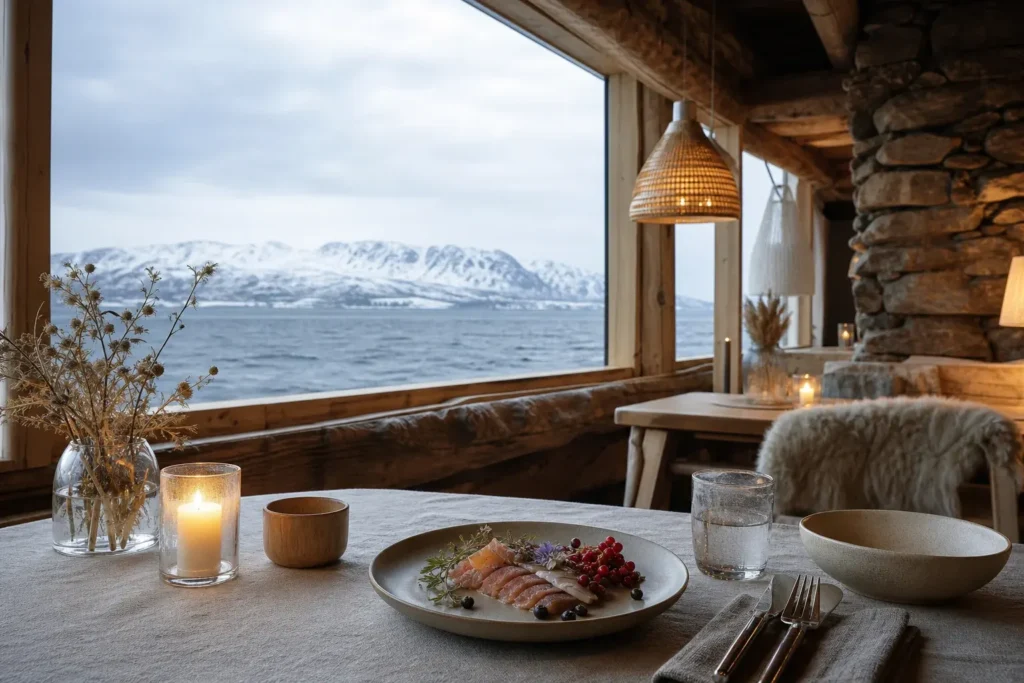
This food-focused itinerary in Murmansk is for travelers who want to understand a region through what it eats. The Arctic is emerging as a distinct culinary identity, and Murmansk’s chefs are leading the way by anchoring menus in Barents Sea catches, local game, and wild ingredients from the surrounding tundra.
Over three days, you will move from casual street food and traditional Pomor fishing culture to contemporary tundra cuisine in proper restaurants. Expect smoked fish, crab, reindeer, halibut, cloudberries and lingonberries, and dishes that reflect centuries of survival and adaptation in one of the world’s harshest environments.
At a glance: Day 1 explores casual Arctic street food, local fish specialities and cafes. Day 2 focuses on fine dining Arctic cuisine at flagship restaurants. Day 3 visits food producers and markets to understand where ingredients come from.
Day 1: Arctic Street Food and Local Fishery Culture
Start with the casual side of Arctic food. Begin at a café serving traditional dishes from Pomor (fishermen) heritage—smoked fish, simple soups, and street snacks that carry the tastes of centuries at sea. Morning coffee in a local spot sets the tone before you explore traditional Murmansk food on foot.
- Surf Coffee x Arctic Ocean – Espresso and Arctic-themed spot (1 hour)
- Gray Goose – Street food and casual dining with Arctic specialties like crab belyash (1–2 hours)
- Tarelka – Budget-friendly Russian soups and comfort food (1 hour)
- Tsarskaya Okhota – Smoked fish boards and Pomor-inspired seafood dishes (2–3 hours)
Tip: Walk these stops in a loop from the city center. Gray Goose has food truck locations at urban fairs—check current timing as these are mobile. Book Tsarskaya Okhota in advance if dining at dinner.
Day 2: Contemporary Arctic Cuisine Fine Dining
Enter the world of tundra cuisine, a movement that began in 2018 when Murmansk chefs united to create a modern identity for Arctic food. Dine at two flagship restaurants that show different interpretations: one rooted in traditional Russian and Pomor heritage, one in contemporary technique. Expect venison, crab, halibut, reindeer, and foraged berries in elaborate dishes.
- Tundra Grill & Bar – 'Made in Arctic' menu with local tundra farmstead ingredients, decorated with natural materials (2–3 hours)
- Terrasa Lounge-Cafe – Barents Sea seafood, game meats, open kitchen, city views from multiple levels (2–3 hours)
Tip: Both require advance booking, especially for dinner. Tundra is the newer and more experimental venue; Terrasa has been established longer. The cocktails at Terrasa include Arctic-inspired drinks with local herbs and berries.
Day 3: Source and Savor—Producers and Markets
Understand where Arctic food comes from. Visit a producer or market focused on seafood processing, then end with a restaurant that showcases the full supply chain. This day reveals the industrial backbone of Arctic eating: what ships bring from the Barents Sea, how it is processed, and which restaurants champion these products.
- Belokamenka Market – Retail fish and seafood from a local producer, frozen and fresh products at source prices (1–2 hours)
- Pomorsky Koch (if operating) – Fast food café serving regional seafood specialties (45 minutes)
- Restaurant Arktika – Hotel restaurant with buffet and à la carte menu emphasizing local seafood and Russian cuisine (2–3 hours)
Tip: Call ahead for Belokamenka hours; it is a working market and may have limited retail hours. Pomorsky Koch is a street food spot; confirm it is open that day. Arktika is in the Azimut Hotel building, tallest structure above the Arctic Circle—worth the location for its views and consistency.
Russia Vibes Tips
- The concept of 'Arctic cuisine' is young (launched in 2018). Not all restaurants use these ingredients consistently; check current menus on official websites before booking, as suppliers and seasons affect what is available.
- Smoked fish and sea urchins are Murmansk specialties rarely found elsewhere in Russia. Order these early in your meal before supplies run out.
- Reindeer tongue, cloudberry tea, and cowberry (lingonberry) spirits are acquired tastes but define Arctic drinking culture. Ask staff for explanations—they are proud of these.
- Booking in advance is essential. Many restaurants have limited seating and cater to large groups; walk-ins may face long waits or disappointment, especially at dinner.
- Winter daylight is minimal (October to February), but this does not affect restaurant hours. Summer white nights (June–July) mean extended evening restaurant service is less essential.
- Many restaurants close on Mondays or have shortened hours. Check opening times and closing days before each visit.
Explore Nearby Food/culinary, Murmansk
Browse more: All Itineraries · All Itineraries in Murmansk · All Murmansk · All Themed Routes
FAQ
What is Arctic cuisine?
Arctic cuisine in Murmansk emerged in 2018 as chefs united to create a modern identity using local Barents Sea fish (cod, halibut, salmon), game (reindeer, moose), foraged berries (cloudberry, lingonberry), and seaweed. It blends traditional Pomor fisherman food with contemporary technique.
Is seafood from the Barents Sea safe to eat?
Yes. Murmansk is famous for producing cod, wolffish, halibut, sea urchins, and northern shrimps that are exported globally. The waters are cold and clean. Choose restaurants that emphasize local sourcing.
Can I visit a fish market to buy fresh seafood?
Yes. Belokamenka is a producer-retail market in Murmansk. Other small fish markets exist but are tiny with few stalls. Supermarkets offer more range than traditional fish markets. Call ahead to confirm hours.
Do I need to book restaurants in advance?
Yes, especially for dinner and on weekends. Arctic cuisine restaurants have limited seating and are popular with tour groups. Book at least one day ahead. Budget cafés accept walk-ins.
What is zaeburikha?
Zaeburikha is a traditional Pomor dish between fish stew and soup, made of boiled fish (most often cod) with potatoes, carrots and onions.
What are reindeer moss chips?
Reindeer moss is a lichen that wild herds eat. In Arctic cuisine, it is harvested, cleaned, and served as a crisp snack or garnish. It has an earthy, slightly mineral taste. Try it as a starter.
Are there vegetarian options in Arctic restaurants?
Yes, but limited. Most menus are meat and seafood focused. However, foraged berries, pickled vegetables, bread, and mushroom dishes appear on nearly every menu. Inform the restaurant in advance if you require vegetarian meals.
What is the price range for dining?
Budget cafés (Tarelka, Bely Krolik) range from ₽ to ₽₽. Mid-range restaurants (Gray Goose, Tsarskaya Okhota) are ₽₽ to ₽₽₽. Fine dining (Terrasa, Tundra, Dekante) is ₽₽₽ to ₽₽₽₽. Prices are moderate by international standards.
Russia Vibes is a one-person project. A coffee keeps it going
How we research and update our guides
About this guide: AI assistance and accuracy
This guide is created with the help of AI and is based on official sources where available. Mistakes can still happen. Opening hours, prices, rules and other details are given to the best of our knowledge as of the date shown and can change without notice. It offers general recommendations only, not professional, legal or travel advice. Please confirm important details with the official source before you travel; you are responsible for your own plans and decisions.

Take this guide with you
Get a free PDF of this guide to print or read offline: key facts, tips and a map link on a few clean pages.
Report an issue on this page
Paying for your trip: please read
International sanctions affect payments between Russia and many other countries. In practice, cards issued in the EU, the UK, the US and several other countries often do not work in Russia, Russian cards usually do not work abroad, and some booking platforms, airlines and payment providers limit or suspend their services for Russia. The situation changes frequently.
We do not give legal or financial advice, and this site does not encourage anyone to break or circumvent sanctions. Whatever you plan, you are responsible for following the laws and regulations that apply to you, including those of your country of residence and citizenship.
Many travelers still organise their stay lawfully. It is worth asking your bank or payment provider what is currently permitted, contacting hotels, tour operators and carriers directly about the payment methods they accept, and checking which services are open to customers from your country. Clarify payment, cancellation and refund terms before you commit to a booking, and keep your plans flexible.
Partner links on this site may not be available in every country, and prices, availability and rules in our guides can differ from what you see when you book.