
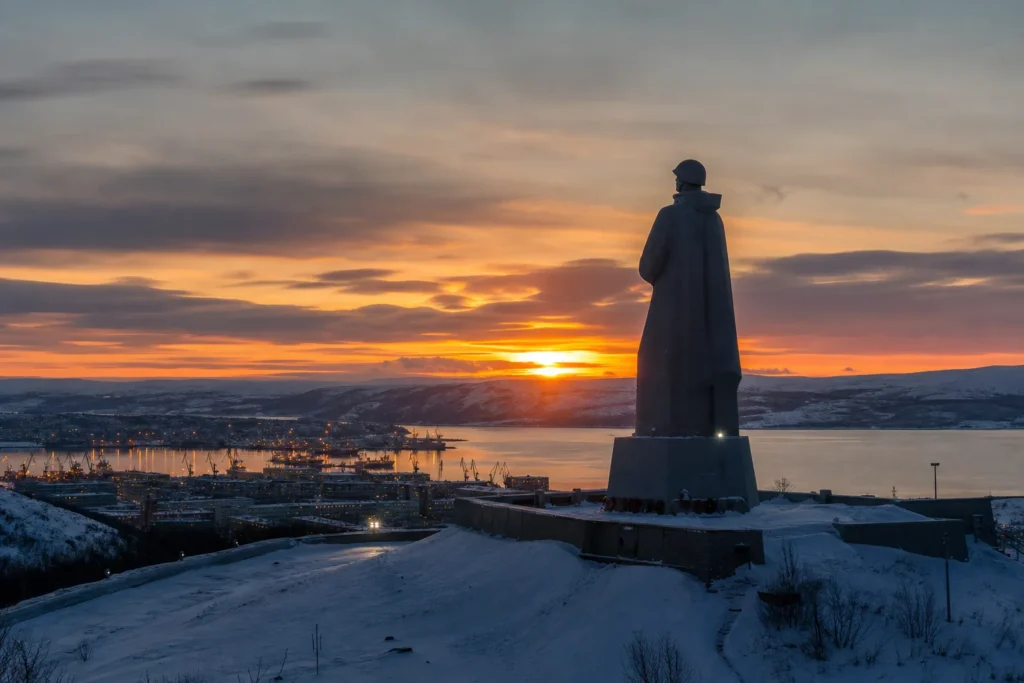
Murmansk, the world’s largest city within the Arctic Circle, offers a unique mix of Soviet-era landmarks, military history, and Arctic culture spread across its museums and public spaces. This guide covers the top attractions from Murmansk’s extensive roster of sites, chosen for their accessibility, historical significance, and appeal to international visitors.
Whether you’re drawn to maritime history, war memorials, Arctic culture or natural sites, you’ll find 10 essential stops that capture what makes Murmansk distinct. Most attractions cluster near the city center and around Five Corners Square, within easy reach of each other by local transport.
At a Glance
| # | Place | Best for | Good to know |
|---|---|---|---|
| 1 | Alyosha Monument | Iconic Arctic landmark | Zeleniy Mys promontory; free entry; easily accessed by local transport |
| 2 | Lenin Nuclear Icebreaker | Cold War maritime museum | Murmansk seaport; paid entry; English-speaking guides available; allow 1.5–2 hours |
| 3 | Murmansk Regional Museum of Local History | Arctic history and natural exhibits | City center; paid entry; family-friendly; 1–2 hours to explore core exhibits |
| 4 | Northern Fleet Naval Museum | Military maritime heritage | City center; paid entry; guided tours recommended for historical context |
| 5 | Memorial Complex to the Soldiers and Seamen Who Died in Peaceful Time | Submarine disaster memorial | Murmansk harbor area; free entry; accessible by local transport; 20–30 minutes to visit |
| 6 | Murmansk Oceanarium | Arctic marine life | City center; paid entry; family-friendly; check current hours before visiting |
| 7 | Church of the Savior on the Waters | Modern Orthodox sanctuary | Harbor district; free entry; typically open mornings and evenings; 15–20 minutes to visit |
| 8 | Monument to Waiting Woman | Harbor viewpoint | City center promenade; free; accessible by bus; 15–20 minutes |
| 9 | Kola Bay | Fjord landscape and viewpoints | Multiple access points; free; best visited by organized tour or with a guide for safety on remote areas |
| 10 | Waterfall on the River Lavna | Natural Arctic site | Outside city center; free; requires local transport or organized tour to reach safely |
| 11 | Murmansk Regional Art Museum | Regional art and design | City center; paid entry; 1–2 hours to explore |
How We Chose
These attractions were selected based on:
- Accessibility to international visitors (centrally located or easily reached by public transport)
- Operating status verified through official sources and current visitor reviews
- Significance to Murmansk’s identity as an Arctic city and strategic wartime location
- Mix of cultural, historical and natural sites to suit different visitor interests
- Facilities for independent visiting (not requiring tours, though guided options exist)
1. Alyosha Monument – Iconic Arctic landmark
Officially named Defenders of the Soviet Arctic, this 42-meter-tall statue of a soldier overlooks the city and was built in 1974 to commemorate the Soviet defence of the Arctic during World War II. The grassy hill surrounding Alyosha provides good hiking grounds with dirt footpaths leading back towards the city. From the base you see panoramic views of Murmansk and Kola Bay. A must-visit for understanding the city's WWII role.
Good to know: Zeleniy Mys promontory; free entry; easily accessed by local transport
Tip: Go early in the day for the best light for photographs across the bay; the hill provides shelter from wind
2. Lenin Nuclear Icebreaker – Cold War maritime museum
Built in 1957, the Lenin Icebreaker played a pivotal role in opening up Arctic routes for commercial shipping. Since 1989, the icebreaker, which has served for 30 years, has been permanently moored in the seaport of Murmansk. After renovation work, it was converted into a museum. The museum has interactive exhibits, including simulators that allow visitors to experience the icebreaker's maneuvering firsthand.
Good to know: Murmansk seaport; paid entry; English-speaking guides available; allow 1.5–2 hours
Tip: Book a guided tour if available—the engine room and navigation deck are most interesting with expert explanation
3. Murmansk Regional Museum of Local History – Arctic history and natural exhibits
Murmansk Regional Museum of Local Lore was founded on October 17, 1926. This is the largest museum of the Murmansk region. Its comprehensive collections encompass the natural history, ethnography, archaeology, and modern history of the Kola Peninsula. The museum showcases artifacts and exhibits that narrate the story of the region, including its indigenous peoples, military history, and the development of the city of Murmansk.
Good to know: City center; paid entry; family-friendly; 1–2 hours to explore core exhibits
Tip: Visit on a rainy day for an unhurried exploration; the Arctic wildlife section appeals to visitors of all ages
4. Northern Fleet Naval Museum – Military maritime heritage
The city is also known for its many unique museums, including Naval Museum of the Northern Fleet. The museum covers the strategic naval role of the Northern Fleet during the Soviet era and Cold War. Displays include naval uniforms, weapons, documents and photographs showing the Arctic's military significance.
Good to know: City center; paid entry; guided tours recommended for historical context
Tip: Worth combining with a visit to the Lenin Icebreaker for a full day of maritime history
5. Memorial Complex to the Soldiers and Seamen Who Died in Peaceful Time – Submarine disaster memorial
Next to the lighthouse is a small museum with artifacts, including diaries of sailors. Since the Kursk accident in the Barents Sea in 2009, the site has become a memorial for submariners as well. Free. The lighthouse structure and memorial overlook the port, offering both historical context and views across Kola Bay.
Good to know: Murmansk harbor area; free entry; accessible by local transport; 20–30 minutes to visit
Tip: Combine with a walk to the nearby Church of the Savior on the Waters for a circuit around the harbor
6. Murmansk Oceanarium – Arctic marine life
The Murmansk Oceanarium offers a delightful experience for families and marine life enthusiasts. The aquarium features fish and marine creatures from the Barents Sea and Arctic waters, with interactive displays and information about Arctic ecosystems. Programs typically last 40–45 minutes.
Good to know: City center; paid entry; family-friendly; check current hours before visiting
Tip: Plan 1.5 hours including viewing time; often crowded in afternoons during school holidays
7. Church of the Savior on the Waters – Modern Orthodox sanctuary
This church is just up the hill from the lighthouse shaped memorial. It is a small church, but looks out over the port. Built in modern times, it serves as a memorial and place of worship overlooking Kola Bay. A white wooden structure with traditional Orthodox design.
Good to know: Harbor district; free entry; typically open mornings and evenings; 15–20 minutes to visit
Tip: Visit in the late afternoon when the interior light is warmest; combine with harbor walk
8. Monument to Waiting Woman – Harbor viewpoint
You could enjoy a very lovely view of the sea/port from here. Nothing much but the monument. It's in the city center. The statue commemorates those who waited for loved ones to return from the sea. A quiet spot with benches and views across the port toward naval vessels.
Good to know: City center promenade; free; accessible by bus; 15–20 minutes
Tip: Best visited in daylight for views and photos; combine with adjacent harbor-front walks
9. Kola Bay – Fjord landscape and viewpoints
The Kola Bay is a typical example of a fjord. Its length is 57 km, its width reaches 7 km closer to the outlet to the Barents Sea. Multiple viewpoints and walking paths around the bay offer Arctic scenery. The bay is central to Murmansk's identity as a port city and strategic location.
Good to know: Multiple access points; free; best visited by organized tour or with a guide for safety on remote areas
Tip: The bridge over Kola Bay offers a vantage point; walks along the shore near the city center are safest
10. Waterfall on the River Lavna – Natural Arctic site
Waterfall on the River Lavna is a natural attraction outside the city center, offering a contrast to urban monuments. A small waterfall set in tundra landscape, typical of the Arctic environment surrounding Murmansk.
Good to know: Outside city center; free; requires local transport or organized tour to reach safely
Tip: Visit in warmer months (June–September) when access is easiest; ask locally about road conditions
11. Murmansk Regional Art Museum – Regional art and design
The art museum features collections of Russian paintings, sculptures, and decorative art with emphasis on regional and contemporary works. A quieter alternative to larger museums, offering insight into Arctic culture and aesthetic traditions.
Good to know: City center; paid entry; 1–2 hours to explore
Tip: Often overlooked by visitors; worth a visit if you're staying in the city for several days
Russia Vibes Tips
- Most major attractions cluster in the city center and around Five Corners Square, reachable on foot or by short local transport journeys. Buy a city map at your hotel or the tourist information center to orient yourself.
- Winter darkness (November–January) makes daytime sightseeing challenging, but it's the best season for Northern Lights viewing on the Kola Peninsula outside the city. Many outdoor monuments (Alyosha, Waiting Woman) are still accessible and dramatic in snow.
- English signage is limited; download offline maps and consider hiring a local guide for 2–3 hours to understand the city's WWII role and Arctic significance. Most guides can be arranged through your hotel.
- The Lenin Icebreaker and museums require paid tickets; check opening hours before visiting, as some close on Mondays or have seasonal variations. Bring cash; not all venues accept foreign cards reliably.
- Dress warmly even in summer (average 12–15°C); the Arctic wind is sharper than the temperature suggests. For any visit October–April, bring insulated clothing, as conditions can change rapidly.
- Allow 3–4 days to see the major attractions comfortably without rushing. Many visitors also book day trips to Northern Lights viewing areas on the Kola Peninsula (Teriberka, Lovozero) or Kirovsk ski resort outside the city.
Explore Nearby Multiple tourist attractions across 188 sites, Murmansk
Browse more: All Culture Lists · All Guides · All Guides in Murmansk · All Murmansk
FAQ
What is the best time to visit Murmansk's attractions?
Summer (June–August) offers continuous daylight and easier access to outdoor sites. However, winter (September–March) is best if you want to see the Northern Lights. Spring and autumn are quieter but less reliable for weather. Most museums and indoor attractions operate year-round.
Is the Lenin Icebreaker worth visiting?
Yes, especially if you're interested in Cold War maritime history and Arctic exploration. The guided tours inside show crew quarters, engine rooms, and navigation areas. Expect 1.5–2 hours and bring cash for tickets.
Can I walk between attractions?
Most central attractions are within walking distance or a short bus ride. Alyosha Monument and the Waterfall on the River Lavna require local transport or a tour to reach safely from the city center.
Are guides necessary?
Not essential, but a 2–3 hour guided tour helps enormously because English signage is limited and the city's WWII significance and Arctic history benefit from expert context. Hotels can arrange guides.
Which attractions are free?
The Memorial Complex (lighthouse and submarine memorial), Monument to Waiting Woman, Alyosha Monument (base and hill), and Kola Bay viewpoints are free. Museums and the Lenin Icebreaker charge admission.
Is Murmansk safe for independent travelers?
Yes, Murmansk is generally safe. Use standard city precautions. For remote sites like the Waterfall, local transport or a guide is recommended both for safety and to avoid getting lost.
How many days should I spend in Murmansk?
2–3 days allows you to see major attractions without rushing. 4–5 days lets you include day trips to Northern Lights areas or regional sites on the Kola Peninsula.
Do I need a visa to visit Murmansk?
Visa requirements depend on your nationality. Check with the Russian embassy or consulate in your country. Some nationalities may qualify for visa-free or visa-on-arrival entry, but rules vary and change frequently.
Russia Vibes is a one-person project. A coffee keeps it going
How we research and update our guides
About this guide: AI assistance and accuracy
This guide is created with the help of AI and is based on official sources where available. Mistakes can still happen. Opening hours, prices, rules and other details are given to the best of our knowledge as of the date shown and can change without notice. It offers general recommendations only, not professional, legal or travel advice. Please confirm important details with the official source before you travel; you are responsible for your own plans and decisions.

Take this guide with you
Get a free PDF of this guide to print or read offline: key facts, tips and a map link on a few clean pages.
Report an issue on this page
Paying for your trip: please read
International sanctions affect payments between Russia and many other countries. In practice, cards issued in the EU, the UK, the US and several other countries often do not work in Russia, Russian cards usually do not work abroad, and some booking platforms, airlines and payment providers limit or suspend their services for Russia. The situation changes frequently.
We do not give legal or financial advice, and this site does not encourage anyone to break or circumvent sanctions. Whatever you plan, you are responsible for following the laws and regulations that apply to you, including those of your country of residence and citizenship.
Many travelers still organise their stay lawfully. It is worth asking your bank or payment provider what is currently permitted, contacting hotels, tour operators and carriers directly about the payment methods they accept, and checking which services are open to customers from your country. Clarify payment, cancellation and refund terms before you commit to a booking, and keep your plans flexible.
Partner links on this site may not be available in every country, and prices, availability and rules in our guides can differ from what you see when you book.