
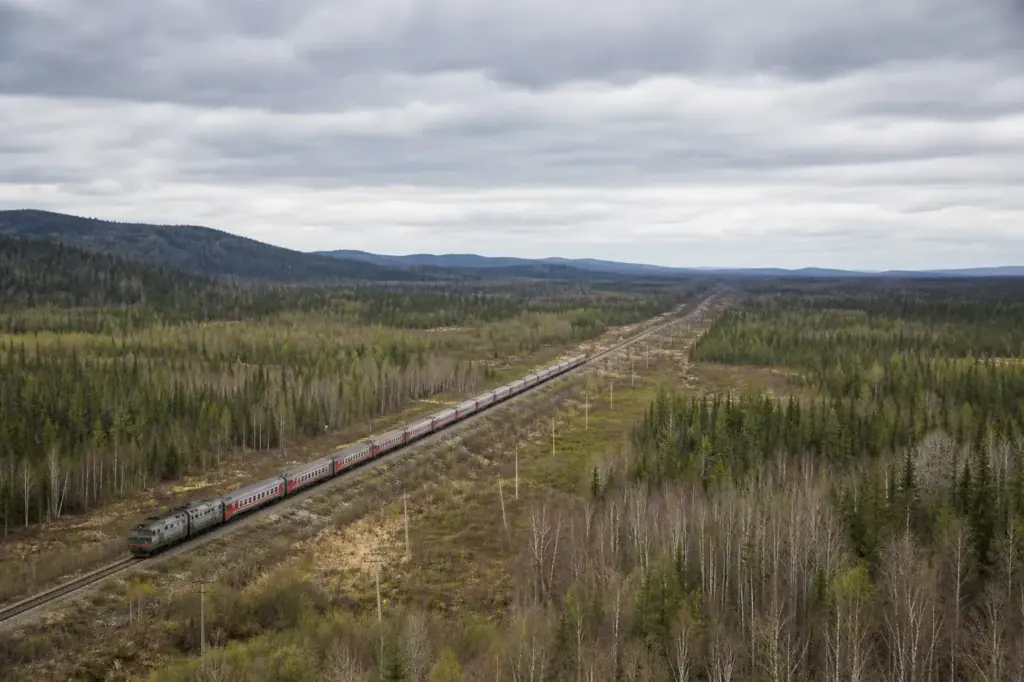
The Trans-Siberian Railway is the world’s longest continuous train route—9,289 kilometres from Moscow to Vladivostok across eight time zones. Most visitors travel it in stages over 2–3 weeks, stopping in major cities like Yekaterinburg, Novosibirsk, and Irkutsk rather than riding nonstop for 6–7 days.
This guide walks you through choosing your route, booking tickets officially, arranging stops and visas, and what to pack. How to plan a Trans-Siberian Railway journey begins with deciding how much time you have and which cities interest you most.
Quick answer: Book tickets through RZD (Russian Railways) website or an international agent 60–90 days before departure. Choose between the Moscow–Vladivostok route (classic, requires Russian visa only) or the Trans-Mongolian to Beijing via Ulaanbaatar (requires Mongolian and Chinese visas). Most journeys take 2–3 weeks with stops; the non-stop trip takes 6–7 days. Total cost varies by class and season.
At a Glance
| Total time | 2–3 weeks with typical stopovers; 6–7 days for direct Moscow–Vladivostok journey |
|---|---|
| Typical cost | ₽₽ to ₽₽₽ |
What You Need Before You Start
- Passport valid for at least 6 months beyond your return date
- Russian visa (required for all routes); Mongolian and Chinese visas if taking Trans-Mongolian route
- Travel insurance that covers the full journey
- International payment method or access to Russian bank card for booking (if booking directly on RZD)
- List of cities where you plan to stop (to arrange train tickets between them and onward transport)
Compare Your Options
| Option | Duration | Price | Notes |
|---|---|---|---|
| Classic Trans-Siberian Moscow–Vladivostok with 3 stops | 2–3 weeks | ₽₽₽₽ | Most popular for independent travellers. Stop in Yekaterinburg (1–2 nights), Novosibirsk or skip it (1 night if included), Irkutsk + Lake Baikal (2–3 nights), then continue to Vladivostok (2–3 nights). Non-stop train journey: 6–7 days. Russian visa only. Daily trains available year-round. |
| Trans-Mongolian Moscow–Beijing via Ulaanbaatar | 2–3 weeks for journey; total trip 3–4 weeks with stops and border delays | ₽₽₽₽ | Requires Russian, Mongolian and Chinese visas. Similar Russian stops as Classic route; adds Ulaanbaatar (2–3 nights). Border crossings: 3–4 hours at Naushki (Russia–Mongolia), 2–3 hours at Zamyn-Üüd (Mongolia–China). Trains depart Moscow 2–3 times per week. Border crossing to Beijing adds 1–2 days. |
| Irkutsk–Vladivostok direct (skip western stops) | 7–10 days on train; 10–14 days with 1–2 stops in Vladivostok and Khabarovsk | ₽₽ | For visitors with limited time or who arrive by plane in Irkutsk. Skip Moscow–Yekaterinburg–Novosibirsk entirely. Still crosses Siberia and reaches the Pacific. Fewer visa complications if you have Irkutsk arrival/departure flights. Requires Russian visa for arrival in Irkutsk. |
| Luxury tourist train (Golden Eagle, Imperial Russia) | 16–22 days | ₽₽₽₽ | All-inclusive guided tours with meals, excursions, private cabins, and English-speaking guides built in. Operated by private companies or RZD Tour. Departures a few times per year. No visa stress (agencies handle logistics); best for those prioritizing comfort and structure over budget travel. |
₽ budget · ₽₽ moderate · ₽₽₽ upscale · ₽₽₽₽ splurge. Price levels are estimates compared with typical prices for visitors.
Step-by-Step Instructions
Step 1: Decide your route and travel dates
Choose between the Classic Trans-Siberian (Moscow to Vladivostok, 9,289 km, requires Russian visa only) or Trans-Mongolian (Moscow to Beijing via Ulaanbaatar, requires Russian, Mongolian and Chinese visas). The Trans-Manchurian to Beijing is currently suspended. Book 90 days before departure for summer travel (May–September) or 60 days ahead for other seasons, as popular dates sell out.
Tip: Summer (June–August) has the best weather and longest daylight, but is the busiest and most expensive season.
Step 2: Plan your stopovers
The classic route passes Moscow, Yekaterinburg (Europe–Asia border, Romanov history), Novosibirsk (Siberia's largest city), Irkutsk (gateway to Lake Baikal), Ulan-Ude (Buddhist culture), and Vladivostok (Pacific terminus). Most travellers spend 1–3 days in 3–4 cities. Decide your stops before booking: you will buy separate tickets for each leg rather than one long ticket.
Tip: Irkutsk and Lake Baikal are the single most popular stopover; book your onward train from there early in summer.
Step 3: Arrange visas
For Moscow–Vladivostok: obtain a Russian visa from your country's consulate (lead time varies; some countries require several weeks). For Trans-Mongolian: add Mongolian and Chinese tourist visas. Check your nationality's specific requirements with the relevant embassy. Visa processing takes 4–8 weeks, so start this step early.
Tip: Some nationalities qualify for Mongolian e-visas, which are faster and cheaper than paper applications.
Step 4: Book your first train ticket Moscow to your first stop
Visit the official RZD website (rzd.ru in English) or use an international booking agent. Choose your train (Rossiya 001/002 is the famous flagship train; Train 061/062 is faster and less crowded), class (1st class/SV is 2-berth, 2nd class/Kupe is 4-berth, 3rd class/Platzkart is open berth), and travel dates. Book 60–90 days ahead. Download and save your confirmation number.
Tip: Western credit cards often don't work on RZD—use an agent like RussianTrain or Tutu if you lack a Russian payment method or MIR card.
Step 5: Pick up or print your ticket and arrange onboard
If you booked online through RZD, collect your paper ticket at Moscow's Yaroslavsky Station at least 1 hour before departure. Bring your passport. You will receive a ticket for your compartment, bedding voucher (optional), and reservation details. Board at least 30 minutes early. Each carriage has a provodnitsa (conductor) who collects tickets and provides hot water for tea.
Tip: Passengers often share compartments with other travellers. Bring slippers, a padlock for your luggage, and small gifts (chocolate, coffee) to exchange with compartment-mates.
Step 6: Book onward trains between your stops
Before or shortly after arriving in your first city, book the next leg of your journey (for example, Yekaterinburg to Novosibirsk). Use the same RZD website or book at the local railway station ticket office. Tickets become available 90 days in advance. Do not rely on buying tickets at the station on the day you want to leave, especially in summer.
Tip: Once you book each leg, confirm the departure time and platform number on the station departures board 1–2 hours before you depart.
Step 7: Arrange accommodation and activities in stops
Book hotels or hostels in each stop city at least 1 month ahead, especially for Irkutsk in summer. Many visitors book Lake Baikal tours from Irkutsk (full-day excursions operate from Listvyanka, about 45 km away). Allow at least 1 day in each city; 2–3 days in Irkutsk and Vladivostok is recommended.
Tip: Some travellers book guided tours through travel agencies; others arrange their own with city guides and local transport—both work, but independent travel is cheaper.
Step 8: Register with your embassy if required
Some countries recommend that their citizens register with their embassy before travelling in Russia. Check your government's travel advisory for your nationality. This step is optional but wise for extended stays.
Tip: Keep a copy of your Russian visa, hotel reservations, and train tickets in a separate location from your originals in case of loss or theft.
Common Mistakes to Avoid
- Waiting too long to book. Summer departures (June–August) and the Irkutsk–Lake Baikal leg sell out 8–12 weeks in advance. Book the moment sales open (90 days for domestic, 60 days for international travellers).
- Trying to buy tickets directly on RZD with a Western card. Most international credit cards are rejected. Use an approved agent or arrange a Russian payment method beforehand—waiting until 2 weeks before departure to solve this creates unnecessary stress.
- Underestimating stops. Riding 6–7 days straight is exhausting and takes you through the same taiga scenery for hours. Nearly all experienced travellers stop in Yekaterinburg and Irkutsk at minimum. Plan at least 10–12 days of travel time if doing the full journey with meaningful stops.
- Failing to reserve onward trains between stops before arrival. If you wait to book the next leg until you arrive in a city, you may find no berths available, especially in the competitive Irkutsk–Ulan-Ude route in summer. Book all legs before you leave home or immediately after booking your first leg.
- Ignoring time zones. The train runs on Moscow time the entire journey. Your watch and the sun slowly drift apart. Check local arrival times at each stop on your ticket and confirm with the conductor.
- Overpacking. Compartments are small, especially Kupe (4-berth). Bring a small daypack and one rollbag. You will not have space or laundry options for multiple outfits. Many travellers rewear clothes and buy fresh items in each city.
Tickets, Payment and Booking
Official booking: Buy tickets at rzd.ru (Russian Railways official website). The site has an English interface and accepts bookings 90 days in advance for domestic trips and 60 days for international passengers. Payment requires a Russian MIR card or Russian bank account; Western cards are routinely rejected.
For international travellers: Use agents like RussianTrain, Tutu, or other IATA-licensed travel agencies outside Russia. These add a 30–50% fee but simplify payment (they accept Western cards) and provide English support. Book early for summer travel.
At the station: You can buy tickets in person at Moscow Yaroslavsky Station or any Russian station, but availability is unreliable in summer and prices may be the same as online.
What to expect: You will receive a paper ticket with your compartment number, departure time, and train number. Bedding and tea vouchers are optional add-ons. Bring your passport when collecting tickets or boarding.
Helpful Links
Advertisement: these are partner links. If you book or buy through them, we may earn a commission at no extra cost to you.
Russia Vibes Tips
- Travel in May or September instead of June–August. Weather is still good, daylight is long, prices are lower by 20–30%, and berths are easier to book. Late September can have rain, but early May is dry and sunny.
- Consider a 2-berth (1st class/Kupe) ticket over the cheapest 3rd class (Platzkart). For 6–7 hours on the train daily, the extra privacy and two lower berths is worth the cost difference, especially if you value sleep.
- Download the offline RZD mobile app (not 'Russian Railway'—that is a third-party reseller). It lets you check train schedules, arrival times, and platform numbers without data, essential when switching between stations with spotty internet.
- Each train carriage stocks a samovar (hot water urn) available 24/7. Bring instant noodles, tea bags, coffee, and a collapsible cup. This cuts food costs and provides flexibility between meal stops at stations.
- The train stops at major stations for 20–60 minutes, allowing time to disembark, buy fresh food, and stretch. Avoid leaving the train unattended with valuables; use the provodnitsa (conductor) safe or carry your documents.
Explore Nearby How to Plan a Trans-Siberian Railway Journey, Trans-Siberian Railway
Sights near How to Plan a Trans-Siberian Railway Journey, Trans-Siberian Railway
 Listvyanka, Lake Baikal · typical visit: 2–3 days
Main image: AI-generated illustration. It may not show the place exactly as it looks.
 Olkhon Island, Lake Baikal · typical visit: 2–3 days
Main image: AI-generated illustration. It may not show the place exactly as it looks.
Related guides
 How to Book Trans-Siberian Railway Tickets, Trans-Siberian Railway: Booking Guide
Main image: AI-generated illustration. It may not show the place exactly as it looks.
 Lake Baikal: Where to Go, What to See and How to Visit
Main image: AI-generated illustration. It may not show the place exactly as it looks.
Browse more: All How-To · All How-To in Trans-Siberian Railway · All Metro and Trains · All Trans-Siberian Railway
FAQ
Do I need a guide for the Trans-Siberian?
No. Independent travel is common and cheaper. Hire local guides at each stop (1–2 days each) if you want organized tours. Luxury tourist trains include guides; budget travellers can navigate with apps, maps, and hotel staff advice. English is limited in smaller cities, so translation apps help.
Can I buy a single ticket from Moscow to Vladivostok non-stop?
Yes, but most travellers buy tickets for each leg separately to allow stops. A direct ticket locks you to one train and no stops. Most Trans-Siberian travellers prefer breaking the journey into 3–4 segments with nights in each city.
What if I arrive in Russia without pre-booking tickets?
You can buy tickets at railway stations once you arrive, but summer availability is scarce and prices may not be lower. Book online before you leave home. If you arrive without booking, visit the railway station early the next morning and join the ticket queue, though finding berths in peak season may be impossible.
Can I travel with children on the Trans-Siberian?
Yes. Many families do it. Book a private compartment (1st or 2nd class) if possible for comfort. The journey is long; children under 5–6 may find sitting still difficult. Plan shorter daily train segments and longer stops in cities. Bring entertainment, snacks, and comfortable clothes.
What happens if my train is delayed?
Delays of 1–6 hours are occasional but uncommon. You will be refunded or rebooked if the delay exceeds 6 hours. Contact the provodnitsa (conductor) or RZD customer service. Keep your ticket and arrival time documentation. Insurance covering trip delays is recommended.
Can I take luggage on the Trans-Siberian?
Yes, each passenger is allowed 2 bags per ticket for free. Compartments are small, so one rollbag and one daypack work best. Luggage storage exists at most stations if you want to explore a city hands-free. Lock your bag in the compartment when you leave the train.
Is food included on the train?
No. You buy meals at station stops or bring your own. The train stops at stations for 20–60 minutes roughly every 4–6 hours, allowing time to buy food from vendors, cafes, or shops. Bring snacks, instant noodles, and water for between stops. The samovar has hot water for tea or instant food.
When is the best time to travel the Trans-Siberian?
May–September for good weather and long daylight. June–August is the warmest and busiest (tickets sell out 12+ weeks in advance and prices peak). May and September offer better prices, fewer crowds, and still-pleasant weather. Winter (December–March) is possible but extremely cold; October and April can be muddy and gray.
Russia Vibes is a one-person project. A coffee keeps it going
Not legal advice. This is general information for visitors. Rules on visas, entry, registration, customs and similar matters change often and can depend on your nationality. Check the official source and, if in doubt, ask your embassy or a qualified adviser.
How we research and update our guides
About this guide: AI assistance and accuracy
This guide is created with the help of AI and is based on official sources where available. Mistakes can still happen. Opening hours, prices, rules and other details are given to the best of our knowledge as of the date shown and can change without notice. It offers general recommendations only, not professional, legal or travel advice. Please confirm important details with the official source before you travel; you are responsible for your own plans and decisions.
Packing for this trip
* Affiliate link: as an Amazon Associate we earn from qualifying purchases at no extra cost to you.

Take this guide with you
Get a free PDF of this guide to print or read offline: key facts, tips and a map link on a few clean pages.
Report an issue on this page
Paying for your trip: please read
International sanctions affect payments between Russia and many other countries. In practice, cards issued in the EU, the UK, the US and several other countries often do not work in Russia, Russian cards usually do not work abroad, and some booking platforms, airlines and payment providers limit or suspend their services for Russia. The situation changes frequently.
We do not give legal or financial advice, and this site does not encourage anyone to break or circumvent sanctions. Whatever you plan, you are responsible for following the laws and regulations that apply to you, including those of your country of residence and citizenship.
Many travelers still organise their stay lawfully. It is worth asking your bank or payment provider what is currently permitted, contacting hotels, tour operators and carriers directly about the payment methods they accept, and checking which services are open to customers from your country. Clarify payment, cancellation and refund terms before you commit to a booking, and keep your plans flexible.
Partner links on this site may not be available in every country, and prices, availability and rules in our guides can differ from what you see when you book.