
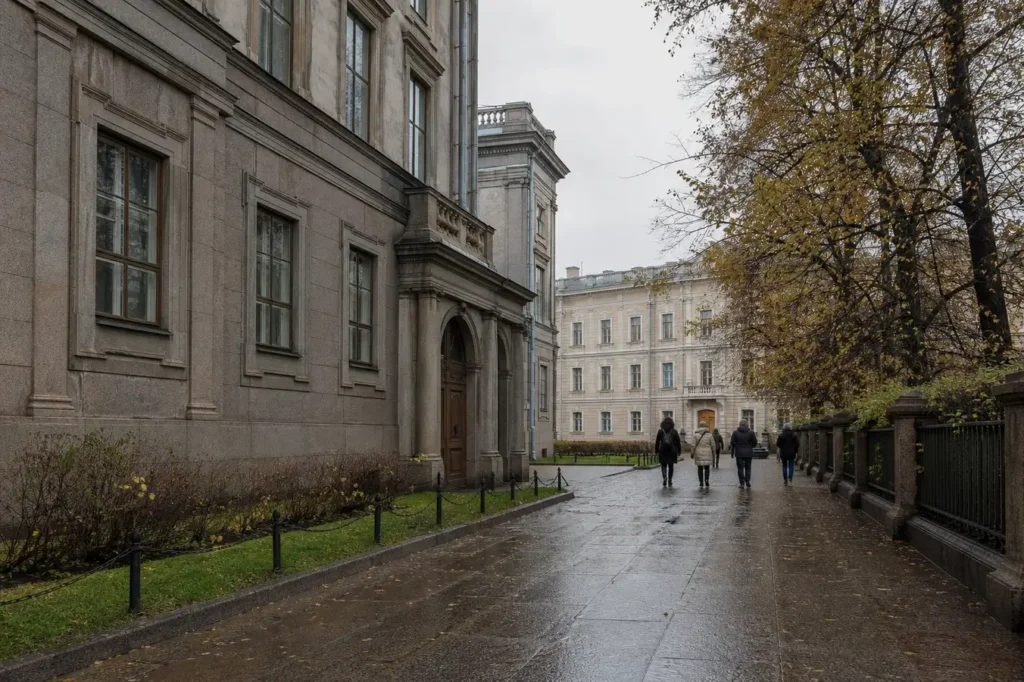
The State Memorial Museum of the Defense and Siege of Leningrad is the one museum in Saint Petersburg devoted entirely to the Battle of Leningrad. It stands in Solyanoy Lane, in the old Salt Town district within walking distance of the Summer Garden, and its permanent exhibition can be visited free of charge.
What makes it unusual is its own story. The museum first opened in 1944, while the war was still being fought, was shut down in the late 1940s and came back to life only in 1989. Much of the collection was handed in by veterans, survivors and search teams. This guide explains what is on show, how guided tours work, how to find the museum and how it differs from the other siege museums around the city.
Quick Facts
| Russian name | Государственный мемориальный музей обороны и блокады Ленинграда |
|---|---|
| Built / opened | 1944 (reopened 1989) |
| Address | Санкт-Петербург, Соляной переулок, 9 |
| District | Central District |
| Metro | Chernyshevskaya (Line 1, about 15–20 minutes on foot) Gostiny Dvor (Line 3, about 15–20 minutes on foot) Nevsky Prospect (Line 2, about 15–20 minutes on foot) |
| Opening hours | Monday and Wednesday to Sunday 10:00–18:00. The box office closes at 17:30 and takes a short break in the early afternoon. Closed on Tuesdays and on the last Wednesday of each month (sanitary day) (as of October 2026 – check the official site). |
| Admission | Entry to the permanent exhibition for a self-guided visit is free. Guided tours and the audio guide are paid extras (₽ to ₽₽₽). |
| Best time to visit | The exhibition is indoors, so it works in any season and weather. The days around 27 January, when the lifting of the siege is marked each year, and around 8 September, the anniversary of its start, carry special meaning; check the museum's event schedule for commemorations at those times. |
| Recommended duration | 1.5–2 hours |
| Website | blokadamus.ru |
| Last updated | October 16, 2026 |
What Is (and Isn't) Part of a Visit to State Memorial Museum of the Defense and Siege of Leningrad, Saint Petersburg?
| Part | Status | Notes |
|---|---|---|
| Permanent exhibition in Solyanoy Lane | Included in the standard ticket | Free to visit on your own, with no ticket needed for self-guided viewing. |
| Guided tours | Separate ticket or institution | Offered only by prior booking, and paid separately from entry. |
| Audio guide | Separate ticket or institution | A paid extra, including a guide based on a siege diary. |
| Other buildings of the Salt Town complex | Not open to visitors | Mostly used by other organisations; only the museum's own rooms are part of a visit. |
| Museum branches elsewhere, such as a pavilion in Moskovsky Victory Park | Separate ticket or institution | They have their own hours and ticket arrangements. |
| Road of Life and Breakthrough of the Siege museums | Outside / not part of it | Separate sites outside the city centre run by other institutions. |
| Summer Garden | Outside / not part of it | A different attraction within walking distance. |
Why Visit State Memorial Museum of the Defense and Siege of Leningrad, Saint Petersburg?
This is the most complete account of the siege that Saint Petersburg offers: more than 50,000 items, from soldiers’ letters and ration cards to wartime drawings, photographs, diaries and military equipment. It was the first museum in the world created during the Second World War itself, and the objects were collected largely from the people who lived through the events.
The scale is human rather than monumental. You see small personal things next to maps and documents, which makes the numbers of the siege easier to grasp. Because self-guided entry is free, it fits easily into a day in the centre alongside the Summer Garden and the Russian Museum.
Highlights of State Memorial Museum of the Defense and Siege of Leningrad, Saint Petersburg
Ration cards and objects of everyday survival
The collection holds several thousand items from soldiers' and civilians' daily life during the siege, including ration cards and household objects adapted to the cold and hunger. The bread ration for dependants fell to 125 grams a day, the figure by which the siege is remembered.
The small size of these objects is the point: a card, a spoon or a scrap of paper often says more than a large display.
Tip: Slow down at the display cases of personal belongings; the labels usually say who handed the item in.
Diaries, letters and documents
About 19,000 handwritten and documentary items form the core of the archive, along with some 20,000 photographs and books printed in besieged Leningrad. The museum has built projects around siege diaries, and it offers an audio guide based on the diary of Igor Nikitin.
These are first-person voices, and they explain daily routine far better than dates and statistics.
Tip: If you want the diary audio guide, ask for it at the start; it is a paid extra described in the booking section.
Art made in the besieged city
The holdings include around 7,000 works of graphic art, painting and sculpture. The very first exhibition in 1944 was designed by the artist Nikolai Suetin, with artists, architects and historians recalled from the front to help. Drawings and sketches made in the city during the siege are among the most direct records of how it looked.
Look for works that record streets and people rather than battles.
Tip: Ask staff which art is on show; the display is rotated.
Weapons and equipment
More than 500 pieces of equipment and weapons belong to the collection. In 1944 the first exhibition filled its halls with real aircraft, guns and tanks, and the museum has never lost that military side. What is on display now can change, so treat this as a section to check on arrival.
It places the defence of the city beside the civilian story told elsewhere in the museum.
Tip: If vehicles are your main interest, ask at the entrance what is currently shown.
The multimedia hall and the interactive exhibition
The museum has a multimedia hall, and one of its special projects is an interactive exhibition called Marshal of the Leningrad Victory. These displays add film, sound and screens to the paper and objects, and help with orientation if you know little about the campaign.
They are part of the modern interpretation of the museum rather than the original 1944 design.
Tip: Start with the multimedia material if you are new to the history.
A museum that was itself erased
The building in Solyanoy Lane was once the Imperial Agricultural Museum. The 1944 exhibition grew into a museum in 1945, was closed in 1949 during the political purge known as the Leningrad Affair and had vanished by 1953. It was recreated in 1989 with a single hall and has grown since.
That history explains why the museum is still described as a people's museum, built from donations.
Tip: Read the panels on the museum's own history; they put the whole visit in context.
Atmosphere
The mood is quiet and serious. The rooms are not grand: the collection is built from small, personal things that families and survivors handed in over decades, and visitors tend to move slowly and speak softly. Petersburgers, school groups and foreign visitors share the same space, and many people read the labels closely.
Because the story is told through letters, cards, drawings and photographs as much as through weapons, the visit feels intimate rather than monumental. It is a place to take your time rather than to tick off, and many visitors want to sit in silence afterwards, so allow a little time before the next stop.
History of State Memorial Museum of the Defense and Siege of Leningrad, Saint Petersburg
The siege of Leningrad began on 8 September 1941, when the ring around the city closed, and lasted until 27 January 1944, a total of 872 days. Supplies reached the city across Lake Ladoga, and the ice road that opened on 22 November 1941 became known as the Road of Life. At the lowest point the bread ration for dependants was 125 grams a day.
On 4 December 1943, before the siege was lifted, the Military Council of the Leningrad Front decided to open an exhibition called The Heroic Defence of Leningrad. The chosen venue was the former Imperial Agricultural Museum in Salt Town. Work began in January 1944, with real aircraft, guns and tanks brought in, and the exhibition opened on 30 April 1944 in 37 halls with about 38,000 items.
It was a huge success. About 250,000 people visited in the first six months, and more than a million by 1949. On 5 October 1945 the exhibition became the Museum of the Defense of Leningrad, the only military museum created while the Second World War was still being fought.
The success did not last. In the late 1940s the so-called Leningrad Affair brought accusations that the museum had exaggerated the role of the city and played down the role of Stalin. The museum was closed in 1949 for a re-exhibition, its premises were handed to the military in 1951 and by 1953 it no longer existed. Some staff were repressed.
On 24 April 1989 the city authorities decided to recreate the museum in its historic building, but the other rooms were occupied, so it received a single hall. It reopened on 8 September 1989, the anniversary of the start of the siege, and survivors, veterans and search teams began donating objects, documents and memories. Since December 1990 it has carried its present name, and a new permanent exhibition opened in 1995, on the 50th anniversary of the Victory.
Today the collection exceeds 54,000 items, and the museum runs lectures, special projects and exhibitions, including work abroad. It has long sought to win back more of its former premises in Salt Town, an effort that has not yet been completed.
Tickets and Booking for State Memorial Museum of the Defense and Siege of Leningrad, Saint Petersburg
| Ticket | Price | Includes |
|---|---|---|
| Self-guided visit of the permanent exhibition | Free | Entry to the museum's permanent exhibition without a guide. |
| Guided tour in a group (booked in advance) | ₽ | A scheduled guided visit in a group; booking is required. |
| Private guided tour for 1–5 people | ₽₽₽ | An author's tour of about an hour and twenty minutes for a small group. |
₽ budget · ₽₽ moderate · ₽₽₽ upscale · ₽₽₽₽ splurge. Price levels are estimates compared with typical prices for visitors.
You do not need a ticket to look around on your own: entry to the permanent exhibition is free. Guided tours are the only thing to arrange ahead, and they are booked by phone or e-mail through the contacts on the official website, blokadamus.ru.
- Tour requests are accepted from Wednesday to Monday, except Tuesday and the last Wednesday of the month.
- When booking, give your full name and a phone number.
- Private tours are for one to five people; group tours are sold per person.
- An audio guide is available on site for an extra fee.
Rates for Russian citizens and concession categories differ from the standard rate, and several categories visit free. The official ticket page, blokadamus.ru, lists every category.
Plan and Book
Suggested itineraries State Memorial Museum of the Defense and Siege of Leningrad, Saint Petersburg
1 hour
Walk through the permanent exhibition at your own pace, focusing on the documents and personal items and the multimedia material. Finish with the panels on the museum's own history.
2 hours
See the whole exhibition, including the art and the military equipment, and add the diary audio guide or a booked tour. Leave time at the end to sit quietly before moving on.
Half day
Spend the first two hours in the museum, then walk to the Summer Garden for a calmer hour outdoors. Continue to Saint Michael's Castle or the Church of the Savior on Spilled Blood.
How to Get to State Memorial Museum of the Defense and Siege of Leningrad, Saint Petersburg
By metro: the museum is on Solyanoy Lane, about 15 to 20 minutes on foot from Chernyshevskaya (Line 1), Gostiny Dvor (Line 3) or Nevsky Prospect (Line 2). Mayakovskaya (Line 3) and Ploshchad Vosstaniya (Line 1) are slightly farther.
By bus or tram: routes serve stops named Gangutskaya Street, Mokhovaya Street and Pestelya Street, all near the museum.
On foot from the centre: from Nevsky Prospect, walk towards the Fontanka River and the Summer Garden; Solyanoy Lane is in the old Salt Town district close to Pestelya Street.
By taxi: ask for Solyanoy Lane, 9 (Соляной переулок, 9).
Accessibility
The museum receives visitors in wheelchairs by prior arrangement, booked a few days ahead by phone through the contacts on the official site. Access to the exhibition is provided by two inclined lifting platforms. A companion is required for safety and enters free together with the visitor. The museum cannot provide a parking space at the entrance because of traffic rules.
Food Nearby
There are no verified cafes inside the museum. Cafes and bakeries are on the streets around it, along Pestelya Street, Mokhovaya Street and Liteyny Prospect, and there is a larger choice on and around Nevsky Prospect.
What to Bring
Comfortable shoes and headphones if you plan to use your own device for audio. Coats and bags larger than a small handbag go to the cloakroom, which can fill up at busy times, so travel light.
Photography Rules
The museum posts its visiting rules at the entrance, so check them on arrival. As a general courtesy, avoid flash near documents and fragile objects and be discreet around other visitors, since this is a memorial museum.
Family Suitability
Better for older children and teenagers who know something about the Second World War. The subject, including hunger and death, can be upsetting for younger children, and the museum is not a hands-on space. For stroller access, ask at the entrance, because only wheelchair access by lifting platforms is described.
Russia Vibes Tips
- Preview the collection online before you go. The museum publishes an online catalogue, which helps you pick the sections that matter most to you.
- Choose one guide format: either a booked tour or the audio guide. Together they overlap heavily in a visit of this size.
- Do not expect a large vehicle park. The 1944 exhibition used real aircraft and tanks, but what is displayed now varies, so ask what is on show.
- Follow the museum with something quiet. The Summer Garden is within walking distance and suits the mood better than a busy shopping street.
- Show the Russian name to a taxi driver. Solyanoy Lane is short, and the Latin spelling can be misheard.
- Allow time to read, not just look. The labels and panels carry much of the story, and the visit is better when unhurried.
Explore Nearby State Memorial Museum of the Defense and Siege of Leningrad, Saint Petersburg
Sights near State Memorial Museum of the Defense and Siege of Leningrad, Saint Petersburg
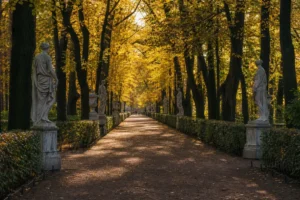 Summer Garden, Saint Petersburg · typical visit: 1–2 hours
Main image: AI-generated illustration. It may not show the place exactly as it looks.
 Fabergé Museum, Saint Petersburg · typical visit: 1–2 hours
Main image: AI-generated illustration. It may not show the place exactly as it looks.
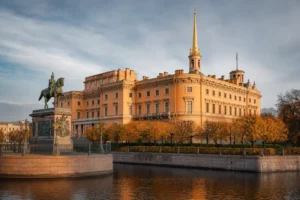 Saint Michael's Castle, Saint Petersburg · typical visit: 1.5–2 hours
Main image: AI-generated illustration. It may not show the place exactly as it looks.
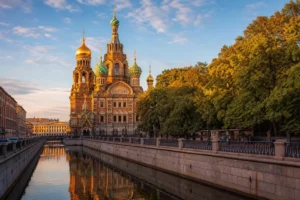 Church of the Savior on Spilled Blood, Saint Petersburg · typical visit: 1 hour inside, plus time to walk around the outside
Main image: AI-generated illustration. It may not show the place exactly as it looks.
 State Russian Museum, Saint Petersburg · typical visit: 3–4 hours for the main building
Main image: AI-generated illustration. It may not show the place exactly as it looks.
Related guides
 Admiralteyskaya Metro Station, Saint Petersburg: Deepest in Russia
Main image: AI-generated illustration. It may not show the place exactly as it looks.
 Russian Ethnographic Museum, Saint Petersburg: Visitor Tips
Main image: AI-generated illustration. It may not show the place exactly as it looks.
 Palace Bridge, Saint Petersburg: Raising Times and Views
Main image: AI-generated illustration. It may not show the place exactly as it looks.
 Smolny Cathedral, Saint Petersburg: Belfry, Hours and Tips
Main image: AI-generated illustration. It may not show the place exactly as it looks.
 Alexander Nevsky Lavra, Saint Petersburg: Necropolis Guide
Main image: AI-generated illustration. It may not show the place exactly as it looks.
Browse more: More in Central District · All Museums · All Saint Petersburg · All Sightseeing · All Sightseeing in Saint Petersburg
FAQ: State Memorial Museum of the Defense and Siege of Leningrad, Saint Petersburg
Is entry to the museum free?
Yes, a self-guided visit to the permanent exhibition is free. Guided tours and the audio guide cost extra. See the booking section for how tours are arranged.
Is this the same as the Road of Life museum?
No. The Road of Life museum is a separate site on Lake Ladoga run by another institution. The museum in Solyanoy Lane covers the whole defence and siege of the city, and is located in the centre of Saint Petersburg.
Do I need a guide?
No. You can walk through on your own and read the labels. A guide adds context and personal stories, but tours must be booked in advance and cannot be arranged on the spot.
How long should I plan for?
About an hour and a half to two hours is comfortable. If you add a guided tour or the audio guide, allow a little longer, and leave time afterwards to sit quietly.
Is it suitable for children?
It suits older children and teenagers better than young ones. The exhibition deals with hunger, bombing and death, so parents may prefer to look at the material first and decide how much to share.
Which metro station is closest?
Chernyshevskaya, Gostiny Dvor and Nevsky Prospect are all about a 15 to 20 minute walk. Pick whichever line is most convenient; the walk crosses the old Salt Town district.
Is the museum in its original building?
Yes, in part. The 1944 exhibition opened in the former Imperial Agricultural Museum in Salt Town, and the reborn museum returned there in 1989, although it holds only part of the original premises.
Can wheelchair users visit?
Yes, by prior arrangement a few days ahead, using inclined lifting platforms. A companion is required. See the accessibility section for the entry details.
Russia Vibes is a one-person project. A coffee keeps it going
Last updated: October 16, 2026. Found an error or something out of date? Report it and we will check and fix it.
How we research and update our guides
About this guide: AI assistance and accuracy
This guide is created with the help of AI and is based on official sources where available. Mistakes can still happen. Opening hours, prices, rules and other details are given to the best of our knowledge as of the date shown and can change without notice. It offers general recommendations only, not professional, legal or travel advice. Please confirm important details with the official source before you travel; you are responsible for your own plans and decisions.
International sanctions affect payments between Russia and many other countries. In practice, cards issued in the EU, the UK, the US and several other countries often do not work in Russia, Russian cards usually do not work abroad, and some booking platforms, airlines and payment providers limit or suspend their services for Russia. The situation changes frequently. We do not give legal or financial advice, and this site does not encourage anyone to break or circumvent sanctions. Whatever you plan, you are responsible for following the laws and regulations that apply to you, including those of your country of residence and citizenship. Many travelers still organise their stay lawfully. It is worth asking your bank or payment provider what is currently permitted, contacting hotels, tour operators and carriers directly about the payment methods they accept, and checking which services are open to customers from your country. Clarify payment, cancellation and refund terms before you commit to a booking, and keep your plans flexible. Partner links on this site may not be available in every country, and prices, availability and rules in our guides can differ from what you see when you book.Paying for your trip: please read

Take this guide with you
Get a free PDF of this guide to print or read offline: key facts, tips and a map link on a few clean pages.