
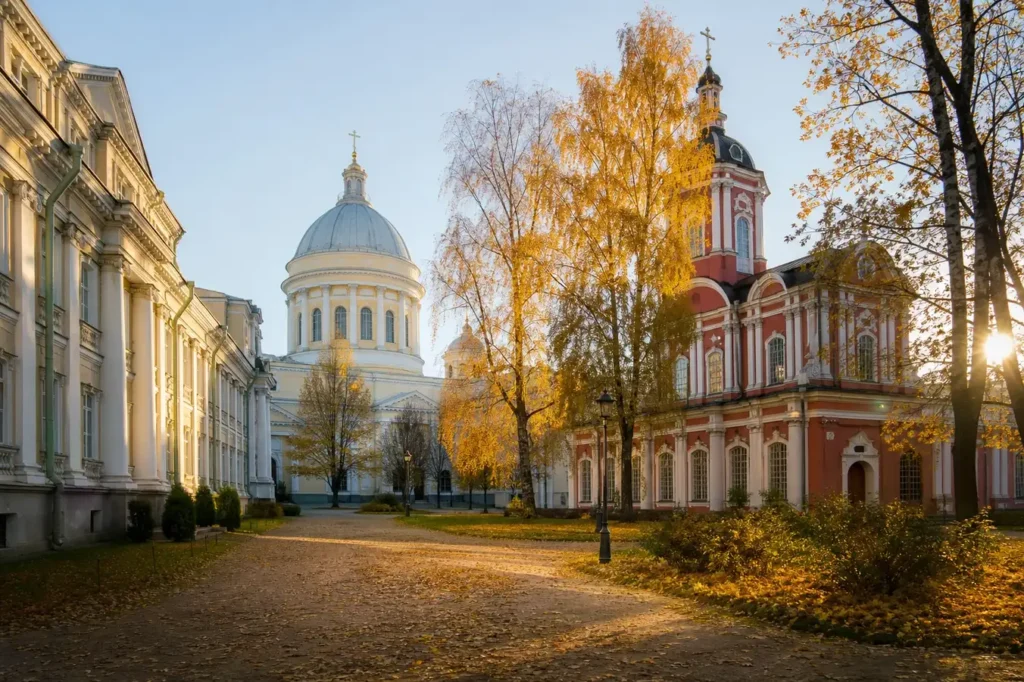
Alexander Nevsky Lavra stands at the far end of Nevsky Prospect, beside the Monastyrka river, and it is really two places in one. It is a working Orthodox monastery whose churches are free to enter, and it holds two museum necropolises with the graves of some of Russia’s best-known writers, composers and scientists.
Peter the Great founded it in 1710, only seven years after Saint Petersburg itself. The courtyard, the Holy Trinity Cathedral and the Annunciation Church can be seen in about an hour, while the cemeteries need a ticket and more time. This page explains which part is which, what to look for and how to plan the visit.
Quick Facts
| Russian name | Свято-Троицкая Александро-Невская лавра |
|---|---|
| Built / opened | 1710 |
| Architect(s) | Domenico Trezzini (Annunciation Church); Ivan Starov (Holy Trinity Cathedral and Holy Gates) |
| Address | Санкт-Петербург, наб. реки Монастырки, 1 OpenStreetMap · Google Maps |
| District | Central District |
| Metro | Ploshchad Alexandra Nevskogo (Line 3) Ploshchad Alexandra Nevskogo (Line 4) |
| Opening hours | Museum necropolises (Necropolis of the 18th Century and Necropolis of the Masters of Arts): daily 10:00–18:00, ticket office until 17:30.
Lazarus Tomb: 10:00–16:30, closed Wednesday and Thursday. The monastery grounds and working churches keep their own hours and follow the service schedule; check lavra.spb.ru (as of October 2026 – check the official site). |
| Admission | Monastery grounds and working churches: free. The two necropolises each need a separate ticket (₽), with a combined ticket for both (₽). Guided visits are a paid extra (₽). |
| Best time to visit | Late spring to early autumn brings green trees, long daylight and the best conditions for walking the cemeteries. Autumn leaves are especially attractive among the tombstones. The necropolises close in the early evening, so plan to arrive during the day. Morning is a calmer time for the cathedral. |
| Recommended duration | 1.5–3 hours |
| Website | lavra.spb.ru |
| Last updated | October 16, 2026 |
What Is (and Isn't) Part of a Visit to Alexander Nevsky Lavra, Saint Petersburg?
| Part | Status | Notes |
|---|---|---|
| Monastery grounds and Holy Trinity Cathedral | Included in the standard ticket | Free to enter; this is a working monastery with its own service schedule. |
| Annunciation Church burial vault | Separate ticket or institution | The vault is run by the State Museum of Urban Sculpture, not the monastery; access and hours vary. |
| Necropolis of the 18th Century (Lazarus Cemetery) | Separate ticket or institution | Museum necropolis with its own ticket. |
| Necropolis of the Masters of Arts (Tikhvin Cemetery) | Separate ticket or institution | Museum necropolis with its own ticket; a combined ticket covers both necropolises. |
| Lazarus Tomb | Separate ticket or institution | A separate museum display with its own schedule. |
| Monument to Alexander Nevsky | Outside / not part of it | Stands on Alexander Nevsky Square in front of the Lavra and is always visible. |
| Literatorskie Mostki necropolis | Outside / not part of it | Another branch of the same museum at the Volkovo cemetery, far from the Lavra, with free entry. |
Why Visit Alexander Nevsky Lavra, Saint Petersburg?
The Lavra packs three kinds of history into one walk. The architecture runs from Petrine Baroque in the red Annunciation Church to the strict neoclassical lines of the Holy Trinity Cathedral. The relics of Saint Alexander Nevsky, the city’s patron saint, rest in that cathedral. And in the cemeteries you can stand at the graves of Dostoevsky, Tchaikovsky, Mussorgsky, Rimsky-Korsakov, Lomonosov and Euler.
The tombstones deserve attention in their own right: much of the funerary sculpture is of real quality, and the Tikhvin cemetery was assembled in the 1930s as an open-air museum of memorial art. It suits a slow, quiet kind of sightseeing, quite unlike the big central museums.
How Alexander Nevsky Lavra, Saint Petersburg Is Laid Out
The Lavra stretches along the Monastyrka river at the end of Nevsky Prospect, and Alexander Nevsky Square is its front door. The Holy Gates, built in the 1780s to Ivan Starov’s design, lead in from the square, and a bridge over the Monastyrka takes you on to the central courtyard.
The Tikhvin cemetery, officially the Necropolis of the Masters of Arts, lies close to the entrance with its own ticket entry. The courtyard is organised around the Holy Trinity Cathedral, with the red Annunciation Church and the older Lazarus cemetery, now the Necropolis of the 18th Century, around it.
A sensible route: look at the gate and the monument on the square, go in, visit the cathedral while it is quiet, then the Annunciation Church and the Lazarus cemetery, and finish at Tikhvin, where most visitors head for the composers and Dostoevsky. Reverse the order if you want the famous graves first.
Highlights of Alexander Nevsky Lavra, Saint Petersburg
Holy Gates and the Gate Church
The main way in from Alexander Nevsky Square is the Holy Gates, built in 1783–85 to a design by Ivan Starov. A church dedicated to Our Lady of Joy for All Who Sorrow sits above the arch, and the arch itself is decorated with a religious mosaic. Starov also shaped the square at the end of Nevsky Prospect, so the gate, the square and the avenue read as one composition.
The gate is part of the working monastery and is free to pass through.
Tip: Stop on the square first to see the gate and the monument together, then walk in.
Holy Trinity Cathedral
The cathedral dominates the courtyard. Ivan Starov built it between 1778 and 1790 in a restrained neoclassical style, a deliberate contrast with the Baroque buildings around it. Inside, the relics of Alexander Nevsky rest in a silver shrine near the iconostasis. They were brought to Saint Petersburg in the 1720s, removed in the Soviet years and returned to the cathedral in 1989.
It is a working church, so expect candles, services and people praying. Entry is free.
Tip: Visit outside service times for a quiet look; the schedule is on lavra.spb.ru.
Annunciation Church
Built in 1717–22 and traditionally credited to Domenico Trezzini, this is one of the oldest churches in the complex. Look for the red façade with delicate white detailing, a cheerful Petrine Baroque that surprises many visitors who expect a gloomy monastery. Field Marshal Alexander Suvorov is buried here.
The church building and its burial vaults belong to different institutions: the vaults are run by the museum, so do not assume that entering the church gives you access to them.
Tip: Photograph the façade in the morning or late afternoon, when the red and white stand out against the sky.
Necropolis of the 18th Century (Lazarus Cemetery)
The Lazarus cemetery dates from 1716, which makes it one of the first burial grounds in the new capital. It became a museum necropolis in 1932 and now belongs to the State Museum of Urban Sculpture. Here lie the polymath Mikhail Lomonosov, the mathematician Leonhard Euler, the engineer Agustín de Betancourt and many architects of Saint Petersburg's landmarks.
Neoclassical tombstones crowd the shaded paths; many carry symbols of the person's profession.
Tip: Slow down and read the sculpture, not just the famous names; the carving is the point.
Tikhvin Cemetery (Necropolis of the Masters of Arts)
Opened in 1823 and turned into a museum necropolis in the 1930s, this is where most visitors head. Dostoevsky, Tchaikovsky, Mussorgsky and Rimsky-Korsakov are buried here, along with many other writers, painters and actors. In the 1930s monuments were gathered from other Petersburg cemeteries, and some graves from that period were lost, so the layout reflects a collection as much as a historic burial ground.
It has its own ticket and sits close to the main entrance.
Tip: Allow time for the sculpture, not only the celebrity graves; many monuments were moved here from other cemeteries.
Lazarus Church and Lazarus Tomb
The small Church of Righteous Lazarus is the first stone building of the complex and gave the Lazarus cemetery its name. It was built in the 1710s for the burial of Peter the Great's sister, Princess Natalya Alexeyevna. The Lazarus Tomb is run by the museum as a separate display with its own shorter schedule.
It is easy to miss among the tombstones and is not part of a standard necropolis visit.
Tip: Check the Lazarus Tomb schedule on gmgs.ru before you plan your route.
Monument to Alexander Nevsky on the square
On the square in front of the Lavra stands an equestrian monument to Prince Alexander Nevsky, erected in 2002. It is outside the monastery walls, always in view and free to see. The prince, who defeated the Swedes in 1240, is the saint after whom the monastery is named and the patron of the city. The monument and the Holy Gates make the classic first view of the Lavra.
It belongs to the square, not to the Lavra or the museum.
Tip: Use the monument as a landmark when you come out of the metro.
Atmosphere
The Lavra is quiet by city standards. Under tall trees, narrow paths run between tombstones, bronze busts and carved angels, and the pale Baroque and neoclassical buildings keep the courtyard open and orderly. Monks and pilgrims share the paths with visitors who have come for the cemeteries, and people tend to speak softly.
Mornings feel calm. Candle smoke and the sound of services come from the churches, while in the necropolises the only noise is often footsteps on gravel and the occasional tour group. Autumn leaves and bare winter branches suit the stone and bronze especially well. The mood is reflective rather than gloomy, closer to a sculpture park than to a graveyard.
History of Alexander Nevsky Lavra, Saint Petersburg
Peter the Great founded the monastery in 1710, seven years after Saint Petersburg itself, on the bank of the Monastyrka river at the far end of the future Nevsky Prospect. He chose the site because he believed it was where Prince Alexander of Novgorod defeated the Swedes in 1240, the victory that earned the prince the name Nevsky. A wooden Annunciation church was consecrated in 1710, and that date is counted as the foundation of the Lavra.
The first decades set the pattern. The Lazarus cemetery was founded in 1716, named after a small stone church built beside the Annunciation church for the burial of Peter’s sister, Princess Natalya Alexeyevna. The stone Annunciation Church followed in 1717–22, traditionally credited to Domenico Trezzini. In 1724 Peter had the relics of Alexander Nevsky brought here from Vladimir, and they stayed until the new cathedral was ready in 1790.
In the late eighteenth century the ensemble took its final shape. Ivan Starov built the Holy Trinity Cathedral in 1778–90 and the Holy Gates with their gate church in 1783–85, and he designed the square at the end of Nevsky Prospect. In December 1797 Emperor Paul I ordered the monastery renamed a lavra, the highest rank in the Orthodox church, and it also became the seat of a theological academy.
The nineteenth century turned the Lavra into the city’s pantheon. The Tikhvin cemetery opened in 1823 and the Nikolskoe cemetery in 1861. By the early twentieth century the complex had sixteen churches and was the home of the ruling archpriest.
The Soviet years brought closure. The Lavra was shut in 1918 and its archive, library and property were nationalised, and the relics of Alexander Nevsky left the cathedral in 1922. In 1932 the Lazarus cemetery was declared a museum necropolis, and the Tikhvin cemetery became the Necropolis of the Masters of Arts, with monuments moved there from other cemeteries. Many graves from that period were destroyed. In 1957 the Holy Trinity Cathedral was returned to the church as a parish church, and the relics came back to it in June 1989.
In 1994 the Lavra was revived as a monastery and the residence of the Metropolitan. In 2002 an equestrian monument to Alexander Nevsky was placed on the square in front. Today the monastery and the museum share the site: the churches and grounds belong to the monastery, while the two necropolises and the Lazarus Tomb belong to the State Museum of Urban Sculpture.
Legends and Myths about Alexander Nevsky Lavra, Saint Petersburg
The wrong battlefield
Disputed by historians. Peter the Great is said to have chosen this spot because he believed the 1240 battle in which Alexander of Novgorod defeated the Swedes had taken place here. Sources note that the belief was mistaken and that the battle is generally placed elsewhere on the Neva. The name Alexander Nevsky, the saint and the monastery are still tied together, even though the original premise was shaky.
Tickets and Booking for Alexander Nevsky Lavra, Saint Petersburg
| Ticket | Price | Includes |
|---|---|---|
| Necropolis of the 18th Century | ₽ | Entry to the Lazarus cemetery. |
| Necropolis of the Masters of Arts | ₽ | Entry to the Tikhvin cemetery, where Dostoevsky and Tchaikovsky are buried. |
| Combined necropolis ticket | ₽ | Entry to both necropolises on one ticket. |
| Guided visit (extra) | ₽ | A guided service bought in addition to the entry ticket. |
₽ budget · ₽₽ moderate · ₽₽₽ upscale · ₽₽₽₽ splurge. Price levels are estimates compared with typical prices for visitors.
The monastery grounds and working churches need no ticket. The two necropolises belong to the State Museum of Urban Sculpture, which sells tickets at its own ticket office and through its website.
- Choose a single necropolis or the combined ticket for both.
- A guide is an optional paid extra on top of entry, and groups pay a minimum fee, so a guide mainly makes sense for groups.
- Check the museum’s online sales page for current availability.
- The Tikhvin cemetery has its own ticket entry close to the main entrance.
Rates for Russian citizens and concession categories differ, and some categories enter free on certain days. The museum lists all categories and current rules on gmgs.ru.
Plan and Book
Suggested itineraries Alexander Nevsky Lavra, Saint Petersburg
1 hour
Start at the monument on the square, then go through the Holy Gates into the courtyard. Visit the Holy Trinity Cathedral, then walk past the Annunciation Church and the old Lazarus cemetery from outside. Free, no ticket needed.
2 hours
Do the courtyard route above, then buy a ticket for the Tikhvin cemetery and look for the graves of Dostoevsky, Tchaikovsky, Mussorgsky and Rimsky-Korsakov. Finish by the monument on the square.
Half day
Take the combined ticket and walk both necropolises: Lazarus for Lomonosov and Euler, then Tikhvin for the writers and composers. Visit the cathedral and the Annunciation Church, check whether the Lazarus Tomb is open, and take a break at one of the monastery refectories.
How to Get to Alexander Nevsky Lavra, Saint Petersburg
By metro: take Line 3 (green) or Line 4 (orange) to Ploshchad Alexandra Nevskogo. The station is by Alexander Nevsky Square, and the Holy Gates are a short walk across the square. Line 3 runs along Nevsky Prospect, so it is a quick ride from the city centre.
On foot: the Lavra sits at the end of Nevsky Prospect, so it also works as the finish of a long walk down the avenue.
By taxi or bus: ask for Alexander Nevsky Square (площадь Александра Невского). Use the Russian address on your phone when speaking to a driver.
Accessibility
The museum operates an accessibility programme called Touch the Beautiful, with a display in the exhibition hall of the Necropolis of the Masters of Arts, and publishes a page for visitors with reduced mobility on gmgs.ru. Surface conditions on the cemetery paths and the Lavra courtyard are not documented in detail, so contact the museum in advance if you need step-free access.
Food Nearby
The Lavra runs a Monastery Refectory and a tea room called Palomnik within the monastery complex; check lavra.spb.ru for current hours and menus. Around Alexander Nevsky Square and along the end of Nevsky Prospect you will find ordinary cafes and bakeries.
What to Bring
Comfortable shoes for gravel and uneven paths, a layer for the cooler courtyard and a rain jacket outside summer. Modest clothing is customary in working churches. Follow instructions at entrances.
Best Views and Photo Spots of Alexander Nevsky Lavra, Saint Petersburg
Holy Gates from Alexander Nevsky Square
The Starov gate with the gate church above the arch, framed by the equestrian monument on the square. It gives the clearest view of the Lavra's classical front.
Best time: Morning or late afternoon light on the façade.
Bridge over the Monastyrka
The path crossing the river leads from the gate into the courtyard and gives a view back along the water, with the Lavra's buildings on the bank.
Best time: Calm mornings, when the water is still.
Courtyard path to the Holy Trinity Cathedral
A straight run of path towards the neoclassical cathedral, with the dome and cross against the sky and the lower Baroque buildings on either side.
Best time: Autumn, when the trees turn gold.
Annunciation Church façade
The red façade with white detailing is the most colourful building in the complex and photographs well against pale buildings and grey sky alike.
Best time: Low sun in the morning or late afternoon.
Photography Rules
Rules for photography and filming in the museum necropolises are set by the museum, which has a dedicated page on gmgs.ru. In the working churches, look for signs and ask before photographing services or people praying. Drone rules were not verified; avoid flying one over the site.
Family Suitability
Suitable for older children who are interested in history or sculpture; younger children may find the cemeteries slow and quiet. Treat the site respectfully, as it is a working monastery and a burial ground. Stroller access on the courtyard paths is likely but not documented; surfaces in the necropolises are not verified, so check with the museum if you need a stroller or wheelchair.
Russia Vibes Tips
- Decide your priority before you buy: Tikhvin for Dostoevsky, Tchaikovsky, Mussorgsky and Rimsky-Korsakov, Lazarus for Lomonosov and Euler. If time is short, choose one rather than rushing both.
- Read the tombstones as sculpture: many reflect the profession of the person buried, and the monuments gathered in the 1930s come from many different cemeteries.
- See the cathedral outside service times if you want to look at the shrine and iconostasis in peace; the schedule is on lavra.spb.ru.
- Treat the Lazarus Tomb as a separate visit with its own schedule, and decide early whether it is worth planning around.
- Take Line 3 from the centre and walk back along Nevsky Prospect if you want to see the avenue's eastern end before the Lavra.
Explore Nearby Alexander Nevsky Lavra, Saint Petersburg
Sights near Alexander Nevsky Lavra, Saint Petersburg
 Nevsky Prospekt, Saint Petersburg · typical visit: 2–4 hours for the main stretch; a full day with stops
Main image: AI-generated illustration. It may not show the place exactly as it looks.
 Smolny Cathedral, Saint Petersburgabout 2.9 km away · typical visit: 1–2 hours
Main image: AI-generated illustration. It may not show the place exactly as it looks.
Metro stations near Alexander Nevsky Lavra, Saint Petersburg
 Ploshchad Aleksandra Nevskogo Metro Station, Saint Petersburgabout 200 m away (~3 min walk)
Main image: AI-generated illustration. It may not show the place exactly as it looks.
Train stations and river piers near Alexander Nevsky Lavra, Saint Petersburg
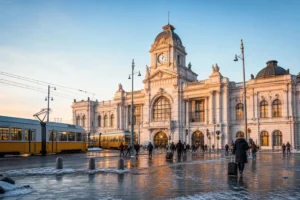 Moskovsky Railway Station, Saint Petersburgabout 1.6 km away (~26 min walk)
Main image: AI-generated illustration. It may not show the place exactly as it looks.
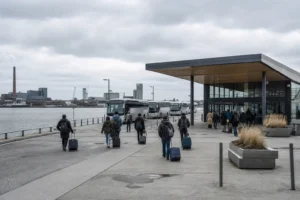 Saint Petersburg Central Bus Stationabout 1.9 km away (~31 min walk)
Main image: AI-generated illustration. It may not show the place exactly as it looks.
Related guides
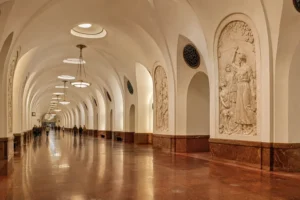 Ploshchad Vosstaniya Metro Station, Saint Petersburg: Guide
Main image: AI-generated illustration. It may not show the place exactly as it looks.
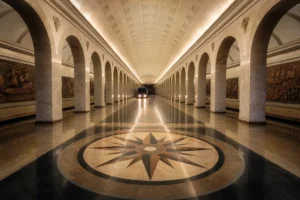 Admiralteyskaya Metro Station, Saint Petersburg: Deepest in Russia
Main image: AI-generated illustration. It may not show the place exactly as it looks.
 State Memorial Museum of the Defense and Siege of Leningrad: Guide
Main image: AI-generated illustration. It may not show the place exactly as it looks.
 Russian Ethnographic Museum, Saint Petersburg: Visitor Tips
Main image: AI-generated illustration. It may not show the place exactly as it looks.
 Palace Bridge, Saint Petersburg: Raising Times and Views
Main image: AI-generated illustration. It may not show the place exactly as it looks.
Browse more: More in Central District · All Churches · All Saint Petersburg · All Sightseeing · All Sightseeing in Saint Petersburg
FAQ: Alexander Nevsky Lavra, Saint Petersburg
Is Alexander Nevsky Lavra free to enter?
The monastery grounds and working churches are free. The two necropolises, the Lazarus cemetery and the Tikhvin cemetery, are museum sites that need a ticket. See the booking section for how tickets work.
Where is Dostoevsky buried?
In the Tikhvin cemetery, also called the Necropolis of the Masters of Arts. It is part of the Lavra complex but run by the State Museum of Urban Sculpture, so you need a necropolis ticket to enter.
Is Tchaikovsky buried at the Lavra?
Yes. Tchaikovsky lies in the Tikhvin cemetery together with Mussorgsky and Rimsky-Korsakov, among other composers. It is a short walk from the main entrance.
Is the Lavra the same as the necropolis?
No. The Lavra is the working monastery with its churches. The necropolises are separate museum cemeteries on the same territory, with their own tickets and their own hours.
Where is Lomonosov buried?
In the Necropolis of the 18th Century, the old Lazarus cemetery inside the Lavra. The mathematician Leonhard Euler is also buried there.
Are the relics of Alexander Nevsky at the Lavra?
Yes. They rest in a silver shrine in the Holy Trinity Cathedral. The relics were moved out in the Soviet years and returned to the cathedral in June 1989.
Do I need a guide?
Not for the churches. The necropolises are easier to understand with a guide who knows the graves, and the museum offers guided visits as a paid extra. Groups pay a minimum fee.
Why is it called a lavra rather than a monastery?
Lavra is the highest rank a monastery can hold in the Orthodox church. Emperor Paul I raised the monastery to that status in December 1797, putting it on a par with the great lavras in Kyiv and Sergiev Posad.
Russia Vibes is a one-person project. A coffee keeps it going
Last updated: October 16, 2026. Found an error or something out of date? Report it and we will check and fix it.
How we research and update our guides
About this guide: AI assistance and accuracy
This guide is created with the help of AI and is based on official sources where available. Mistakes can still happen. Opening hours, prices, rules and other details are given to the best of our knowledge as of the date shown and can change without notice. It offers general recommendations only, not professional, legal or travel advice. Please confirm important details with the official source before you travel; you are responsible for your own plans and decisions.
International sanctions affect payments between Russia and many other countries. In practice, cards issued in the EU, the UK, the US and several other countries often do not work in Russia, Russian cards usually do not work abroad, and some booking platforms, airlines and payment providers limit or suspend their services for Russia. The situation changes frequently. We do not give legal or financial advice, and this site does not encourage anyone to break or circumvent sanctions. Whatever you plan, you are responsible for following the laws and regulations that apply to you, including those of your country of residence and citizenship. Many travelers still organise their stay lawfully. It is worth asking your bank or payment provider what is currently permitted, contacting hotels, tour operators and carriers directly about the payment methods they accept, and checking which services are open to customers from your country. Clarify payment, cancellation and refund terms before you commit to a booking, and keep your plans flexible. Partner links on this site may not be available in every country, and prices, availability and rules in our guides can differ from what you see when you book.Paying for your trip: please read

Take this guide with you
Get a free PDF of this guide to print or read offline: key facts, tips and a map link on a few clean pages.