
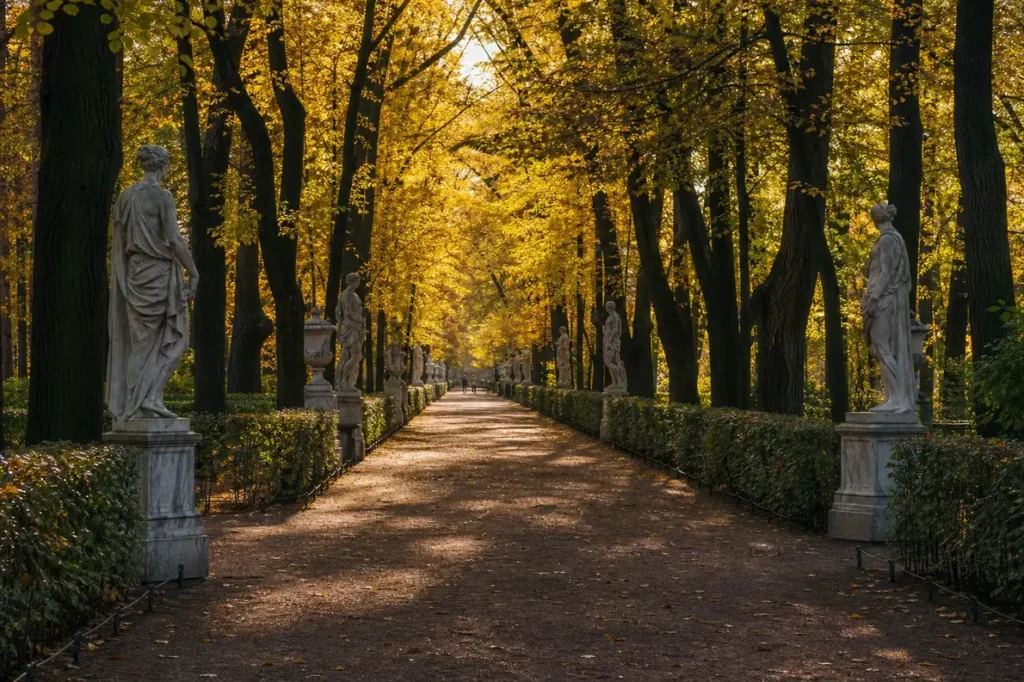
The Summer Garden in Saint Petersburg is the oldest garden in the city, laid out in 1704 by Peter the Great on an island between the Neva, the Fontanka, the Moika and the Swan Canal. It sits in the Central District, beside the Field of Mars and the Neva embankment.
Today the garden is run by the State Russian Museum. Visitors walk shaded alleys lined with white marble statues, pass the Krylov monument and can step into the small Summer Palace where Peter lived. This guide explains what is inside, which parts have their own tickets and when the garden is open.
Quick Facts
| Russian name | Летний сад |
|---|---|
| Built / opened | 1704 |
| Architect(s) | Peter the Great (plan); Domenico Trezzini (Summer Palace); Yuri Felten and Pyotr Yegorov (fence) |
| Address | Летний сад, набережная Кутузова, 2, Санкт-Петербург OpenStreetMap · Google Maps |
| District | Central District |
| Metro | Gostiny Dvor (Line 3, About a 20-minute walk via Mikhailovsky Garden) Nevsky Prospekt (Line 2, About a 20-minute walk via Mikhailovsky Garden) |
| Opening hours | Open seasonally: roughly May to September from 10:00 until late evening, and October to March from 10:00 until the evening. The garden is usually closed in April and on Tuesdays. The Summer Palace and the small museum pavilions keep shorter, separate hours (as of October 2026 – check the official site). |
| Admission | Garden entry is listed as free on the city's tourism portal, but this has changed in the past, so check the Russian Museum site. The Summer Palace and exhibitions are ₽₽ if separately ticketed. |
| Best time to visit | Late spring to early autumn is the main season. Mornings are quietest. In October to March the garden has shorter hours and the statues may be covered. Check closures in April. |
| Recommended duration | 1–2 hours |
| Website | rusmuseum.ru |
| Last updated | October 15, 2026 |
What Is (and Isn't) Part of a Visit to Summer Garden, Saint Petersburg?
| Part | Status | Notes |
|---|---|---|
| Garden alleys and statues | Included in the standard ticket | The main part of a visit, open in season. |
| Summer Palace of Peter the Great | Separate ticket or institution | A branch of the Russian Museum with its own hours and ticket. |
| Pavilion exhibitions | Separate ticket or institution | Small exhibitions in park buildings may need their own ticket. |
| Mikhailovsky Castle | Outside / not part of it | A different Russian Museum branch on the other side of the Moika. |
| Field of Mars | Outside / not part of it | An adjoining public space, not part of the garden. |
| Embankment fence | Outside / not part of it | Seen from the outside on the Neva embankment. |
Why Visit Summer Garden, Saint Petersburg?
The garden shows the Petersburg that Peter imagined: regular alleys, statues of classical figures and a plain two-storey summer house instead of a grand palace.
The iron fence along the Neva, built in 1771–1784 to a design by Yuri Felten, is one of the best-known sights of the embankment.
It is also the quietest large green space in the centre, a good place to rest between museums. The garden is part of the Russian Museum complex, so it works well with a visit to the nearby Mikhailovsky Castle and the Russian Museum.
How Summer Garden, Saint Petersburg Is Laid Out
The garden is a rectangle of long straight alleys running from the Neva side toward the Moika, with the Summer Palace in the north-eastern corner near the water. The main iron fence runs along the Neva embankment.
Sculptures stand along the alleys, and small buildings sit in the park, including the Coffee House of 1826 by Carlo Rossi and the Tea House built the following year by Ludwig Charlemagne. The Krylov monument stands in the southern part.
Walk in from the main entrance, follow the central alley with the statues, stop at the Summer Palace if you have time, and finish at the fence on the Neva side.
Highlights of Summer Garden, Saint Petersburg
The marble statues
Peter wanted many sculptures in the garden. The city portal says the collection of Italian marble figures is the oldest garden sculpture in Russia, and that the figures are placed along the alleys in series.
Many of the figures you see are copies, since original statues are kept in the Mikhailovsky Castle, another branch of the Russian Museum.
Tip: Look at the base of each statue for the figure's name.
The Summer Palace of Peter the Great
A small two-storey house built in 1710–1712 by Domenico Trezzini, with 14 rooms and two kitchens, in the Petrine baroque style. It hardly looks like a palace.
It is a branch of the Russian Museum and normally has its own ticket and hours.
Tip: Check whether the palace is open on the day you come; it has had long closures.
The iron fence on the Neva
The delicate cast-iron fence on the embankment side was installed between 1771 and 1784 to a design by Yuri Felten, assisted by Pyotr Yegorov. It separates the garden from the Neva embankment.
It is one of the most photographed fences in Russia.
Tip: Walk along the embankment outside to see it in full.
The Krylov monument
A monument to the fabulist Ivan Krylov was put up in the garden in 1855. It was the first monument to a poet in Eastern Europe, according to the Russian Museum's information.
Animals from his fables decorate the pedestal.
Tip: Look for the animal reliefs around the base.
The Coffee House and Tea House
Two small pavilions stand in the park: the Coffee House, built in 1826 by Carlo Rossi, and the Tea House, built in 1827 by Ludwig Charlemagne.
They show how the garden changed after Peter's time.
Tip: Check the museum's programme for exhibitions in the pavilions.
Winter boxes
To protect the marble from frost, statues are traditionally covered with wooden cases in winter and uncovered again in the warm season.
If you come outside summer, the alleys may look like rows of wooden boxes.
Tip: Come in late spring or summer if you want to see the statues themselves.
Atmosphere
Inside the garden the city noise drops away. Tall trees shade the straight alleys, gravel crunches underfoot and the white statues stand in the green light.
In the morning it is quiet, with a few walkers and photographers. In summer afternoons families, couples and students sit on benches, and in autumn the alleys are covered with leaves. In winter the statues are boxed up and snow settles on the paths, which makes the garden feel empty and still.
History of Summer Garden, Saint Petersburg
The Summer Garden was founded in 1704 by Peter the Great on the site of a former Swedish mansion at the point where the Fontanka flows out of the Neva. Peter drew up a sketch himself and wanted a summer residence to rival Versailles.
Peter ordered many sculptures, and in 1714 an open gallery received a statue of Venus. The garden had fountains, and by 1710–1712 the Summer Palace was built by Domenico Trezzini. By the end of Elizabeth’s reign the collection had grown to about two hundred statues.
The garden was the centre of social life in the capital during Peter’s reign and afterwards. The flood of 1777 destroyed the fountain system and other features of the original garden. In 1771–1784 the iron fence along the Neva was installed to a design by Yuri Felten.
In 1826 and 1827 the Coffee House and the Tea House were built, and in 1855 the Krylov monument was unveiled. After February 1917 the garden lost the status of an imperial park, and in 1934 it became a museum together with the Summer Palace.
The garden became part of the State Russian Museum complex in the early 2000s, and restoration work began again. Original sculptures were moved indoors for protection and copies were placed in the garden.
Tickets and Booking for Summer Garden, Saint Petersburg
| Ticket | Price | Includes |
|---|---|---|
| Garden entry | Free | Walking in the alleys; the city portal lists entry as free, which should be checked. |
| Summer Palace ticket | ₽₽ | The rooms of Peter the Great's Summer Palace, a Russian Museum branch. |
₽ budget · ₽₽ moderate · ₽₽₽ upscale · ₽₽₽₽ splurge. Price levels are estimates compared with typical prices for visitors.
Garden entry is normally handled at the gates, and the Summer Palace sells its own tickets. Tickets for Russian Museum branches are sold on the museum’s official site and at the branches.
- Rates differ for Russian citizens and concessions.
- Combined tickets may exist for several branches; check the museum site.
Use the Russian Museum’s official website (rusmuseum.ru) for current ticket types and rules.
Plan and Book
Suggested itineraries Summer Garden, Saint Petersburg
1 hour
Walk the central alley with the statues, look at the Krylov monument and leave by the Neva side to see the fence.
2 hours
Add the Summer Palace and the pavilions, then walk along the Neva embankment to see the fence from outside.
Half day
Combine the garden with the Field of Mars, Mikhailovsky Castle and the State Russian Museum, Saint Petersburg.
How to Get to Summer Garden, Saint Petersburg
The garden is about a 20-minute walk from Nevsky Prospekt. From Gostiny Dvor (Line 3) or Nevsky Prospekt (Line 2), walk along the Moika or through the Mikhailovsky Garden toward the Field of Mars.
- The main entrance faces the Neva side of the island.
- A taxi to the Kutuzov Embankment is an easy alternative.
Accessibility
The paths are mostly flat gravel, which can be heavy for wheelchairs and strollers. Check the Russian Museum site for details of access to the Summer Palace, which is a small historic building.
Food Nearby
There are cafes near the Field of Mars and along the Moika, and more on Nevsky Prospekt. The garden has few facilities, so plan a break outside.
What to Bring
Comfortable shoes for gravel paths and a light layer in the shade.
Best Views and Photo Spots of Summer Garden, Saint Petersburg
Central alley
A long view of the alley with statues on both sides and trees overhead.
Best time: Morning.
The fence from the embankment
The iron fence seen from the Neva embankment with the river behind.
Best time: Late afternoon.
Krylov monument
The seated writer surrounded by fable animals.
Best time: Soft daylight.
Summer Palace
The small ochre-coloured house among trees.
Best time: Autumn.
Photography Rules
Photography is allowed in the open garden. Rules inside the Summer Palace and exhibitions are set by the Russian Museum, so check at the entrance.
Family Suitability
A good place for families: open space, shade and statues to look at. Gravel paths are slow for strollers. Children usually enjoy the animals on the Krylov monument.
Russia Vibes Tips
- Walk the Neva embankment first to see the fence from outside, then enter.
- Check whether the garden is open for the month; it has closed in April.
- Visit between museum stops rather than as a full-day plan; one to two hours is enough.
- Look for the copies and the empty plinths when you compare with the originals at Mikhailovsky Castle.
- Leave through the Field of Mars side for a continuation of the walk.
Explore Nearby Summer Garden, Saint Petersburg
Sights near Summer Garden, Saint Petersburg
 Saint Michael's Castle, Saint Petersburgabout 500 m away (~8 min walk) · typical visit: 1.5–2 hours
Main image: AI-generated illustration. It may not show the place exactly as it looks.
 State Russian Museum, Saint Petersburg · typical visit: 3–4 hours for the main building
Main image: AI-generated illustration. It may not show the place exactly as it looks.
 Church of the Savior on Spilled Blood, Saint Petersburg · typical visit: 1 hour inside, plus time to walk around the outside
Main image: AI-generated illustration. It may not show the place exactly as it looks.
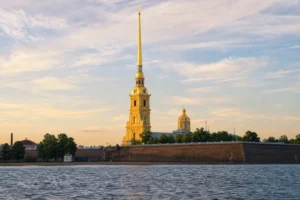 Peter and Paul Fortress, Saint Petersburg · typical visit: 2–4 hours
Main image: AI-generated illustration. It may not show the place exactly as it looks.
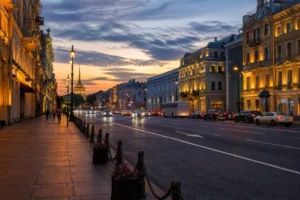 Nevsky Prospekt, Saint Petersburg · typical visit: 2–4 hours for the main stretch; a full day with stops
Main image: AI-generated illustration. It may not show the place exactly as it looks.
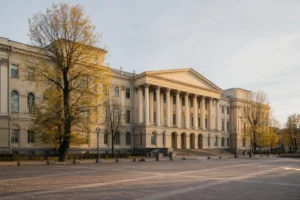 Russian Ethnographic Museum, Saint Petersburgabout 600 m away (~10 min walk) · typical visit: 2–3 hours
Main image: AI-generated illustration. It may not show the place exactly as it looks.
Metro stations near Summer Garden, Saint Petersburg
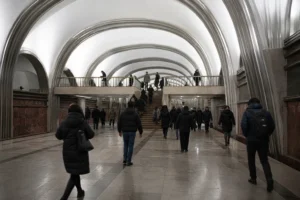 Nevsky Prospekt Metro Station, Saint Petersburgabout 1.2 km away (~19 min walk)
Main image: AI-generated illustration. It may not show the place exactly as it looks.
 Gostiny Dvor Metro Station, Saint Petersburgabout 1.2 km away (~19 min walk)
Main image: AI-generated illustration. It may not show the place exactly as it looks.
Train stations and river piers near Summer Garden, Saint Petersburg
 Finlyandsky Railway Station, Saint Petersburgabout 1.7 km away (~28 min walk)
Main image: AI-generated illustration. It may not show the place exactly as it looks.
Related guides
 Best Things to Do with Kids, Saint Petersburg: 8 Family Picks
Main image: AI-generated illustration. It may not show the place exactly as it looks.
 Best Churches and Religious Sites, Saint Petersburg: 9 Places to See
Main image: AI-generated illustration. It may not show the place exactly as it looks.
 Best Palaces and Historic Mansions, Saint Petersburg: 10 Interiors
Main image: AI-generated illustration. It may not show the place exactly as it looks.
 Best Museums, Saint Petersburg: 9 Picks and What to See
Main image: AI-generated illustration. It may not show the place exactly as it looks.
 Palace Pier, Saint Petersburg: Boat Trips on the Neva
Main image: AI-generated illustration. It may not show the place exactly as it looks.
Browse more: More in Central District · All Parks · All Saint Petersburg · All Sightseeing · All Sightseeing in Saint Petersburg
FAQ: Summer Garden, Saint Petersburg
Who founded the Summer Garden?
Peter the Great, in 1704, on the site of a former Swedish mansion.
Is the Summer Garden free?
The city's tourism portal lists entry as free, but this should be checked on the Russian Museum site, since the Summer Palace has its own ticket.
Is the Summer Palace part of the garden?
It stands in the garden but is a separate Russian Museum branch with its own hours and ticket.
Are the statues original?
Many are copies. Original sculptures are kept in the Mikhailovsky Castle.
When is it closed?
It has usually been closed on Tuesdays and in April. Check the official site.
Who designed the fence?
Yuri Felten, with Pyotr Yegorov, in 1771–1784.
How long do I need?
One to two hours.
Why are the statues in boxes?
To protect the marble from winter frost.
Russia Vibes is a one-person project. A coffee keeps it going
Last updated: October 15, 2026. Found an error or something out of date? Report it and we will check and fix it.
How we research and update our guides
About this guide: AI assistance and accuracy
This guide is created with the help of AI and is based on official sources where available. Mistakes can still happen. Opening hours, prices, rules and other details are given to the best of our knowledge as of the date shown and can change without notice. It offers general recommendations only, not professional, legal or travel advice. Please confirm important details with the official source before you travel; you are responsible for your own plans and decisions.
International sanctions affect payments between Russia and many other countries. In practice, cards issued in the EU, the UK, the US and several other countries often do not work in Russia, Russian cards usually do not work abroad, and some booking platforms, airlines and payment providers limit or suspend their services for Russia. The situation changes frequently. We do not give legal or financial advice, and this site does not encourage anyone to break or circumvent sanctions. Whatever you plan, you are responsible for following the laws and regulations that apply to you, including those of your country of residence and citizenship. Many travelers still organise their stay lawfully. It is worth asking your bank or payment provider what is currently permitted, contacting hotels, tour operators and carriers directly about the payment methods they accept, and checking which services are open to customers from your country. Clarify payment, cancellation and refund terms before you commit to a booking, and keep your plans flexible. Partner links on this site may not be available in every country, and prices, availability and rules in our guides can differ from what you see when you book.Paying for your trip: please read

Take this guide with you
Get a free PDF of this guide to print or read offline: key facts, tips and a map link on a few clean pages.