
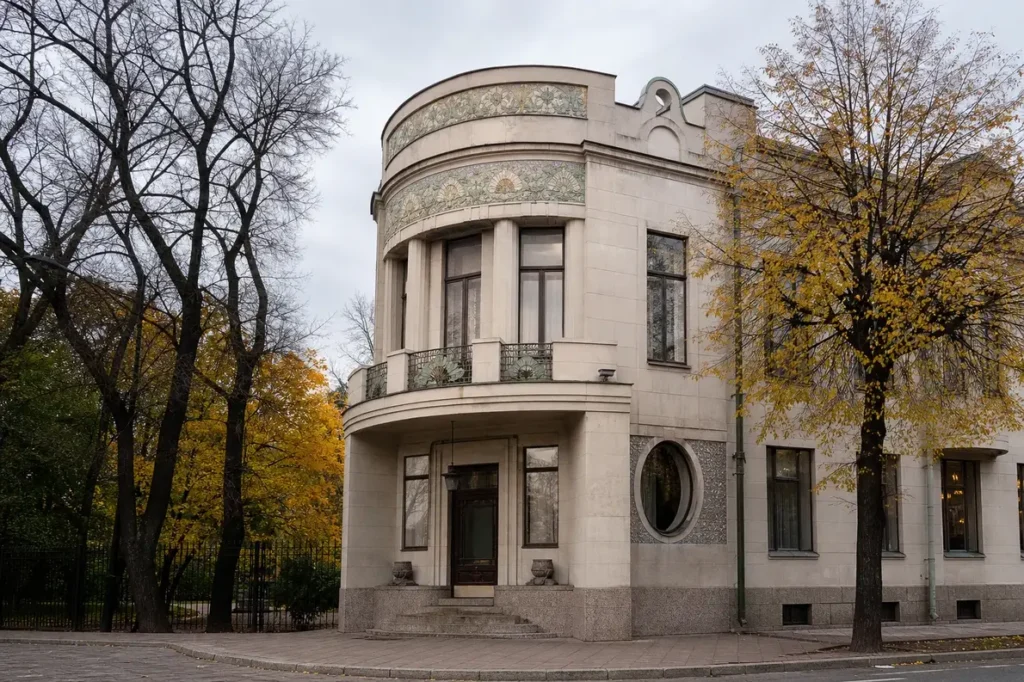
The State Museum of Political History of Russia occupies two early twentieth-century Art Nouveau mansions on the Petrograd side, a few minutes from the Peter and Paul Fortress. The main one was built for Mathilde Kshesinskaya, prima ballerina of the Mariinsky Theatre, and in 1917 it became a base of the Bolsheviks, with Lenin speaking from its balcony.
Today the museum shows the history of political life in Russia from the nineteenth to the twenty-first century, in rooms where the ballerina once held court. This page explains the opening hours, the ticket categories and free days, what to see inside and how it differs from the museum’s other sites such as Gorokhovaya 2.
Quick Facts
| Russian name | Государственный музей политической истории России (особняк Кшесинской) |
|---|---|
| Built / opened | 1919 |
| Architect(s) | Alexander von Gogen (Kshesinskaya mansion, 1904–1906) |
| Address | Санкт-Петербург, ул. Куйбышева, 2–4 (вход с Кронверкского проспекта) OpenStreetMap · Google Maps |
| District | Petrogradsky District |
| Metro | Gorkovskaya (Line 2, a short walk, the station named by the museum) |
| Opening hours | Tuesday, Thursday, Friday, Saturday and Sunday 10:00–18:00; Wednesday 10:00–20:00; closed on Mondays. Enter from Kronverksky Prospekt (as of October 2026 – check the official site). |
| Admission | A standard ticket (₽₽); children aged 7–17, students and pensioners pay half (₽); foreign visitors pay a higher rate (₽₽). Children under 7 enter free, and there are free days for some categories. |
| Best time to visit | Wednesday evenings, when the museum is open until 20:00, are often calmer, and weekday mornings are also quiet. Because the visit is indoors it works in any season. Free days, such as the third Wednesday of the month for students and under-18s, can be busier. |
| Recommended duration | 1.5–2.5 hours |
| Website | polithistory.ru |
| Last updated | October 16, 2026 |
What Is (and Isn't) Part of a Visit to State Museum of Political History of Russia, Saint Petersburg?
| Part | Status | Notes |
|---|---|---|
| Permanent exposition and non-commercial exhibitions | Included in the standard ticket | Covered by the standard entry ticket in the main building. |
| Kshesinskaya mansion interiors and the 1917 rooms | Included in the standard ticket | The staircase, White Hall, Hall 16 and the second-floor halls are part of the visit. |
| Gorokhovaya 2 museum on state security | Separate ticket or institution | A branch on Admiralteysky Prospect; a combined ticket covers it together with the main exposition. |
| Children's Historical Museum | Separate ticket or institution | Housed in the main building but offered as booked museum sessions with their own tickets. |
| Peter and Paul Fortress | Outside / not part of it | A separate site a few minutes' walk away. |
Why Visit State Museum of Political History of Russia, Saint Petersburg?
The building is as much an exhibit as the displays: a stylish Art Nouveau mansion with a famous owner, a famous balcony and a dramatic twentieth-century history. Inside, the permanent exposition Man and Power in Russia in the 19th to 21st Centuries traces political events through objects, documents and interactive displays.
It is a good choice if you are interested in the Russian Revolution, in how a private house became a political centre, or in the architecture of the period. The museum is compact and well organised, and it is close to the fortress and the cruiser Aurora, so it fits easily into a day on the Petrograd side.
How State Museum of Political History of Russia, Saint Petersburg Is Laid Out
The museum’s main building is at Kuybysheva Street, 2–4, and visitors enter from Kronverksky Prospekt. It consists of two mansions joined together: the Kshesinskaya mansion, built in 1904–1906, and the neighbouring mansion of the businessman Vasily Brandt, built around 1911. The two were joined by a passage in 1955.
In the Kshesinskaya mansion you can see the grand staircase, the White Hall and a hall dedicated to the ballerina herself (Hall 16), together with rooms on the second floor where Lenin worked in 1917. The permanent exposition continues through the two buildings, and temporary exhibitions are shown in other rooms. In warm weather, tours may include the garden.
The museum has other sites: the Children’s Historical Museum in the main building, the Gorokhovaya 2 museum on Admiralteysky Prospect about state security, and the Children’s Museum Centre on Bolotnaya Street. A combined ticket covers the main exposition and Gorokhovaya 2.
Highlights of State Museum of Political History of Russia, Saint Petersburg
Kshesinskaya's Art Nouveau interiors
The mansion was built between 1904 and 1906 for Mathilde Kshesinskaya, a star of the Mariinsky Theatre. Its modern, Art Nouveau style astonished Petersburg society at the time. Rooms like the White Hall, the main staircase and Hall 16, dedicated to the ballerina, show how she lived and entertained.
Guests included Sergei Diaghilev, Feodor Chaliapin, Isadora Duncan and members of the Romanov family.
Tip: Take time on the main staircase; it is one of the best-preserved interiors.
Lenin's balcony and the 1917 rooms
After the February Revolution the Bolsheviks occupied the mansion, and it became one of their bases in Petrograd. The balcony is where Lenin spoke to crowds, and the museum links it to the April Theses of 1917. The second-floor halls where he worked are devoted to the events of 1917 and the civil war.
This is the part of the visit that most directly ties the house to the revolution.
Tip: Read the captions on the 1917 rooms; they set out who used the house and when.
Man and Power in Russia in the 19th to 21st Centuries
The permanent exposition opened in 2013 after about ten years of preparation. It follows the relationship between people and the state in Russia through documents, objects and displays, from the nineteenth century to the present.
It is the main attraction for visitors who want to understand political history rather than just see the house.
Tip: Pick up an audio guide if you want more detail; it is available for hire.
The Brandt mansion
The second mansion belonged to the businessman Vasily Brandt, who moved into his newly built house in 1911. It is another Art Nouveau monument, and today it forms part of the museum, joined to the Kshesinskaya house by a passage.
Together the two buildings give a sense of the style and wealth of the period just before the revolution.
Tip: Notice the change in style as you move between the two houses.
The garden and the mansion's setting
The mansion stands at the corner of Kronverksky Prospekt and Kuybysheva Street, close to the Peter and Paul Fortress. In warm weather, guided tours may include a walk in the garden.
The setting adds to the impression of a private house turned public institution.
Tip: Ask on arrival whether the garden is open on the day you visit.
The Fragile Politics exposition
The museum offers a thematic tour of the exposition Fragile Politics, for groups of up to ten people and lasting 45 minutes. It is a smaller, focused programme within the museum's offerings.
It is booked separately from the entrance ticket.
Tip: Ask at the ticket office or call ahead to book it.
Atmosphere
Inside the old mansion the mood is calm and a little theatrical: carved stairs, tall windows and light-coloured halls, with exhibits arranged among the rooms where the ballerina once lived. Visitors move at an unhurried pace, often in small groups with a guide, and the sound of voices is low.
There is a contrast between the elegant surroundings and the political subject matter, and the building seems to hold both worlds at once. On Wednesday evenings the museum stays open until 20:00, and the atmosphere is quiet, with the balcony and staircase picked out by the lights.
History of State Museum of Political History of Russia, Saint Petersburg
The mansion was built between 1904 and 1906 for the ballerina Mathilde Kshesinskaya, one of the most famous dancers of her time and a favourite at the imperial court. The architect was Alexander von Gogen, and the house, in the Art Nouveau style then known as modern, quickly became a centre of Petersburg society. Guests included Sergei Diaghilev, Feodor Chaliapin, Isadora Duncan and Romanov grand dukes.
After the February Revolution of 1917 Kshesinskaya left, and the Bolsheviks took over the house. It became one of their bases in Petrograd through the spring and early summer of 1917, and Lenin addressed crowds from its balcony, an event the museum links to the April Theses.
For decades the building was used by various public institutions. The State Museum of the Revolution was founded on 9 October 1919 by decision of the Petrograd Soviet, as the first historical and revolutionary museum in the country. In 1955 the former mansion was joined by a passage to the neighbouring house of the businessman Vasily Brandt, built in 1911, and the two buildings housed the museum of the revolution.
The museum changed its name three times in the Soviet period and has been called the State Museum of Political History of Russia since 1991. In 2013, after a decade of preparation, a new permanent exposition, Man and Power in Russia in the 19th to 21st Centuries, opened.
Today the museum has several sites. Besides the main building, there is a Children’s Historical Museum, the Gorokhovaya 2 museum on the history of the political police and state security, and a Children’s Museum Centre for historical education on Bolotnaya Street. The museum also runs a lecture programme, concerts and cultural events.
Tickets and Booking for State Museum of Political History of Russia, Saint Petersburg
| Ticket | Price | Includes |
|---|---|---|
| Adult ticket (Russia and EAEU) | ₽₽ | Entry to the permanent exposition and non-commercial exhibitions in the main building, without a guided tour. |
| Foreign visitor ticket (age 7 and over) | ₽₽ | The same entry, at the foreign-visitor rate. |
| Children 7–17, students and pensioners | ₽ | A reduced ticket for citizens of Russia and EAEU countries, plus certain disability categories. |
| Combined ticket, adult | ₽₽ | The main exposition plus the Gorokhovaya 2 museum. |
| Combined ticket, foreign visitor | ₽₽ | The same combined entry at the foreign-visitor rate. |
| Children under 7 | Free | Free entry for young children on museum working days. |
₽ budget · ₽₽ moderate · ₽₽₽ upscale · ₽₽₽₽ splurge. Price levels are estimates compared with typical prices for visitors.
Tickets are sold at the museum and on its official ticket site. Entry is by ticket, and guided tours are paid separately from the entrance fee.
- A group tour for one to five people lasts one hour; a seat on a set-time shared tour is sold individually.
- Tours in foreign languages and interactive programmes are available for groups; book by phone or email.
- An audio guide can be hired, and amateur photography without tripod or flash is free.
Rates for Russian and EAEU citizens and for foreign visitors differ, and students and under-18s from Russia can enter free on the third Wednesday of each month; all visitors enter free on 18 May. Check the museum’s price list for current categories.
Plan and Book
Suggested itineraries State Museum of Political History of Russia, Saint Petersburg
1 hour
See the grand staircase, the White Hall and the balcony, then the second-floor 1917 rooms. Spend the last minutes in Hall 16 on Kshesinskaya.
2 hours
Walk the whole permanent exposition across both mansions and add a short tour or audio guide. Finish in the Brandt mansion.
Half day
Visit the museum in the morning, then walk to the Peter and Paul Fortress and on to the cruiser Aurora along Kronverksky Park.
How to Get to State Museum of Political History of Russia, Saint Petersburg
By metro: take Line 2 to Gorkovskaya, the station the museum lists, and walk a few minutes. The entrance is from Kronverksky Prospekt.
On foot: the museum is a couple of minutes’ walk from the Peter and Paul Fortress, on the Petrograd side.
By taxi: ask for Kuybysheva Street, 2–4 (улица Куйбышева, 2–4), and mention the entrance from Kronverksky Prospekt.
Accessibility
The museum has an accessible-museum page on its website and offers adapted tours for blind and partially sighted visitors and for visitors with autism spectrum disorder, as well as tours in Russian sign language, each at a reduced price. Details of step-free access to each hall in the historic mansion were not verified, so contact the museum before your visit.
Food Nearby
The museum has the Atrium coffee shop. More cafes and restaurants are on Kamennoostrovsky Prospekt, near Gorkovskaya metro and around the fortress.
What to Bring
Comfortable shoes, a light layer for the halls, and documents if you are claiming a reduced or free ticket. Use the cloakroom for coats and large bags.
Best Views and Photo Spots of State Museum of Political History of Russia, Saint Petersburg
Main staircase of the Kshesinskaya mansion
The sweeping Art Nouveau staircase with its curved lines and period detail.
Best time: Morning, when the light is soft.
The White Hall
The bright, formal salon where the ballerina entertained, with tall windows.
Best time: Any time inside.
The balcony and façade from the street
The mansion's façade at the corner of Kronverksky Prospekt with the balcony Lenin used, framed by trees.
Best time: Late afternoon light.
The garden
The mansion seen from the garden side in warm weather, if the garden is open.
Best time: Summer days.
Photography Rules
Amateur photography with phones and small cameras, without tripod, flash or extra lighting, is free, but images may not be published. Professional shooting needs the museum's permission. Watch for signs restricting photography in specific rooms.
Family Suitability
Suitable for older children and teenagers interested in history. The museum has a Children's Historical Museum with sessions and creative workshops for different age groups, which are booked in advance and paid separately. Children under 7 enter the main museum free.
Russia Vibes Tips
- Enter from Kronverksky Prospekt. The official address is Kuybysheva Street, 2–4, but the visitor entrance is on the other side.
- Do not confuse this site with the Gorokhovaya 2 branch on Admiralteysky Prospect, which has its own entrance; a combined ticket covers both.
- Choose Wednesday if you want a later visit; the museum stays open until 20:00 that day.
- Check the free days before you plan: the third Wednesday of the month for students and under-18s, and 18 May for all visitors.
- Pair the museum with the Peter and Paul Fortress, which is only a couple of minutes away on foot.
Explore Nearby State Museum of Political History of Russia, Saint Petersburg
Sights near State Museum of Political History of Russia, Saint Petersburg
 Peter and Paul Fortress, Saint Petersburg · typical visit: 2–4 hours
Main image: AI-generated illustration. It may not show the place exactly as it looks.
 Cruiser Aurora, Saint Petersburgabout 700 m away (~11 min walk) · typical visit: 1–1.5 hours
Main image: AI-generated illustration. It may not show the place exactly as it looks.
 Summer Garden, Saint Petersburgabout 1.2 km away (~20 min walk) · typical visit: 1–2 hours
Main image: AI-generated illustration. It may not show the place exactly as it looks.
 Spit of Vasilyevsky Island, Saint Petersburgabout 1.6 km away (~26 min walk) · typical visit: 1–2 hours, plus time for any museum
Main image: AI-generated illustration. It may not show the place exactly as it looks.
 Saint Michael's Castle, Saint Petersburgabout 1.7 km away (~28 min walk) · typical visit: 1.5–2 hours
Main image: AI-generated illustration. It may not show the place exactly as it looks.
 Russian Ethnographic Museum, Saint Petersburgabout 1.7 km away (~28 min walk) · typical visit: 2–3 hours
Main image: AI-generated illustration. It may not show the place exactly as it looks.
Metro stations near State Museum of Political History of Russia, Saint Petersburg
 Gorkovskaya Metro Station, Saint Petersburgabout 400 m away (~6 min walk)
Main image: AI-generated illustration. It may not show the place exactly as it looks.
Train stations and river piers near State Museum of Political History of Russia, Saint Petersburg
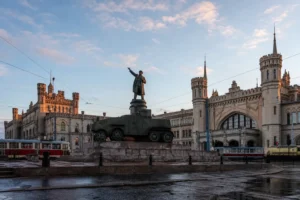 Finlyandsky Railway Station, Saint Petersburgabout 1.8 km away (~29 min walk)
Main image: AI-generated illustration. It may not show the place exactly as it looks.
Related guides
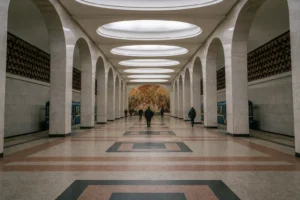 Ploshchad Lenina Metro Station, Saint Petersburg: Finland Station
Main image: AI-generated illustration. It may not show the place exactly as it looks.
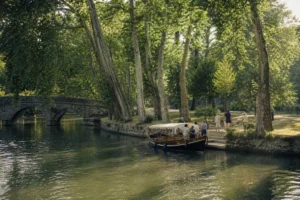 Yelagin Island Pier, Saint Petersburg: Park Landing for Boat Trips
Main image: AI-generated illustration. It may not show the place exactly as it looks.
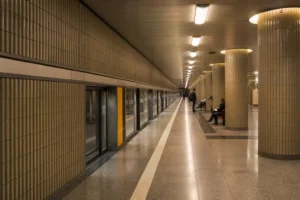 Petrogradskaya Metro Station, Saint Petersburg: Closed-Type Hall
Main image: AI-generated illustration. It may not show the place exactly as it looks.
 Chkalovskaya Metro Station, Saint Petersburg: Aviation Hall
Main image: AI-generated illustration. It may not show the place exactly as it looks.
 Krestovsky Ostrov Metro Station, Saint Petersburg: Park Gateway
Main image: AI-generated illustration. It may not show the place exactly as it looks.
Browse more: More in Petrogradsky District · All Museums · All Saint Petersburg · All Sightseeing · All Sightseeing in Saint Petersburg
FAQ: State Museum of Political History of Russia, Saint Petersburg
What is the State Museum of Political History of Russia?
A museum of the political history of Russia housed in the Art Nouveau mansion of the ballerina Mathilde Kshesinskaya and the neighbouring Brandt mansion, with several branches.
When is it open?
Tuesday, Thursday, Friday, Saturday and Sunday 10:00 to 18:00, Wednesday 10:00 to 20:00, closed on Mondays.
How much is a ticket?
A standard adult ticket is moderately priced, with half-price tickets for children 7–17, students and pensioners from Russia and EAEU countries. Foreign visitors pay a higher rate.
Where is the entrance?
From Kronverksky Prospekt, although the address is Kuybysheva Street, 2–4. The nearest metro station is Gorkovskaya.
Why is the mansion famous?
It was built for the ballerina Kshesinskaya, and in 1917 the Bolsheviks used it as a base, with Lenin speaking from its balcony.
What is the permanent exposition about?
Man and Power in Russia in the 19th to 21st Centuries, which opened in 2013 and follows the relationship between people and the state.
Is there a combined ticket?
Yes. A combined ticket covers the main exposition and the Gorokhovaya 2 museum on the history of state security.
Are there free days?
Children under 7 enter free, students and under-18s from Russia enter free on the third Wednesday of each month, and all visitors enter free on 18 May.
Russia Vibes is a one-person project. A coffee keeps it going
Last updated: October 16, 2026. Found an error or something out of date? Report it and we will check and fix it.
How we research and update our guides
About this guide: AI assistance and accuracy
This guide is created with the help of AI and is based on official sources where available. Mistakes can still happen. Opening hours, prices, rules and other details are given to the best of our knowledge as of the date shown and can change without notice. It offers general recommendations only, not professional, legal or travel advice. Please confirm important details with the official source before you travel; you are responsible for your own plans and decisions.
International sanctions affect payments between Russia and many other countries. In practice, cards issued in the EU, the UK, the US and several other countries often do not work in Russia, Russian cards usually do not work abroad, and some booking platforms, airlines and payment providers limit or suspend their services for Russia. The situation changes frequently. We do not give legal or financial advice, and this site does not encourage anyone to break or circumvent sanctions. Whatever you plan, you are responsible for following the laws and regulations that apply to you, including those of your country of residence and citizenship. Many travelers still organise their stay lawfully. It is worth asking your bank or payment provider what is currently permitted, contacting hotels, tour operators and carriers directly about the payment methods they accept, and checking which services are open to customers from your country. Clarify payment, cancellation and refund terms before you commit to a booking, and keep your plans flexible. Partner links on this site may not be available in every country, and prices, availability and rules in our guides can differ from what you see when you book.Paying for your trip: please read

Take this guide with you
Get a free PDF of this guide to print or read offline: key facts, tips and a map link on a few clean pages.