
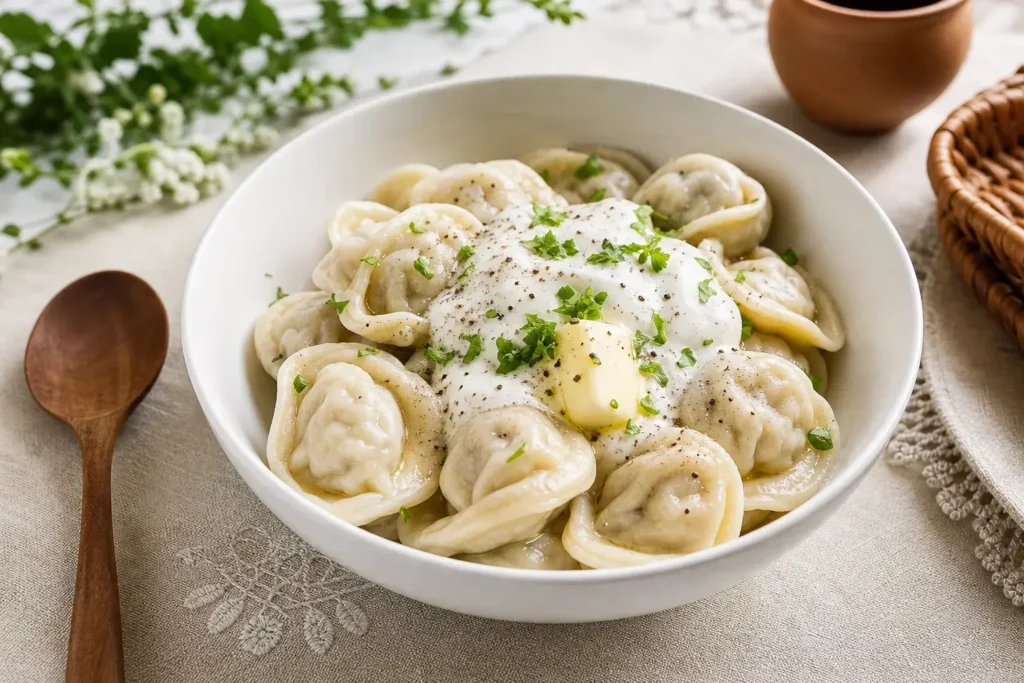
Pelmeni are one of Russia’s most beloved comfort foods. Whether you’re in Saint Petersburg or anywhere across Russia, you’ll find these small meat-filled dumplings on menus and in home kitchens. This guide teaches you how to make pelmeni from scratch.
The process is straightforward: mix a simple dough, prepare a seasoned meat filling, shape the dumplings by hand, and boil them until they float. The recommended approach is hand-shaping, which takes patience but produces authentic results. You’ll end up with enough for several meals and plenty to freeze for later.
Quick answer: Make a flour dough with eggs and water, mix ground meat with onions and seasonings, roll the dough thin, cut circles, fill and fold them into pelmeni shapes, then boil in salted water until they float. Total time is 2–3 hours including resting and shaping.
At a Glance
| Type | Dishes |
|---|---|
| Local name | пельмени |
| Origin | Pelmeni's origins are rooted in Siberia and the Ural Mountains of Russia, where the specific shape and recipe developed. It is believed that the recipe was introduced to Siberia and the Urals by the Mongols and gradually spread throughout Eastern Europe, becoming a part of Russian culture. The term "pelmeni" comes from the native Finno-Ugric-Komi and Udmurt languages, meaning "ear bread" in reference to their unique shape. This dish originates from Siberia and was a popular meal among coachmen or hunters on their long trips across this vast and cold part of Russia. |
| Servings | 4 servings (makes 40–50 dumplings) |
| Total time | 2–3 hours |
| Difficulty | Medium |
History and Story of Pelmeni, Saint Petersburg
Pelmeni were prepared and stored frozen for a long period of time without being cooked, so they were frozen food that could be easily cooked and eaten either at home or on a journey. One only had to light a fire and boil some water or melt snow to cook pelmeni. During long and hard winters this hot and nourishing food was a real blessing.
Ingredients
- 250 g flour
- 1 egg
- 80 ml water
- 300 g ground pork, beef, or mixed meat
- 1 onion
- Salt and pepper to taste
- Extra flour for dusting
How Pelmeni, Saint Petersburg Is Made
Step 1: Make the dough
In a bowl, mix flour with a pinch of salt. Create a well in the centre and crack in one egg. Slowly add water while mixing with a fork, then knead on a floured surface until the dough becomes soft and elastic but not sticky. Knead for about 5 minutes. Cover the dough and let it rest for 30 minutes to an hour; this relaxes the gluten and makes it easier to roll.
Tip: If the dough is too sticky, add more flour one tablespoon at a time. If it's too dry, add a few drops of water.
Step 2: Prepare the filling
Finely chop or grate one onion. In a bowl, combine the ground meat with the chopped onion, salt, and pepper to taste. Mix thoroughly until well blended. You can add a splash of cold water to the filling to make it juicier and more tender when cooked.
Tip: Test the seasoning by frying a small pinch of filling in a pan. Adjust salt and pepper if needed.
Step 3: Roll and cut the dough
Divide the rested dough into portions. Working with one portion at a time, roll it out on a lightly floured surface until it is very thin, about the thickness of a coin. Cover unused dough to prevent it from drying. Using a small glass or cookie cutter about 6–7 cm in diameter, cut out circles.
Tip: Work quickly to prevent the dough from drying out. Keep cut circles covered with a damp cloth.
Step 4: Fill and shape
Place about half a teaspoon of filling in the centre of each dough circle. Dip your finger in water and trace the edge of the circle to help seal it. Fold the circle in half and pinch the edges firmly to seal. Then bring the two corners together, pinching and pressing them to form the characteristic ear-shaped dumpling.
Tip: Do not overfill; a teaspoon is the maximum. Loosely packed pelmeni cook more evenly.
Step 5: Freeze or cook immediately
Place finished pelmeni on a floured plate or tray, ensuring they don't touch. Freeze for at least 2 hours before cooking, or store in the freezer for weeks. This is the traditional way: pelmeni were made in large batches and frozen for eating throughout winter.
Tip: Pelmeni can go from freezer directly to boiling water; do not thaw first.
Step 6: Boil the pelmeni
Bring a large pot of salted water to a rolling boil. Add bay leaves if desired for flavour. Gently drop the pelmeni into the boiling water. Stir immediately to prevent them from sticking to the bottom. After 2–3 minutes, they will float to the surface. Once they float, cook for another 5 minutes, then carefully remove with a slotted spoon.
Tip: Frozen pelmeni take 8–10 minutes total, starting from when you add them to the water. Fresh pelmeni cook faster, about 5–7 minutes total.
Variants
- Beef and pork mixture
- Venison (traditional in colder regions)
- Fish-filled pelmeni (especially in coastal areas)
- Mushroom-filled pelmeni
- Mixed meat (three types)
Common Mistakes to Avoid
- Overfilling the dumplings: too much meat tears the dough and causes pelmeni to burst open during cooking. Stick to half a teaspoon per dumpling.
- Not sealing the edges properly: pinch firmly and ensure the two corners are pressed together, or pelmeni will open in the boiling water.
- Skipping the dough rest: dough that hasn't rested is harder to roll thin and more likely to tear.
- Cooking fresh pelmeni too long: they cook much faster than frozen ones and can become mushy if overcooked.
- Thawing frozen pelmeni before boiling: the dough may split. Cook them directly from the freezer.
- Using dough that is too thick: thin dough ensures the dumpling cooks through without becoming chewy.
How to Order and Eat It
Pelmeni are boiled dumplings, served with different condiments, but smetana (sour cream) is most popular. The traditional serving is to place cooked pelmeni in a bowl, top generously with sour cream, and add a knob of butter. Some eat them Siberian-style with vinegar and black pepper. Pelmeni are typically eaten as a main course for lunch or dinner, either as a comforting home meal or in cafeterias and restaurants throughout Russia.
To order: Пельмени со сметаной, пожалуйста [Pelmeni so smetanoy, pozhaluysta]
Diet and Allergens
- Contains eggs
- Contains gluten
- Typically contains pork
Where to Try Pelmeni, Saint Petersburg
Irkutsk
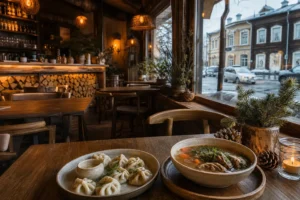 Taiga, Irkutsk Siberian cuisine with game, smoked dishes and local products
Main image: AI-generated illustration. It may not show the place exactly as it looks.
Russia Vibes Tips
- Make pelmeni in a group. The hand-shaping is repetitive and time-consuming, but much faster with friends or family working together. Russians traditionally make large batches in one sitting.
- Buy or borrow a pelmeni mold if you make them often. The mold dramatically speeds up production: you lay dough over it, fill the holes, cover with another dough layer, roll firmly, and invert to pop out dozens at once.
- Freeze extra pelmeni unbaked and store in freezer bags for weeks or months. This makes them perfect for quick weeknight meals: boil directly from frozen without thawing.
- Rest your hands while shaping. Pinching 50 dumplings is tiring; take breaks and keep your workspace organized to avoid dropping filled dumplings.
- The filling should be raw when you seal the dumplings, not cooked. The boiling water cooks the meat through in about 8 minutes, which is why pelmeni are best served immediately after cooking while still warm.
Explore Nearby Pelmeni, Saint Petersburg
Sights near Pelmeni, Saint Petersburg
 Nevsky Prospekt, Saint Petersburg · typical visit: 2–4 hours for the main stretch; a full day with stops1 min on foot from Gostiny Dvor metro, Open 24 hours
Main image: AI-generated illustration. It may not show the place exactly as it looks.
 Kazan Cathedral, Saint Petersburg · typical visit: 30–60 minutes4 min on foot from Nevsky Prospekt metro
Main image: AI-generated illustration. It may not show the place exactly as it looks.
 Church of the Savior on Spilled Blood, Saint Petersburg · typical visit: 1 hour inside, plus time to walk around the outside9 min on foot from Nevsky Prospekt metro
Main image: AI-generated illustration. It may not show the place exactly as it looks.
 State Hermitage Museum, Saint Petersburg · typical visit: 3-5 hours for the main highlights7 min on foot from Admiralteyskaya metro
Main image: AI-generated illustration. It may not show the place exactly as it looks.
Browse more: All Food & Drink · All Food & Drink in Saint Petersburg · All Other · All Saint Petersburg
FAQ
Are pelmeni Ukrainian or Russian?
Pelmeni became a staple of Russian cuisine during the period of Russian expansion into the Ural Mountains and Siberia. Pelmeni also have deep roots in the traditions and folklore of the regions of Komi and Udmurtia in Russia.
Can I use chicken instead of pork?
Yes. They are typically stuffed with a filling of ground pork, chicken, turkey, or beef seasoning with onions and salt and pepper. Many Russians use chicken for a lighter version, and both beef and poultry work well.
What's the difference between pelmeni and ravioli?
Similar to Chinese dumplings and Italian ravioli, pelmeni are traditionally filled with ground beef, pork, and lamb, but variations with chicken, potatoes, cheese, or mushrooms also exist. Pelmeni are smaller and shaped like ears, while ravioli are typically larger and square-shaped.
How long can I keep frozen pelmeni?
Properly frozen, unbaked pelmeni will keep for several weeks or months in the freezer. Store them in a freezer bag or container to prevent drying out. Boil directly from frozen without thawing.
Can I boil pelmeni straight from the freezer?
Yes. This is the traditional method. Drop frozen pelmeni into boiling salted water and cook for 8–10 minutes until they float and the meat inside is cooked through. Do not thaw first; the dough can split.
What should I serve with pelmeni?
Sour cream is the most common topping, served generously with a knob of butter melted on top. Some prefer vinegar and black pepper (Siberian-style), or just butter. They are eaten as a main course, similar to pasta.
Why is the filling raw?
The filling is mixed raw and cooks when the pelmeni are boiled. This ensures the meat stays moist and tender inside while the dough cooks through. The boiling water temperature is sufficient to fully cook ground meat in 8–10 minutes.
Is there an easier way to make pelmeni?
A pelmeni mold speeds up production significantly, but requires buying a special tool. Alternatively, you can buy ready-made frozen pelmeni from Russian grocery stores or supermarkets, then simply boil and serve.
Russia Vibes is a one-person project. A coffee keeps it going
How we research and update our guides
About this guide: AI assistance and accuracy
This guide is created with the help of AI and is based on official sources where available. Mistakes can still happen. Opening hours, prices, rules and other details are given to the best of our knowledge as of the date shown and can change without notice. It offers general recommendations only, not professional, legal or travel advice. Please confirm important details with the official source before you travel; you are responsible for your own plans and decisions.

Take this guide with you
Get a free PDF of this guide to print or read offline: key facts, tips and a map link on a few clean pages.
Report an issue on this page
Paying for your trip: please read
International sanctions affect payments between Russia and many other countries. In practice, cards issued in the EU, the UK, the US and several other countries often do not work in Russia, Russian cards usually do not work abroad, and some booking platforms, airlines and payment providers limit or suspend their services for Russia. The situation changes frequently.
We do not give legal or financial advice, and this site does not encourage anyone to break or circumvent sanctions. Whatever you plan, you are responsible for following the laws and regulations that apply to you, including those of your country of residence and citizenship.
Many travelers still organise their stay lawfully. It is worth asking your bank or payment provider what is currently permitted, contacting hotels, tour operators and carriers directly about the payment methods they accept, and checking which services are open to customers from your country. Clarify payment, cancellation and refund terms before you commit to a booking, and keep your plans flexible.
Partner links on this site may not be available in every country, and prices, availability and rules in our guides can differ from what you see when you book.