
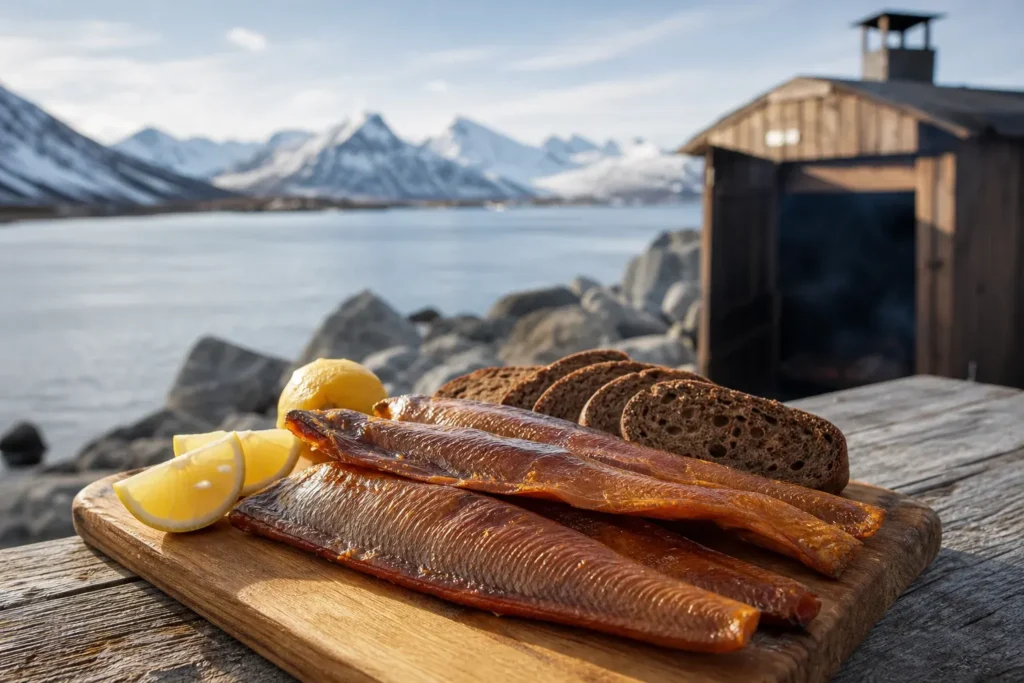
Smoked Arctic Fish Murmansk style represents the essence of Arctic cuisine—simple, flavorful, and deeply rooted in the region’s fishing traditions. Visitors to Murmansk often encounter whole smoked fish or fillets at restaurants, cafés, and market stalls, sometimes served as part of a fish board alongside cured varieties. This guide shows you how to prepare hot-smoked Arctic char at home using a home smoker or grill.
You will master the two-part process: brining the fresh fish overnight to season and preserve it, then smoking it until the flesh turns opaque and flakes easily. The recommended method is hot smoking, which is simpler than cold smoking and safe for home cooks.
Quick answer: Brine fresh Arctic char or trout with salt and sugar for 12–24 hours, then hot-smoke it at 180–220°F (82–104°C) until the internal temperature reaches 160°F, typically 2–4 hours depending on fillet thickness. Total time from brine to table: 14–28 hours.
At a Glance
| Type | Dishes |
|---|---|
| Local name | Копченая полярная рыба |
| Origin | Murmansk region and Russian Arctic |
| Servings | 2–4 servings |
| Total time | 14–28 hours (including overnight brine) |
| Difficulty | Medium |
History and Story of Smoked Arctic Fish, Murmansk
Smoking has been a cornerstone of northern Russian food preservation for centuries, born from harsh winters and the need to store fish from the short summer fishing season. Arctic char and other cold-water fish thrive in the Barents Sea and inland Arctic waters, making them the natural choice for Murmansk’s fishing heritage. In traditional Pomor (northern Russian seafaring) culture, smoked fish was not only sustenance but also a trade commodity, dried or smoked fish being transported inland along ancient routes. Today, smoked Arctic fish remains a marker of local identity and Arctic culinary pride, appearing on restaurant menus from humble cafés to upscale dining establishments across the region.
Ingredients
- 700–900 g fresh Arctic char or trout fillets (skin-on or skin-off, 2–4 servings)
- 90 g sea salt
- 90 g brown sugar
- 1 L cold water
- Wood chips for smoking (alder, aspen, or applewood preferred)
- Smoker or grill with thermometer
- Baking racks or grill grates
How Smoked Arctic Fish, Murmansk Is Made
Step 1: Make the brine
In a bowl, dissolve 90 g sea salt and 90 g brown sugar in 1 L of cold water, stirring until fully dissolved. Optional: add a few peppercorns, bay leaves, or lemon zest for flavor depth. The brine will taste noticeably salty and sweet.
Tip: Ensure all salt and sugar dissolve completely before adding the fish.
Step 2: Submerge the fish
Pat the fish dry with paper towels. Place the fillets skin-side down in a non-reactive container (glass, plastic, or ceramic—not metal) and pour the brine over them until fully submerged. Use a plate or weight to keep them underwater if needed.
Tip: If fillets are thinner than 1 cm, reduce brining time to 8–12 hours to avoid over-salting.
Step 3: Refrigerate overnight
Cover the container and place it in the refrigerator for 12–24 hours. The fish will absorb salt and sugar, firming the flesh and drawing out moisture. Do not skip this step; brining is essential for both flavor and food safety during smoking.
Tip: Brining time can be lengthened to 24 hours for thicker fillets (1.5 cm or more) without harm.
Step 4: Rinse and dry the fish
Remove the fillets from the brine and rinse them briefly under cold running water to remove excess salt crystals. Pat them completely dry with clean paper towels and place them skin-side down on greased racks. Let them air-dry in a cool, breezy spot for 1–2 hours until a light, shiny coating (called a pellicle) forms on the surface. This helps smoke adhere evenly.
Tip: A fan or open window speeds pellicle formation and improves the final texture.
Step 5: Prepare the smoker
Soak a generous handful of wood chips in water for 30 minutes, then drain them. Preheat your smoker to 180–220°F (82–104°C). If using a grill, place a metal pan of soaked wood chips directly over the heat source. Arrange the fillets skin-side down on the racks with 2–3 cm of space between pieces to allow smoke and heat to circulate freely.
Tip: Insert a meat thermometer into the thickest fillet to monitor internal temperature throughout smoking.
Step 6: Smoke the fish
Close the smoker and maintain the temperature between 180–220°F. The fish is done when the internal temperature reaches 160°F (71°C) and the flesh flakes easily with a fork. For fillets 1–1.5 cm thick, expect 2–3 hours; thicker cuts may take 3–4 hours. Do not open the smoker frequently, as this drops the temperature and extends cooking time.
Tip: Thinner fillets cook faster; check them at the 90-minute mark to avoid overcooking.
Step 7: Cool and serve
Remove the fillets from the smoker and let them cool slightly on the racks. Smoked fish can be eaten warm, at room temperature, or chilled. Store leftovers in an airtight container in the refrigerator for up to 3–4 days, or freeze for up to 2 months.
Tip: Serve on a board with rye bread, crackers, fresh lemon, thin-sliced onion, and sour cream for the classic Arctic presentation.
Variants
- Cold-smoked Arctic char: Uses lower temperatures (below 85°F / 29°C) and longer smoking times (1–5 days), resulting in a raw, silky interior and deeper smoke flavor. Requires specially frozen fish or commercially frozen char to eliminate parasites.
- Hot-smoked whole fish: Instead of fillets, whole fish are brined and smoked, sometimes with the head on. Cooking time extends and presentation is more dramatic.
- Smoked fish with herbs: Add dill, parsley, or caraway seeds to the brine for Scandinavian-style variation.
- Combination board: Mix hot-smoked trout, salt-cured salmon, and smoked halibut on one platter, served with crackers and sauces—the traditional Murmansk restaurant presentation.
Common Mistakes to Avoid
- Skipping or rushing the brine: Brining is not optional—it seasons the flesh, draws out moisture to improve texture, and prevents the fish from drying out during long smoking. Skip it and the result will be bland and stringy.
- Overfilling the smoker: Crowding fillets prevents air and smoke from reaching all surfaces evenly. Leave space between pieces; smoke in batches if necessary.
- Opening the smoker constantly: Every time you lift the lid, you drop the temperature and extend cooking time unpredictably. Use a thermometer in the fillet instead.
- Using the wrong fish: Lean fish (pike, cod) become dry and tough when smoked. Choose fatty fish with high oil content such as Arctic char, salmon, trout, or mackerel.
- Not reaching 160°F internal temperature: Cold spots in the flesh can harbor bacteria. Use a meat thermometer and ensure at least 30 minutes at 160°F during the smoking cycle.
- Choosing green or wet wood: Unseasoned or wet chips create acrid smoke and stalling. Use dry, aromatic hardwoods like alder, aspen, or applewood instead.
How to Order and Eat It
Serve smoked Arctic fish warm or at room temperature, flaked into large pieces, on dark rye bread or crisp crackers. Pair with thinly sliced red onion, fresh lemon wedges, and a dollop of sour cream or mustard sauce. In Murmansk restaurants, smoked fish often appears as part of a zakuska (appetizer) board alongside other cured and smoked varieties, with tomatoes, cucumbers, and tartar sauce on the side. The delicate, flaky texture and mild smoke flavor make it equally at home on a sandwich, in a salad, or simply eaten by itself.
To order: Копченую полярную рыбу, пожалуйста [Kopchenuyu polyarnuyu rybu, pozhaluysta]
Diet and Allergens
- gluten-free
- dairy-free
Where to Try Smoked Arctic Fish, Murmansk
Murmansk
 Loft-bar Cherdak, Murmansk
Main image: AI-generated illustration. It may not show the place exactly as it looks.
 Dublin Irish Pub, Murmansk
Main image: AI-generated illustration. It may not show the place exactly as it looks.
 BEERGEEK51 Bar, Murmansk
Main image: AI-generated illustration. It may not show the place exactly as it looks.
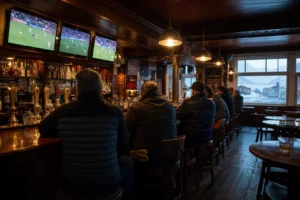 Buldog Pub, Murmansk
Main image: AI-generated illustration. It may not show the place exactly as it looks.
 Rock'n'Roll Music Bar, Murmansk
Main image: AI-generated illustration. It may not show the place exactly as it looks.
Russia Vibes Tips
- Buy the freshest fish available, ideally from a market or fishmonger the same day you plan to brine. Older fish, even if refrigerated, will produce a less tender result.
- If you don't own a smoker, improvise with a covered grill or even a kettle barbecue: place the wood chips in a foil packet on the heat source and position the fish on a rack above them.
- In Murmansk, smoked fish boards at restaurants often mix trout, catfish, halibut, and other local varieties. Feel free to experiment with whichever oily fish is fresh in your market.
- Don't discard the skin: when properly smoked, it becomes crispy and flavorful, not tough. Many locals eat it.
- Wood choice matters: alder and aspen impart milder smoke; hickory and oak are stronger. Start mild if you're new to smoking.
Explore Nearby Smoked Arctic Fish, Murmansk
Browse more: All Food & Drink · All Food & Drink in Murmansk · All Murmansk · All Other
FAQ
What fish can I use instead of Arctic char?
Any oily fish with high fat content works: salmon, trout, mackerel, halibut, or catfish. Avoid lean fish (pike, cod alone) as they dry out. In Murmansk restaurants, you'll find all of these smoked together.
Can I cold-smoke fish at home safely?
Cold smoking is riskier than hot smoking because temperatures below 90°F don't kill all bacteria. If you want to try it, you must use commercially frozen fish (which kills parasites) or freeze your fish at –10°F for at least 7 days first. Hot smoking is simpler and safer for beginners.
How long does brining take?
12–24 hours in the refrigerator. Thinner fillets (under 1 cm) can brine for as little as 8 hours; thicker cuts benefit from the full 24 hours. Don't exceed 24 hours or the fish will become too salty.
What if I don't have a meat thermometer?
A thermometer is strongly recommended to ensure food safety (160°F internal). If you don't have one, test by inserting a thin fork into the thickest part; the flesh should flake easily and show no translucent areas.
Can I smoke fish indoors?
No. Smoking produces large amounts of smoke and requires outdoor equipment. Some cities prohibit outdoor smoking; check local regulations first.
How do I store smoked fish?
Refrigerate in an airtight container for 3–4 days, or freeze for up to 2 months. Properly smoked fish keeps longer than fresh fish due to the salt and smoke, but it's best consumed within a few days for peak flavor.
Does smoked fish contain gluten?
The fish itself is naturally gluten-free, but check any added seasonings, sauces, or accompaniments (bread, crackers) for gluten. The basic recipe here is gluten-free.
Is smoked fish healthy?
Smoked fish is high in omega-3 fatty acids and protein, but also higher in sodium due to the brine. Consume in moderation as part of a balanced diet. It is not suitable as a salt-restricted diet without rinsing.
Russia Vibes is a one-person project. A coffee keeps it going
How we research and update our guides
About this guide: AI assistance and accuracy
This guide is created with the help of AI and is based on official sources where available. Mistakes can still happen. Opening hours, prices, rules and other details are given to the best of our knowledge as of the date shown and can change without notice. It offers general recommendations only, not professional, legal or travel advice. Please confirm important details with the official source before you travel; you are responsible for your own plans and decisions.

Take this guide with you
Get a free PDF of this guide to print or read offline: key facts, tips and a map link on a few clean pages.
Report an issue on this page
Paying for your trip: please read
International sanctions affect payments between Russia and many other countries. In practice, cards issued in the EU, the UK, the US and several other countries often do not work in Russia, Russian cards usually do not work abroad, and some booking platforms, airlines and payment providers limit or suspend their services for Russia. The situation changes frequently.
We do not give legal or financial advice, and this site does not encourage anyone to break or circumvent sanctions. Whatever you plan, you are responsible for following the laws and regulations that apply to you, including those of your country of residence and citizenship.
Many travelers still organise their stay lawfully. It is worth asking your bank or payment provider what is currently permitted, contacting hotels, tour operators and carriers directly about the payment methods they accept, and checking which services are open to customers from your country. Clarify payment, cancellation and refund terms before you commit to a booking, and keep your plans flexible.
Partner links on this site may not be available in every country, and prices, availability and rules in our guides can differ from what you see when you book.