
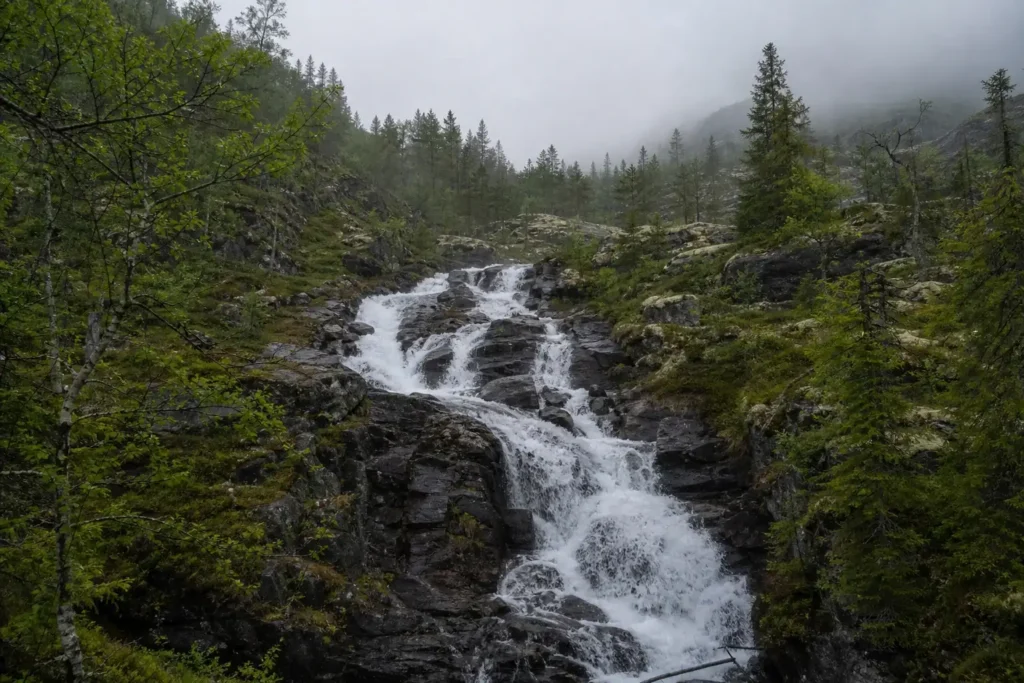
Lavna Waterfall sits on the Lavna River, a 21-kilometre stream that flows from Lake Lavna into Kola Bay. Located roughly 30 minutes from central Murmansk in the direction of the village of Ladva, this modest cascade is one of the Murmansk region’s most accessible natural attractions for visitors with limited time. The waterfall is best experienced as a day trip from the city, combining a short forest hike with a riverside walk along banks dotted with lichen-covered stones.
The falls themselves are modest in height—about 4 metres—but the surrounding landscape draws regular visitors. The river runs cold and fast year-round, creating a continuous backdrop of sound and movement that guides walkers to the cascade even in low light.
Quick Facts
| Russian name | Водопад на реке Лавна |
|---|---|
| Distance from the nearest major city | 1900 km |
| Travel time from the nearest major city | 3–4 hours by plane plus ground transport |
| Address | Pechenga Highway, Lavna village, near Radiomast bus stop, Murmansk OpenStreetMap · Google Maps |
| Admission | free |
| Best time to visit | Summer (June–August) is the most popular season: daylight extends well into evening, weather is milder (though still cool), and the waterfall is full-flowing from summer melt. Forest trails are driest in mid-summer but can remain damp. Wildflowers and berries are visible; fewer insects than in early summer.Spring (May–early June) brings the fullest, most powerful water flow from snowmelt; the waterfall is at its most dramatic. Weather remains cold and unpredictable; the trail is muddy and treacherous. Go only if you have waterproof boots and enjoy muddy conditions.Autumn (September–October) offers crisp, clear weather and fewer visitors. The forest turns gold and red; mushroom foraging is at its peak. Days shorten rapidly; plan to return before dusk. Early autumn is preferable; late autumn becomes winter-like.Winter (November–March) is challenging but attractive to hardy visitors. The cascade partially freezes but continues to flow, creating striking icy formations. Days are very short; visit only with secure winter gear and awareness that rescue services are distant. Heavy snowfall closes the access road; check conditions before departing.Avoid mud season transitions (late April–early May, late September–early October) unless prepared for difficult footing. |
| Recommended duration | 2–3 hours |
What Is (and Isn't) Part of a Visit to Lavna Waterfall, Murmansk?
| Part | Status | Notes |
|---|---|---|
| The waterfall and river cascade | Included in the standard ticket | Free access to the natural cascade and surrounding rocks; no ticket required. |
| Forest trail to the falls (1.3 km) | Included in the standard ticket | Marked but informal trail; part of the natural river landscape, not developed or maintained infrastructure. |
| Picnic clearings nearby | Included in the standard ticket | Forest glades used informally by locals for gatherings; no facilities, no permit needed. |
| Fishing in the river | Included in the standard ticket | Locals fish seasonally; visitors may fish subject to Russian regional fishing regulations (check locally). |
| Berries and mushrooms (summer) | Included in the standard ticket | Seasonal foraging is common; respect local custom and do not over-harvest. |
| Lake Lavna | Outside / not part of it | The source lake, located inland and not easily accessible from the waterfall; separate destination. |
| Other Murmansk waterfalls | Outside / not part of it | The Murmansk region has multiple waterfalls. Bolshoy Yaniskengas and Mill Waterfall (on Titovka River) are popular alternatives, each requiring separate trips. |
How to Get from the nearest major city to Lavna Waterfall, Murmansk
| Option | Duration | Price | Notes |
|---|---|---|---|
| Taxi or ride-share from central Murmansk | 40–50 minutes round trip with waiting time | ₽₽ | Direct and most convenient for visitors unfamiliar with local roads. Drivers familiar with the area know the Radiomast bus stop marker. Agree on a return pickup time or wait for your driver. |
| Rental car | 1.5–2 hours round trip (30 min drive each way plus parking) | ₽₽₽ | Gives flexibility to spend time on-site. Follow the Pechenga Highway (M69) northeast toward the village of Lavna. Turn at the Radiomast stop (identifiable by the radio mast antenna). Park at the bridge over the river. Road conditions can be poor in mud season (spring, autumn) and after heavy snowfall (winter). High-clearance or SUV recommended. |
| Public bus | 1–1.5 hours each way, plus walking | ₽ | Buses toward Pechenga stop near Lavna and Radiomast. Service is infrequent and routes are not optimised for tourism. Confirm schedules at the central bus station before departing. Last return buses are usually late afternoon. Not recommended without Russian language assistance or local knowledge. |
| Guided excursion tour | 4–5 hours including transport and site time | ₽₽₽ | Local operators in Murmansk arrange waterfall trips combined with other Arctic sights. Includes interpretation, transport, and sometimes meals. Check with accommodation or Murmansk tourism office for current offerings. |
₽ budget · ₽₽ moderate · ₽₽₽ upscale · ₽₽₽₽ splurge. Price levels are estimates compared with typical prices for visitors.
Why Visit Lavna Waterfall, Murmansk?
The appeal lies in the combination of accessibility and genuine Arctic wilderness just outside a major city. Unlike crowded urban attractions, the waterfall offers solitude and a close look at subarctic forest ecology: mossy banks, forest trails, and the ecology of a northern river. The walk to the falls takes 20–40 minutes and is moderate enough for most fitness levels, though the path is often damp and muddy, especially in spring and autumn.
The site has become a ritual destination for Murmansk residents: locals bring picnics to forest clearings nearby, and wedding parties come for photographs. Winter visits are possible; the waterfall rarely freezes completely, creating an impressive icy display against the landscape.
Highlights of Lavna Waterfall, Murmansk
The Cascade and Mossy Banks
The waterfall itself drops from moss-covered rocks, creating a small but vigorous cascade. The surrounding banks are strewn with stones of various sizes, each covered with thick green and grey lichen and moss that thrive in the Arctic humidity. This growth makes for vivid photography and shows how quickly organic life colonises stone in northern climates. Look for the contrast between the rushing water and the static, encrusted rocks.
Tip: Approach carefully—the rocks are slippery; wear waterproof boots with good grip, especially in spring and autumn when the path is wet.
The Forest Trail Along the River
The 1.3-kilometre path from the parking area to the cascade winds through boreal forest (taiga) along the river's edge. The trail is marked but informal—locals refer to it as 'trampled' by regular footsteps. The river sounds grow louder as you approach, providing a natural navigational signal. The walk reveals the structure of a northern forest: low, hardy vegetation, scattered pines and birches, and the dense organic layer of moss and fallen wood underfoot.
Tip: The descent to the trail is marked and relatively steep; use available handholds and take your time, especially in poor visibility or on icy conditions in winter.
Fishing and River Wildlife
Trout, grayling, whitefish, perch and pike are found in the Lavna. The river was historically home to salmon, but after a dam appeared on the river, the royal fish stopped being seen here. Local fishermen often work the quieter sections of the river, and patient walkers may spot Arctic birds or observe fishing in progress. The site is popular with locals who fish seasonally.
Tip: If you see fishermen, give them space; dawn and dusk are peak fishing times, so expect more activity then.
Summer Berries and Mushrooms
In summer, berries and mushrooms are picked here. Forest clearings near the cascade become foraging grounds from late June through September. The practice is integral to local culture; residents travel specifically to gather lingonberries, cloudberries, and wild mushrooms. This seasonal activity makes summer visits distinctly different from other seasons.
Tip: If foraging, know local mushroom species or go with someone experienced; respect posted gathering rules and leave some for others.
Winter Icing and Contrast
The waterfall is especially full-flowing and powerful in spring, but even in winter, in frost, most of it does not freeze, creating an indelible impression. Winter visitors see the contrast between the unfrozen cascade and accumulated ice and snow on surrounding rocks and banks. This seasonal transformation makes the site visually distinct from summer visits.
Tip: Winter visits require extra preparation: waterproof insulated boots, gaiters, and full winter clothing. The path becomes treacherous after heavy snowfall; check conditions before attempting access.
Photo Clearings and Picnic Spots
Newlyweds come here for photo shoots, and Murmansk residents often have picnics in the glades that are nearby. Forest clearings near the falls provide open space and varied backdrops: the cascade itself, forest framed by trees, and river views. These same areas are used for informal gatherings, especially in summer.
Tip: Visit early morning or on weekdays to avoid other photographers and picnickers, particularly on sunny weekend days in summer.
Atmosphere
The site feels removed from the city despite its proximity. The sound of rushing water dominates; it grows louder as the path descends to the river, creating an acoustic anticipation before the falls come into sight. The forest is quiet except for birdsong and water. In summer, the air is fresh and cool; the moss and wet rocks give off an earthy, forest smell. In winter, the air is cold and crisp, and sound carries differently across frozen or snow-covered ground.
The waterfall itself is small enough to take in at a glance, but the setting rewards lingering. Visitors often sit on rocks to absorb the landscape rather than rushing through. The demographic is mixed: local families on weekends, occasional tourists, and solo hikers. Wedding parties sometimes appear with professional photographers, treating the cascade as a portrait studio backdrop.
Tickets and Booking for Lavna Waterfall, Murmansk
There is no ticket system. The waterfall is free to visit and access is unrestricted. Parking and trail entry are not controlled. Visitors should arrange their own transport from Murmansk or book a guided excursion through a local tour operator.
Plan and Book
Suggested itineraries Lavna Waterfall, Murmansk
Half day (4–5 hours)
Depart Murmansk by taxi or tour bus in late morning. Arrive at the parking area (Radiomast stop) by midday. Walk to the cascade (20–40 minutes), spend 45 minutes to an hour at the waterfall and surroundings, then return to the trailhead. Depart for Murmansk by late afternoon. This schedule allows time for photos, rest, and exploration without rushing and ensures daylight for the return journey.
Full day (8 hours)
Start early (9 am departure from Murmansk). Spend 2–3 hours exploring the waterfall, forest trail, and surrounding clearings. Pack a picnic lunch to eat at one of the forest clearings or riverside rocks. Allow time for additional walks along the river upstream from the cascade if energy permits. Depart for Murmansk by 4–5 pm to arrive before dark. Combine with a stop in the village of Lavna or another nearby natural site if desired.
Winter day trip (6–7 hours)
Depart in early morning (8 am) to maximise daylight in the short Arctic winter day. Travel to the waterfall, allowing extra time for slower movement on icy terrain. Spend 1–2 hours on-site, viewing the partially frozen cascade and winter forest. Return to Murmansk by 3 pm while daylight remains. Bring full winter gear, including insulated waterproof boots and warm clothing.
How to Get to Lavna Waterfall, Murmansk
From central Murmansk: Take the Pechenga Highway (M69) northeast toward Pechenga and Nikel, roughly 20–25 kilometres. The highway passes through the suburb of Abram Cape, then the settlement of Minkino. Look for the Radiomast bus stop (marked by a radio mast antenna), usually about 20 km from the city centre. At or just before this stop, turn left off the highway onto an unpaved dirt road. Drive carefully—the road is rough and can be muddy or snow-covered. After roughly 500 metres, you will reach a bridge over the Lavna River. Park here.
On foot from the parking area: From the bridge, descend to the marked trail along the river. The path is informal but trampled and recognisable. Walk downstream (north) along the river for approximately 1.3 kilometres. The sound of the waterfall will become louder as you approach. The trail is damp and can be slippery; use available roots or branches for handholds on steeper sections.
By public transport: Buses operating the Pechenga route pass near Lavna and Radiomast. Confirm schedules and exact stop locations at Murmansk central bus station or use local transport apps. Service is infrequent; plan for multiple-hour waits if connecting to return buses.
By taxi or ride-share: Share the Radiomast location or the name “Lavna Waterfall” with the driver. Agree on pickup and return arrangements in advance.
Accessibility
The site is not formally accessible to visitors with limited mobility. The trail to the waterfall is steep, uneven, and often muddy or icy; it requires climbing down from the parking area via exposed roots and rocks. There are no paved surfaces, handrails, or maintained steps. The walk takes 20–40 minutes of moderate to strenuous effort depending on fitness and conditions.Visitors with mobility challenges could view the waterfall from the parking area at the bridge (a short walk from the car) but would not reach the cascade itself. No facilities (toilets, benches, shelter) are available on-site.
Food Nearby
There are no restaurants, cafés, or kiosks at or near the waterfall. The nearest food options are in the settlements of Lavna or Minkino (roughly 5–10 kilometres away), which have small shops and local eateries, but these are not reliably accessible or open to tourists. Pack all food, water, and hot drinks from Murmansk. A thermos of hot tea, sandwiches, and snacks are standard for day visitors.
What to Bring
Footwear: Waterproof hiking boots with grip-soled soles; the path is wet and slippery year-round. Gaiters prevent mud from entering boots in spring and autumn.Clothing: Layers appropriate to the season. Arctic conditions are cold; even in summer, bring a windproof jacket. Winter visits require insulated waterproof layers, hat, and gloves.Hydration and food: Bring water, hot tea in a thermos, and snacks. There are no shops on-site.Photography: The site is picturesque; bring a camera or phone with a good lens. A tripod can be unstable on uneven ground but is possible.Safety: A headlamp or torch is essential for winter visits and helpful even in summer if timing slips. Small bags are preferable to large backpacks in the forest; security checks are not conducted, but keep valuables secure in your vehicle.Seasonal extras: Winter: gaiters, insulated boots, full thermal layers, emergency whistle, knowledge of weather. Spring/autumn: extra socks and waterproof bag for muddy conditions.
Best Views and Photo Spots of Lavna Waterfall, Murmansk
The cascade from the base level
Direct view of the waterfall dropping over moss-covered rocks, framed by forest. The lichen-covered banks and rushing water create natural foreground and backdrop. This angle shows the full height of the falls and the texture of the stones.
Best time: Overcast days or diffuse light; early morning or late afternoon for warm sidelighting that emphasises texture.
Upstream along the river from the cascade
The cascading river flowing upstream toward and around the main falls, with calm pools reflecting the forest and rocks. This perspective captures the river system and landscape context.
Best time: Calm water days; mid-morning or afternoon for clear reflection.
From the forest edge overlooking the cascade
The waterfall viewed from a distance with forest framing the scene, showing the scales of the cascade within its woodland setting. Lichen-covered rocks and moss dominate the foreground.
Best time: Overcast or soft light; avoids harsh shadows and emphasises the green of moss and lichen.
Icy formations in winter (November–March)
Partially frozen cascade and ice-coated rocks create sculptural forms and colour contrast. The white and blue tones of ice against dark stone and forest background.
Best time: Early morning after freezing night, before ice begins to melt; clear days emphasise ice texture.
Photography Rules
The site welcomes photography. Tripods can be set up on stable ground near the cascade but are difficult to position securely on uneven, moss-covered rocks. Drones are permitted in principle but Arctic winds and proximity to natural hazards make flying difficult; seek local guidance if you plan to use one. Flash and artificial lighting are not necessary; the water and surrounding moss provide natural texture and light. The best light for photography is overcast conditions (which emphasise moss colour and water) or warm light near sunrise or sunset.
Family Suitability
The site is suitable for older children (age 10 and up) with hiking experience and appropriate footwear. Younger children can visit if an adult is prepared to carry them part of the way, but the steep, slippery trail and lack of safety rails make it risky for toddlers or children who cannot walk steadily on uneven ground.Strollers are not usable on the forest trail. Babies and very young children should be carried in a backpack-style carrier rather than a stroller. Teenagers and adults find the hike manageable; fitness requirements are moderate, not extreme. The absence of facilities (toilets, shelter, seating) is a consideration for families with young children. Bring extra water and snacks to keep children energised. Summer is preferable to winter for family visits due to longer daylight and less hazardous trail conditions.
Russia Vibes Tips
- The dirt road to the parking area becomes impassable after heavy rain or snowfall. Call ahead to the Murmansk tourism office or check weather reports before departing, especially in spring, autumn, and winter. After snowfall, the road may be closed for days.
- The Radiomast bus stop is the key landmark. If you do not see the radio mast antenna, you have driven past. There is no large sign; the stop is marked only by a shelter and the antenna. Ask a local if uncertain.
- Bring more water than you think you need. There is no drinking water on-site, and the exertion and Arctic air cause dehydration faster than expected. A litre per person is a minimum.
- If visiting in winter, inform someone of your plans and expected return time. Daylight is limited; do not linger at the waterfall after 2 pm in December–January. The road and trail become hazardous in darkness.
- Locals do not resent visitors, but the site is primarily used by Murmansk residents for picnics and fishing. Respect ongoing activities (anglers, family groups) and avoid loud noise.
- The trail is not maintained after snowfall in winter. Early-winter visitors (November) may find a partially packed trail; later in winter, the path becomes indistinct under snow. Winter hiking here requires genuine snow-travel experience.
Explore Nearby Lavna Waterfall, Murmansk
Browse more: All Day Trips · All Day Trips in Murmansk · All Murmansk · All Viewpoints
FAQ: Lavna Waterfall, Murmansk
Is there a ticket or entrance fee?
No, the waterfall is free to visit. There is no gate, ticket booth, or admission control. Access is unrestricted year-round.
How far is the walk from the parking area to the waterfall?
The waterfall is located about 800 metres from the mouth of the river along the trail from the parking area. The walk typically takes 20–40 minutes depending on fitness, trail conditions, and stopping for photos.
Is the waterfall accessible in winter?
The road to it is not so easy after heavy snowfalls. Winter visits are possible but require a high-clearance vehicle or snowmobile for access, full winter gear, and experience with Arctic terrain. The waterfall itself remains partially unfrozen even in frost, making it visually striking in winter.
What is the height of the waterfall?
It is about 4 kilometres high, though sources vary slightly (3–4 metres reported). It is modest in height but full-flowing and surrounded by picturesque moss-covered rocks.
Can you swim in the Lavna River?
The river is too rapids, although there are sections that are quite deep with a calm flow. But the water does not have time to warm up and is cold. Swimming is not advisable; the current is strong and water temperatures are far too cold for safe immersion.
What is the best season to visit?
Summer (June–August) is the most popular: daylight extends into evening, weather is milder, and trails are relatively dry. Spring (May) offers the most powerful water flow but muddy conditions. Autumn (September–October) is quieter with excellent light. Winter visits are possible but challenging and require specialist experience.
Are there guides or tours available?
Local tour operators in Murmansk arrange waterfall excursions, usually combining the waterfall with other Arctic attractions. No on-site guides are available; the site is unmanaged. Check with your accommodation or the Murmansk tourism office for current tour offerings.
How long does a visit typically take?
Allow 2–3 hours total: 30 minutes driving from Murmansk, 40 minutes round-trip walking to and from the waterfall, and 45 minutes–1 hour at the cascade itself. A full-day visit (4–5 hours on-site) allows for picnicking, additional exploration, or photography.
Russia Vibes is a one-person project. A coffee keeps it going
How we research and update our guides
About this guide: AI assistance and accuracy
This guide is created with the help of AI and is based on official sources where available. Mistakes can still happen. Opening hours, prices, rules and other details are given to the best of our knowledge as of the date shown and can change without notice. It offers general recommendations only, not professional, legal or travel advice. Please confirm important details with the official source before you travel; you are responsible for your own plans and decisions.

Take this guide with you
Get a free PDF of this guide to print or read offline: key facts, tips and a map link on a few clean pages.
Report an issue on this page
Paying for your trip: please read
International sanctions affect payments between Russia and many other countries. In practice, cards issued in the EU, the UK, the US and several other countries often do not work in Russia, Russian cards usually do not work abroad, and some booking platforms, airlines and payment providers limit or suspend their services for Russia. The situation changes frequently.
We do not give legal or financial advice, and this site does not encourage anyone to break or circumvent sanctions. Whatever you plan, you are responsible for following the laws and regulations that apply to you, including those of your country of residence and citizenship.
Many travelers still organise their stay lawfully. It is worth asking your bank or payment provider what is currently permitted, contacting hotels, tour operators and carriers directly about the payment methods they accept, and checking which services are open to customers from your country. Clarify payment, cancellation and refund terms before you commit to a booking, and keep your plans flexible.
Partner links on this site may not be available in every country, and prices, availability and rules in our guides can differ from what you see when you book.