
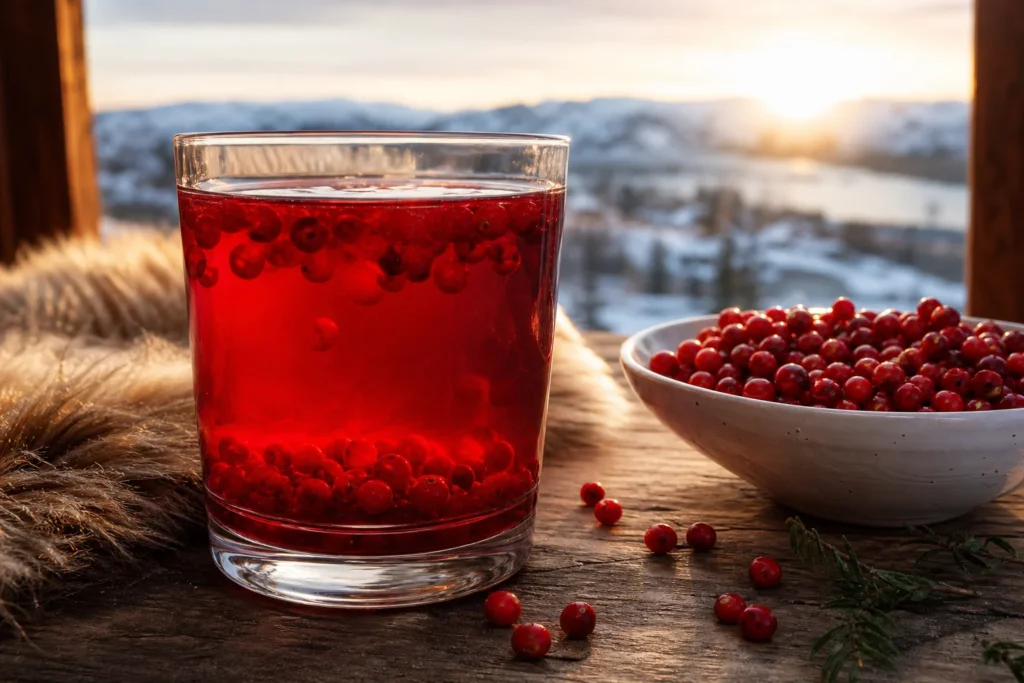
Lingonberry compote is a traditional Russian drink that appears on tables throughout the Arctic regions, particularly valued in Murmansk where northern berries grow wild. This guide shows you how to make lingonberry compote at home using simple ingredients.
The result is a naturally sweet, slightly tart fruit drink that can be served either hot on cold Arctic days or chilled during summer. This recipe uses the same technique as other traditional Russian fruit compotes, and comes together in under 30 minutes.
Quick answer: Simmer fresh or frozen lingonberries with water and sugar for 15–20 minutes, then let the mixture cool. The drink is ready to serve hot or cold, and takes about 30 minutes total.
At a Glance
| Type | Drinks |
|---|---|
| Local name | Брусничный компот |
| Origin | Northern Russia and Scandinavia; traditional in Arctic regions including Murmansk |
| Servings | 4 servings |
| Total time | 30 minutes |
| Difficulty | Easy |
History and Story of Lingonberry Compote, Murmansk
Lingonberry compote is part of a broader tradition of Russian fruit drinks and preserves that dates back centuries. In the Arctic regions of Russia, including Murmansk, lingonberries have been gathered wild and preserved through fermentation, jamming, and compote-making to provide nutrients and flavor during long winters. The berries grow naturally in the tundra and northern forests throughout the Northern Hemisphere. Traditional Russian compotes are hot or cold drinks served year-round, made from any available berries or fruits simmered with water and sugar.
Ingredients
- 400–500 g fresh or frozen lingonberries
- 1 L water
- 50–80 g sugar
- Large saucepan
- Strainer or fine mesh (optional)
How Lingonberry Compote, Murmansk Is Made
Step 1: Prepare the berries
If using frozen lingonberries, rinse them briefly under cool water to remove any ice crystals. If using fresh berries, pick through them to remove any leaves or debris and rinse gently. You don't need to thaw frozen berries completely before cooking.
Tip: Frozen berries work just as well as fresh and are easier to find outside northern regions.
Step 2: Bring water to a boil
Pour 1 liter of water into a large saucepan and bring it to a rolling boil over medium-high heat. This takes about 5 minutes.
Step 3: Add berries and sugar
Once the water is boiling, add the lingonberries and sugar. Stir to combine. The sugar will dissolve as the liquid heats. Use 50 g sugar for a more tart drink or 80 g for a sweeter version, depending on your preference.
Tip: Some people add a squeeze of lemon juice at this stage for extra tartness.
Step 4: Simmer
Once the mixture returns to a boil, reduce the heat to low or medium-low. Let it simmer gently for 15–20 minutes. The berries will soften and release their color and flavor into the water, turning it a deep red.
Tip: Don't let it boil rapidly; a gentle simmer keeps the flavor delicate.
Step 5: Cool and strain (optional)
Remove from heat and let cool slightly. You can drink it warm with the berries still in it, or strain through a fine mesh sieve if you prefer a clear drink without berry pulp. Both ways are traditional.
Tip: If straining, press the softened berries gently against the sieve to release all their juice.
Step 6: Serve
Serve the compote hot during colder months or chill it in the refrigerator and serve cold during summer. Pour into glasses and drink as is, or serve alongside a meal.
Variants
- Mixed berry compote: Combine lingonberries with cranberries, blueberries, or blackcurrants for a more complex flavor.
- Spiced compote: Add a cinnamon stick, clove, or piece of fresh ginger during simmering for warmth.
- Honey-sweetened compote: Replace some or all of the sugar with honey for a different sweetness profile.
- Compote with citrus: Add a strip of orange or lemon zest during cooking or a squeeze of juice at the end.
Common Mistakes to Avoid
- Boiling too vigorously: Vigorous boiling can make the drink cloudy and the flavor less refined. Keep the heat at a gentle simmer.
- Adding sugar after cooling: Sugar dissolves best in hot liquid. Always add it while the water is still hot or boiling.
- Over-cooking the berries: Lingonberries are delicate and lose flavor if simmered too long. Stick to 15–20 minutes.
- Not tasting as you go: Lingonberries vary in tartness depending on the batch. Taste the compote before serving and adjust sugar if needed.
- Using only water without any sweetener: While technically possible, unsweetened lingonberry compote is very tart and rarely served this way in Russian tradition.
How to Order and Eat It
Drink lingonberry compote warm or cold as a refreshing beverage. In Arctic Russian tradition, it’s served alongside meals, particularly in winter as a warming drink. Some people use it as a topping for pancakes, yogurt, or desserts. The berries themselves can be eaten from the drink or strained out beforehand, depending on preference. Compote keeps in the refrigerator for several days and can be reheated gently before serving.
To order: Брусничный компот [brusnichniy kompot]
Russia Vibes Tips
- Lingonberries are naturally tart due to organic acids; they do not need lemon juice to preserve, unlike some other fruit compotes. The tartness is part of their appeal.
- If you cannot find fresh lingonberries, frozen ones (often labeled as wild lingonberries or mountain cranberries) work perfectly and are widely available in Russian grocers and online.
- The compote's color—a deep ruby red—is a clue that it's ready. Pale-colored compote means the berries haven't released enough flavor or color yet; simmer a bit longer.
- Make larger batches and store in glass jars in the refrigerator for up to a week. You can also freeze compote in ice cube trays to use later in other recipes.
- In Arctic cuisine menus in Murmansk, lingonberry compote sometimes appears as an accompaniment to game dishes and meat pies, balancing rich flavors with acidity.
- Some Russian families prepare soaked (brined) lingonberries in water and salt, which tastes quite different from sweet compote. These are not the same thing; compote is specifically the sweetened, cooked version.
Where to Find Lingonberry Compote, Murmansk in Russia
Browse more: All Food & Drink · All Food & Drink in Murmansk · All Murmansk · All Other
FAQ
Can I use fresh lingonberries instead of frozen?
Yes, fresh and frozen lingonberries work equally well in compote. Fresh berries may release slightly more color and flavor, but frozen berries are just as nutritious and flavorful. If using fresh, rinse gently; if using frozen, no thawing is necessary.
Is lingonberry compote the same as lingonberry jam?
No. Compote is a thin, drinkable mixture of berries in syrup served as a beverage. Jam (or varenye in Russian) is much thicker, cooked longer, and served as a spread. Compote takes 20–30 minutes; jam takes much longer.
How sweet should lingonberry compote be?
Lingonberries are naturally very tart. Traditional Russian compote balances tartness with sweetness, but less sweet than jam. Start with 50–80 g sugar per liter and taste as you go. You can always add more sugar, but you cannot remove it.
Can I make compote without sugar?
Technically yes, but it will be extremely tart. Russians traditionally sweeten compote. Some use honey instead of sugar for a different flavor. Unsweetened lingonberry juice is called mors, a different drink.
How long does compote keep?
Homemade compote keeps in a sealed glass jar in the refrigerator for up to a week. If you want longer storage, you can freeze it or prepare it using traditional preservation methods (canning).
What is the difference between compote and mors?
Compote is made by simmering berries in water with sugar, then straining or drinking with the berries. Mors is a berry juice drink traditionally made by crushing berries, extracting juice, then mixing with water and sugar. Both are traditional Russian drinks, but mors is clearer and more juice-like.
Can I add spices to lingonberry compote?
Yes. Cinnamon stick, clove, cardamom, or ginger can be added during simmering. Remove whole spices before serving. Be cautious with strong spices; they can overpower the delicate berry flavor.
Are lingonberries the same as cranberries?
No, but they're related and look similar. Lingonberries are smaller, slightly sweeter, and less sour than cranberries. They grow wild in Arctic and northern regions. Both make good compote, but lingonberries are preferred in Russian and Scandinavian cooking.
Russia Vibes is a one-person project. A coffee keeps it going
How we research and update our guides
About this guide: AI assistance and accuracy
This guide is created with the help of AI and is based on official sources where available. Mistakes can still happen. Opening hours, prices, rules and other details are given to the best of our knowledge as of the date shown and can change without notice. It offers general recommendations only, not professional, legal or travel advice. Please confirm important details with the official source before you travel; you are responsible for your own plans and decisions.

Take this guide with you
Get a free PDF of this guide to print or read offline: key facts, tips and a map link on a few clean pages.
Report an issue on this page
Paying for your trip: please read
International sanctions affect payments between Russia and many other countries. In practice, cards issued in the EU, the UK, the US and several other countries often do not work in Russia, Russian cards usually do not work abroad, and some booking platforms, airlines and payment providers limit or suspend their services for Russia. The situation changes frequently.
We do not give legal or financial advice, and this site does not encourage anyone to break or circumvent sanctions. Whatever you plan, you are responsible for following the laws and regulations that apply to you, including those of your country of residence and citizenship.
Many travelers still organise their stay lawfully. It is worth asking your bank or payment provider what is currently permitted, contacting hotels, tour operators and carriers directly about the payment methods they accept, and checking which services are open to customers from your country. Clarify payment, cancellation and refund terms before you commit to a booking, and keep your plans flexible.
Partner links on this site may not be available in every country, and prices, availability and rules in our guides can differ from what you see when you book.