
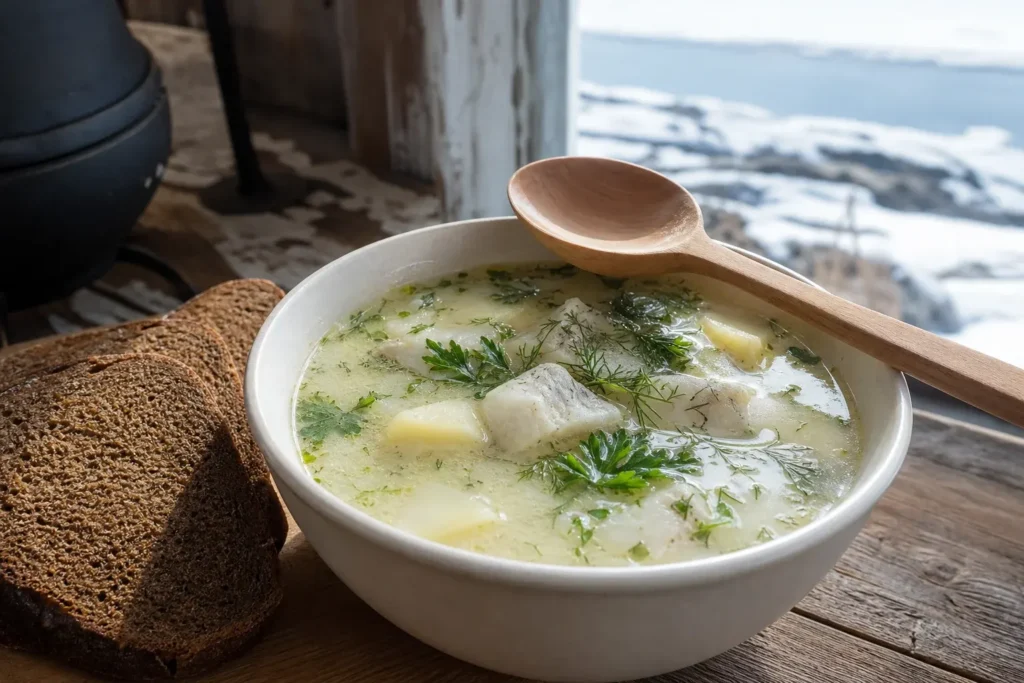
Pomor Ukha is the signature fish soup of Russia’s Arctic coast, born from centuries of seafaring tradition. The Pomors—maritime communities of the White Sea and Murmansk region—developed this version of ukha using the abundant cod that sustained their families and fishing expeditions. Unlike the freshwater fish soups found inland, Pomor Ukha relies on saltwater catch and a creamy finish of milk and butter, making it distinct across Russian cuisine.
This guide teaches you how to make authentic Pomor Ukha at home. The recommended approach uses a simple, layered method: build a clean fish broth, add potatoes and aromatics, finish with tender cod and a swirl of cream.
Quick answer: Fish broth begins with bones, fins, and heads of large fish, boiled with onion and parsley for about an hour, then strained. After straining, potatoes and aromatics simmer briefly, then sliced potatoes, peppercorns, chopped onion, and cod chunks are added, finished with hot milk, diced butter, and chopped herbs. Total time: about 90–100 minutes. Cost: ₽₽.
At a Glance
| Type | Dishes |
|---|---|
| Local name | Поморская уха |
| Origin | The Pomors are a maritime people of the Russian North including Murmansk, Arkhangelsk and neighbouring regions, whose traditional livelihoods were based on fishing and sea hunting. Pomor ukha is the best known dish in the Northern Russian cookbook, traditionally boiled with a fresh catch, adding onion, milk and spices. |
| Servings | 2–4 servings |
| Total time | 90–100 minutes |
| Difficulty | Medium |
History and Story of Pomor Ukha, Murmansk
Ukha has been part of Russian cuisine for centuries, believed to have originated in the 11th century though it was not a fish soup back then—it was made from game and animal cheeks, and only became a fish dish in the 15th century. In the Russian Far North, Pomor ukha calls for cod and cod liver; the Pomors, on the shores of the White Sea, are avid cod eaters, so Pomor ukha made with seawater fish is one of the most famous dishes in Northern Russian cuisine. The Arkhangelsk or Pomor ukha is made of cod or halibut, with milk and butter added to the ready dish, a feature that comes from Finnish cuisine with its traditional creamy fish soup lohikeitto. Today Pomor Ukha remains the most recognized dish of Murmansk and White Sea Arctic cooking, a symbol of the harsh maritime heritage.
Ingredients
- 500 g fresh cod, skin and bones removed, cubed
- 400 g fish bones and heads (from cod or another white fish)
- 300 g waxy potatoes, unpeeled
- 150 ml whole milk
- 30 g unsalted butter
- 1 large onion, peeled and halved
- 5–6 whole black peppercorns
- 1 bay leaf
- 2 tablespoons fresh dill, finely chopped
- 1 tablespoon fresh parsley, finely chopped
- Salt to taste
- 2 litres water
How Pomor Ukha, Murmansk Is Made
Step 1: Prepare the fish broth
Place fish bones, heads and any trimmings in a large pot. Add one peeled and halved onion, bay leaf, and peppercorns. Pour in 2 litres of cold water and bring slowly to a boil. Once boiling, reduce heat and simmer gently for 45–50 minutes, uncovered. Skim any foam from the surface periodically to keep the broth clear. Do not stir.
Tip: A clear broth stays clear only when you avoid disturbance. Skimming removes impurities that cloud the soup.
Step 2: Strain the broth
When broth has simmered, carefully pour it through a fine mesh sieve lined with cheesecloth into a clean pot, leaving behind all bones and solids. Discard the solids. The strained broth should be aromatic and pale gold.
Tip: Broth can be made a day ahead and refrigerated; simply reheat before continuing.
Step 3: Prepare and cook potatoes
Wash unpeeled potatoes and cut into medium chunks (about 3 cm). Add them to the hot strained broth and bring to a gentle simmer over medium heat. Cook for 12–15 minutes until potatoes are almost tender but still holding their shape.
Tip: Waxy potatoes hold shape better than floury varieties; they won't break apart during simmering.
Step 4: Add cod and herbs
Gently place cubed cod pieces into the simmering broth with potatoes. Reduce heat to low and poach very gently for 5–7 minutes until the fish just turns opaque. Do not boil or stir vigorously. The surface should barely move.
Tip: Gentle poaching keeps fish tender and the broth clear. If broth boils hard, the fish will shred and the soup will become cloudy.
Step 5: Finish with cream and butter
Pour milk slowly into the soup while stirring gently. Cut butter into small cubes and add them, stirring until melted. Season with salt to taste. Remove from heat immediately after butter dissolves.
Tip: This creamy finish is characteristic of Pomor style. The milk rounds out the briny fish flavour without making the soup heavy.
Step 6: Garnish and serve
Ladle soup into warm bowls. Top each portion with a pinch of fresh dill and parsley. Serve immediately, very hot. In Arkhangelsk tradition, milk enhances the overall palate while infusing the fish with a creamy taste.
Tip: Fresh herbs added at the very end preserve their bright flavour. Never cook them into the soup.
Variants
- Arkhangelsk Ukha: uses a broth made from cod fins and bones, with finely chopped cod liver, scallions, black pepper and bay leaf added
- Simple Pomor style: as prepared here, without cod liver
- With other Arctic fish: halibut, catfish or other seawater white fish may substitute for cod
- With fish pelmeni: dumplings filled with minced fish replace the chunks
Common Mistakes to Avoid
- Boiling instead of simmering: Hard boiling breaks up fish and clouds the broth. Fish broth needs to be thick but without notable fish scent; fish is added to boiling water then poached without a cover, and it is important to preserve the fish juicy and springy.
- Using frozen cod: Fresh fish yields a cleaner, brighter broth. Fresh fish lends the dish the best flavour, and if frozen fish is used, it is better not to defrost it; preference is given to smaller, younger fish.
- Skipping the straining step: Unstrained broth will taste metallic and muddy from impurities. The ritual of clarification is central to ukha's character.
- Adding milk too early: If milk goes in during broth-making, the soup will curdle and turn grey. Milk is a finishing step only.
- Over-seasoning with salt: Taste just before serving; it's easier to add salt than remove it. The broth already carries salt from fish bones.
- Omitting fresh herbs: Frozen or dried herbs lack the bright, clean note that lifts Pomor Ukha. Fresh dill and parsley are essential.
- Using the wrong fish: In the Russian Far North, Pomor ukha calls for cod; what makes a northern fish soup specifically 'Pomor' is the use of seawater fish, cod in particular. Freshwater fish will taste flat.
How to Order and Eat It
Pomor Ukha is eaten hot, straight from the bowl or a shallow soup plate. Spoon the creamy broth slowly, ensuring you capture both fish chunks and potato pieces in each spoonful. The milk mellows the briny fish flavour. Serve with a thick slice of dark rye bread on the side for dipping into the broth, or crumble bread directly into the bowl. Pomors traditionally add vodka to ukha or drink it separately—a shot of vodka sipped between spoonfuls is authentic, though optional.
To order: Поморскую уху пожалуйста [Pomor-skuyu ukhu, pozhaluysta]
Russia Vibes Tips
- Source fresh cod from a fishmonger with high turnover, not supermarket freezers. The broth reflects fish freshness directly; there is nowhere to hide staleness. If your city lacks Atlantic cod, ask what the closest equivalent Arctic white fish is.
- Never stir the broth during simmering. Stirring releases oils and proteins that cloud it. A wooden spoon should touch the pot only to skim foam or test potatoes.
- Keep broth temperature low and even. A rolling boil invites cloudiness and shredded fish. The surface should show only the barest steam and occasional gentle bubbles.
- Make broth a day or two ahead, refrigerate, and reheat when ready. Cold broth clarifies overnight—fat solidifies on top and you can lift it off, leaving cleaner broth underneath.
- Toast thick slices of dark rye bread lightly before serving, then brush with butter. Crisp corners will not dissolve immediately in broth, giving you textural contrast.
- Invite diners to tear fresh dill and parsley into their bowls themselves; this releases oils and aroma just before eating. The herbs perfume the broth as they float.
Explore Nearby Pomor Ukha, Murmansk
Browse more: All Food & Drink · All Food & Drink in Murmansk · All Murmansk · All Other
FAQ
Can I use frozen cod?
Fresh fish lends the dish the best flavour, and if frozen fish is used, it is better not to defrost it. Thawing releases water and the fish becomes mushy. Cook frozen cod straight from the freezer and it will hold its texture better, though fresh remains superior.
What is the difference between Pomor Ukha and other Russian fish soups?
Ukha, the traditional Russian fish soup, is often made with freshwater fish, but in the Russian Far North, Pomor ukha calls for cod and cod liver. The Pomor version is also creamier: The Arkhangelsk or Pomor ukha is made of cod or halibut, and then milk and butter are added to the ready dish. This creamy finish is not typical of inland Russian fish soups, which stay clear.
Can I substitute halibut for cod?
Yes. Pomor ukha is made of cod or halibut, so halibut is a recognized traditional choice. Any firm white fish from Arctic or Northern Atlantic waters will work, though flavour will differ slightly. Avoid oily fish like salmon or mackerel; they overwhelm the soup's delicate balance.
Why does my broth look cloudy?
Cloudiness comes from hard boiling, over-stirring, or adding milk too early. Maintain a very gentle simmer, skim foam regularly, and never stir vigorously. Add milk only at the very end, after heat is off. If broth is already cloudy, strain it through cheesecloth again before plating.
Can I make this without milk?
Technically yes, but you lose the defining character of Pomor style. Pomor ukha is finished with hot milk and diced butter, along with chopped herbs. Without milk and butter, it becomes a simple northern fish soup, not a true Pomor Ukha.
What do I do with fish bones and heads after making broth?
Discard them. After 45–50 minutes of simmering, all flavour and nutrients have leached into the broth. The bones become dry and their taste turns bitter if left longer. Composting is best; they break down quickly.
Can I make a larger batch and freeze it?
Yes. Broth freezes well for up to 3 months in airtight containers. Freeze finished soup only up to 2 weeks, as the texture of potatoes and fish deteriorates. Better to freeze broth alone and finish the soup fresh when serving.
What is the best bread to serve with Pomor Ukha?
Dark rye bread or pumpernickel—traditional Russian choices that stand up to the rich, creamy broth. Avoid soft white bread, which will dissolve into mush. Slice thick, toast lightly, and brush with butter if desired.
Russia Vibes is a one-person project. A coffee keeps it going
How we research and update our guides
About this guide: AI assistance and accuracy
This guide is created with the help of AI and is based on official sources where available. Mistakes can still happen. Opening hours, prices, rules and other details are given to the best of our knowledge as of the date shown and can change without notice. It offers general recommendations only, not professional, legal or travel advice. Please confirm important details with the official source before you travel; you are responsible for your own plans and decisions.

Take this guide with you
Get a free PDF of this guide to print or read offline: key facts, tips and a map link on a few clean pages.
Report an issue on this page
Paying for your trip: please read
International sanctions affect payments between Russia and many other countries. In practice, cards issued in the EU, the UK, the US and several other countries often do not work in Russia, Russian cards usually do not work abroad, and some booking platforms, airlines and payment providers limit or suspend their services for Russia. The situation changes frequently.
We do not give legal or financial advice, and this site does not encourage anyone to break or circumvent sanctions. Whatever you plan, you are responsible for following the laws and regulations that apply to you, including those of your country of residence and citizenship.
Many travelers still organise their stay lawfully. It is worth asking your bank or payment provider what is currently permitted, contacting hotels, tour operators and carriers directly about the payment methods they accept, and checking which services are open to customers from your country. Clarify payment, cancellation and refund terms before you commit to a booking, and keep your plans flexible.
Partner links on this site may not be available in every country, and prices, availability and rules in our guides can differ from what you see when you book.