
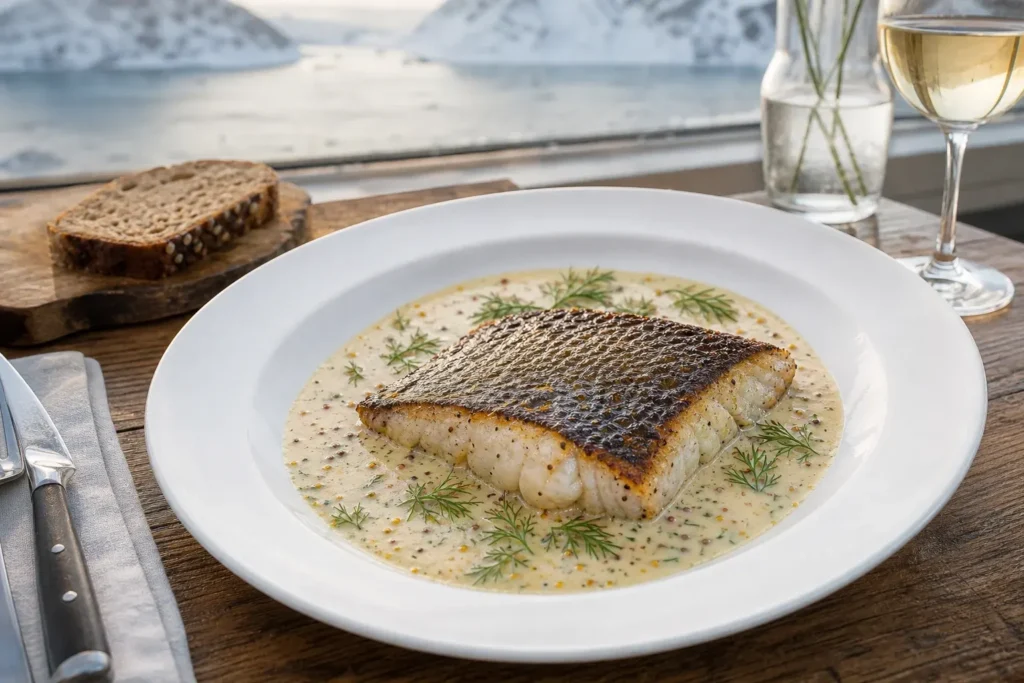
Arctic Cod Murmansk refers to the fresh Atlantic cod from the cold Barents Sea, a fish so central to Northern Russian culture that local Pomors were historically called “cod eaters.” This how-to teaches you to prepare a simple but refined pan-seared version with a cream sauce, as served in Murmansk restaurants.
The dish takes 30–40 minutes. You need fresh cod fillet, butter, cream, basic pantry staples, and an oven. The recommended approach is to pan-sear skin-side first, then finish in the oven for even cooking.
Quick answer: Season a cod fillet, pan-sear it skin-side down in butter until the skin crisps, then bake skin-side up for 3–4 minutes at 180°C (350°F). Serve with a light cream sauce made from pan drippings, dill, and mustard. Total time: 30–40 minutes. Cost: ₽₽
At a Glance
| Type | Dishes |
|---|---|
| Local name | Треска арктическая |
| Origin | Murmansk and the Russian North; Pomor fishing tradition |
| Servings | 2 servings |
| Total time | 30–40 minutes |
| Difficulty | Easy |
History and Story of Arctic Cod, Murmansk
For centuries, cod was the foundation of life in the Russian North. The Pomors, seafaring communities on the White Sea and Barents Sea coasts, developed hundreds of cod recipes and shipped salted cod across Russia. The saying “No cod, no work” reflects how central the fish was to survival and trade. Fresh Arctic cod became a luxury dish in 20th-century Russian restaurants, especially in Murmansk, where local chefs elevated simple Pomor preparations into refined cuisine by adding cream sauces and modern presentation while respecting the fish’s delicate flavor.
Ingredients
- 400 g Arctic cod fillet, skin-on, room temperature
- 60 g unsalted butter, divided
- 120 ml heavy cream
- 15 ml whole-grain mustard
- 1 sprig fresh thyme or dill
- Salt and black pepper to taste
- 5 ml vegetable oil
How Arctic Cod, Murmansk Is Made
Step 1: Prepare the cod
Remove the cod fillet from the refrigerator 15 minutes before cooking so it reaches room temperature. This ensures even cooking from inside to outside. Pat it dry with paper towels. Season both sides generously with salt and black pepper.
Tip: Drying the fish thoroughly prevents it from sticking to the pan and helps the skin crisp.
Step 2: Heat the pan
Set a stainless steel or cast-iron frying pan over medium-high heat. Add the vegetable oil and half the butter (about 30 g), plus the thyme sprig. When the butter foams and smells nutty (about 1–2 minutes), the pan is ready.
Tip: Vegetable oil raises the smoke point, preventing the butter from burning.
Step 3: Sear the fish skin-side down
Place the cod skin-side down in the pan. Do not move it. Sear for 4–5 minutes until the skin turns golden and crispy. You will see the flesh begin to turn opaque as it cooks upward from the heat.
Tip: Resist the urge to flip early. Still skin gives the fish flavor and structure.
Step 4: Bake in the oven
Transfer the pan to a preheated 180°C (350°F) oven with the fish still skin-side down. Bake for 3–4 minutes. The flesh will be opaque throughout but still moist. Do not overcook.
Tip: For a thicker fillet (more than 2 cm), add 1–2 extra minutes.
Step 5: Make the cream sauce
Remove the pan from the oven and transfer the fish to a plate. Return the pan to the stovetop over medium heat. Add the remaining butter (about 30 g), then pour in the cream. Stir in the mustard and a pinch of salt. Simmer for 1–2 minutes, stirring gently until it coats the back of a spoon. Add fresh dill if using.
Tip: Do not boil the cream, or it may break. Keep heat moderate.
Step 6: Plate and serve
Place the cod fillet on a warm serving plate, skin-side up. Pour the warm cream sauce around (not over) the fish to keep the skin crispy. Garnish with a small dill sprig and a light grind of black pepper.
Tip: Serve immediately. Cold plates cause the sauce to congeal and the fish to lose heat quickly.
Variants
- Pomor ukha: a traditional fish soup made with cod, potatoes, onion, and fresh herbs, finished with milk and butter
- Salt cod (bacalao): dried and salted cod, soaked and prepared in stews or with root vegetables
- Zaiburikha: boiled cod with potatoes, carrots, onions, and broth, a Pomor comfort dish
- Cod liver appetizer: the liver sautéed and served on toast or with rye bread
Common Mistakes to Avoid
- Using cod straight from the fridge: Cold fish cooks unevenly on the outside while remaining cold inside. Always bring it to room temperature first.
- Moving the fillet while searing: Frequent flipping breaks the delicate skin and prevents crisping. Leave it alone until it naturally releases from the pan.
- Baking too long: Cod is lean and dries out quickly above 180°C. Four minutes is usually enough; check by looking for opaque flesh at the thickest point.
- Pouring sauce over the skin: This makes the crispy exterior soggy. Pour the sauce beside or around the fillet instead.
- Using cold cream: Adding cold cream to a hot pan can cause it to curdle. Warm it slightly first or add it slowly while stirring.
How to Order and Eat It
Eat the cod with a fork, breaking the flaky flesh into bite-sized pieces. The skin is crispy and edible—many diners eat it. Spoon the sauce over each bite. In Murmansk restaurants, pan-fried Arctic cod is often served with a simple vegetable purée (spinach and potato) or rye bread. Finish with a glass of cold white wine or, in the local tradition, a shot of Arctic herbal infusion.
To order: Треска арктическая со сливочным соусом [Tréska arkticeskaya so slivochnym sausom]
Diet and Allergens
- Gluten-free (if sauce is prepared without additives)
Russia Vibes Tips
- Arctic cod season in the Barents Sea runs from January to April, when the mature fish migrate to spawning grounds. During these months, the fish is at its peak—lean, firm, and most flavorful. Outside this window, frozen Arctic cod is the norm in Murmansk restaurants, but it is still excellent.
- Murmansk restaurants often serve Arctic cod with mustard-based cream sauces rather than heavy tomato sauces, because the clean flavor of the fish demands restraint. Ask for recommendations at your hotel or check the official website of any restaurant before visiting.
- If you cannot find Arctic cod, Atlantic cod from other regions (Iceland, Norway) will work, but Barents Sea cod is preferred for its lower salinity and pure white flesh. Look for skin-on fillets at the market; they indicate freshness.
- The traditional Pomor way to finish cod is with a pinch of pike roe or a sprinkle of smoked salt. Try this if you have access to either. Modern Murmansk chefs also add a drop of dill oil or a whisper of smoked cream.
- Many Murmansk menus list "Murmansk Cod" as a signature dish, but preparation varies widely—some places pan-fry, others bake en papillote, others serve it raw as ceviche. Always read the menu description or ask before ordering.
Explore Nearby Arctic Cod, Murmansk
Browse more: All Food & Drink · All Food & Drink in Murmansk · All Murmansk · All Other
FAQ
What is Arctic Cod exactly?
Arctic Cod is Atlantic cod (Gadus morhua) from the Northeast Arctic stock in the Barents Sea. It is also called "Arcto-Norwegian cod" or skrei in Norwegian. The Barents Sea supplies fresh and frozen Arctic cod to Murmansk markets and restaurants year-round, but the fish is most abundant and prized during spawning season (January–April).
Is Arctic Cod the same as Norwegian Skrei?
Largely yes. Skrei is the Norwegian name for mature Arctic cod migrating from the Barents Sea back to Norwegian spawning grounds. Russian Arctic cod and Norwegian skrei come from the same stock but are caught and processed differently. Arctic cod served in Murmansk may be slightly fresher if caught locally.
Can I buy Arctic Cod frozen?
Yes. Frozen Arctic cod is widely available in Murmansk supermarkets and maintains quality well if thawed slowly in the refrigerator overnight. Thaw it gently, pat it dry, and cook it the same way as fresh. Quality is still excellent because the fish is flash-frozen at sea.
Does Arctic Cod contain any allergens?
Arctic Cod is fish. It does not contain gluten, pork, or dairy unless prepared with butter or cream as in the sauce recipe above. Cross-contamination can occur in commercial kitchens. If you have a fish allergy, inform restaurant staff immediately.
How long does Arctic Cod keep in the refrigerator?
Fresh cod fillet keeps for 1–2 days in the coldest part of the refrigerator, wrapped loosely in paper or in an airtight container. Frozen cod keeps for several months. Always check for a fresh smell and firm texture before cooking.
What side dishes go with Arctic Cod?
Traditional pairings in Murmansk include potato purée, steamed spinach, roasted root vegetables, rye bread, and pickled vegetables. Arctic berries (lingonberries, cloudberries) are served as a sweet contrast in some modern preparations. A simple green salad also works well.
Can I prepare Arctic Cod without a cream sauce?
Absolutely. Pomor tradition favors simple boiling (for ukha soup) or salting and drying (for preservation). You can steam or bake Arctic cod with just salt, pepper, and a squeeze of lemon. The clean flavor of the fish shines without embellishment.
Where can I order Arctic Cod in Murmansk?
Most Murmansk restaurants with Arctic or seafood menus serve it. Look for establishments advertising "Arctic cuisine" or "Pomor food." The official website or booking apps can help you find current menus and reservations. Many also list Arctic Cod under "Murmansk Cod" on English-language pages.
Russia Vibes is a one-person project. A coffee keeps it going
How we research and update our guides
About this guide: AI assistance and accuracy
This guide is created with the help of AI and is based on official sources where available. Mistakes can still happen. Opening hours, prices, rules and other details are given to the best of our knowledge as of the date shown and can change without notice. It offers general recommendations only, not professional, legal or travel advice. Please confirm important details with the official source before you travel; you are responsible for your own plans and decisions.

Take this guide with you
Get a free PDF of this guide to print or read offline: key facts, tips and a map link on a few clean pages.
Report an issue on this page
Paying for your trip: please read
International sanctions affect payments between Russia and many other countries. In practice, cards issued in the EU, the UK, the US and several other countries often do not work in Russia, Russian cards usually do not work abroad, and some booking platforms, airlines and payment providers limit or suspend their services for Russia. The situation changes frequently.
We do not give legal or financial advice, and this site does not encourage anyone to break or circumvent sanctions. Whatever you plan, you are responsible for following the laws and regulations that apply to you, including those of your country of residence and citizenship.
Many travelers still organise their stay lawfully. It is worth asking your bank or payment provider what is currently permitted, contacting hotels, tour operators and carriers directly about the payment methods they accept, and checking which services are open to customers from your country. Clarify payment, cancellation and refund terms before you commit to a booking, and keep your plans flexible.
Partner links on this site may not be available in every country, and prices, availability and rules in our guides can differ from what you see when you book.