
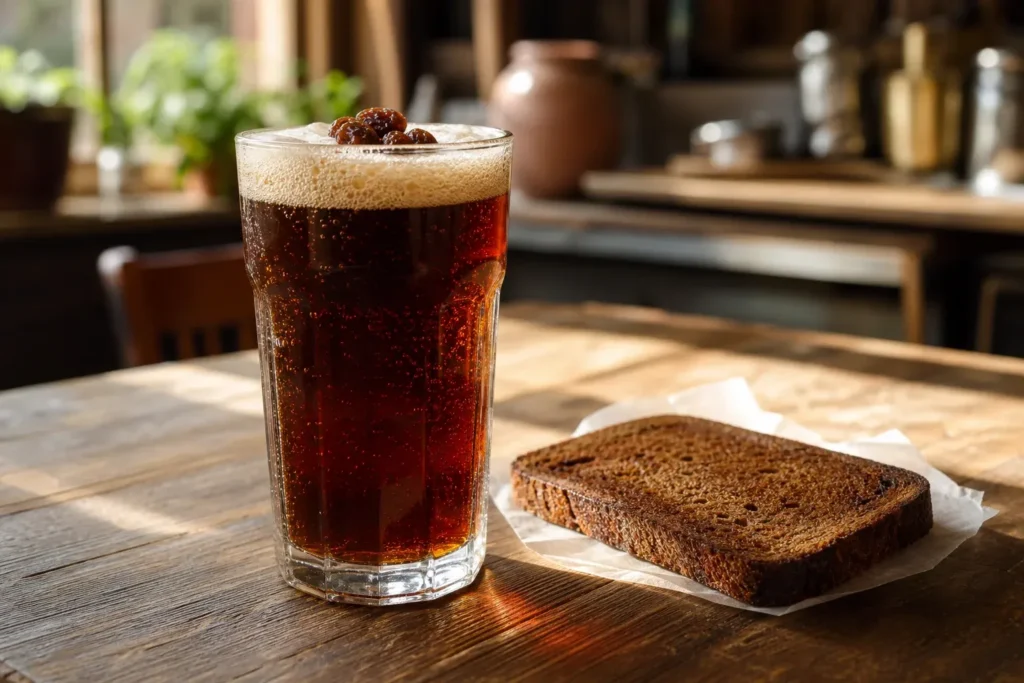
Kvass holds a unique place in Russian culture as the everyday fermented drink that predates the modern vodka-focused tradition by centuries. For international visitors to Volgograd, understanding traditional Russian beer kvass offers genuine insight into local food culture and what ordinary Russians have drunk with meals for over a thousand years.
This guide explains what kvass is, how to recognize it when you encounter it in markets and street vendors throughout Volgograd, and how to make a simple batch at home. You will learn the fundamentals of this fermented beverage and understand why it remains a national staple, particularly during warm months.
Quick answer: Kvass is made by fermenting toasted dark rye bread with water, sugar and yeast. The basic preparation takes 24–48 hours of fermentation at room temperature. The result is a lightly carbonated, mildly alcoholic drink (typically under 1.5% alcohol by volume in commercial versions) that tastes faintly sour, gently sweet and faintly malty.
At a Glance
| Type | Drinks |
|---|---|
| Local name | Квас |
| Origin | Russia; documented since medieval times in Russian chronicles |
| Servings | 4 servings (1 litre) |
| Total time | 24–48 hours fermentation; 20 minutes preparation |
| Difficulty | Easy |
History and Story of Beer, Volgograd
Kvass is documented from 988 CE in the Russian Primary Chronicle, compiled by the monk Nestor at the Kyiv-Pechersk Lavra monastery, c.1113 AD. The Domostroy describes the brewing techniques of fermented beverages like braga, kvas, and pivo, integral to Russian culture. These beers are still brewed today in Russia and neighbouring countries, and the text sheds light on a very old brewing tradition that predates 15th century Muscovy and spills over into Central Europe and the Black Sea. In Russia, kvass was most commonly made from bread and grain, but recipes also called for fresh or dried berries, fruits, and occasionally vegetables — beets among them. With the advent of Soviet power, the old traditions of preparing kvass began to be replaced by industrial recipes. The quality was not always ideal, but kvass remained a living part of daily life.
Ingredients
- 300 g (10 oz) dark rye bread, cut into cubes
- 1 litre (4.2 cups) water
- 50 g (3–4 tablespoons) sugar
- 5–8 raisins (optional, for fermentation)
- 1/4 teaspoon active dry yeast (or omit for wild fermentation)
How Beer, Volgograd Is Made
Step 1: Toast the rye bread
Cut the dark rye bread into 2 cm cubes. Spread them on a baking sheet and toast in a preheated oven at 200°C (400°F) for 8–10 minutes until the cubes turn deep brown or nearly black. The darker the toast, the more complex the final flavor. Allow to cool completely.
Tip: Do not burn the bread; it should be dark but still hold its shape. Overtoasted bread becomes bitter.
Step 2: Prepare the fermentation liquid
Bring 1 litre of water to a boil, then remove from heat and stir in the sugar until dissolved. Allow the water to cool to room temperature (about 20–25°C). Do not add the bread while the water is hot, as this will kill any yeast.
Tip: Use filtered or boiled water if your tap water is heavily chlorinated, as chlorine can inhibit fermentation.
Step 3: Combine bread and liquid
Pour the cooled sugar water into a clean glass jar or large bowl. Add the toasted bread cubes and stir gently. The bread will sink and begin to absorb the liquid immediately.
Tip: A 1–2 litre glass jar works well; avoid metal containers, which can react with fermentation acids.
Step 4: Start fermentation
Sprinkle the yeast over the mixture and stir well. If using raisins, add them now; they provide additional wild yeast and a subtle fruity note. Cover the jar loosely with a clean cloth, coffee filter or paper towel secured with a rubber band. This allows gas to escape while keeping dust out.
Tip: Do not seal the jar tightly; fermentation produces carbon dioxide and the container needs to breathe.
Step 5: Ferment at room temperature
Leave the jar at room temperature (18–25°C) for 24–48 hours. After 24 hours, you will see gentle bubbling and smell a slightly sour, yeasty aroma. Taste after 24 hours; if it is still too sweet, leave it another 12–24 hours. The longer it ferments, the more sour and slightly fizzy it becomes.
Tip: Fermentation speed depends on temperature; warmer rooms ferment faster. Avoid direct sunlight.
Step 6: Strain and bottle
When the flavor reaches your preference, carefully pour the liquid through a fine strainer into clean bottles, leaving the bread solids and raisins behind. Discard the solids. Seal the bottles and refrigerate immediately. Kvass will stay fresh for 3–5 days in the refrigerator.
Tip: If you leave bottled kvass at room temperature for 1–2 days before refrigerating, it will become slightly more carbonated.
Variants
- Beet kvass (свежий свеклой): fermented with fresh beets or beet juice for color and earthiness
- Honey kvass: sweetened with birch syrup or honey instead of sugar for deeper flavor
- Berry kvass: made with dried berries or fruit added during fermentation for subtle tartness
- Rye malt kvass: made with added rye malt or barley malt for enhanced malty character
Common Mistakes to Avoid
- Using white bread instead of dark rye bread: white bread ferments differently and produces a bland, less authentic taste. Always use a dense, dark rye loaf.
- Sealing the jar too tightly during fermentation: this traps carbon dioxide and can cause the container to burst or produce off-flavors. Leave it loosely covered.
- Adding yeast to water that is still warm: heat kills the yeast. Always cool the liquid to room temperature before adding yeast.
- Fermenting in direct sunlight: light can degrade the yeast and produce unwanted flavors. Keep the jar in a dark cupboard or covered area.
- Skipping the toasting step: untoasted bread produces weak, watery kvass. Toasting creates the malty flavor that defines kvass.
- Drinking kvass immediately after bottling: it needs time to develop carbonation and flavor. Even 12 hours in the bottle improves the taste.
How to Order and Eat It
Kvass tastes faintly sour, gently sweet, and a little like rye. It is brown, lightly sour, slightly sweet and gently fizzy, and it tastes of dark bread – closer to a very light beer than to a soda. Serve chilled from the refrigerator in a glass, often as an accompaniment to lunch or dinner. In Russia, it is commonly drunk on warm days as a refreshing afternoon beverage. Commercially produced kvass typically has alcohol content in the 0–1.2% range. In Russia, such kvass is not considered an alcoholic beverage and is sold without restrictions to anyone including children. Kvass pairs well with hearty Russian soups like okroshka (a cold soup made with kvass, vegetables and sometimes meat), or simply as a standalone refreshment.
To order: Квас, пожалуйста [kvas, pozhaluysta]
Russia Vibes Tips
- Buy commercial kvass at any Russian supermarket or outdoor market stand in Volgograd if you do not want to ferment at home. It is typically sold in plastic bottles or cartons next to soft drinks and juices, and costs very little. Street vendors in summer often sell it from yellow cylindrical tanks with a tap.
- Fermentation time varies with room temperature. In cool rooms (15–18°C), kvass needs 48–72 hours; in warm rooms (25°C+), it may be ready in 24 hours. Taste after 24 hours to judge when it reaches your preferred sourness.
- Some Russians prefer kvass that is barely fermented (sweeter, less sour). Others like it quite sour and fizzy. There is no single 'correct' time to drink it; stop fermentation whenever the taste suits you.
- Kvass was historically a practical way to preserve bread that was about to go stale. Using slightly stale rye bread gives better results than fresh bread, which contains too much moisture.
- Do not confuse kvass with beer (pivo). Kvass is fermented bread with minimal alcohol (typically under 1.5%), while modern beer is made from malted grain with higher alcohol content (4–6%). Kvass is much older and far more traditional to Russian daily life.
Explore Nearby Beer, Volgograd
Browse more: All Food & Drink · All Food & Drink in Volgograd · All Other · All Volgograd
FAQ
Is kvass alcoholic?
Commercially produced kvass typically has alcohol content in the 0–1.2% range. In Russia, such kvass is not considered an alcoholic beverage and is sold without restrictions to anyone including children. The amount of alcohol expected in homemade kvass, however, can be 2–5% approaching the range of at least light beer. Commercial kvass is safe for all ages; homemade versions may contain slightly more alcohol depending on fermentation length.
What is the difference between kvass and beer?
Traditional Russian kvass is the product of a double fermentation — alcoholic and lactic. The same two processes occur in the production of beer and wine, but there the lactic acid stage is suppressed in favor of alcohol. Kvass is made from bread, while beer is made from malted grain. Kvass has minimal alcohol and tastes slightly sour; beer has higher alcohol and a bitter hop flavor.
Where can I buy kvass in Volgograd?
Kvass is sold at supermarkets, outdoor markets, and street vendors throughout Volgograd, particularly during warm months. Look for it in plastic bottles or cartons in the beverages section next to soft drinks. Street kiosks often sell it from large yellow cylindrical tanks with a tap. It is inexpensive and widely available.
How long does homemade kvass keep?
Homemade kvass keeps in the refrigerator for 3–5 days. Fermentation continues slowly even when chilled, so the drink will gradually become slightly more sour. After 5 days, it may develop off-flavors or mold if stored in a non-sterile container.
Can I use white bread instead of rye bread?
No. Dark rye bread is essential to kvass. White bread ferments differently and produces a weak, bland drink without the characteristic malty, slightly sour flavor. Always use a dense, dark rye loaf from a bakery or supermarket.
Do I need special equipment to make kvass?
No. A clean glass jar, a cloth to cover it, a strainer, and clean bottles are all you need. You can use any size jar; a 1–2 litre jar is most convenient. Metal containers should be avoided as they can react with fermentation acids.
Can I make kvass without yeast?
Yes. Traditional kvass relied on wild yeast in the bread and raisins. If you omit store-bought yeast, fermentation will be slower (48–72 hours instead of 24–48) but will still happen. Adding raisins helps provide natural yeast.
What does kvass taste like?
Kvass is brown, lightly sour, slightly sweet and gently fizzy, and it tastes of dark bread – closer to a very light beer than to a soda. It tastes malty with a slight sweetness and when cold it is genuinely refreshing.
Russia Vibes is a one-person project. A coffee keeps it going
How we research and update our guides
About this guide: AI assistance and accuracy
This guide is created with the help of AI and is based on official sources where available. Mistakes can still happen. Opening hours, prices, rules and other details are given to the best of our knowledge as of the date shown and can change without notice. It offers general recommendations only, not professional, legal or travel advice. Please confirm important details with the official source before you travel; you are responsible for your own plans and decisions.

Take this guide with you
Get a free PDF of this guide to print or read offline: key facts, tips and a map link on a few clean pages.
Report an issue on this page
Paying for your trip: please read
International sanctions affect payments between Russia and many other countries. In practice, cards issued in the EU, the UK, the US and several other countries often do not work in Russia, Russian cards usually do not work abroad, and some booking platforms, airlines and payment providers limit or suspend their services for Russia. The situation changes frequently.
We do not give legal or financial advice, and this site does not encourage anyone to break or circumvent sanctions. Whatever you plan, you are responsible for following the laws and regulations that apply to you, including those of your country of residence and citizenship.
Many travelers still organise their stay lawfully. It is worth asking your bank or payment provider what is currently permitted, contacting hotels, tour operators and carriers directly about the payment methods they accept, and checking which services are open to customers from your country. Clarify payment, cancellation and refund terms before you commit to a booking, and keep your plans flexible.
Partner links on this site may not be available in every country, and prices, availability and rules in our guides can differ from what you see when you book.