
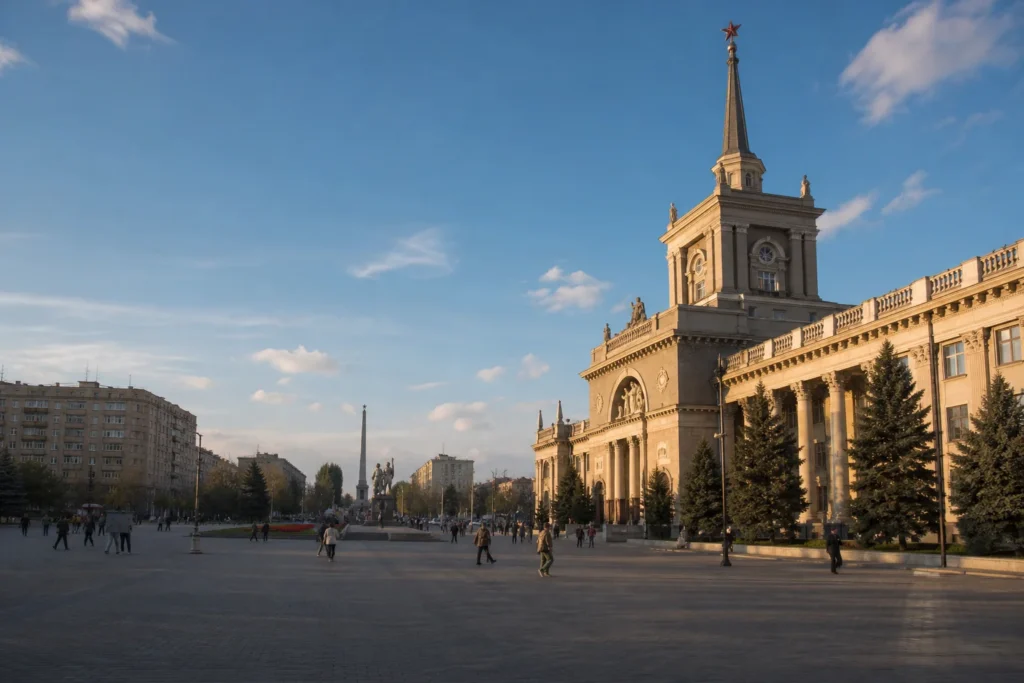
Tsentralny District forms the historic core of Volgograd, stretched along the western bank of the Volga River. This is where most of the city’s major sights and transport hubs cluster—the main railway station, the central embankment, key war memorials, and the city’s administrative and cultural centers. For first-time visitors, the district serves as the natural entry point and base for exploring the city’s layered history.
The neighborhood evolved through three centuries of names: originally Tsaritsyn (founded 1589), then Stalingrad from 1925 to 1961, before reverting to Volgograd. That history is written into its streets and buildings—some predate the Soviet era, many rose from the rubble after 1943, and new architecture continues to reshape the skyline.
Quick Facts
| Russian name | Центральный район |
|---|---|
| Address | OpenStreetMap · Google Maps |
| District | Volgograd |
| Best time to visit | May to September offers warm, dry weather ideal for walking and riverside strolls. Summer (June–August) brings the longest daylight hours but also crowds at major sites and some heat. Spring (April–May) and autumn (September–October) provide milder temperatures and fewer tourists. Winter (November–March) is cold (often below freezing) but less crowded; snow can be present December–February. The embankment is most photogenic at sunrise and sunset; avoid midday glare in summer. Museums are quieter on weekday mornings. |
| Last updated | October 18, 2026 |
What Is (and Isn't) Part of a Visit to Tsentralny District, Volgograd?
| Part | Status | Notes |
|---|---|---|
| Tsentralny District borders and area | Included in the standard ticket | The district covers approximately 11 square kilometers in the central and southern part of Volgograd, bounded by the Volga River to the east. |
| Volgograd Railway Station | Included in the standard ticket | Located at Railway Station Square, 1, within the district; a major transport hub and architectural landmark. |
| Central Embankment | Included in the standard ticket | The reconstructed 1952 riverfront promenade runs along the Volga's western bank through the district. |
| Mamayev Kurgan Memorial Complex | Separate ticket or institution | While at the southern edge of the district, it is a separate institution with its own admission fees and opening hours; treat as a distinct site requiring separate planning. |
| Square of the Fallen Fighters and Central Department Store (TsUM) | Included in the standard ticket | The city center square and the Soviet-era department store that hosts the Pamyat Museum in its basement; separate museum ticket required. |
| Krasnooktyabrsky District | Outside / not part of it | A separate city district to the north; not part of Tsentralny District. Both are central city districts, so they are sometimes confused by visitors. |
Why Visit Tsentralny District, Volgograd?
This district concentrates Volgograd’s most significant sites within walking distance. You can visit the Volgograd Railway Station, a 1950s architectural landmark with its distinctive spire. Along the central embankment, the Volga River opens up vistas and riverside cafés. Museums here document the city’s Civil War past and, more prominently, the 1942–43 Battle of Stalingrad—one of the war’s turning points. Nearby lie memorials, the older Tsaritsyn-era buildings, and starting points for day trips to Mamayev Kurgan or across the river. Walking these streets, you encounter visible traces of each era layered atop one another.
Highlights of Tsentralny District, Volgograd
Volgograd Railway Station
Built in 1854 and substantially rebuilt in the 1950s, the main railway station stands as one of the city's most recognizable structures. Its tall spire topped with a red star dominates Railway Station Square. The imposing Soviet-era façade features elaborate stonework celebrating industry and rail transport. Located at the southern edge of the district at Railway Station Square, 1, it serves as both a functional hub and a visual anchor for the central area. Expect crowds during peak travel times.
Tip: Arrive early if you need tickets; the station runs porter services. The square outside is a popular photo spot for the building's full façade.
Central Embankment
Reconstructed in 1952, the riverfront promenade runs along the Volga's western bank, offering the city's best river views. Wide, tree-lined paths and benches provide rest spots. The embankment connects to key sights—Mamayev Kurgan lies on the skyline upriver, and the riverside cafés and restaurants make it a gathering point for both locals and visitors. Walking its length takes 30–45 minutes and captures the river's scale that defined Volgograd's growth.
Tip: Visit in the evening when locals come out; sunset reflections on the Volga are strongest in summer months. The embankment is wheelchair-accessible.
Pamyat State Museum
Located in the basement of the Central Department Store (TsUM) on the Square of the Fallen Fighters, this compact but historically charged museum focuses on the final days of the Battle of Stalingrad. It preserves the interrogation room where Field Marshal Friedrich Paulus was held after his surrender in February 1943. Inside are holographic installations, period artifacts, and the reconstructed setting. Visiting takes 45–60 minutes. The square itself marks the city center and the Soviet 'zero kilometer' point.
Tip: The museum requires a separate ticket from the TsUM building. It can feel cramped; go at off-peak hours if possible. Photography is typically restricted indoors.
Square of the Fallen Fighters
This central square (also called Ploshchad Pavshikh Boyvtsov) anchors the district's public life. Marked by Lenin statuary and surrounded by Soviet-era administrative buildings and shops, it functions as the commercial and civic hub. From here, streets radiate outward to the railway station, embankment, and historical quarters. The square is pedestrianized and typically busy with foot traffic. It represents the Soviet redesign of the city center after wartime destruction.
Tip: Street vendors and small cafés operate year-round. The square is best navigated in daylight; map out your route to avoid confusion at the radiating intersections.
Volgograd Memorial Historical Museum
Housed in an early twentieth-century estate house, this museum documents the Russian Civil War era (1917–22) when the city was called Tsaritsyn. Founded in 1937 as a Stalin-era museum, it now covers broader social and political history of the region. Collections include Civil War military equipment, period documents, and local artifacts. The building itself—a pre-Soviet mansion—contrasts visually with surrounding modern structures and provides a window into pre-revolutionary architecture. Visits typically take 1–1.5 hours.
Tip: Entry requires a ticket; hours vary seasonally. The museum is relatively quiet compared to war-focused memorials, offering a more contemplative experience.
Old Fire Station Tower
Built in 1897 during the Tsaritsyn era, the former fire station with its tall watchtower survives north of the Children's Park as one of the district's oldest structures. The building was state-of-the-art for its time and is now protected as a heritage monument. The tower's distinctive architecture and its history make it a subtle landmark easily overlooked by visitors, but it represents the pre-Soviet layer of the city. Photography from outside is permitted.
Tip: The tower is best viewed from the adjacent park. The building is no longer an active fire station and is not open to interiors; view and photograph from the street.
Mamaev Kurgan (Mamayev Kurgan)
While technically on the district's edge, the Mamaev Kurgan memorial complex is a short walk or tram ride south along the embankment. This was Height 102 during the Battle of Stalingrad and bore some of the war's fiercest fighting. Today it holds the monumental sculpture "The Motherland Calls!" (completed 1967), standing 279 feet tall. The complex includes museums, exhibition spaces, and a Hall of Military Glory. Many first-time visitors make this their first stop. Visiting the entire site takes 2–3 hours.
Tip: Wear comfortable shoes; the site involves significant climbing and walking. Entry fees apply. Descent and ascent of the main staircase can be strenuous; alternative paths exist but are less dramatic.
Central Volgograd Tram and Metrotram Lines
The district's tram and metrotram (light rail) systems connect major sites. The metrotram runs north–south, linking Lenin Square, the Railway Station area, and Mamayev Kurgan. These vintage-style vehicles are both practical transport and a piece of local character. A short tram ride between sights costs a nominal fare and offers street-level views of neighborhoods. The tram stops often sit at or near points of interest, making them logical way-finding aids.
Tip: Buy a rechargeable transport card (available at kiosks) for quick boarding. Tram maps are posted at major stops. These systems run until late evening, so you can use them to return to your accommodation after dark.
Atmosphere
The district pulses with a mixture of Soviet planning and wartime memory. Massive Stalinist apartment blocks and administrative buildings line wide avenues designed for ceremonial parades. The railway station area bustles with travelers, vendors, and informal commerce—a typical Russian transport hub with its chaos of arrivals and departures. Closer to the river, the embankment becomes quieter and more contemplative, with joggers, couples on benches, and people pausing to gaze across the water.
The light changes the mood sharply. In strong summer sun, the massive memorial complexes can feel imposing and overly monumental. In overcast weather or dusk, they feel weightier, more reflective. The district carries a persistent undercurrent of wartime history—memorial plaques, museum entrances, and monument signs remind visitors that nearly every street here was rebuilt after 1943. Crowds peak at railway station hours and around major war sites; early mornings and late afternoons tend to be calmer.
History of Tsentralny District, Volgograd
The district’s foundations trace to Tsaritsyn, a frontier fortress founded in 1589 where the Tsaritsyn River met the Volga. For centuries it remained a small trading post and military outpost. The name derived from a Mongol-Tatar word for an arrow. By the nineteenth century, it had grown into a modest regional town with river commerce and some early industry.
In 1925, the Soviet government renamed the city Stalingrad in honor of Stalin’s role in the Bolshevik victory during the Russian Civil War (1917–22), when the city was a contested battleground. The district itself was formally established in 1935. The 1930s saw rapid Soviet industrialization, with factories, housing blocks, and administrative centers rising on a grand scale. Architecture from this era reflects Stalinist ideals: imposing, symmetrical, designed for mass assembly and display.
The Battle of Stalingrad (August 1942 to February 1943) devastated the city. For nearly six months, German and Soviet forces fought block by block, building by building. The district’s streets were utterly destroyed. The city’s surrender in early 1943 marked a turning point in the war—the Soviet Union‘s first major strategic victory. However, the cost was staggering: estimates place Soviet military and civilian deaths at over one million.
Reconstruction began immediately after the war’s end in 1945. Soviet architects and planners designed the new Stalingrad as a showcase of Soviet recovery and power. The central square, embankment, railway station, and major administrative buildings were rebuilt in bombastic 1950s Stalinist style, completed largely by the early 1950s. This rebuilt district became the visual and symbolic heart of the new Soviet city.
In 1961, after Stalin’s death and Nikita Khrushchev’s de-Stalinization campaign, the city was renamed Volgograd—the name held a more ideologically neutral meaning tied to the Volga River rather than to any individual. The district retained its administrative role and continued to grow, though more modestly. Modern additions have layered atop the Soviet core, including new shopping centers, restaurants, and residential areas, creating a palimpsest of Soviet, post-Soviet, and contemporary Russia.
Legends and Myths about Tsentralny District, Volgograd
Mamaev and the Tatar Burial Mound
Legend – historically unreliable. Local legend holds that Mamayev Kurgan, the hill now crowned by "The Motherland Calls!" sculpture, is the burial mound of a great Mongol-Tatar military commander named Mamaev. Historians generally dismiss this; the hill's true origins are obscure and the association with Mamaev is likely folk etymology or Soviet-era invention. Nevertheless, the name persists in local memory and guides often mention the legend when discussing the memorial complex.
Pavlov's House—the Steadfast Garrison
Disputed by historians. A four-story apartment building on Ulitsa Penzenskaya (Lenin Square area) became symbolic of Soviet resistance during the Battle of Stalingrad. Soviet sergeant Yakov Pavlov and his squad held the building for 58 days despite being surrounded and heavily bombarded. The Soviets promoted the story as evidence of ordinary soldiers' heroism. Postwar Soviet accounts often inflated the building's significance; historians now believe it was one of many such strongpoints rather than uniquely important. The building still stands, though modified.
Tickets and Booking for Tsentralny District, Volgograd
Tsentralny District itself is free to walk and explore. Individual museums and sites within it charge separate admission:
- Pamyat State Museum: Requires a separate ticket; check the official museum contact for current hours and rates.
- Volgograd Memorial Historical Museum: Separate ticket and hours; typically open afternoon sessions.
- Mamayev Kurgan Complex: Separate institution with its own ticketing and hours (see Mamayev Kurgan entry for details).
Public transport (metrotram, trams, buses) uses a rechargeable card system; purchase at kiosks or convenience stores throughout the city. Transport passes are not typically bundled with site admissions.
Plan and Book
Advertisement: these are partner links. If you book or buy through them, we may earn a commission at no extra cost to you.
Suggested itineraries Tsentralny District, Volgograd
2–3 hours
Walk from the Railway Station south along Ulitsa Krasnaya and Prospekt Lenina toward the central square. Stop at the Old Fire Station Tower (15 min walk north from the square). Return to the square, visit the TsUM Department Store and Pamyat Museum (45–60 min). End at the central embankment with café time and river views (30 min).
Half day
Start at the Railway Station, photograph its façade. Walk the Central Embankment northward for 30 min. Visit the Volgograd Memorial Historical Museum (60 min). Return via the Square of the Fallen Fighters. Take a metrotram or tram south to Mamayev Kurgan (20 min by public transport, or 30–40 min walk), spending 2–3 hours at the memorial complex.
Full day
Morning: explore the district's central core—Railway Station, square, embankment, fire station. Lunch at a café near Lenin Square. Afternoon: metrotram to Mamayev Kurgan (2–3 hours). Evening: return to the central embankment for sunset views, dinner at a riverside restaurant. Optional: visit the Volgograd Planetarium if time permits (30–45 min drive northeast).
How to Get to Tsentralny District, Volgograd
Tsentralny District is central Volgograd, accessible by all major transport modes:
- By air: Volgograd International Airport lies 18 km south. Take a taxi or bus to the Railway Station or central square (40–50 min journey).
- By train: The Volgograd Railway Station (Volgograd-Glavny) sits directly in the district at Railway Station Square. Long-distance trains from Moscow, St. Petersburg, and other cities arrive here. Taxis wait outside; short journeys within the district cost a modest fare.
- By bus: Long-distance coaches arrive at the Central Bus Station, a short walk from the Railway Station and main square.
- By metrotram and tram: These light-rail systems serve the district extensively. Lenin Square Metrotram Station and Komsomolskaya Station provide key access points. Maps are posted at stations.
- Walking: The district is compact and walkable. Major sights are 5–25 min apart on foot. Bring a comfortable pair of shoes; street surfaces are uneven in older quarters.
Accessibility
The central embankment and main squares (Square of the Fallen Fighters, Railway Station Square) are wheelchair-accessible with paved, level surfaces and benches for rest. Most Soviet-era buildings do not have elevators or ramps; the Pamyat Museum in the TsUM basement requires descent of stairs with no lift access. The Railway Station itself has wheelchair facilities and accessible entrances; contact station staff for assistance. Curb ramps exist in the main commercial streets but are inconsistent in older quarters. Accessible public restrooms are limited; use facilities at major museums or cafés.
Food Nearby
The district hosts cafés and restaurants along Lenin Prospekt, near the central square, and along the embankment. These range from casual stand-up cafés (pelmeni, pirozhki, soups) to sit-down restaurants offering Russian, Caucasian, and European cuisine. The embankment has outdoor summer café seating with river views. Near the railway station, quick-service chains offer fast options. Quality varies; established restaurants along Prospekt Lenina tend to be more reliable. Evening dining options concentrate near the square and embankment; smaller quarters close after 20:00.
What to Bring
Comfortable walking shoes are essential; streets vary in surface quality and involve significant pavement and some cobblestones. In summer, bring sunscreen, a hat, and a water bottle; in winter, thermal clothing, a warm coat, and waterproof boots. A light rain jacket works year-round. Bags are not restricted in public areas, but museum entry may require bag checks; carry a daypack rather than a large suitcase.
Best Views and Photo Spots of Tsentralny District, Volgograd
Railway Station façade, facing south from Railway Station Square
The full neoclassical Soviet front with its tall central spire and red star dominates. Best captured from ground level in the square; the scale is impressive against the sky. Include the ornamental stonework and the square's surrounding buildings for context.
Best time: Early morning or late afternoon for side-lit detail; avoid harsh midday sun. Weekday mornings have fewer crowds in the square.
Central Embankment looking north or south along the Volga River
The wide Volga River, often reflecting sky, with the far bank and natural landscape visible. The embankment's tree-lined path provides foreground framing. In summer, the water is vivid; in winter, ice can add drama. Mamayev Kurgan is visible upriver to the south.
Best time: Sunset (April–September) produces golden light and reflections; sunrise is quieter. Summer offers the most vivid color; winter brings starker, more minimalist compositions.
Square of the Fallen Fighters from the north side of Lenin monument
The open square with Soviet-era administrative buildings framing the sides and the monument central. The scale and geometric Soviet planning are evident. Early morning and evening light is more forgiving than midday.
Best time: Dawn or early evening for warmer light. Weekday mornings are less crowded, allowing clearer sight-line photos.
Old Fire Station Tower from the adjacent Children's Park
The distinctive pre-Soviet tower and building provide a visual contrast to surrounding modern and Soviet structures. The park greenery frames the shot. This is a quieter, less-photographed landmark, offering a more intimate perspective.
Best time: Late afternoon for side-lit architectural detail. Spring and autumn foliage add color if shooting from the park.
Volga River from the central embankment at sunset, looking east across the water
The opposite bank's natural landscape, water reflections, and the sun low over the horizon. This is a serene, meditative perspective contrasting with the urban monuments on the Volgograd side. Bring a wide-angle lens to capture the river's breadth.
Best time: Clear evenings April–September for the best light; June offers the latest sunset (after 21:00) for extended golden hour shooting.
Photography Rules
Photography is permitted in public spaces (streets, squares, embankment) without restriction. Drones are prohibited in central urban areas. Tripods are permitted in outdoor spaces but not typically allowed inside museums without special permission. Indoor museum photography is usually prohibited or requires a paid permit; check at each venue. Flash photography is restricted indoors to protect artifacts.
Family Suitability
The district is partly family-friendly and partly challenging for young children. The embankment and main squares are accessible and offer open space for children to run and play. However, war memorials and museums focus on heavy historical content (battle, death, military conflict) that may not suit very young children (under 8–10). Stroller access is good on main streets; older quarters have uneven pavement. The Railway Station is busy and crowded; keep children close. The Planetarium (located northeast of the district) offers more age-appropriate programming for families with kids 6–12. Ice cream shops and cafés throughout the district help break up longer walking days.
Russia Vibes Tips
- Visit the Pamyat Museum early in the day or on a weekday; it is small, intimate, and easily overwhelmed by crowds. The basement setting and heavy subject matter (Paulus's imprisonment) can feel claustrophobic when busy.
- Use the metrotram and tram systems to connect distant sights quickly; they are cheap, frequent (every 5–10 min), and cover most major attractions. Tram maps are posted at stops. A day-pass or weekly card offers better value than per-trip tickets.
- The railway station area attracts informal vendors and can feel chaotic; keep valuables secure and be alert to pickpockets during peak hours. Avoid displaying expensive camera gear openly.
- Many sites and restaurants close or operate reduced hours (17:00–18:00 closing) in winter; confirm hours before visiting if traveling October–April. Call ahead or check online for accurate schedules.
- The embankment is beautiful in any season but can be windy, especially in autumn and winter. Dress in layers and bring wind-resistant outerwear if visiting during these months.
- Meals and cafés in the district are affordable (₽–₽₽). Avoid tourist trap restaurants directly opposite the Railway Station; walk 5 min inland to find better quality and value near the central square.
Explore Nearby Tsentralny District, Volgograd
Sights near Tsentralny District, Volgograd
 Volgograd Planetarium, Volgograd – about 850 m away (~14 min walk) · typical visit: 1–2 hoursOpen daily 10:00–18:00
Main image: AI-generated illustration. It may not show the place exactly as it looks.
 Pavlov's House, Volgograd – about 600 m away (~10 min walk) · typical visit: 30–45 minutesOpen 24 hours
Main image: AI-generated illustration. It may not show the place exactly as it looks.
 Gerhardt's Mill, Volgograd – about 600 m away (~10 min walk) · typical visit: 30–45 minutesOpen 24 hours
Main image: AI-generated illustration. It may not show the place exactly as it looks.
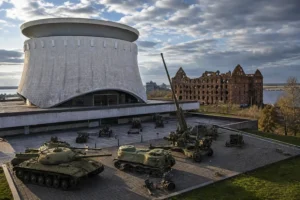 Volgograd Panorama Museum, Volgogradabout 650 m away (~11 min walk) · typical visit: 2–3 hours
Main image: AI-generated illustration. It may not show the place exactly as it looks.
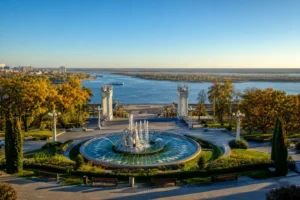 Central Embankment, Volgograd – about 1.6 km away (~25 min walk) · typical visit: 1–2 hoursOpen 24 hours
Main image: AI-generated illustration. It may not show the place exactly as it looks.
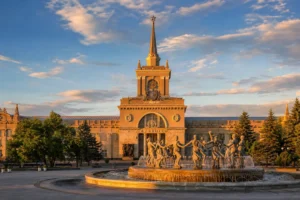 Volgograd Railway Station, Volgograd – about 1.6 km away (~26 min walk) · typical visit: 30 minutesOpen daily 00:00–23:59
Main image: AI-generated illustration. It may not show the place exactly as it looks.
Hotels near Tsentralny District, Volgograd
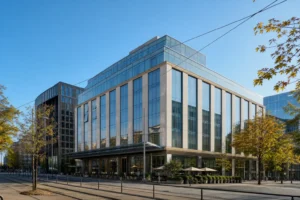 Hilton Garden Inn Volgograd, Volgogradabout 900 m away (~15 min walk)
Main image: AI-generated illustration. It may not show the place exactly as it looks.
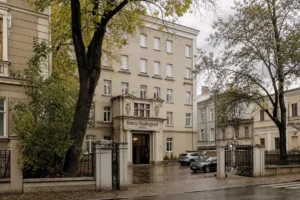 Stariy Stalingrad, Volgogradabout 1.5 km away (~25 min walk)
Main image: AI-generated illustration. It may not show the place exactly as it looks.
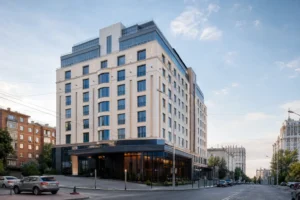 Park Inn by Radisson Volgograd, Volgogradabout 1.7 km away (~27 min walk)
Main image: AI-generated illustration. It may not show the place exactly as it looks.
Related guides
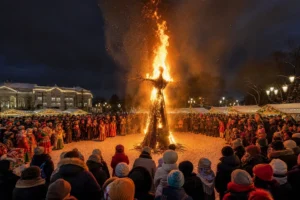 Maslenitsa in Volgograd: Pancakes, Folklore and the Burning of Winter
Main image: AI-generated illustration. It may not show the place exactly as it looks.
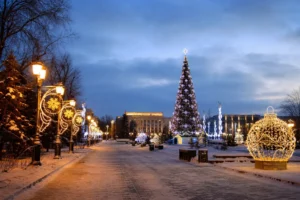 New Year Celebrations in Volgograd: Traditions and Public Festivities
Main image: AI-generated illustration. It may not show the place exactly as it looks.
 Volgograd City Day: Free Riverside Celebration in September
Main image: AI-generated illustration. It may not show the place exactly as it looks.
 Victory Day, Volgograd: Russia’s Most Solemn National Holiday
Main image: AI-generated illustration. It may not show the place exactly as it looks.
 Basilico, Volgograd: Italian Pasta, Pizza and Wine
Main image: AI-generated illustration. It may not show the place exactly as it looks.
Browse more: More in Volgograd · All Neighborhoods · All Neighborhoods · All Neighborhoods in Volgograd · All Volgograd
FAQ: Tsentralny District, Volgograd
Is Tsentralny District the same as Mamayev Kurgan?
No. Tsentralny District is the administrative city district covering the central area including the railway station, squares, and embankment. Mamayev Kurgan is a separate war memorial complex and museum located on the district's southern edge. Mamayev Kurgan requires a separate ticket and visit; treat it as its own destination even though it is nearby.
How is the district connected to the Battle of Stalingrad?
The district's streets were the primary battleground during the Battle of Stalingrad (August 1942–February 1943). Nearly all prewar buildings were destroyed; what you see today is the postwar Soviet rebuild (1945–1950s). Museums like the Pamyat Museum and memorials throughout the district document this history. Mamayev Kurgan, the culminating memorial, marks the site of fierce combat and the eventual Soviet victory.
What is there to do for free in the district?
Walking the central embankment, exploring the main squares, photographing the Railway Station, and viewing the Fire Station Tower are free. The public spaces—embankment, squares, streets—are open year-round at no cost. Museums and the Mamayev Kurgan complex charge admission. The district's atmosphere and history can be experienced simply by wandering and observing.
Is it safe to walk around the district at night?
Main commercial areas (central square, embankment, Lenin Prospekt) are generally safe and well-lit until late evening. Avoid walking alone in isolated side streets after dark. Use taxis or the metrotram system for late-night transport. Common sense applies: stay aware of surroundings, keep valuables hidden, and travel with others if possible.
How far is the district from Mamayev Kurgan?
Mamayev Kurgan lies at the southern edge of the district, approximately 1.5–2 km (25–30 min walk) or a 10–15 min tram/metrotram ride from the central square. The memorial complex is visible across the city skyline upriver and is the district's most prominent landmark from the embankment.
What languages are spoken, and will I get by with English?
Russian is the primary language. English is spoken by some young people and in tourist-oriented establishments but not universally. Hotel staff usually speak some English; museum staff may not. Carry a phrasebook, offline translation app, or write out simple phrases in Russian. Major signs and menus in tourist areas include English.
When were the Soviet-era buildings in the district constructed?
Most main structures (Railway Station, major apartment blocks, administrative buildings, embankment) were rebuilt between 1945 and the mid-1950s following destruction in World War II. These reflect 1950s Stalinist and early postwar Soviet architectural styles. A few pre-Soviet buildings (Old Fire Station, 1897; some mansion houses from the Tsaritsyn era) survive but are less prominent.
Can I visit the district in winter, and is it worth it?
Yes. Winter (November–March) is cold (often –5°C to –10°C or below), but the city is less crowded. Snow transforms the landscape and memorial complexes into stark, powerful compositions. Some cafés and shops have reduced hours or close. Dress warmly in thermal clothing, waterproof boots, and a heavy coat. The embankment and outdoor sights are still accessible and visually striking, though visits require more physical stamina in cold weather.
Russia Vibes is a one-person project. A coffee keeps it going
Last updated: October 18, 2026.
How we research and update our guides
About this guide: AI assistance and accuracy
This guide is created with the help of AI and is based on official sources where available. Mistakes can still happen. Opening hours, prices, rules and other details are given to the best of our knowledge as of the date shown and can change without notice. It offers general recommendations only, not professional, legal or travel advice. Please confirm important details with the official source before you travel; you are responsible for your own plans and decisions.
International sanctions affect payments between Russia and many other countries. In practice, cards issued in the EU, the UK, the US and several other countries often do not work in Russia, Russian cards usually do not work abroad, and some booking platforms, airlines and payment providers limit or suspend their services for Russia. The situation changes frequently. We do not give legal or financial advice, and this site does not encourage anyone to break or circumvent sanctions. Whatever you plan, you are responsible for following the laws and regulations that apply to you, including those of your country of residence and citizenship. Many travelers still organise their stay lawfully. It is worth asking your bank or payment provider what is currently permitted, contacting hotels, tour operators and carriers directly about the payment methods they accept, and checking which services are open to customers from your country. Clarify payment, cancellation and refund terms before you commit to a booking, and keep your plans flexible. Partner links on this site may not be available in every country, and prices, availability and rules in our guides can differ from what you see when you book.Paying for your trip: please read
Report an issue on this page

Take this guide with you
Get a free PDF of this guide to print or read offline: key facts, tips and a map link on a few clean pages.