
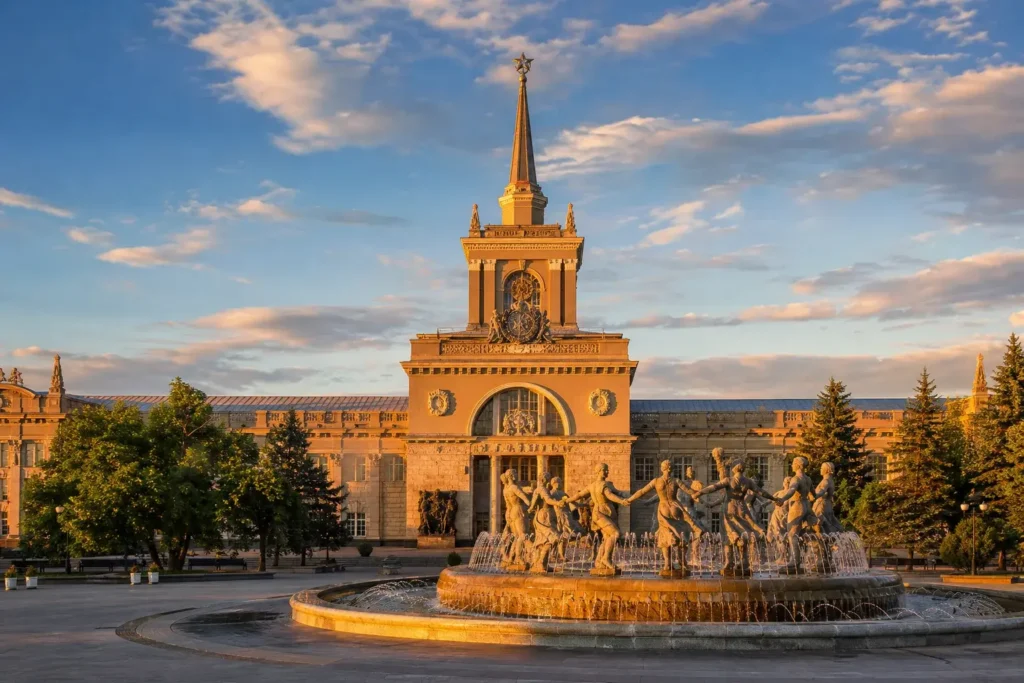
Located at Railway Station Square in the Central District, Volgograd Railway Station is one of the largest railway stations in Russia and serves long-distance and suburban trains. The Volgograd Railway Station is more than a transit hub—it is a striking example of post-war Soviet architecture, rebuilt after the devastation of World War II.
The station is the hub for services to five main destinations: Krasnodar, Rostov-on-Don, Moscow, Saratov and Astrakhan. Even if you are not catching a train, the building itself is worth visiting for its monumental design and historic significance in the city’s story.
Quick Facts
| Russian name | Волгоград-Главный |
|---|---|
| Built / opened | 1954 |
| Architect(s) | A. Kurovsky and S. Briskin |
| Address | Привокзальная площадь, 1, Волгоград OpenStreetMap · Google Maps |
| District | Tsentralny District |
| Opening hours | Daily 00:00-23:59 |
| Admission | Free (to visit the building); ticket prices for travel vary by destination |
| Best time to visit | Spring (April–May) and autumn (September–October) offer the most comfortable weather for visiting and photographing the exterior. Summer (June–August) is warm but can be hot. The station is active year-round; winter visits are possible but require warm clothing. Visit outside peak travel times (early morning or late afternoon) to see the interior without large crowds of passengers. |
| Recommended duration | 30 minutes |
| Last updated | October 18, 2026 |
What Is (and Isn't) Part of a Visit to Volgograd Railway Station, Volgograd?
| Part | Status | Notes |
|---|---|---|
| Main station building (exterior and interior halls) | Included in the standard ticket | Free to enter and view the architecture and ceiling paintings. |
| Train tickets and platform access | Separate ticket or institution | Requires a valid train ticket; available from ticket windows or online through Russian Railways. |
| Automatic lockers (basement) | Included in the standard ticket | Available for luggage storage; fees apply. |
| Cafes and restaurants | Included in the standard ticket | Various eating options available inside the station for passengers and visitors. |
| Volgograd City History Museum | Outside / not part of it | Located opposite the station on Gogolya Street; separate institution with own entrance and admission. |
Why Visit Volgograd Railway Station, Volgograd?
The very grandest piece of 1950s Soviet architecture in Volgograd is probably the 1954 main train station with its tall spire topped by a five-pointed star and with plenty of elaborate stonemasonry on the façade celebrating the railways and industrialization in general.
It is worth going inside the station building to take a look at the two fantastic large socialist-realist ceiling paintings in the main halls, one featuring lots of red-flag-waving victorious Soviets, while the other is a glorification of industrialization and construction works. The facades are adorned with bas-reliefs dedicated to the defense of Stalingrad, and the calling card of the station square is the ‘Children’s Circle Dance’ fountain, a replica of the fountain seen in photographs of ruined Stalingrad.
Highlights of Volgograd Railway Station, Volgograd
The Spire and Façade
The most distinctive feature is the tall spire topped by a five-pointed star, with elaborate stonemasonry on the façade celebrating the railways and industrialization. The building is a three-story structure made of a combination of brick and concrete, with the facade consisting of ornamented granite and interior walls mainly of marble. Look up as you approach to see the sculptural compositions framing the entrance.
Tip: The building is most striking at night when illuminated; visit after dark if possible.
Socialist Realist Ceiling Paintings
Two fantastic large socialist-realist ceiling paintings adorn the main halls, one featuring red-flag-waving victorious Soviets, while the other glorifies industrialization and construction works. The ceiling is decorated with stucco and several paintings of the battles that took place in the city. These are among the finest examples of Soviet-era propagandist art.
Tip: Spend time in the main hall to study the details and symbolism in the paintings.
The Apotheosis of Labor Sculpture
The entrance portico is crowned with 'The Apotheosis of Labour' sculpture by sculptors M. Pavlovskii, N. Pavlovskaya, and V. Bezrukov. This monumental sculpture represents the ideals of Soviet labor and craftsmanship. It appears above the vault and forms the gateway to the station interior.
Tip: View this sculpture from the station square in front to see it in full context with the façade.
Children's Circle Dance Fountain
The 'Children's Circle Dance' fountain in front of the station is a replica of the fountain seen in photographs of ruined Stalingrad. The original fountain was removed after the war but this copy was rebuilt in front of the station in 2013. It serves as a symbol of the city's reconstruction.
Tip: The fountain is a popular photo spot, especially in warm weather when it operates.
Marble Interior
The interior walls are mainly marble. The station's grand hall features this luxurious material throughout, creating a sense of permanence and prestige typical of major Soviet public buildings. The marble adds warmth and dignity to the space.
Tip: Notice the care taken in the material selections and finishes—this reflects the station's importance to Soviet planners.
Historic Transformation
The first railway to serve Tsaritsyn (now Volgograd) was the Volga-Don railway in 1862, with the first railway station constructed of wood; in 1871 the station was replaced with a brick structure. During the Second World War, the building was almost completely destroyed in the Battle of Stalingrad; from July 1951 to May 1954 the new station building was erected on the site of the old building.
Tip: The station's story mirrors Volgograd's reconstruction after the war—it speaks to resilience and Soviet ambition.
Atmosphere
The building was built in 1951–1954 and like all public buildings of that time looks monumental. The main hall is grand and formal, with high ceilings and soaring proportions that dwarf individual visitors. The socialist-realist paintings overhead convey an optimistic, forward-looking Soviet vision. On arrival, you pass through modern security screening, a contemporary addition that marks the building’s ongoing use as an active transport hub.
The atmosphere combines history and function: tourists pause to photograph the ornate details while passengers hurry with luggage. The station remains busy with commuters and long-distance travelers, creating a mix of the monumental and the mundane. The exterior square offers a quieter moment to take in the spire and fountain.
History of Volgograd Railway Station, Volgograd
The first railway to serve Tsaritsyn (now Volgograd) was the Volga-Don railway in 1862, and the first railway station was constructed of wood. In 1871 the station was replaced with a brick structure. This early station served the growing industrial city on the Volga for nearly seven decades.
During the Second World War, the building was almost completely destroyed in the Battle of Stalingrad. The station’s destruction was part of the wider devastation inflicted on the city during the brutal urban fighting of 1942–43. Like much of Stalingrad, the railway infrastructure had to be entirely rebuilt.
In the period from July 1951 to May 1954 the new station building was erected on the site of the old building. The architects were A. Kurovsky and S. Briskin. The station was built in the Stalinist Empire style, reminiscent of Moscow’s Stalinist skyscrapers with spires. The rebuilt station was not merely functional; it was conceived as a symbol of Soviet reconstruction and power, a monument to the state’s ability to restore and transform.
This architectural grandeur was particularly fitting for a city where a crucial turning point in the Great Patriotic War (World War II) took place. The station became one of Volgograd’s most recognizable buildings and remains a landmark of post-war Soviet urban planning.
Legends and Myths about Volgograd Railway Station, Volgograd
The Children's Fountain and Memory
Legend – historically unreliable. The 'Children's Circle Dance' fountain standing in front of the station is a replica created to honor a famous pre-war fountain that photographers captured in ruins during the Battle of Stalingrad. The original fountain was removed after the war but this copy was rebuilt in front of the station in 2013. The fountain has become a symbol of Volgograd's recovery and continuity, linking the destroyed city of wartime to the rebuilt city of today.
Tickets and Booking for Volgograd Railway Station, Volgograd
To visit the station building itself, no ticket is required—entry to the main hall and interior is free. To board a train, purchase tickets at the station ticket windows or in advance online through Russian Railways. Access to the station platforms is through a separate building with metal detectors. Allow time for security screening. For international travelers, identification (passport) is required. Check the official Russian Railways website (rzd.ru) for current train schedules and prices.
Plan and Book
Suggested itineraries Volgograd Railway Station, Volgograd
30 minutes
Enter the main hall and look up at the two socialist-realist ceiling paintings. Walk around the interior to observe the marble walls and ornate details. Step outside to view the spire and fountain from the station square. If time allows, read any information plaques about the station's history.
1 hour
Spend 30 minutes in the main hall and interior as above. Then walk around the exterior perimeter to see the bas-reliefs on the façades dedicated to the defense of Stalingrad. Photograph the building from different angles. Visit the fountain and read its history. If interested, walk to the nearby History Museum across the street (though it is a separate visit with its own admission).
How to Get to Volgograd Railway Station, Volgograd
The station is located at Railway Station Square, 1, in the Central District of Volgograd. If arriving by train, simply follow signs to exit. If arriving by car, taxis and ride-hailing services can drop you at the main entrance on Privokzalnaya Square. Public transport connections: local buses serve the station area; check current routes with local transit information. The station is within walking distance of central Volgograd’s main attractions.
Accessibility
The station building has wheelchair accessible entry through designated entrances. Access to platforms is through a separate building with metal detectors. The interior features level surfaces in the main halls. Specific accessibility details (lifts, accessible restrooms, companion tickets) should be confirmed with station staff upon arrival or by contacting Russian Railways in advance.
Food Nearby
Cafes and restaurants operate inside the station building, serving passengers and visitors. Options include snacks, light meals, and tea. The central Volgograd city area is within walking distance and offers many restaurants and cafes. Street vendors sometimes operate in the station square during warmer months.
What to Bring
Comfortable walking shoes for exploring the interior and exterior. A camera or phone to photograph the architecture and paintings. In winter, warm clothing, as the station can be cold despite its grand interior. The building is not heated to extreme temperatures. Avoid large bags or luggage if possible—security screening is required for platform access.
Best Views and Photo Spots of Volgograd Railway Station, Volgograd
Main entrance portico
Face the main entrance to capture the spire, five-pointed star, and the 'Apotheosis of Labor' sculpture above the portal. The ornamented granite façade and sculptural reliefs are clearly visible here. This is the classic view of the building.
Best time: Late afternoon light from the west highlights the details; evening with artificial lighting creates dramatic shadows.
From Privokzalnaya Square
Step back into the square to see the entire building facade and the spire rising above the street. The Children's Circle Dance fountain is in the foreground, providing a human-scale element that complements the monumental architecture.
Best time: Golden hour (early evening) gives warm light across the façade. After dark, architectural lighting highlights the building's features.
The Children's Circle Dance Fountain
Close-up view of the fountain sculpture showing the figures of dancing children. In the background, the station building towers above, creating context for the monument. The fountain works during warm months.
Best time: Midday for even lighting on the sculptures; spring through early autumn when the fountain operates.
Side facades
Walk around the building's perimeter to see the bas-reliefs dedicated to the defense of Stalingrad. These ornamental compositions tell the story of the city's wartime experience and are less photographed than the main entrance.
Best time: Side light during morning (east facades) or afternoon (west facades) brings out the sculptural details in the reliefs.
Main hall ceiling
Stand in the center of the main hall and look up to photograph the socialist-realist ceiling paintings. The scale and detail are impressive from this perspective. Consider the architectural framing created by the columns and vaulting.
Best time: Daytime when interior lighting is natural; avoid flash to respect other visitors and preserve image quality.
Photography Rules
Photography of the interior and exterior is generally allowed. Metal detectors are used for security screening before accessing platforms, so inform security if carrying camera tripods or professional equipment. Flash photography may be permitted in the main halls but avoid disturbing passengers or blocking thoroughfares. Drones are not permitted inside or on the station grounds.
Family Suitability
The station building is suitable for families with children. The main hall is grand and engaging for children to explore, and the ceiling paintings are impressive at any age. The exterior and fountain are family-friendly. However, young children may become overwhelmed by the scale and crowds during peak travel times. Stroller access is possible in the main halls, though tight in security areas. The building has restrooms and some family facilities. Parents should keep a close eye on children in busy areas near the platforms. A brief interior visit (30 minutes) works well for families with young children.
Russia Vibes Tips
- Visit early in the morning (before 9 AM) or late afternoon (after 4 PM) to see the interior without large crowds of transit passengers. This allows better viewing and photography of the ceiling paintings and hall details.
- Do not miss the bas-reliefs on the façades—they tell the story of the Battle of Stalingrad through sculpture. Walk the perimeter of the building to see them, as most visitors focus only on the main entrance.
- The station square in front offers the best vantage point for photographing the entire building and spire. Step well back from the entrance to capture the full height and details.
- Allow extra time for security screening if you plan to photograph the platforms or if staff asks questions about your camera equipment. Be prepared to remove bags from screening areas.
- The fountain in front sometimes runs seasonally (typically May–September). If you visit in winter, it may not operate, but the station itself remains open year-round.
- Bring a guide or use a translation app if you speak limited Russian—information plaques inside are typically in Russian, and few staff speak English.
Explore Nearby Volgograd Railway Station, Volgograd
Sights near Volgograd Railway Station, Volgograd
 Mamayev Kurgan, Volgograd – about 3.7 km away · typical visit: 3–4 hoursOpen daily 09:00–18:00
Main image: AI-generated illustration. It may not show the place exactly as it looks.
 Volgograd Planetarium, Volgograd – about 850 m away (~13 min walk) · typical visit: 1–2 hoursOpen daily 10:00–18:00
Main image: AI-generated illustration. It may not show the place exactly as it looks.
 Central Embankment, Volgograd – about 1.2 km away (~19 min walk) · typical visit: 1–2 hoursOpen 24 hours
Main image: AI-generated illustration. It may not show the place exactly as it looks.
 Volgograd Panorama Museum, Volgogradabout 1.4 km away (~23 min walk) · typical visit: 2–3 hours
Main image: AI-generated illustration. It may not show the place exactly as it looks.
 Pavlov's House, Volgograd – about 1.4 km away (~24 min walk) · typical visit: 30–45 minutesOpen 24 hours
Main image: AI-generated illustration. It may not show the place exactly as it looks.
 Gerhardt's Mill, Volgograd – about 1.5 km away (~24 min walk) · typical visit: 30–45 minutesOpen 24 hours
Main image: AI-generated illustration. It may not show the place exactly as it looks.
Restaurants and cafes near Volgograd Railway Station, Volgograd
 Bamberg, Volgograd – about 550 m away (~9 min walk)Open daily 11:00–23:00
Main image: AI-generated illustration. It may not show the place exactly as it looks.
 Knyagininskiy Dvor, Volgograd – about 750 m away (~13 min walk)Open daily 11:00–23:00
Main image: AI-generated illustration. It may not show the place exactly as it looks.
 Denver Burgers, Volgogradabout 900 m away (~14 min walk)
Main image: AI-generated illustration. It may not show the place exactly as it looks.
 Restaurant Marusya, Volgogradabout 950 m away (~16 min walk)
Main image: AI-generated illustration. It may not show the place exactly as it looks.
Hotels near Volgograd Railway Station, Volgograd
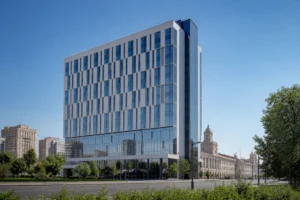 Cosmos Volgograd Hotel, Volgogradabout 150 m away (~3 min walk)
Main image: AI-generated illustration. It may not show the place exactly as it looks.
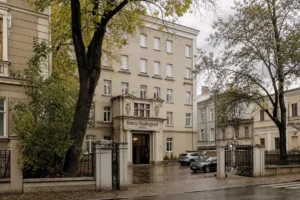 Stariy Stalingrad, Volgogradabout 1.8 km away (~29 min walk)
Main image: AI-generated illustration. It may not show the place exactly as it looks.
 Hampton by Hilton Volgograd Profsoyuznaya, Volgogradabout 2.0 km away (~32 min walk)
Main image: AI-generated illustration. It may not show the place exactly as it looks.
Related guides
 Hotel Volgograd: Historic City Centre Hotel with Stalinist Architecture
Main image: AI-generated illustration. It may not show the place exactly as it looks.
 Palkin, Saint Petersburg: Historic Russian Fine Dining7 min on foot from Mayakovskaya metro, Open daily 12:00–23:00
Main image: AI-generated illustration. It may not show the place exactly as it looks.
 Gogol, Saint Petersburg: Russian Cuisine and Dining Guide1 min on foot from Admiralteyskaya metro, Open daily 12:00–23:00
Main image: AI-generated illustration. It may not show the place exactly as it looks.
 Katyusha, Saint Petersburg: Russian Food and Dining Guide4 min on foot from Nevsky Prospekt metro
Main image: AI-generated illustration. It may not show the place exactly as it looks.
Browse more: More in Tsentralny District · All Railway Stations · All Sightseeing · All Sightseeing in Volgograd · All Volgograd
FAQ: Volgograd Railway Station, Volgograd
Can I enter the station building without a train ticket?
Yes. The main hall and interior are open to the public free of charge. You can walk around, view the ceiling paintings, and explore the architecture without buying a ticket. Only platform access requires a valid train ticket.
Is the station accessible by public transport?
Yes. Local buses serve the station area. The exact routes and numbers change; check current information with local transit providers or at your hotel. Taxis and ride-hailing services (Yandex Taxi, Uber) can also drop you at the main entrance.
What is the best time of day to visit?
Early morning (7–9 AM) or late afternoon (4–6 PM) offer smaller crowds. Midday and evening rush hours (11 AM–2 PM, 5–7 PM) can be busy with transit passengers. Mornings provide better natural light for photography.
Are there restrooms in the station?
Yes, restroom facilities are available inside the station building. Some are free and some may have a small fee; check with staff on arrival.
Can I photograph the interior?
Yes, photography of the main halls and ceiling paintings is generally permitted. Avoid using flash and respect other passengers. Professional equipment or tripods may require security approval.
Is there luggage storage at the station?
Yes. Automatic lockers are available in the basement of the station. A fee applies for storage. This is useful if you arrive early and want to explore the city before your train.
What is the Connection 'Apotheosis of Labor' sculpture?
The entrance portico is crowned with 'The Apotheosis of Labour,' a monumental sculpture representing Soviet ideals of work and craftsmanship. It was created by sculptors M. Pavlovskii, N. Pavlovskaya, and V. Bezrukov as part of the 1954 rebuilding.
How long should I plan to spend here?
A brief visit to the main hall and exterior takes 30 minutes. A more thorough exploration of the interior, exterior reliefs, and photographs takes 1–1.5 hours. Include the station in a longer city itinerary rather than as a standalone destination.
Russia Vibes is a one-person project. A coffee keeps it going
Last updated: October 18, 2026.
How we research and update our guides
About this guide: AI assistance and accuracy
This guide is created with the help of AI and is based on official sources where available. Mistakes can still happen. Opening hours, prices, rules and other details are given to the best of our knowledge as of the date shown and can change without notice. It offers general recommendations only, not professional, legal or travel advice. Please confirm important details with the official source before you travel; you are responsible for your own plans and decisions.
International sanctions affect payments between Russia and many other countries. In practice, cards issued in the EU, the UK, the US and several other countries often do not work in Russia, Russian cards usually do not work abroad, and some booking platforms, airlines and payment providers limit or suspend their services for Russia. The situation changes frequently. We do not give legal or financial advice, and this site does not encourage anyone to break or circumvent sanctions. Whatever you plan, you are responsible for following the laws and regulations that apply to you, including those of your country of residence and citizenship. Many travelers still organise their stay lawfully. It is worth asking your bank or payment provider what is currently permitted, contacting hotels, tour operators and carriers directly about the payment methods they accept, and checking which services are open to customers from your country. Clarify payment, cancellation and refund terms before you commit to a booking, and keep your plans flexible. Partner links on this site may not be available in every country, and prices, availability and rules in our guides can differ from what you see when you book.Paying for your trip: please read
Report an issue on this page

Take this guide with you
Get a free PDF of this guide to print or read offline: key facts, tips and a map link on a few clean pages.