
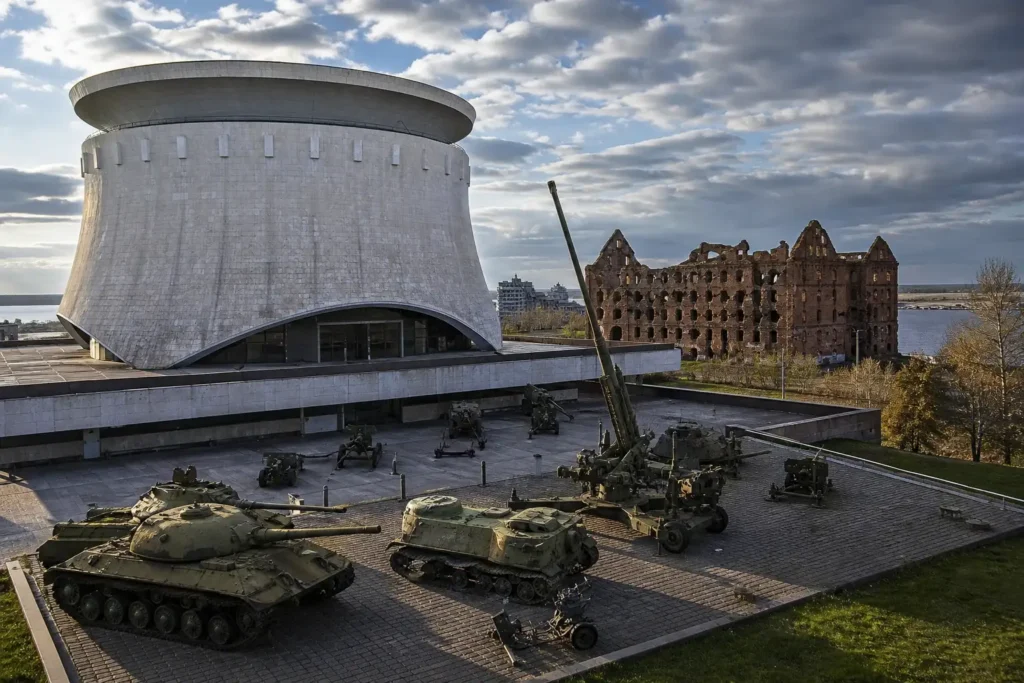
Volgograd Panorama Museum stands at the heart of a landscape shaped by one of history’s most brutal military encounters. Designed by architect Vadim Maslyaev and opened in 1985, the museum occupies a prominent position near the Volga riverbank in the city centre, its circular concrete structure rising above exhibition halls below.
The museum exists as a memorial to the Battle of Stalingrad (1942–43), which lasted 200 days and transformed the course of World War II. Visitors explore eight large exhibition halls filled with over 3,500 artefacts—weapons, uniforms, photographs, documents, letters and personal effects—arranged chronologically. The star attraction is the panorama itself: a sweeping 360-degree painted canvas depicting the final stage of the battle from a Soviet vantage point, viewable from a circular gallery at the building’s top.
Quick Facts
| Russian name | Музей-панорама «Сталинградская битва» |
|---|---|
| Built / opened | 1985 |
| Architect(s) | Vadim Maslyaev |
| Address | Ulitsa Imeni Marshala V.I. Chuykova, 47, Volgograd, 400053 OpenStreetMap · Google Maps |
| District | Tsentralny District |
| Metro | Ploshchad Lenina (Tram line CT, 5 minutes walk downhill toward the river on Ulitsa Naumova) |
| Opening hours | Tue-Fri 10:00-18:00; Sat 10:00-20:00; Sun 10:00-18:00; Mon closed |
| Admission | ₽₽ (foreign adults) |
| Best time to visit | Spring (April–May) and autumn (September–October) offer comfortable outdoor temperatures for exploring the courtyard and outdoor exhibits without summer crowds or winter cold. Summer (June–August) is busiest, especially in July and August when school groups and tour buses arrive daily; morning visits (before 11:00) help avoid peak crowds. Winter (November–February) is quiet but cold; some sources note reduced winter lighting in certain areas. Weekdays (Tuesday–Thursday) are quieter than weekends. Saturday afternoon can be busy due to extended evening hours (until 20:00) attracting after-work visitors. Avoid Monday (closed). Visiting before 13:00 generally means shorter queues at the ticket office. |
| Recommended duration | 2–3 hours |
| Website | stalingrad-battle.ru |
| Last updated | October 18, 2026 |
What Is (and Isn't) Part of a Visit to Volgograd Panorama Museum, Volgograd?
| Part | Status | Notes |
|---|---|---|
| Main Exhibition Halls (8 halls, dioramas, portraits) | Included in the standard ticket | Admission ticket covers all indoor exhibition spaces, panorama gallery, and displays within the main building. |
| 360-Degree Panorama Canvas | Included in the standard ticket | The central circular panorama gallery at the top of the building is included in standard admission. |
| Open-Air Military Equipment Courtyard | Included in the standard ticket | Tanks, artillery, aircraft parts and other outdoor displays are accessible as part of standard admission. |
| Grudinin Mill Ruins | Outside / not part of it | The ruined mill stands adjacent to the museum and is visible from multiple points, but is cordoned off and not open to visitor entry due to structural safety. Photographs can be taken from outside the barriers. |
| Audio Guide | Separate ticket or institution | Audio guides in English and other languages are available for a separate fee and not included in standard admission. |
| Photography Rights | Separate ticket or institution | Some sources mention a 'photos free' option; standard admission may have restrictions on indoor photography. Check at the ticket office or inquire about this option. |
| Mamayev Kurgan (Mamayev Hill Monument) | Outside / not part of it | Another major Stalingrad memorial complex approximately 2 km away; it is a separate institution with separate admission. Do not confuse it with the Panorama Museum. |
| Old Gogol Street Defence Museum (Civil War Museum) | Outside / not part of it | The earlier museum building on Gogol Street, dedicated to Tsaritsyn Civil War history, is a separate institution with separate admission and different focus. It is not part of the Panorama Museum complex. |
Why Visit Volgograd Panorama Museum, Volgograd?
The panorama—measuring 16 metres high and 120 metres around—is one of the largest of its kind in Russia and immerses you in the intensity of urban combat. Four additional dioramas, each 5 by 25 metres, show specific episodes of the battle with miniature figures and atmospheric lighting. The displays include Soviet and German uniforms, rifles and machine guns, field artillery, tank engines, and poignant personal items: soldiers’ letters, postcards, and household goods. A portrait gallery honours Soviet military commanders. Outside, the courtyard holds tanks, anti-tank guns, and other heavy equipment where children can clamber on gun turrets and climb into hatches.
The ruins of the Grudinin Mill (built in 1904 by German brothers, destroyed during the battle) stand immediately beside the museum—the largest authentic WWII ruin in Russia, preserved as a stark memorial to the fighting’s scale.
How Volgograd Panorama Museum, Volgograd Is Laid Out
The museum complex divides into indoor and outdoor sections. Entry at street level on the Volga-facing side leads first through exhibition halls arranged on descending levels. The eight halls progress chronologically through the battle and include adjoining smaller rooms with dioramas and thematic displays. A central Hall of Triumph lists the names of Soviet divisions that fought.
From the exhibition halls, a ramp ascends to the circular panorama gallery at the top of the building—a 360-degree viewing platform where visitors stand in the centre and turn slowly to absorb the entire painted battle scene. The panorama is lit from the front and depicts the rubble-strewn landscape of southern Stalingrad at the moment of German defeat.
Outside the main building, the courtyard and surrounding grounds display heavy military equipment—tanks, anti-aircraft guns, artillery—arranged in the open air. These can be accessed independently of the main museum ticket in many cases. The adjacent mill ruin is visible from multiple vantage points within the complex but is cordoned off to visitors for safety.
Highlights of Volgograd Panorama Museum, Volgograd
The Panorama Canvas
The painted panorama measures 16 by 120 metres and wraps 360 degrees around the top of the building's circular core. Visitors step onto a central viewing platform and rotate slowly to absorb the entire scene of rubble, ruined buildings, fallen soldiers and advancing Soviet troops. The depiction is vivid and emotionally intense, made more powerful by dramatic period lighting that recreates the scene's atmosphere. This is not a reconstruction on canvas—it is viewed from within, making it a unique viewing experience.
Tip: Visit the panorama last, after touring the exhibition halls below; it will be most impactful when you understand the battle's details and human cost.
Eight Exhibition Halls
Eight exhibition halls contain more than 3,500 exhibits and four dioramas measuring 5 by 25 metres each. Halls are organized chronologically and thematically: the opening phase of the battle, street-by-street fighting, Soviet counter-offensives, and the German defeat. Each room has a short synopsis in English on the room's particular theme, though most labels are in Russian. Display cases hold weapons, uniforms, documents, photographs, field equipment and personal artefacts from both armies.
Tip: Pick up an audio guide (available for a fee) to understand the spatial and strategic context of each phase.
Soviet and German Uniforms and Personal Effects
The museum displays military trophies and personal belongings of Soviet and Wehrmacht soldiers, including letters, postcards and household items. Mannequins dressed in combat uniforms show the evolution of equipment and tactics over the 200-day battle. Display cases hold letters home, family photographs, identification papers, and everyday objects—a testament to the individuals caught in the conflict. The contrast between the soldiers' own words and the scale of the battle is striking.
Tip: Spend time reading translated excerpts of soldiers' letters; they offer intimate perspective on the fighting.
Soviet Military Commanders Portrait Gallery
The museum features a unique portrait gallery of Soviet military leaders and commanders involved in the Stalingrad battle. Large formal photographs and biographical plaques honour the generals and colonels who directed operations—men like Georgy Zhukov and Alexander Vasilevsky. Accompanying maps show their commands and strategic decisions. The gallery underscores the battle's significance as the moment Soviet military leadership proved capable of orchestrating and executing massive counter-offensives.
Tip: Compare the Soviet generals' portraits with displayed German officers' photographs to understand the commands on each side.
Hall of Triumph
The Hall of Triumph lists the names of the divisions which took part in the battle. This central chamber honours the military units that fought at Stalingrad and is often treated as a symbolic heart of the museum. The density of names—many now-famous Soviet formations—illustrates the enormous scale of the engagement and the scope of Soviet mobilization. Visitors often pause here to absorb the magnitude of forces involved.
Tip: Bring a pen and paper if you seek a specific ancestor's unit; staff may help locate it on the lists.
Open-Air Equipment Display
The courtyard and surrounding grounds display authentic military hardware: Soviet T-34 and other tanks, German Panther tanks, anti-aircraft guns, field artillery, aircraft engines and fuselage sections. Many pieces are accessible for close inspection and some pieces can be touched or climbed on (with care). The area has views out over the river and plenty of old tanks and planes for kids to climb around on. These artefacts are positioned as they might have been during the battle.
Tip: Wear comfortable shoes; exploring the outdoor displays involves significant walking on uneven ground.
The Grudinin Mill Ruins
Next to the museum stands the remains of an old mill, dating from 1903, that was destroyed in the battle. It's left standing as a reminder of the horrific fighting. The war ruin of the former Grudinin Mill is by far the largest war relic not just in Volgograd but probably the whole of Russia. The roofless brick structure, bullet- and shrapnel-scarred, is visible from multiple viewpoints within the complex. It serves as a powerful physical witness to the battle's intensity. The ruins cannot be entered but can be photographed from outside the cordoned perimeter.
Tip: Photograph the mill from the Volga side in late afternoon when the angle of light emphasizes the scars on the brick.
Afghan and Chechen War Exhibits
Since 1989 there is a continuously expanding exposition devoted to the military actions in Afghanistan and Chechnya. Smaller halls display weapons, uniforms, photographs and personal artefacts from Soviet operations in Afghanistan (1979–89) and Russian military operations in Chechnya (1990s–2000s). While not the main focus, these exhibits contextualize Soviet and Russian military experience across decades and offer perspective on Cold War and post-Soviet history.
Tip: These halls are easier to navigate quickly than the main Stalingrad exhibition; visit them if time is limited or your interest is specific.
Atmosphere
The building itself—a late-Soviet structure of grey concrete—is functional and imposing rather than graceful. Inside, the exhibition halls are dimly lit, with spotlighting on displays and period music or sound effects (gunfire, explosions) in some rooms. The air carries the faint smell of old cloth, metal and dust. Visitors move in small clusters, speaking quietly; many pause for extended periods before individual displays or photographs.
The panorama gallery at the top is its own experience: a circular, semi-darkened chamber where soft light illuminates the painted canvas. The stillness of the space contrasts sharply with the chaos depicted. Winter and spring visitors often encounter school groups and military cadets on organized tours; summer brings more international tourists.
Outside in the courtyard, the atmosphere shifts to open air. The massive rusted tanks and gun barrels, the skeletal mill ruin across the courtyard, and the Volga visible beyond create a landscape of memory. The memorial character is palpable. Few visitors linger in the courtyard in silence; most walk through briskly, taking photographs.
History of Volgograd Panorama Museum, Volgograd
The roots of the Volgograd Panorama Museum reach back to 1937, when Volgograd was still called Tsaritsyn. An earlier museum on Gogol Street documented the city’s role in the Russian Civil War (1918–22), when Bolshevik forces defended it against White Army assault. That museum building still stands but now covers only pre-Soviet and Civil War history.
In 1943, just after the Battle of Stalingrad, the museum was augmented with items from this battlefield, and the name was changed to include the ‘Defence’ of both Tsaritsyn and Stalingrad. The post-war Soviet state immediately recognized the Battle of Stalingrad’s historical and propaganda significance as the turning point in the war. The renovated museum under that name opened in 1948, housed in the same Civil War-era building.
As Soviet politics shifted, the museum’s identity became entangled with the city’s renaming. After the city was renamed Volgograd, the museum had to change its name again too. And so from 1962 to 1982 it was simply called “Volgograd State Defence Museum”. By the late Cold War era, the old Civil War museum building had become inadequate for the scale of artefacts and the international interest in Stalingrad.
The current museum next to the Old Mill ruin was only set up in 1982, and opened its doors to visitors in 1985. So it’s a late Soviet design. The structure was designed by architect Vadim Maslyaev. The building’s circular form encasing the panorama gallery was an intentional choice—it creates a gallery in the round, forcing visitors to turn slowly and absorb the painted battlefield from multiple angles. It was then that the name Stalingrad slipped back in, in the full title “Panorama Museum of the Battle of Stalingrad”, despite the city’s official Soviet-era name. The panorama painting itself was commissioned as the centrepiece; Soviet artists created the vivid scene showing the moment of German defeat.
The museum has operated continuously since 1985, gradually expanding its collections. Since 1989 there is a continuously expanding exposition devoted to the military actions in Afghanistan and Chechnya, reflecting the Soviet and Russian state’s desire to frame these conflicts within a continuum of military and national history. The outdoor displays—tanks, guns, equipment—have accumulated over decades, donated by military units or recovered from battlefield archaeology.
The decision to leave the Grudinin Mill ruins standing adjacent to the museum was symbolic. Rather than restore or demolish the structure, Soviet authorities preserved the bullet-scarred brick walls as a physical embodiment of the battle’s destructiveness. The mill became the visual anchor of the entire complex: a memento mori standing next to the carefully curated exhibition halls above.
Legends and Myths about Volgograd Panorama Museum, Volgograd
The Mill as the Last German Position
Legend – historically unreliable. Local legend claims the Grudinin Mill was the final German strongpoint in southern Stalingrad, held by Wehrmacht soldiers until the very end of the battle. According to the story, Soviet forces had to fight room by room through the mill's interior, and the building's destruction was the symbolic capstone of Soviet victory. Historians note that while the mill was indeed a significant strong point and was heavily damaged, the exact sequence of its final capture is disputed and likely involved Soviet artillery bombardment more than close-quarters fighting. The legend persists because the ruined structure is so visually powerful and its preservation deliberate.
King George VI's Sword in the Hall of Triumph
Disputed by historians. Visitors are sometimes told that the Hall of Triumph displays a ceremonial sword gifted by British King George VI to the city of Stalingrad as recognition of Soviet heroism. The pride of place in museum expositions is the priceless sword given to the people of Stalingrad by King George VI of the United Kingdom. While this gift was historically real and was indeed a diplomatic gesture, its current location and whether it is permanently on display at the Panorama Museum is not confirmed by the official museum website or recent visitor reports. The sword's legend has grown in local lore.
Tickets and Booking for Volgograd Panorama Museum, Volgograd
| Ticket | Price | Includes |
|---|---|---|
| Adult (foreign visitors) | ₽₽ | Access to all eight exhibition halls, dioramas, panorama gallery, open-air equipment displays, and Hall of Triumph. |
| Child or Teen | ₽ | Same access as adult ticket; discounted rate typically applies to visitors under 18. |
| Audio Guide (available for extra fee) | ₽ | Rental of audio guide device with commentary in English or other languages; not included in standard admission. |
₽ budget · ₽₽ moderate · ₽₽₽ upscale · ₽₽₽₽ splurge. Price levels are estimates compared with typical prices for visitors.
Tickets are purchased at the ticket office located at street level on the Volga-facing side of the main building. As of October 2026, online advance booking is available via the official website (stalingrad-battle.ru) and may reduce queuing, especially during peak summer months and school holidays. Same-day tickets are usually available, but ticket office closes 30 minutes before museum closing time.
Prices for Russian citizens and concession categories (students, pensioners, military, disabled visitors) differ from international adult rates. The official website lists all current rates and eligibility criteria. Companions of disabled visitors may be entitled to free or reduced admission; verify current policy at the ticket office or via the official site.
The museum operates year-round according to the posted schedule. Note that Monday is a weekly closure day. A few hours’ advance notice is sufficient for most visits, though booking a guided tour in advance (available in Russian, English and other languages) may require longer notice. Check stalingrad-battle.ru for current pricing, opening hours, and any temporary closures or special events.
Plan and Book
Suggested itineraries Volgograd Panorama Museum, Volgograd
90 minutes (express visit)
Enter and proceed directly to the panorama gallery; spend 15–20 minutes absorbing the 360-degree canvas from the central platform. Descend and walk quickly through the main exhibition halls (Hall 1: opening phase, Hall 2: street fighting), viewing key artefacts and dioramas without lingering. Exit via the courtyard; glance at outdoor equipment and photograph the mill ruin from outside the barrier. Skip audio guide and smaller annexes.
2.5–3 hours (standard visit)
Start with exhibition halls, allowing 45–60 minutes to move chronologically through all eight halls and the Hall of Triumph, pausing at key artefacts and reading English synopses. Spend 20–30 minutes on the panorama, turning slowly to absorb all angles. Take 20–30 minutes to explore outdoor equipment, photograph the mill and understand the complex's spatial layout. Revisit any hall of particular interest. End at street level as you exit.
3.5–4 hours (unhurried visit with audio guide)
Rent an audio guide at entry. Tour exhibition halls in chronological order, using audio commentary for each room (approximately 60–75 minutes total). Spend 30 minutes absorbing the panorama from the circular gallery, reading any wall text. Invest 30–40 minutes in outdoor displays, using audio commentary if available for equipment identification. Visit any special exhibition on Afghanistan or Chechnya if interested. Photograph mill and complex from multiple angles. End at riverside promenade if time permits.
Half day (4–5 hours, includes nearby sites)
After completing the Panorama Museum as above (2.5–3 hours), walk to the nearby Pavlov's House memorial (10 minutes' walk; site of specific house-to-house fighting) or continue north along the riverside to other Stalingrad-era monuments. Alternatively, plan a separate visit to Mamayev Kurgan (2 km away; separate admission) the same afternoon or day. This allows deeper engagement with the broader Battle of Stalingrad landscape without rushing.
How to Get to Volgograd Panorama Museum, Volgograd
By Tram: The nearest public transport stop is Ploshchad Lenina, which is just about a five-minute leisurely walk from the museum entrance. Take the ‘metrotram’ (line CT) to Lenin Square (Площадь Ленина) and walk down Ulitsa Naumova in the direction of the river. The tram system is inexpensive and frequent; this is the most direct route from the city centre.
On Foot: The route from the top of the Volga Steps in the very heart of the city along the promenade above the banks of the River Volga is quite pleasant too and takes you past a few noteworthy monuments. From the central Maidan (Pavshikh Bortsov Square), descend toward the river via any of the broad paths leading downhill to the Volga embankment; the museum building and mill ruin are visible once you reach the waterfront level.
By Taxi or Ride-Hailing: It is recommended to leave your car in the designated parking area on Naumova Street, near the Ploshchad Lenina public transport stop. Ride-hailing and taxi services operate throughout Volgograd and can drop you at or near the museum entrance on Ulitsa Imeni Marshala V.I. Chuykova.
Entry Point: The entrance is located at street level on the side of the building facing the Volga. Look for the main doors on the riverside (western) face of the concrete structure. Bag storage and cloakrooms are provided.
Accessibility
Wheelchair access to the main exhibition halls is available via ramps and lifts; however, the panorama gallery at the building's top is accessed by stairs only and is not wheelchair accessible. The outdoor courtyard displays are on uneven ground with gravel paths, making wheelchair navigation difficult. Companions for mobility-impaired visitors may be eligible for free or reduced admission; verify current policy at the ticket office. The museum is generally suitable for visitors with strollers in the main exhibition halls but more challenging in outdoor areas.
Food Nearby
The museum complex does not have an on-site café or restaurant. Street-level options are limited in the immediate vicinity. The closest dining options are approximately 10–15 minutes' walk up the hill toward the central Maidan, where restaurants, cafés and fast-food chains line Prospekt Lenina and side streets. Vending machines dispensing snacks and water may be present within or near the museum building. Plan to eat before or after your visit, or bring packed provisions.
What to Bring
Comfortable walking shoes are essential; outdoor courtyard terrain is uneven. In summer, sunscreen and a hat are needed for outdoor equipment displays. In winter, warm coat, hat and gloves are necessary. A camera or smartphone for photography is useful, particularly for outdoor displays and the mill ruin. If interested in reading labels and object descriptions, bring reading glasses. A notebook can help if researching family or unit history. The ticket office may not provide bags or lockers; store larger items before entry or use facilities offered.
Best Views and Photo Spots of Volgograd Panorama Museum, Volgograd
The Panorama Gallery Central Platform
Stand in the circular gallery's centre and photograph the 360-degree painted panorama. The curved canvas shows Soviet troops advancing across rubble-strewn urban terrain with ruined buildings and smoke. The viewing platform's interior railing creates leading lines toward the horizon painted on canvas.
Best time: Late afternoon, when soft directional light illuminates the canvas texture; interior lighting is consistent throughout the day.
Grudinin Mill Ruin from the Courtyard
Photograph the roofless brick mill structure from outside the cordoned perimeter, capturing the bullet-scarred walls, the empty window openings and the scale of the ruin against the sky. The Volga River often visible in the background adds context.
Best time: Late afternoon (16:00–17:30) when sunlight rakes across the brick surface, emphasizing the scars and texture. Overcast days reduce harsh shadows.
Mill Ruin from the Riverside Embankment
Walk down to the Volga embankment level and photograph the mill ruin from the river's edge. From this vantage point, the ruin is silhouetted against the sky and the museum building is visible behind it. The river foreground provides compositional depth.
Best time: Golden hour (30–60 minutes before sunset) when the brick glows warm and the river reflects the sky. Morning light from the east also works well.
Outdoor Military Equipment Courtyard
Photograph rusted T-34 tanks, German Panther tanks and anti-aircraft guns arranged in the courtyard. Compose shots to include multiple pieces of equipment or focus on detail (rust textures, gun barrels, turrets). The mill ruin visible in the background contextualizes the scene.
Best time: Morning (09:00–11:00) when light is directional and shadows define the equipment's form. Fewer visitors in morning allow uncluttered compositions.
Museum Building with Mill Ruin
Photograph the concrete museum building's circular structure alongside or framing the mill ruin. The contrast between the modern curved building and the ancient damaged structure encapsulates the complex's dual purpose: modern curation and physical memorial.
Best time: Late afternoon or golden hour, when the building and ruin are lit from the side, creating strong definition and shadows. Overcast skies flatten the scene but allow detail emphasis.
Volga River View from Museum Level
Photograph the Volga River from the museum courtyard or riverside embankment, with the museum building framing one side of the composition. The river's broad expanse underscores the landscape's scale and the historical significance of the waterway in the battle.
Best time: Golden hour for warm light; clear days allow the river's expanse to be defined. Spring and autumn offer clearer air; summer can have heat haze.
Photography Rules
Audio headphones are available for a fee and some sources note that standard admission may have photography restrictions; a 'photos free' option may be available separately. Drones, tripods and professional lighting are not permitted. Flash photography may be restricted in dimly lit exhibition halls to protect artefacts and other visitors' experience. Outdoor equipment and the mill ruin can be freely photographed from public areas; do not enter cordoned zones.
Family Suitability
The museum is suitable for older children (10+) and adults interested in military history; the subject matter is serious and depicts warfare's human cost. Younger children may find long exhibition halls tiring; audio guides and dioramas help maintain engagement. The outdoor equipment courtyard appeals to children, who can touch and climb on tanks and gun turrets (with supervision), though playground supervision is the family's responsibility. Stroller access to exhibition halls is possible but challenging with crowds. School-age children benefit from a guided tour (arrange in advance). Expect to spend 2–3 hours for a family visit. Not recommended for very young children (under 8) unless under close supervision and with shortened itineraries.
Russia Vibes Tips
- Arrive before 11:00 or after 16:00 to avoid peak crowds, especially in summer and on weekends. The panorama gallery is most atmospheric when visitor numbers are low.
- If you do not read Russian, rent an audio guide at entry; most exhibition labels are in Russian only, and the guide provides essential context for understanding each hall's theme and the artefacts' significance.
- Reserve the panorama gallery visit for the end of your museum tour, not the beginning. Understanding the battle's phases through the exhibition halls first will make the circular painted canvas far more meaningful and emotionally powerful.
- Photograph the Grudinin Mill ruin from outside the cordoned perimeter in late afternoon light; the angle emphasizes the brick's scars and texture far better than morning light.
- The museum closes 30 minutes after the last regular closing time for ticket sales; do not arrive less than 45 minutes before closing if you want a full experience. Saturday extends hours until 20:00, offering an evening option.
- Bring comfortable shoes; the outdoor courtyard displays involve walking on uneven gravel terrain, and the exhibition halls require standing and moving between rooms.
Explore Nearby Volgograd Panorama Museum, Volgograd
Sights near Volgograd Panorama Museum, Volgograd
 Pavlov's House, Volgograd – about 50 m away (~1 min walk) · typical visit: 30–45 minutesOpen 24 hours
Main image: AI-generated illustration. It may not show the place exactly as it looks.
 Gerhardt's Mill, Volgograd – about 50 m away (~1 min walk) · typical visit: 30–45 minutesOpen 24 hours
Main image: AI-generated illustration. It may not show the place exactly as it looks.
 Volgograd Planetarium, Volgograd – about 600 m away (~10 min walk) · typical visit: 1–2 hoursOpen daily 10:00–18:00
Main image: AI-generated illustration. It may not show the place exactly as it looks.
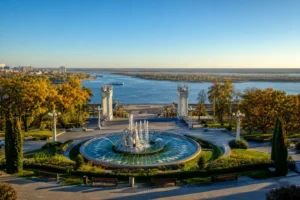 Central Embankment, Volgograd – about 1000 m away (~16 min walk) · typical visit: 1–2 hoursOpen 24 hours
Main image: AI-generated illustration. It may not show the place exactly as it looks.
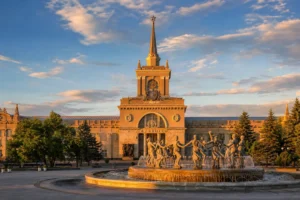 Volgograd Railway Station, Volgograd – about 1.4 km away (~23 min walk) · typical visit: 30 minutesOpen daily 00:00–23:59
Main image: AI-generated illustration. It may not show the place exactly as it looks.
Restaurants and cafes near Volgograd Panorama Museum, Volgograd
 Denver Burgers, Volgogradabout 1.4 km away (~22 min walk)
Main image: AI-generated illustration. It may not show the place exactly as it looks.
Hotels near Volgograd Panorama Museum, Volgograd
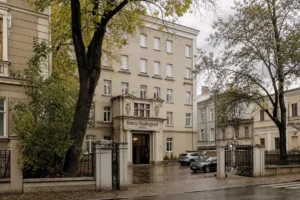 Stariy Stalingrad, Volgogradabout 850 m away (~14 min walk)
Main image: AI-generated illustration. It may not show the place exactly as it looks.
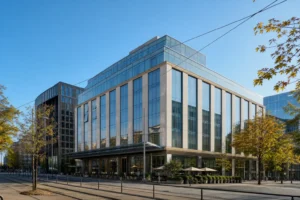 Hilton Garden Inn Volgograd, Volgogradabout 1.4 km away (~23 min walk)
Main image: AI-generated illustration. It may not show the place exactly as it looks.
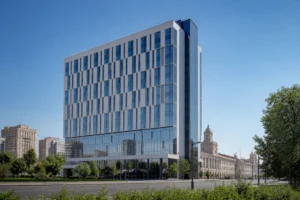 Cosmos Volgograd Hotel, Volgogradabout 1.6 km away (~26 min walk)
Main image: AI-generated illustration. It may not show the place exactly as it looks.
Related guides
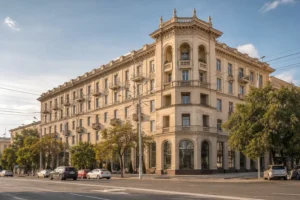 Hotel Volgograd: Historic City Centre Hotel with Stalinist Architecture
Main image: AI-generated illustration. It may not show the place exactly as it looks.
 Palkin, Saint Petersburg: Historic Russian Fine Dining7 min on foot from Mayakovskaya metro, Open daily 12:00–23:00
Main image: AI-generated illustration. It may not show the place exactly as it looks.
 Gogol, Saint Petersburg: Russian Cuisine and Dining Guide1 min on foot from Admiralteyskaya metro, Open daily 12:00–23:00
Main image: AI-generated illustration. It may not show the place exactly as it looks.
 Katyusha, Saint Petersburg: Russian Food and Dining Guide4 min on foot from Nevsky Prospekt metro
Main image: AI-generated illustration. It may not show the place exactly as it looks.
Browse more: More in Tsentralny District · All Museums · All Sightseeing · All Sightseeing in Volgograd · All Volgograd
FAQ: Volgograd Panorama Museum, Volgograd
Is the museum included in a Volgograd city pass or combo ticket?
No. The Volgograd Panorama Museum is a standalone institution with independent admission. If you plan to visit multiple Stalingrad-related sites (Mamayev Kurgan, Pavlov's House, the old Gogol Street Defence Museum), each requires separate tickets. Bundle discounts may occasionally be available; inquire at the main ticket office or check the official website.
Can I visit the Grudinin Mill ruins by walking inside?
No. The mill ruin is cordoned off and not open to visitor entry for structural safety reasons. The roofless brick walls are preserved as a memorial, but you can only view and photograph them from outside the barriers from multiple surrounding viewpoints.
Is photography allowed inside the museum?
Photography policies vary by display area. Some sources mention that standard admission may have restrictions on indoor photography in exhibition halls, and a separate 'photos free' option may be available. Check with staff at the ticket office before entering, or ask about purchasing a photography permit if you plan to photograph extensively.
How does this museum differ from Mamayev Kurgan?
They are separate sites. The Panorama Museum focuses on indoor exhibition halls, artefacts and a 360-degree painted panorama depicting the final stage of the battle. Mamayev Kurgan is an outdoor hilltop monument complex 2 km away with sculptures, the massive 'Motherland Calls' statue, memorials and different exhibits. Both are worth visiting but require separate admission and time.
What languages are available for audio guides or information?
Audio guides are available in English and other languages for a separate fee. Exhibition hall labels are primarily in Russian, though some rooms have brief English synopses. Guided tours in English and other languages can be arranged in advance through the official website or by contacting the museum directly.
Is there food or water available inside the museum?
The museum complex does not have an on-site café or formal restaurant. Vending machines may offer snacks and water. Plan to eat before entering or bring provisions. Restaurants and cafés are 10–15 minutes' walk up the hill toward the central areas.
Can I bring a large bag or backpack?
Bag storage and cloakroom facilities are available at the entrance. You may be asked to check large bags before entering exhibition halls; smaller bags and daypacks are typically allowed. Confirm current bag policies with staff at entry.
Is the panorama gallery accessible by lift or ramp, or only by stairs?
The panorama gallery is accessed by stairs. Visitors with mobility restrictions who cannot climb stairs cannot access the panorama viewing platform at the building's top. Most of the main exhibition halls are accessible via lifts, but the gallery itself has no wheelchair alternative.
Russia Vibes is a one-person project. A coffee keeps it going
Last updated: October 18, 2026.
How we research and update our guides
About this guide: AI assistance and accuracy
This guide is created with the help of AI and is based on official sources where available. Mistakes can still happen. Opening hours, prices, rules and other details are given to the best of our knowledge as of the date shown and can change without notice. It offers general recommendations only, not professional, legal or travel advice. Please confirm important details with the official source before you travel; you are responsible for your own plans and decisions.
International sanctions affect payments between Russia and many other countries. In practice, cards issued in the EU, the UK, the US and several other countries often do not work in Russia, Russian cards usually do not work abroad, and some booking platforms, airlines and payment providers limit or suspend their services for Russia. The situation changes frequently. We do not give legal or financial advice, and this site does not encourage anyone to break or circumvent sanctions. Whatever you plan, you are responsible for following the laws and regulations that apply to you, including those of your country of residence and citizenship. Many travelers still organise their stay lawfully. It is worth asking your bank or payment provider what is currently permitted, contacting hotels, tour operators and carriers directly about the payment methods they accept, and checking which services are open to customers from your country. Clarify payment, cancellation and refund terms before you commit to a booking, and keep your plans flexible. Partner links on this site may not be available in every country, and prices, availability and rules in our guides can differ from what you see when you book.Paying for your trip: please read
Report an issue on this page

Take this guide with you
Get a free PDF of this guide to print or read offline: key facts, tips and a map link on a few clean pages.