
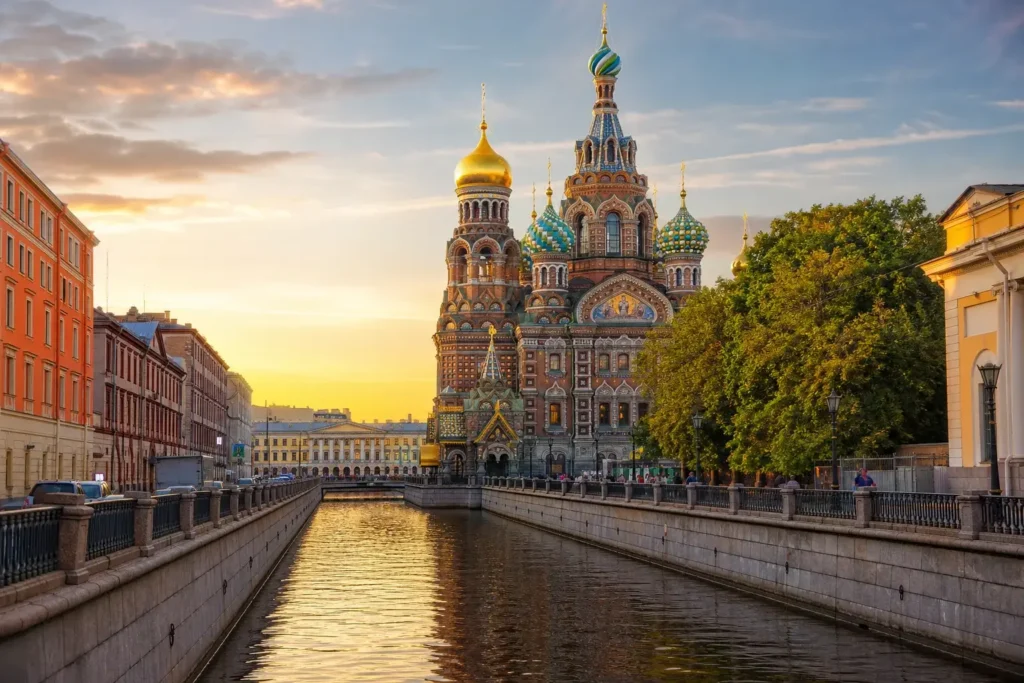
The Tsentralny District, Saint Petersburg, guide starts with a simple fact: much of what visitors picture when they imagine the city lies here. Nevsky Prospekt runs through the middle, the canals curve around the Church of the Savior on Spilled Blood, and the museum quarter sits behind the Russian Museum.
The district is flat, dense and very walkable, and it sits east of the Admiralty and the Winter Palace, which belong to a neighbouring district. This page explains how the area is laid out, what is inside it and what is not, and how to use the metro to move around.
Quick Facts
| Russian name | Центральный район |
|---|---|
| Address | Tsentralny District, Saint Petersburg (Центральный район, Санкт-Петербург) |
| District | Tsentralny |
| Metro | Gostiny Dvor (Line 3 (Green), Exits to Nevsky Prospekt; walk to Kazan Cathedral or the Church on Blood) Nevsky Prospekt (Line 2 (Blue), Linked to Gostiny Dvor; the same stretch of the avenue) Mayakovskaya (Line 3 (Green), Central stretch of the avenue and the quieter streets around Marata) Ploshchad Vosstaniya (Line 1 (Red), Moskovsky Railway Station and the eastern end of the avenue) Vladimirskaya (Line 4 (Orange), Vladimirsky Cathedral area and the Kuznechny market) Dostoevskaya (Line 4 (Orange), Streets around Dostoevsky's last home) Ploshchad Aleksandra Nevskogo (Line 3 (Green), Alexander Nevsky Lavra, at the far eastern end of the avenue) |
| Opening hours | The streets, squares and gardens are open all day. Museums, churches and the Summer Garden have their own hours and weekly closing days, which differ from one site to the next, so check each one before you plan the order. (as of October 2026 – check the official sites) |
| Admission | Walking the district is free. Most museums, the Church on Blood and the castle have their own tickets, mostly ₽₽; Kazan Cathedral and many churches are free to enter. |
| Best time to visit | Spring to early autumn is best for walking, and early morning is quietest. The white nights give long evenings in early summer, and in winter the district is quiet and dark early. Weekends are the busiest on the avenue. |
| Recommended duration | A full day, or two days to include the museums |
| Last updated | October 17, 2026 |
What Is (and Isn't) Part of a Visit to Tsentralny District, Saint Petersburg?
| Part | Status | Notes |
|---|---|---|
| Nevsky Prospekt, the canals and the Summer Garden area | Included in the standard ticket | Part of the district and free to walk. |
| Kazan Cathedral and the Church on Blood | Included in the standard ticket | Both are in the district; the Church on Blood is a museum with its own ticket. |
| Russian Museum and Saint Michael's Castle | Separate ticket or institution | In the district, each with its own ticket and hours. |
| Alexander Nevsky Lavra and Smolny Cathedral | Included in the standard ticket | In the district, but far from the western avenue; use the metro. |
| State Hermitage Museum and Palace Square | Outside / not part of it | These lie in the neighbouring Admiralteysky District, west of the avenue's start. |
| Saint Isaac's Cathedral and the Mariinsky Theatre | Outside / not part of it | Also in the Admiralteysky District. |
| Peter and Paul Fortress | Outside / not part of it | On the Petrograd Side, across the river. |
Why Visit Tsentralny District, Saint Petersburg?
- The avenue: Nevsky Prospekt, the city’s main street, with shops, cafes and old facades.
- Churches: Kazan Cathedral, the Church on Blood and Smolny Cathedral are all here.
- Museums: the Russian Museum, the Fabergé Museum and the castle are within a short walk.
- Green space: the Summer Garden and the canal embankments give breaks from the pavement.
- Transport: five metro lines meet here, so the district is easy to reach from everywhere.
How Tsentralny District, Saint Petersburg Is Laid Out
Think of the district as a long strip running east from the Admiralty along Nevsky Prospekt, with the canals cutting across it. Kazan Cathedral and the Church on Blood sit on the western stretch, between the Moika and the Griboyedov Canal. Gostiny Dvor and Nevsky Prospekt metro stations mark the busiest part of the avenue.
North of the avenue, the museum quarter around Arts Square holds the Russian Museum and the castle, and the Summer Garden runs along the Fontanka. East of the Fontanka, the avenue becomes quieter and passes Ploshchad Vosstaniya and the railway station. At the far eastern end, the Lavra stands by the river. Smolny Cathedral lies in a separate pocket to the north-east, a short ride from the avenue.
A sensible order is to start at Kazan Cathedral, walk to the Church on Blood, cross to the museum quarter and the Summer Garden, and then follow the avenue east by foot or metro.
Highlights of Tsentralny District, Saint Petersburg
Nevsky Prospekt
The main avenue runs through the district for several kilometres and began as a road in the early 18th century. Today it is a line of shops, cafes and theatres, crossed by canals at the Moika, the Griboyedov Canal and the Fontanka. Look at the upper floors rather than the shopfronts: many of the facades are 19th-century.
The avenue is free to walk and open all day, and the stretch between the Admiralty and the Fontanka is the most photographed.
Tip: Walk the left side on the way out and the right side on the way back for the best views of the facades.
Kazan Cathedral
Built in the early 1800s to a design by Andrey Voronikhin, the cathedral has a long curved colonnade that opens onto the avenue and echoes the colonnade of Saint Peter's in Rome. Inside it is calm and dim, with a tall central space.
Entry is generally free, and the colonnade makes a good meeting point.
Tip: Stand in the small square behind the colonnade for a view of the dome without the crowds on the avenue.
Church of the Savior on Spilled Blood
The colourful church on the Griboyedov Canal was built in the late 19th century, in a Russian revival style, on the spot where Emperor Alexander II was fatally wounded in 1881. Its onion domes and mosaics make it the most photographed building in the district. Inside, the walls are covered in mosaics.
It is run as a museum with its own ticket and weekly closing day, so check before you go.
Tip: View the exterior from the bridge over the canal in the morning, when the light is on the domes.
The Russian Museum and Arts Square
The Russian Museum occupies the Mikhailovsky Palace and later buildings around Arts Square, and shows Russian art from icons to the 20th century. The square itself is a calm, symmetrical space with a statue of Pushkin in the middle.
The museum has its own ticket and weekly closing day, and its other buildings are separate sites.
Tip: Choose one wing rather than trying to see the whole collection in a day.
Saint Michael's Castle
The castle was built for Emperor Paul I at the end of the 18th century and has a moat and drawbridges that give it a more fortified look than the other palaces. Paul lived there only a short time before his death in 1801. Today it houses part of the Russian Museum's collection.
It has its own ticket and hours.
Tip: Look at the castle from the Fontanka side, where the moat is clearest.
The Summer Garden
The garden, laid out in the early 18th century, runs along the Fontanka and the Moika, with avenues of old trees and a long line of marble statues. It is a quiet place to rest between museum visits.
The garden has seasonal opening hours and a weekly closing day, and it closes for parts of the year.
Tip: Enter from the Fontanka side for the shortest route from the castle.
Alexander Nevsky Lavra
The monastery at the eastern end of the avenue was founded in the early 18th century and houses cemeteries where many famous writers, composers and artists are buried. The walled grounds are green and quiet, and the main cathedral stands at the centre.
The grounds and the cemeteries have separate rules and tickets, so check which parts you want to enter.
Tip: Use the metro to reach the Lavra; it is too far to walk from the central part of the avenue.
Atmosphere
The district feels busy at the avenue and calm just a street away. Along Nevsky Prospekt the sound is of footsteps, trams and shop doors, and the pavements are crowded from mid-morning to evening. A few minutes’ walk to a canal embankment and the noise drops to the lapping of water and the occasional boat.
Early morning is the best time for the churches and the canals, when the light is low on the facades and the streets are nearly empty. By evening the avenue fills again, and the cafes around Gostiny Dvor and Mayakovskaya are busy. In winter the whole area is quieter and darker, with lit windows and snow on the canal banks.
History of Tsentralny District, Saint Petersburg
The area grew up in the early 18th century, after the founding of Saint Petersburg. Nevsky Prospekt began as a road from the Admiralty toward the Alexander Nevsky Monastery, founded in 1710 on the site where, by tradition, the prince had won a battle in the 13th century. The avenue took its present name later in the century.
The Summer Garden, laid out from 1704, was one of the first gardens of the new city, and the canals were dug through the marshy ground to drain it. In the 18th century the area became a district of palaces and noble houses along the Fontanka, and in 1797 Emperor Paul I began Saint Michael’s Castle, which he entered in 1801 shortly before his death.
In the early 1800s Kazan Cathedral was built with its curved colonnade facing the avenue, and the Russian Museum opened in the Mikhailovsky Palace in 1898. The Church of the Savior on Spilled Blood followed in the late 19th century, after the assassination of Alexander II in 1881.
Through the 19th century the avenue became the city’s main commercial street, lined with banks, shops and theatres. The railway station at the eastern end opened in the mid-19th century, and the district’s streets filled with apartment buildings.
In the Soviet period the area was a centre of city life and suffered during the siege of Leningrad in the Second World War. After the war the buildings were repaired, and the district later became a major destination for visitors. Today it is a mix of preserved historic buildings, hotels, museums and residential streets.
Legends and Myths about Tsentralny District, Saint Petersburg
The ghost of Paul I
Legend – historically unreliable. A well-known story says the spirit of Emperor Paul I haunts Saint Michael's Castle, where he was killed in 1801. Staff and visitors are said to have reported footsteps and shadows in its corridors. There is no historical evidence for the ghost.
The little bird on the Fontanka
Legend – historically unreliable. A small statue of a bird, known locally as Chizhik-Pyzhik, sits on a ledge above the Fontanka. Tradition says that if you throw a coin and it lands on the ledge, you will have good luck. It is a modern local custom, not a historic one.
Tickets and Booking for Tsentralny District, Saint Petersburg
The district itself is free to walk, so there is no single ticket. Museums and churches sell their own tickets at the door and on their official sites; check each site for how far ahead online sales open and for current hours.
- Rates: prices for Russian citizens and concessions differ from those for foreign visitors.
- ID: carry your passport; some sites check it.
- Payment: the sanctions rules of your own country may restrict some Russian payment services, so check this yourself.
For all ticket categories, see the official site of each museum or church.
Plan and Book
Advertisement: these are partner links. If you book or buy through them, we may earn a commission at no extra cost to you.
Suggested itineraries Tsentralny District, Saint Petersburg
2 hours
Start at Gostiny Dvor and walk Nevsky Prospekt to Kazan Cathedral, then continue to the Church on Blood and look at the exterior from the bridge. Finish with a coffee on the canal embankment.
Half day
Kazan Cathedral, the Church on Blood, then cross to Arts Square for one wing of the Russian Museum and a walk through the Summer Garden. End on the Fontanka for the castle exterior.
Full day
Morning at Kazan Cathedral and the Church on Blood, midday at the Russian Museum and the castle, afternoon along the avenue to Ploshchad Vosstaniya, then the metro to the Lavra before it closes.
How to Get to Tsentralny District, Saint Petersburg
The district is the centre of the metro network.
- Gostiny Dvor (Line 3) and Nevsky Prospekt (Line 2): the busiest stop, right on the avenue.
- Mayakovskaya and Ploshchad Vosstaniya (Lines 3 and 1): the central and eastern stretch.
- Vladimirskaya and Dostoevskaya (Line 4): the quieter southern streets.
- Ploshchad Aleksandra Nevskogo (Line 3): for the Lavra.
See How to Use the Metro, Saint Petersburg. From the Admiralty and the Winter Palace, walk along the avenue or take the metro from Admiralteyskaya.
Food Nearby
The avenue and the streets around Gostiny Dvor and Mayakovskaya are full of cafes, bakeries and restaurants at every level. For sit-down meals see Best Restaurants, Saint Petersburg.
What to Bring
Comfortable shoes, a rain layer and a warm coat in winter. Museums and churches may check bags and ask for modest dress.
Best Views and Photo Spots of Tsentralny District, Saint Petersburg
The Church on Blood from the canal bridge
The domes reflected in the canal, with the colourful facade behind.
Best time: Morning
Kazan Cathedral colonnade
The curved colonnade leading the eye to the dome.
Best time: Late afternoon
Anichkov Bridge
The horse sculptures on the Fontanka with the avenue behind.
Best time: Early morning
The Summer Garden avenues
A long line of statues under old trees.
Best time: Autumn
Photography Rules
Photography is free on the street and in the gardens. Inside churches and museums, rules vary and flash is often banned, so look for signs. Drones are not allowed in the centre.
Family Suitability
Suitable for families: the district is flat and compact, and the canals and gardens give children space. Museums suit older children. Strollers work on most streets, but some bridges and church entrances have steps.
Russia Vibes Tips
- Do not confuse the district with the whole centre; the Hermitage and Saint Isaac's are in the neighbouring district.
- Use the canal embankments rather than the avenue for a quieter walk.
- Take the metro to the Lavra; it is too far to walk from the central avenue.
- Keep one museum per half day; the queues and the walking add up.
- Look up on the avenue; the best details are above the shop windows.
Explore Nearby Tsentralny District, Saint Petersburg
Sights near Tsentralny District, Saint Petersburg
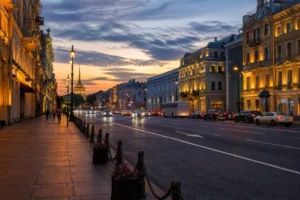 Nevsky Prospekt, Saint Petersburg · typical visit: 2–4 hours for the main stretch; a full day with stops
Main image: AI-generated illustration. It may not show the place exactly as it looks.
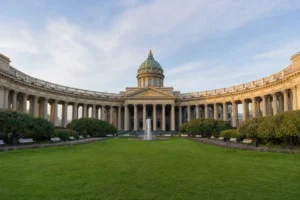 Kazan Cathedral, Saint Petersburg · typical visit: 30–60 minutes
Main image: AI-generated illustration. It may not show the place exactly as it looks.
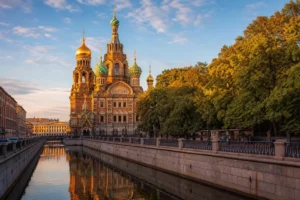 Church of the Savior on Spilled Blood, Saint Petersburg · typical visit: 1 hour inside, plus time to walk around the outside
Main image: AI-generated illustration. It may not show the place exactly as it looks.
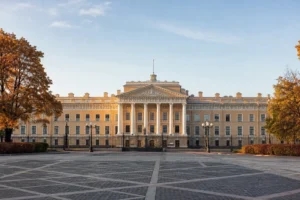 State Russian Museum, Saint Petersburg · typical visit: 3–4 hours for the main building
Main image: AI-generated illustration. It may not show the place exactly as it looks.
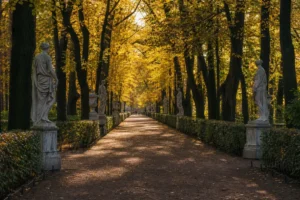 Summer Garden, Saint Petersburg · typical visit: 1–2 hours
Main image: AI-generated illustration. It may not show the place exactly as it looks.
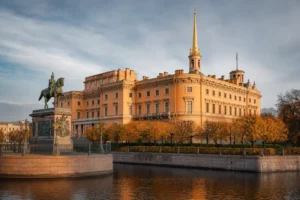 Saint Michael's Castle, Saint Petersburg · typical visit: 1.5–2 hours
Main image: AI-generated illustration. It may not show the place exactly as it looks.
Related guides
- Maslenitsa Celebrations, Saint Petersburg: Pancake Week Guide
 Saint Petersburg Christmas Market: What to Expect in Winter
Main image: AI-generated illustration. It may not show the place exactly as it looks.
 Museum Night, Saint Petersburg: How the Late Opening Works
Main image: AI-generated illustration. It may not show the place exactly as it looks.
 Nevsky Prospekt Area, Saint Petersburg: What Lies Along It
Main image: AI-generated illustration. It may not show the place exactly as it looks.
Browse more: More in Tsentralny · All Architecture · All Neighborhoods · All Neighborhoods in Saint Petersburg · All Saint Petersburg
FAQ: Tsentralny District, Saint Petersburg
Is the Hermitage in the Tsentralny District?
No, it is in the neighbouring Admiralteysky District, west of the avenue. See the scope table.
Which metro station is best for Nevsky Prospekt?
Gostiny Dvor or Nevsky Prospekt, which are linked.
How long do I need?
A full day for the avenue, a church and a museum; two days to include the Lavra.
Is the Church on Blood free?
No, it is a museum with its own ticket. Walking around the exterior is free.
Is the district safe to walk at night?
Yes, the main streets are busy and lit, but use ordinary city caution.
Where is Smolny Cathedral?
In the north-east of the district, a short metro or taxi ride from the avenue.
Can I walk from the Winter Palace?
Yes, along the Moika or the avenue, about fifteen minutes to Kazan Cathedral.
Where should I stay?
Near the avenue for easy access. See the hotel pages for options.
Russia Vibes is a one-person project. A coffee keeps it going
Last updated: October 17, 2026.
How we research and update our guides
About this guide: AI assistance and accuracy
This guide is created with the help of AI and is based on official sources where available. Mistakes can still happen. Opening hours, prices, rules and other details are given to the best of our knowledge as of the date shown and can change without notice. It offers general recommendations only, not professional, legal or travel advice. Please confirm important details with the official source before you travel; you are responsible for your own plans and decisions.
International sanctions affect payments between Russia and many other countries. In practice, cards issued in the EU, the UK, the US and several other countries often do not work in Russia, Russian cards usually do not work abroad, and some booking platforms, airlines and payment providers limit or suspend their services for Russia. The situation changes frequently. We do not give legal or financial advice, and this site does not encourage anyone to break or circumvent sanctions. Whatever you plan, you are responsible for following the laws and regulations that apply to you, including those of your country of residence and citizenship. Many travelers still organise their stay lawfully. It is worth asking your bank or payment provider what is currently permitted, contacting hotels, tour operators and carriers directly about the payment methods they accept, and checking which services are open to customers from your country. Clarify payment, cancellation and refund terms before you commit to a booking, and keep your plans flexible. Partner links on this site may not be available in every country, and prices, availability and rules in our guides can differ from what you see when you book.Paying for your trip: please read
Report an issue on this page

Take this guide with you
Get a free PDF of this guide to print or read offline: key facts, tips and a map link on a few clean pages.