
Last updated
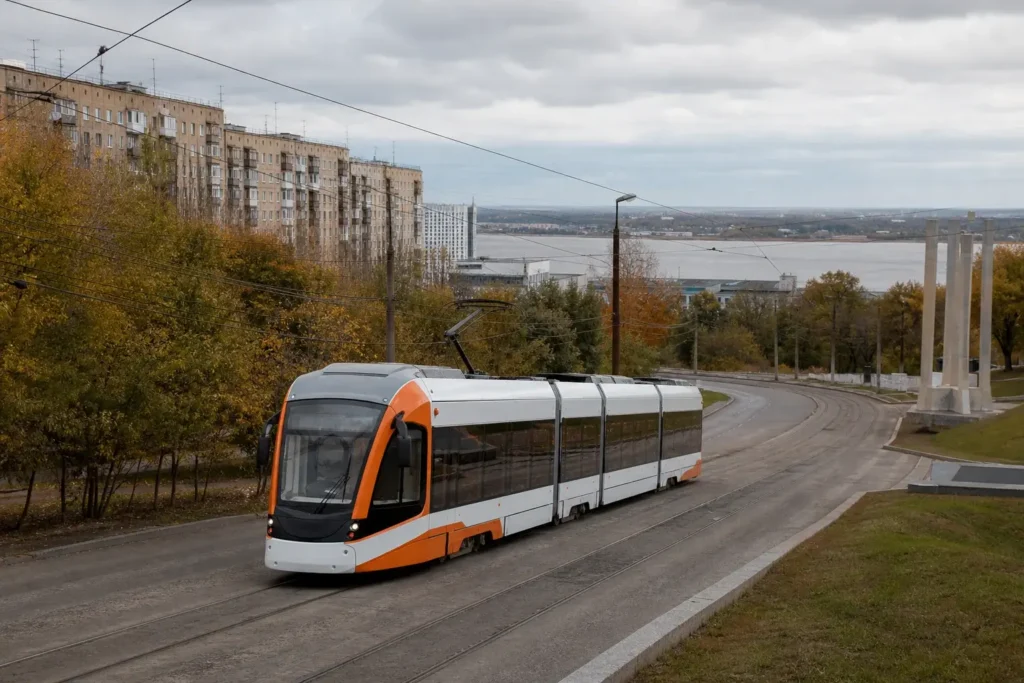
The Volgograd Metrotram (Skorostnoy Tramvay, ST) is a light rail surface/subway line operating in Volgograd, Russia. It consists of 22 stations along the Volga River on a route from the northern suburbs of Volgograd to the city center, with a total length of 17.3 kilometres.
The underground part of the line, built according to the standards of metro with tunnels and stations, has a length of 7.1 km and is located in the city centre, while the ground part rebuilt from a usual tram line connects the city centre and northern parts, running through five of the city’s eight districts.
Current access notice: As of October 2026: The system operates normally. Check the official website gortransvolga.ru for any service changes or maintenance notices.
Quick Facts
| Russian name | Волгоградский скоростной трамвай |
|---|---|
| Type | Transport hub |
| Built / opened | 1984 |
| Address | Volgograd, Russia OpenStreetMap · Google Maps |
| District | Central District |
| Opening hours | Daily 05:48-22:42 |
| Admission | free |
| Best time to visit | The Metrotram runs year-round. It is most comfortable in spring (May) and autumn (September–October) when temperatures are moderate. Avoid morning rush hour (7–9 am) and evening rush (5–7 pm) on weekdays if you prefer quieter observation. Mid-day (10 am–4 pm) offers the best experience with less crowding and better opportunities to see stations and surroundings. Weekend service is similar but less crowded. |
| Recommended duration | 15–30 minutes per ride |
| Website | gortransvolga.ru |
| Last updated | October 18, 2026 |
How to Get to and from Volgograd Metrotram, Volgograd
| Option | Duration | Price | Notes |
|---|---|---|---|
| Metrotram ST-2 (Full Route) | 40 minutes end-to-end | ₽ | Connects northern industrial suburbs (VGTZ) through central Volgograd to southern terminus at Yelshanka. Includes all underground and elevated sections. Best option for first-time visitors and to reach Mamayev Kurgan. Service 05:48–22:42. Frequency approximately every 5–10 minutes during peak hours, 10–15 minutes off-peak. |
| Metrotram ST (Central Route) | 35 minutes end-to-end | ₽ | Connects VGTZ to Ploshchad Chekistov (central station), omitting the southern underground extension. Does not include Mamayev Kurgan station. Useful for city centre connections and commuting through the industrial corridor. Service 05:48–22:42. Frequency similar to ST-2. |
| Single Ticket (Contactless Card) | One journey | ₽ | Pay with contactless bank card at turnstile readers. Valid for one unidirectional journey on either route. Staff assist with payment if needed. Turnstiles accept most international bank cards with contactless payment (check with your bank about Russian terminal compatibility). |
| Single Ticket (Cash) | One journey | ₽ | Purchase at ticket windows (window staff speak basic English) or at automated machines (Russian interface; use picture guide). Some older machines accept coins only; newer ones take small banknotes. Kept in small pouches; do not block the turnstile behind you. |
| Volna Transport Card (Reloadable) | Multiple journeys | ₽ | Rechargeable card sold at ticket windows and kiosks (labeled 'Волна' / Volna). Lowest per-journey cost. Recommended for stays over 3 days or frequent use. Valid on Metrotram, all city trams, buses and trolleybuses. Staff at windows assist with loading balance. |
₽ budget · ₽₽ moderate · ₽₽₽ upscale · ₽₽₽₽ splurge. Price levels are estimates compared with typical prices for visitors.
Why Visit Volgograd Metrotram, Volgograd?
The system was inaugurated on 5 November 1984 and serves 136,000 passengers daily. It is one of Europe’s most distinctive transport systems, combining tram accessibility with rapid transit characteristics. A 5-minute ride from the central station takes you to Mamayev Kurgan, the war memorial and major Volgograd landmark. The Metrotram offers a practical way to navigate the city’s linear layout along the Volga, connecting industrial areas, residential districts and monuments.
Highlights of Volgograd Metrotram, Volgograd
Surface Section Through Industrial Volgograd
The ground part of the line runs through five city districts, connecting the city centre with northern industrial and residential areas. Most of the route runs at street level on dedicated right-of-way, passing through the Krasnooktyabr district (home to the Red October factory) and factory-named stations (Khlebozavod, Zavod Barrikady). This is where you experience Volgograd's Soviet-era industrial character without the speed or separation of underground sections. The stations have simple, functional design.
Tip: The surface section is most interesting mid-day when industrial areas are most active; avoid commute hours (7–9 am, 5–7 pm) when trams are crowded.
Pionerskaya: The Transition Point
Pionerskaya is the only elevated station in the system, and it marks the shift from surface tram to underground metro. The station itself sits above street level, offering views as the line transitions. After Pionerskaya, the metrotram uses left-hand traffic on the underground section between TRK Europa City Mall and Pionerskaya to enable unidirectional vehicles to use island platforms. This unusual arrangement is worth observing if you ride through.
Tip: Get off at Pionerskaya and look at how the infrastructure changes from tram to metro-style tunnel below.
Underground Stations: City Centre Crossing
Five stations are underground; there is also one covered overpass. These stations run beneath central Volgograd, built to metro standards with proper tunnels and platforms. The underground section opened in stages: 1984 (initial phase with 3 stations) and 2011 (extension). On the new underground section between Pionerskaya and Yel'shanka, bidirectional vehicles operate, with right-handed traffic and doors on both sides.
Tip: The underground stations have the most interesting Soviet-era design and atmosphere; take the ST-2 route to see all of them, especially the southern extension opened in 2011.
Two Routes: ST and ST-2
Route ST runs from Gimnazia №14 to Ploshchad Chekistov and is mainly a north–centre axis through industrial and central areas. Route ST-2 runs from VGTZ to Yelshanka and includes the full north–centre–south run with all underground stations. The ST ends earlier, at Ploshchad Chekistov, and has a shorter operating window in the evening. For visitors, ST-2 provides the complete Metrotram experience.
Tip: Plan your ride on ST-2 if you want to experience the full system; ST alone misses the 2011 southern extension with its more modern underground infrastructure.
Access to Mamayev Kurgan Memorial
It takes 5 minutes from the central station to the station at the Mamayev Kurgan. The Mamayev Kurgan station on the Metrotram provides direct access to Volgograd's most important war memorial. The memorial sits atop the highest point in the city and is reached by escalator from the underground station. This is one of the most important destinations visitors access via the Metrotram.
Tip: The Mamayev Kurgan station is modern (from the 2011 extension) and has good signage. Descend the escalator, then follow pedestrian signs to the memorial entrance at ground level.
Modern Rolling Stock and 2026 Upgrades
2024–2025 brought significant renewal: modern low-floor trams, track upgrades, and in March 2026 journey times dropped by 8% following completion of track repairs. The system uses modern vehicles with level boarding and improved accessibility. This is one of the most recently upgraded rapid transit systems in southern Russia.
Tip: New low-floor trams are wheelchair-accessible and have better climate control; if you have a choice, newer orange or white trams are preferable to older stock.
Atmosphere
The Metrotram is a direct response to the shape of Volgograd. The city stretches for kilometres along the Volga river from north to south: linear, industrial, historically charged. It does not have the compactness of a radial capital. Its neighbourhoods, factories, monuments and public spaces are strung along that axis, and to connect that urban strip there was no need for a complex metro network.
On the surface sections, you sit among local commuters and industrial workers, hearing Russian conversations, seeing graffiti and murals on warehouse walls, and passing red-brick Soviet factories and residential blocks. During rush hours the trams are full and human; mid-day is quieter and more observant. The underground stations feel cooler and more formal, with tiled walls and Soviet-era fixtures. Sound echoes in the tunnels; announcements are in Russian.
History of Volgograd Metrotram, Volgograd
As the industrial population grew through the 1960s and 70s, the existing tram network fell short for the flows between the northern factory districts and the centre. The solution was to upgrade the main tram corridor with metro characteristics where they mattered most: segregated sections, higher speeds and an underground section in the densest areas.
The Metrotram was inaugurated on 5 November 1984, and had served 50 million passengers per year at the time the 2011 extension was opened. The first stage connected Traktornyj Zavod (VGTZ) with Ploshchad Chekistov, and at opening, the line was 13.5 km long, including 3.5 km underground.
A subway section in the south has five underground stations and an elevated station; this section opened in two stages in 1984 and 2011, and spans 6.8 kilometres. It was extended from Pionerskaya to Yel’shanka in 2011, with much of the city centre section being in tunnel. This second phase, completed nearly three decades after the original, added modern capacity and allowed the system to reach Mamayev Kurgan.
In 2024–2025, the system underwent significant renewal with modern low-floor trams, track upgrades, and journey times dropped by 8% in March 2026 following completion of track repairs.
Tickets and Payment at Volgograd Metrotram, Volgograd
Current fares (from October 2025): 32 roubles with the Volna transport card, 38 roubles by contactless bank card and 40 roubles in cash. No advance booking is needed; buy tickets on arrival at the station.
Where to buy: Ticket windows at major stations (open 06:00–21:00; staff may speak limited English) or automated machines (Russian interface). Contactless payment (international bank cards with contactless feature) works at most modern turnstiles.
Single tickets vs. cards: One-off visitors use cash or contactless card for individual journeys. The Volna card (reloadable transport card) offers the lowest cost and works on all public transport in Volgograd; buy it if you will make more than 3 journeys or stay several days.
Entrances: Stations have clear ‘Metrotram’ signs and separate platform areas from regular tram lines. Ground-level surface stations are open-air; underground stations are accessed by stairs or escalators (escalators at major underground stations). Bags are not searched.
For all current fares, service hours, and schedule information, see gortransvolga.ru (in Russian; use browser translation).
Flights, Transfers and Planning
How to Get to Volgograd Metrotram, Volgograd
The Metrotram does not connect to a single transport hub but is part of Volgograd’s central public transport grid. It runs north–south along the Volga corridor.
- From Volgograd Main Railway Station: Walk 10 minutes east to Komsomolskaya Station (the main central interchange for the Metrotram), or take a regular tram or bus. Komsomolskaya is on both the ST and ST-2 routes.
- From the city centre (hotel district): Walk to the nearest Metrotram platform. Central platforms include Ploshchad Chekistov (main central stop, accessible by foot from most central hotels), Pionerskaya (elevated station, clear signage), or regular street-level tram stops along the surface section.
- From the airport: Since the Fifa World Cup 2018 a new train line operates between the airport and Volgograd city, including Volgograd 1 railway station. Trains depart about every 30 to 60 minutes and take about 30 minutes. From there, take a taxi to a central Metrotram station, or transfer to other public transport.
Accessibility
2024–2025 brought significant renewal with modern low-floor trams. New vehicles have level or near-level boarding for wheelchairs and pushchairs. Most ground-level surface stations are fully accessible; underground stations have escalators or stairs. Elevators are present at major underground stations (Ploshchad Chekistov, Mamayev Kurgan, Yelshanka). Staff at ticket windows will assist with directions. Service animals are permitted. Accessible trams have designated wheelchair spaces; pushchairs fold on crowded trams during peak hours.
Food Nearby
The surface-level tram stations pass through residential and industrial areas with local shops and cafes nearby, though not usually within immediate walking distance of the platforms themselves. The central underground stations (Ploshchad Chekistov, Pionerskaya) are in or near the city centre with hotels and restaurants accessible on foot. The underground section between TRK Europa City Mall and Pionerskaya means you are close to a shopping mall with food options at Pionerskaya. Carry water and snacks if making long journeys on the surface section, as some northern stations are in industrial zones with limited nearby amenities.
What to Bring
Comfortable walking shoes (some stations require stair climbing; escalators are not everywhere). A small day pack or shoulder bag for camera and water. In winter (November–February), Volgograd is cold and windy; bring a warm coat, gloves and hat. Sunglasses and sun protection for summer rides on the surface section where sun exposure is high and unshaded. A translation app on your phone for station names and directions (few signs are in English). Coins or small notes for cash tickets if you prefer not to use contactless payment. Bags are not searched at entrances.
Photography Rules
Photography is permitted freely on the Metrotram for personal use. No tripods, drones or commercial equipment are allowed inside stations or vehicles. Flash is not restricted. Station interiors (especially the Soviet-era underground stations) are highly photogenic; ask permission before photographing passengers in close-up. Exterior shots of the surface section and modern trams are unrestricted. Avoid photographing security gates or staff in uniform.
Family Suitability
Suitable for families with children of any age. The modern trams are spacious, with dedicated pushchair areas at off-peak hours (fold during peak 7–9 am, 5–7 pm). The ride itself is smooth on the underground section, slightly rougher on surface tracks. Short journeys (under 15 minutes) suit young children well; longer full-route rides are good for older children interested in urban transport or history. The system connects to Mamayev Kurgan, a major family destination. Escalators at major stations assist with pushchairs, though stairs are also available. No explicit child seat or companion tickets exist; children under 5 may ride free in some cases (verify at ticket window). Accessible toilets are not available on trams; use station facilities before boarding.
Russia Vibes Tips
- Take route ST-2 for the complete Metrotram experience, including the dramatic 2011 southern extension with modern underground stations. The ST route misses Mamayev Kurgan, the most important destination. ST-2 runs 05:48–22:42; plan accordingly.
- Board at Pionerskaya to witness the unique transition from surface to underground. Watch the line pivot from tram to metro-style operation. It is the architectural and functional heart of the system.
- Mid-morning (10–12) is the best time to ride if you want to photograph or observe stations. Avoid 7–9 am and 5–7 pm weekdays when commuters fill trams and make it hard to move or see details.
- Mamayev Kurgan station is modern and excellent; allow 40 minutes to ride there from the northern terminus and 1–2 hours to visit the memorial. The escalator down from the platform is long; the exit clearly signed.
- The Volna reloadable transport card (Волна) is sold at windows, not machines. It works on all Volgograd public transport and saves money over 3+ journeys. Staff at ticket windows speak some Russian only; use the card symbol and numbers on a written note to communicate.
- The surface section between Traktornyy Zavod and Stadion Monolit is historically interesting (Soviet factories, industrial district) but visually repetitive and less tourist-oriented. Visit it deliberately or as a commuting experience, not as a sight in itself.
Explore Nearby Volgograd Metrotram, Volgograd
Sights near Volgograd Metrotram, Volgograd
 Volgograd Railway Station, Volgograd – about 50 m away (~1 min walk) · typical visit: 30 minutesOpen daily 00:00–23:59
Main image: AI-generated illustration. It may not show the place exactly as it looks.
 Volgograd Planetarium, Volgograd – about 850 m away (~13 min walk) · typical visit: 1–2 hoursOpen daily 10:00–18:00
Main image: AI-generated illustration. It may not show the place exactly as it looks.
 Central Embankment, Volgograd – about 1.2 km away (~19 min walk) · typical visit: 1–2 hoursOpen 24 hours
Main image: AI-generated illustration. It may not show the place exactly as it looks.
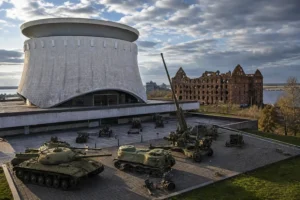 Volgograd Panorama Museum, Volgogradabout 1.4 km away (~23 min walk) · typical visit: 2–3 hours
Main image: AI-generated illustration. It may not show the place exactly as it looks.
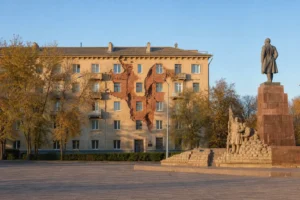 Pavlov's House, Volgograd – about 1.4 km away (~24 min walk) · typical visit: 30–45 minutesOpen 24 hours
Main image: AI-generated illustration. It may not show the place exactly as it looks.
Train stations and river piers near Volgograd Metrotram, Volgograd
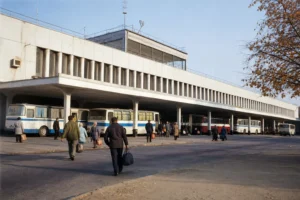 Volgograd Bus Station, Volgogradabout 450 m away (~7 min walk)
Main image: AI-generated illustration. It may not show the place exactly as it looks.
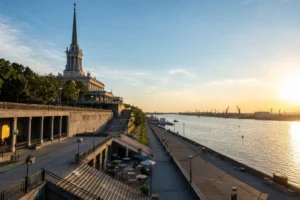 Volgograd River Station, Volgogradabout 1.5 km away (~24 min walk)
Main image: AI-generated illustration. It may not show the place exactly as it looks.
Restaurants and cafes near Volgograd Metrotram, Volgograd
 Bamberg, Volgograd – about 550 m away (~9 min walk)Open daily 11:00–23:00
Main image: AI-generated illustration. It may not show the place exactly as it looks.
 Knyagininskiy Dvor, Volgograd – about 750 m away (~13 min walk)Open daily 11:00–23:00
Main image: AI-generated illustration. It may not show the place exactly as it looks.
 Denver Burgers, Volgogradabout 900 m away (~14 min walk)
Main image: AI-generated illustration. It may not show the place exactly as it looks.
 Restaurant Marusya, Volgogradabout 950 m away (~16 min walk)
Main image: AI-generated illustration. It may not show the place exactly as it looks.
Hotels near Volgograd Metrotram, Volgograd
 Cosmos Volgograd Hotel, Volgogradabout 150 m away (~3 min walk)
Main image: AI-generated illustration. It may not show the place exactly as it looks.
 Park Inn by Radisson Volgograd, Volgogradabout 200 m away (~3 min walk)
Main image: AI-generated illustration. It may not show the place exactly as it looks.
 Intourist Hotel, Volgogradabout 450 m away (~7 min walk)
Main image: AI-generated illustration. It may not show the place exactly as it looks.
Related guides
 Scotch Hostel, Volgograd: Budget Lodging with Style
Main image: AI-generated illustration. It may not show the place exactly as it looks.
 Rustaveli: Georgian Cuisine and Wine in Central VolgogradOpen daily 12:00–00:00
Main image: AI-generated illustration. It may not show the place exactly as it looks.
 Admiralteyskaya Metro Station, Saint Petersburg: Deepest in Russia
Main image: AI-generated illustration. It may not show the place exactly as it looks.
 State Memorial Museum of the Defense and Siege of Leningrad: Guide
Main image: AI-generated illustration. It may not show the place exactly as it looks.
 Russian Ethnographic Museum, Saint Petersburg: Visitor Tips9 min on foot from Nevsky Prospekt metro
Main image: AI-generated illustration. It may not show the place exactly as it looks.
Browse more: More in Central District · All Airports & Transport · All Airports & Transport in Volgograd · All Other Hubs · All Volgograd
FAQ: Volgograd Metrotram, Volgograd
Is the Metrotram a real metro or just a tram?
It is both: a hybrid light rail system. Most of it runs at street level like a regular tram, but sections dive underground with metro-style tunnels and stations. The underground section in central Volgograd (Pionerskaya to Yelshanka) was built to full metro standards with escalators and modern platforms. It is part of Volgograd's tram system, not a separate metro, but functions like rapid transit.
How long does it take to ride from end to end?
From the central station to Mamayev Kurgan takes 5 minutes. The full ST-2 route from Traktornyy Zavod (northern terminus) to Yelshanka (southern terminus) takes approximately 40 minutes without stops. Journey times vary depending on which section you ride and time of day (fewer stops mid-day).
What is the difference between ST and ST-2 routes?
ST runs from Gimnazia №14 to Ploshchad Chekistov (north–centre axis, 19 stations); ST-2 runs from VGTZ to Yelshanka (full north–centre–south run, 21 stations) and includes all underground stations. ST-2 is longer and includes the 2011 extension to Mamayev Kurgan and beyond. For most visitors, ST-2 is preferable.
Does the Metrotram reach Mamayev Kurgan?
Yes. From the central station to the Mamayev Kurgan station takes 5 minutes. The station is modern (opened 2011) and has an escalator to the memorial above. Only ST-2 reaches it; ST ends earlier at Ploshchad Chekistov.
Can I pay with a credit card on the Metrotram?
Yes, if your card has contactless payment (NFC/tap). Most modern turnstiles accept international contactless bank cards. If your card does not have contactless, buy a ticket at the window with cash, or use the Volna reloadable card (purchased at the ticket window) which you can use repeatedly.
Are there elevators or escalators for wheelchair and pushchair access?
2024–2025 brought modern low-floor trams, allowing level boarding from platforms. Most underground stations (Ploshchad Chekistov, Mamayev Kurgan, Yelshanka, Pionerskaya) have escalators or stairs. Some major stations have elevators. Ground-level surface stations are fully accessible. Staff at windows can advise on accessible routes.
What is the system frequency (how often do trams come)?
Frequency varies by section and time of day: typically 5–10 minutes during peak hours (7–9 am, 5–7 pm on weekdays) and 10–15 minutes mid-day and off-peak. Evening service (after 19:00) has longer waits. No detailed published schedule exists in English; check the official site gortransvolga.ru or ask station staff.
Is there somewhere to store luggage if I need to explore by Metrotram with a large bag?
No luggage storage exists on the Metrotram itself or at most stations. Modern trams have large interior space and luggage racks on some vehicles. For extended sightseeing, leave large luggage at your hotel or rent a locbox at the railway station. Day packs and camera bags are fine for Metrotram travel.
Russia Vibes is a one-person project. A coffee keeps it going
How we research and update our guides
About this guide: AI assistance and accuracy
This guide is created with the help of AI and is based on official sources where available. Mistakes can still happen. Opening hours, prices, rules and other details are given to the best of our knowledge as of the date shown and can change without notice. It offers general recommendations only, not professional, legal or travel advice. Please confirm important details with the official source before you travel; you are responsible for your own plans and decisions.
International sanctions affect payments between Russia and many other countries. In practice, cards issued in the EU, the UK, the US and several other countries often do not work in Russia, Russian cards usually do not work abroad, and some booking platforms, airlines and payment providers limit or suspend their services for Russia. The situation changes frequently. We do not give legal or financial advice, and this site does not encourage anyone to break or circumvent sanctions. Whatever you plan, you are responsible for following the laws and regulations that apply to you, including those of your country of residence and citizenship. Many travelers still organise their stay lawfully. It is worth asking your bank or payment provider what is currently permitted, contacting hotels, tour operators and carriers directly about the payment methods they accept, and checking which services are open to customers from your country. Clarify payment, cancellation and refund terms before you commit to a booking, and keep your plans flexible. Partner links on this site may not be available in every country, and prices, availability and rules in our guides can differ from what you see when you book.Paying for your trip: please read
Report an issue on this page

Take this guide with you
Get a free PDF of this guide to print or read offline: key facts, tips and a map link on a few clean pages.