
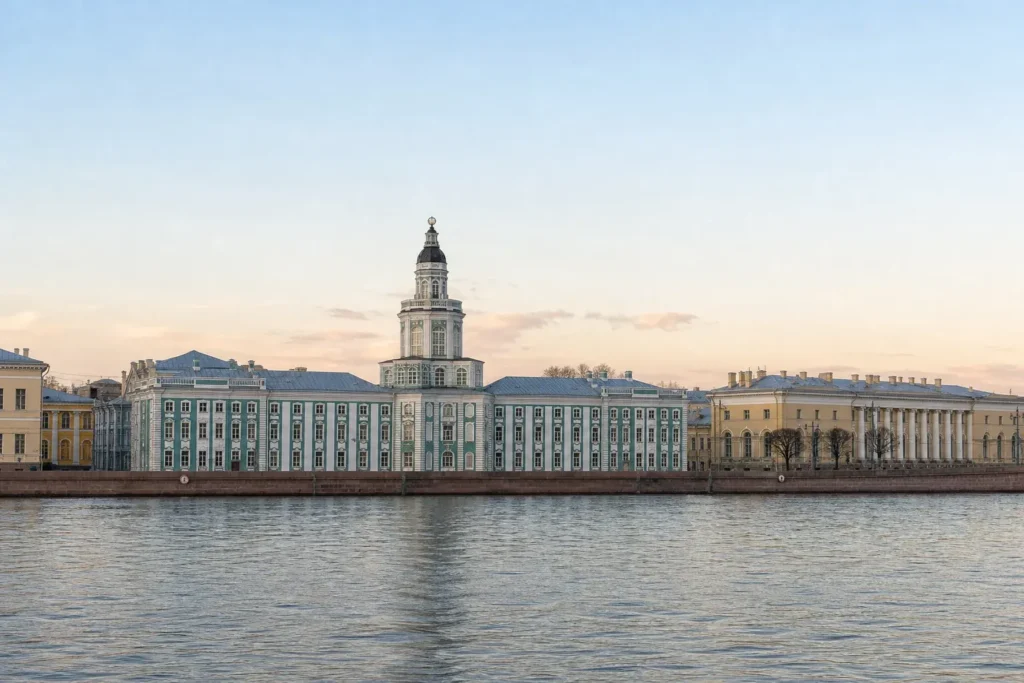
The Kunstkamera in Saint Petersburg is the popular name of the Peter the Great Museum of Anthropology and Ethnography, housed in a baroque building on Universitetskaya Embankment, on Vasilievsky Island opposite the Winter Palace. Its collection was first opened to the public in 1714, which makes it Russia’s first museum.
Today the museum is a research institution of the Russian Academy of Sciences. The halls show the cultures of peoples around the world, and a part of the museum keeps Peter’s famous anatomical curiosities. This guide explains what you see and how to plan the visit.
Quick Facts
| Russian name | Кунсткамера |
|---|---|
| Built / opened | 1714 (collection); 1727 (building) |
| Architect(s) | Georg Johann Mattarnovy |
| Address | Университетская набережная, 3, Санкт-Петербург OpenStreetMap · Google Maps |
| District | Vasileostrovsky District |
| Metro | Admiralteyskaya (Line 5, About 1.3 km, across the Palace Bridge) Vasileostrovskaya (Line 3, A longer walk along Universitetskaya Embankment) Sportivnaya (Line 5, A longer walk across the island) |
| Opening hours | Open on most days from late morning to early evening, and closed on Mondays; some sources also list a monthly closing day, so check the calendar before going (as of October 2026 – check the official site). |
| Admission | Paid entry (₽₽); reduced and free categories exist. |
| Best time to visit | Go in the morning for fewer crowds. Weekdays are quieter. The museum suits rainy or cold days. |
| Recommended duration | 2 hours |
| Website | kunstkamera.ru/en |
| Last updated | October 15, 2026 |
What Is (and Isn't) Part of a Visit to Kunstkamera, Saint Petersburg?
| Part | Status | Notes |
|---|---|---|
| Ethnographic exhibitions | Included in the standard ticket | The main halls of the museum. |
| Original Kunstkamera display | Included in the standard ticket | The eighteenth-century curiosities, on the upper floor. |
| Gottorp Globe | Included in the standard ticket | Displayed on the fourth floor. |
| Temporary exhibitions | Separate ticket or institution | May need a different ticket; check the official site. |
| Russian Museum of Ethnography | Outside / not part of it | A different museum on another side of the city centre. |
| Hermitage | Outside / not part of it | On the opposite bank of the Neva. |
Why Visit Kunstkamera, Saint Petersburg?
The Kunstkamera shows how Peter the Great wanted to bring science to Russia. He bought collections from European scholars, and the building was made to house them.
The museum has two faces. The ethnographic halls show costumes, tools and objects from peoples around the world, and the original Kunstkamera collection shows the eighteenth-century curiosity cabinet, including specimens that some visitors find disturbing.
The Gottorp Globe, a large diplomatic gift to Peter, is on display on the top floor.
How Kunstkamera, Saint Petersburg Is Laid Out
The museum occupies a historic building with a tower, built in 1727 to the design of Georg Johann Mattarnovy, and a connected modern part. Exhibitions are spread over several floors.
The ethnographic halls take up most of the museum, arranged by region. The original Kunstkamera display of curiosities and anatomical preparations is on the upper floor, and the Gottorp Globe is on the fourth floor.
A sensible route is to see the regional halls first and then go up to the curiosities and the globe. Entrance arrangements can differ, so look for signs at the building.
Highlights of Kunstkamera, Saint Petersburg
Peter the Great's curiosity cabinet
The core of the collection was assembled under Peter, including purchases from European collectors such as Frederik Ruysch and Albertus Seba.
The display shows eighteenth-century anatomical preparations and natural specimens, which Peter wanted to use to educate people about the natural world.
Tip: Be prepared: some specimens are graphic and not suitable for sensitive visitors or young children.
The Gottorp Globe
A large globe given to Peter the Great in 1713 by the Duchy of Gottorp and delivered to Saint Petersburg in 1717. It was one of the first exhibits of the museum.
It is displayed on the fourth floor of the museum.
Tip: Look inside for the star map; the globe also worked as a planetarium.
The baroque building
The building, completed in 1727 and designed by Georg Johann Mattarnovy, is in the Petrine baroque style, with a tower that faces the Neva.
It is one of the landmarks of the Vasilievsky Island embankment.
Tip: See it from the other side of the Neva at the Admiralty for the best view.
Ethnographic halls
The museum shows the cultures of peoples from Siberia, the Far East, the Americas, Africa, Asia and Europe, including costumes, tools and household objects.
Collections include material on the Ainu and on Native peoples of North America.
Tip: Choose one or two regions rather than trying to see everything.
The riverfront setting
The museum stands on University Embankment facing the Winter Palace and the Admiralty across the Neva.
It is close to the Rostral Columns and the university buildings.
Tip: Walk along the embankment after your visit.
Atmosphere
The museum is quiet and old-fashioned. Wooden floors creak, display cases are dimly lit and the halls smell faintly of old wood and glass.
School groups and foreign visitors move slowly from room to room. The upper floor is the most intense, with preparations in jars and the large globe that fills the room. Outside, the embankment is open and windy, with views of the Neva and the Winter Palace.
History of Kunstkamera, Saint Petersburg
Peter the Great began to collect natural and scientific objects in the early eighteenth century. His collection was first opened to the public in 1714 at the Summer Palace, which made it the first public museum in Russia.
On trips to Europe Peter bought collections from scholars such as Frederik Ruysch and Albertus Seba. In 1713 the Gottorp Globe was given to him, and it arrived in Saint Petersburg in 1717.
The museum became part of the Academy of Sciences. A baroque building was constructed on Vasilievsky Island to house it, designed by Georg Johann Mattarnovy and completed in 1727.
The collection grew through expeditions to Siberia, Kamchatka and the Pacific, and through the Academy’s research trips. A fire in 1747 damaged the building.
Later the ethnographic collections became the core of the institution, which is now officially the Peter the Great Museum of Anthropology and Ethnography of the Russian Academy of Sciences. The museum holds close to two million items and continues as a research centre.
Tickets and Booking for Kunstkamera, Saint Petersburg
| Ticket | Price | Includes |
|---|---|---|
| Museum ticket | ₽₽ | Permanent exhibitions. |
₽ budget · ₽₽ moderate · ₽₽₽ upscale · ₽₽₽₽ splurge. Price levels are estimates compared with typical prices for visitors.
Tickets are sold at the museum’s ticket office and online through the official site. Same-day tickets are usually available.
- Rates differ for Russian citizens and concession groups.
- Permissions: the museum requires a request for professional photography and filming.
Use the museum’s official website (kunstkamera.ru) for current ticket types and rules.
Plan and Book
Suggested itineraries Kunstkamera, Saint Petersburg
1.5 hours
Walk the ethnographic halls on the lower floors, then go up to the curiosities and the Gottorp Globe.
2 hours
Add a longer look at one or two regional halls, then a stop on the embankment for the view toward the Winter Palace.
Half day
Combine the museum with the Rostral Columns, the university buildings and the Palace Bridge crossing to the State Hermitage Museum, Saint Petersburg.
How to Get to Kunstkamera, Saint Petersburg
The museum is on Vasilievsky Island, across the Neva from the Admiralty.
- From Admiralteyskaya (Line 5), walk about 1.3 km across the Palace Bridge and along the embankment.
- Bus stops are near the museum on Universitetskaya Embankment.
- From Vasileostrovskaya (Line 3), the walk is longer.
Accessibility
The building is historic, with stairs and several floors. Check the museum's website or contact the museum about lifts and wheelchair access before going.
Food Nearby
There are cafes along Universitetskaya Embankment and around the university on Vasilievsky Island. The area also has cafes toward the Rostral Columns.
What to Bring
A light layer for the cool halls and an extra layer for the windy embankment.
Best Views and Photo Spots of Kunstkamera, Saint Petersburg
Universitetskaya Embankment
The baroque tower and facade seen from the embankment.
Best time: Morning.
Across the Neva
The museum seen from the Admiralty side with the river in front.
Best time: Evening.
The Rostral Columns
A view back toward the museum along the embankment.
Best time: Dusk.
Photography Rules
Check the museum's rules on photography, flash and tripods at the entrance. Filming and professional shooting require permission from the museum.
Family Suitability
Suitable for older children and teenagers interested in science and cultures. The anatomical collection includes graphic specimens, so parents should decide in advance whether it is right for their children.
Russia Vibes Tips
- Start with the ethnographic halls when you are fresh and keep the curiosities for the end.
- Decide in advance whether you want to see the anatomical collection; some visitors skip it.
- Cross the Palace Bridge on foot for a view back toward the Hermitage.
- Combine the museum with the Rostral Columns and the university area.
- Check the monthly calendar for any unusual closing days.
Explore Nearby Kunstkamera, Saint Petersburg
Sights near Kunstkamera, Saint Petersburg
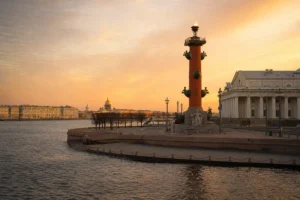 Spit of Vasilyevsky Island, Saint Petersburgabout 300 m away (~5 min walk) · typical visit: 1–2 hours, plus time for any museum
Main image: AI-generated illustration. It may not show the place exactly as it looks.
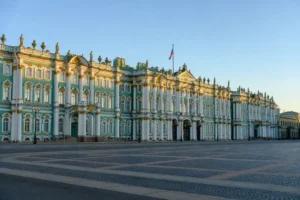 State Hermitage Museum, Saint Petersburg · typical visit: 3-5 hours for the main highlights
Main image: AI-generated illustration. It may not show the place exactly as it looks.
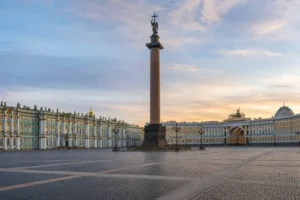 Palace Square, Saint Petersburg · typical visit: 30–60 minutes, more with the Hermitage
Main image: AI-generated illustration. It may not show the place exactly as it looks.
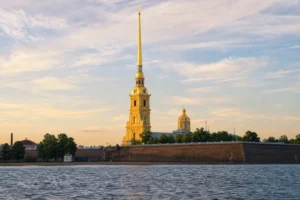 Peter and Paul Fortress, Saint Petersburg · typical visit: 2–4 hours
Main image: AI-generated illustration. It may not show the place exactly as it looks.
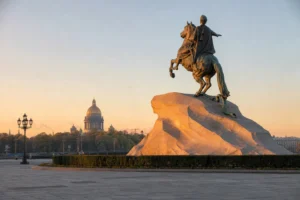 Bronze Horseman, Saint Petersburg · typical visit: 20–40 minutes
Main image: AI-generated illustration. It may not show the place exactly as it looks.
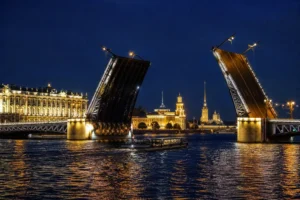 Palace Bridge, Saint Petersburg – about 200 m away (~4 min walk) · typical visit: 30–45 minutes; allow 1.5–2 hours if you wait for the night raising
Main image: AI-generated illustration. It may not show the place exactly as it looks.
Metro stations near Kunstkamera, Saint Petersburg
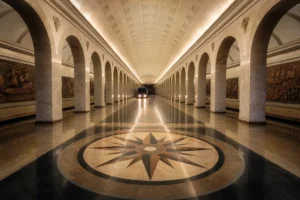 Admiralteyskaya Metro Station, Saint Petersburgabout 850 m away (~14 min walk)
Main image: AI-generated illustration. It may not show the place exactly as it looks.
Train stations and river piers near Kunstkamera, Saint Petersburg
 Rumyantsev Descent Pier, Saint Petersburgabout 700 m away (~11 min walk)
Main image: AI-generated illustration. It may not show the place exactly as it looks.
Related guides
 Best Palaces and Historic Mansions, Saint Petersburg: 10 Interiors
Main image: AI-generated illustration. It may not show the place exactly as it looks.
 Vasileostrovskaya Metro Station, Saint Petersburg: Island Hub
Main image: AI-generated illustration. It may not show the place exactly as it looks.
 Erarta Museum of Contemporary Art: Hours, Tickets and Tips
Main image: AI-generated illustration. It may not show the place exactly as it looks.
 Sevkabel Port Pier, Saint Petersburg: Sunset Boats on the Gulf
Main image: AI-generated illustration. It may not show the place exactly as it looks.
 Gorny Institut Metro Station, Saint Petersburg: Line 4 Terminus
Main image: AI-generated illustration. It may not show the place exactly as it looks.
Browse more: More in Vasileostrovsky District · All Museums · All Saint Petersburg · All Sightseeing · All Sightseeing in Saint Petersburg
FAQ: Kunstkamera, Saint Petersburg
Is the Kunstkamera the same as the Peter the Great Museum of Anthropology and Ethnography?
Yes. Kunstkamera is the popular name, and the museum has expanded far beyond the original collection.
Is it Russia's first museum?
Yes. The collection was first opened to the public in 1714.
Is the museum closed on Mondays?
Yes, according to the sources checked, but confirm on the official site.
Is it suitable for children?
For older children, yes. Some specimens are graphic.
Where is the Gottorp Globe?
On the fourth floor of the museum.
Is it near the Hermitage?
It is on the opposite bank of the Neva, a walk across the Palace Bridge.
How long should I plan?
About two hours.
Is it the same as the Russian Museum of Ethnography?
No. That is a different museum.
Russia Vibes is a one-person project. A coffee keeps it going
Last updated: October 15, 2026. Found an error or something out of date? Report it and we will check and fix it.
How we research and update our guides
About this guide: AI assistance and accuracy
This guide is created with the help of AI and is based on official sources where available. Mistakes can still happen. Opening hours, prices, rules and other details are given to the best of our knowledge as of the date shown and can change without notice. It offers general recommendations only, not professional, legal or travel advice. Please confirm important details with the official source before you travel; you are responsible for your own plans and decisions.
International sanctions affect payments between Russia and many other countries. In practice, cards issued in the EU, the UK, the US and several other countries often do not work in Russia, Russian cards usually do not work abroad, and some booking platforms, airlines and payment providers limit or suspend their services for Russia. The situation changes frequently. We do not give legal or financial advice, and this site does not encourage anyone to break or circumvent sanctions. Whatever you plan, you are responsible for following the laws and regulations that apply to you, including those of your country of residence and citizenship. Many travelers still organise their stay lawfully. It is worth asking your bank or payment provider what is currently permitted, contacting hotels, tour operators and carriers directly about the payment methods they accept, and checking which services are open to customers from your country. Clarify payment, cancellation and refund terms before you commit to a booking, and keep your plans flexible. Partner links on this site may not be available in every country, and prices, availability and rules in our guides can differ from what you see when you book.Paying for your trip: please read

Take this guide with you
Get a free PDF of this guide to print or read offline: key facts, tips and a map link on a few clean pages.