
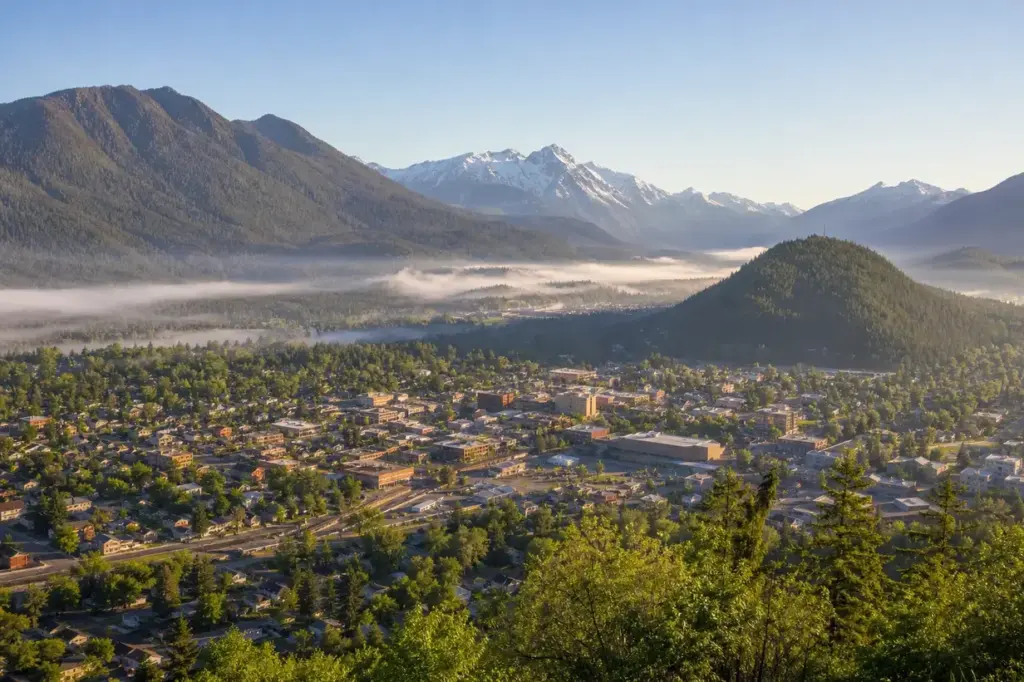
Gorno-Altaysk, the capital of the Altai Republic, is a small mountain city of about 64,000 people in the northwestern foothills of the Altai Mountains. Founded in 1824 as Ulala and renamed in 1948, it serves as the cultural and administrative hub for the Altai region and the main access point for travelers exploring the mountains and wilderness. The city itself sits at 290 metres elevation in a valley formed by the confluence of the Ulalushka and Maima rivers.
Unlike most Russian regional capitals, Gorno-Altaysk is the only settlement with city status in the entire Altai Republic, giving it a particular character—small-scale and quiet rather than urban and bustling. The surrounding foothills offer a mild microclimate compared to the harsher regions of Siberia, and the landscape is dominated by forests and green spaces, making it feel closer to nature than to a typical city center.
Quick Facts
| Russian name | Го́рно-Алта́йск |
|---|---|
| Built / opened | 1824 |
| Address | Gorno-Altaysk, Altai Republic, Russia Google MapsApple MapsYandex Maps2GIS |
| District | Altai Republic |
| Best time to visit | Summer (June to September) is the peak season for hiking and mountain exploration, with mild temperatures, longer daylight, and most mountain trails open. Late May and early June offer wildflower displays in the foothills. Winter (December to February) brings snow to the surrounding mountains and is suitable for winter trekking and skiing in nearby areas, though some high passes close. Spring (March to May) is wet and transitional. Autumn (September to November) offers clear weather and fewer crowds before winter, though daylight shortens and nights grow cold. |
| Recommended duration | 1–2 days |
| Website | gornoaltaysk.ru |
Why Visit Gorno-Altaysk, Altai Mountains?
Gorno-Altaysk matters primarily as the gateway to the Altai Mountains and the Altai Republic’s wilderness. For visitors trekking, hiking, or exploring the high peaks and pristine wilderness, the city serves as your arrival point and supply hub. Museums here focus on the region’s indigenous Altai culture and natural history, and the city’s relatively calm atmosphere provides a base before venturing into more remote mountain areas. The surrounding foothills themselves offer accessible trails and views, and the city’s position in a mountain valley creates distinctive landscapes that justify a brief visit before traveling deeper into the region.
Atmosphere
Gorno-Altaysk has a quiet, provincial character quite different from larger Russian cities. The streets are lined with trees and the low-rise buildings (rarely more than five stories) create an intimate streetscape. The central area around Lenina Square, the main plaza, hosts local markets and shops. In summer, the city is cool and green with hiking parties coming and going through guesthouses and outdoor-equipment shops; in winter, snow blankets the surrounding foothills and the city becomes a staging point for winter activities. The pace is deliberately slow—this is not a place for nightlife or grand attractions, but rather a pause point before the mountains.
History of Gorno-Altaysk, Altai Mountains
Early settlement and Soviet era (1824–1948). Russian settlers from Biysk founded the village of Ulala in 1824, establishing a foothold in the region. The area had been inhabited for thousands of years by Teleut peoples and the Altai, whose ancestors left paleolithic tools and petroglyphs that are still found in the region.
Soviet transformation (1922–1948). In 1922, after the Russian Civil War, the region became the Oirot Autonomous Oblast with Ulala as its capital. In 1928, Ulala was granted city status. In 1932, the city was renamed Oyrot-Tura. In 1948, the oblast was renamed the Gorno-Altai Autonomous Oblast (Gorno-Altai means ‘Mountain Altai’), and the city received its current name, Gorno-Altaysk.
Soviet growth and infrastructure (1948–1991). During the Soviet era, the city became the administrative and industrial center of the region. Military manufacturing was introduced during World War II, with factories producing uniforms, skis, sledges, and boots. The paleolithic discoveries in and around the city, particularly the Ulalinskaya Paleolithic site from excavations in the city center, influenced local identity and later appeared on the city’s coat of arms when it was officially adopted in 1996.
Post-Soviet era (1992–present). In 1992, Gorno-Altaysk became the capital of the Altai Republic following the breakup of the Soviet Union and the transition to the Altai Republic as an independent federal subject of Russia. Today, it remains the administrative center and the primary hub for tourism to the Altai Mountains, though it has retained its small-city character despite steady population growth.
Plan and Book
How to Get to Gorno-Altaysk, Altai Mountains
Gorno-Altaysk has no direct railway station; the nearest railway stations are in Biysk (96 kilometres away) and Barnaul (300 kilometres away). Most visitors arrive by air or long-distance bus.
- By air: Gorno-Altaysk International Airport (GOJ) is the closest option. Flights connect to Moscow and other major Russian cities. From the airport, minibuses and taxis serve the city centre (roughly 30 kilometres away, about 45 minutes by road).
- By road: Federal Highway M52 connects Gorno-Altaysk to Novosibirsk in the north (about 500 kilometres) and extends south towards Kazakhstan and the Mongolian border. Long-distance buses run regularly on this route. Once in the city, the centre is compact and walkable; local minibuses (marshrutka) provide inexpensive transport to outlying districts.
- From Biysk or Barnaul: If arriving by train, you can take a bus or hire a car from either city. The drive from Biysk is about two hours; from Barnaul, four to five hours.
Accessibility
Gorno-Altaysk has basic accessibility for people with reduced mobility in the city centre, particularly around Lenina Square and along main streets. However, the city's hilly terrain and some older buildings without lifts present challenges. Public buildings constructed in recent years typically have wheelchair ramps and accessible facilities. Taxis are abundant and relatively inexpensive. The city is not a major destination for accessible tourism; visitors with significant mobility limitations should plan carefully and may find the mountain region beyond the city limits inaccessible.
Food Nearby
Gorno-Altaysk has a small but varied dining scene focused on Russian, Altai, and Caucasian cuisines. Local restaurants and cafés around Lenina Square and along Kommunisticheskiy Avenue (the main commercial street) serve traditional Russian dishes, pelmeni, soups, and grilled meat. Street food and simple cafés offer quick meals. There are no international chain restaurants; options reflect local tastes and ingredients. Markets and small shops throughout the city sell local products, honey, dairy, and berries, particularly in summer. Prices are moderate by Russian standards.
What to Bring
Bring comfortable hiking boots if you plan to explore the surrounding foothills. In summer, pack sunscreen and a hat; in winter, warm layers, a heavy coat, hat, and gloves are essential. The city itself has no extreme altitude, but cool mountain breezes are common even in summer. A small backpack is useful for day trips. Standard urban supplies (toiletries, medications) are available in pharmacies and shops throughout the city. The city has no specific security restrictions; standard travel precautions apply.
Best Views and Photo Spots of Gorno-Altaysk, Altai Mountains
Lenina Square (central plaza)
The administrative buildings and public spaces at the heart of the city, with the surrounding foothills in the background. Particularly photogenic in early morning light and at sunset.
Best time: Early morning or late afternoon when light is warm; in summer when flowers bloom around the square.
Views from the city looking south toward the main Altai range
The higher peaks of the Altai Mountains visible on the horizon beyond the foothills. Best from elevated areas on the city's southern edge.
Best time: Clear days in autumn or early winter when snow first covers the peaks; morning light is sharpest.
Maima River valley overlook
The valley formed by the confluence of local rivers with forested slopes and distant mountain ridges. A quieter, less-visited perspective on the region's geography.
Best time: Summer when vegetation is green; autumn when deciduous trees turn color.
Photography Rules
Photography is generally unrestricted in Gorno-Altaysk and the surrounding areas. Drones are not permitted in the city centre without permission. The surrounding foothills and mountain valleys offer excellent landscape photography, particularly during sunrise and sunset when the mountains light up. Weather changes rapidly, so bring weather-resistant gear.
Family Suitability
Gorno-Altaysk is moderately family-friendly for families with older children and teenagers interested in outdoor activities and nature. The city itself is quiet and safe, with parks and green spaces suitable for walks with younger children. The surrounding foothills offer accessible day hikes for families. However, the city has few attractions specifically designed for young children such as theme parks or entertainment venues. Stroller access on central streets is adequate but becomes difficult on uneven terrain and hillier areas. The main appeal is as a base for mountain activities; families should be comfortable with outdoor exploration.
Russia Vibes Tips
- Book mountain guides or tours through your accommodation or the Altai State Nature Reserve office in the city centre if you plan to venture beyond the immediate foothills. Many serious hikes require permits and expert navigation.
- Gorno-Altaysk has no passenger railway station—do not expect to arrive or leave by train. Plan your transport well in advance, especially in summer when buses and flights fill quickly.
- The city is the supply hub for the entire region. Stock up on food, water, fuel, and equipment here before heading into remote mountain areas; small villages have limited options.
- Use the official city website (gornoaltaysk.ru) for current information on festivals, exhibitions, and seasonal events, as the city's modest tourism infrastructure does not always keep tourist websites updated.
- The Altai State Nature Reserve has its main office in the city. Stop here for permits, maps, and expert advice on wildlife and protected areas before any serious wilderness expedition.
Explore Nearby Gorno-Altaysk, Altai Mountains
Sights near Gorno-Altaysk, Altai Mountains
 Mount Belukha, Altai Mountainsabout 242.2 km away · typical visit: 10–14 days
Main image: AI-generated illustration. It may not show the place exactly as it looks.
 National Museum of the Altai Republic, Altai Mountainsabout 1.6 km away (~26 min walk) · typical visit: 2–3 hours
Main image: AI-generated illustration. It may not show the place exactly as it looks.
Related guides
 Altai Mountains: Best Places, Scenic Routes and Travel Tips
Main image: AI-generated illustration. It may not show the place exactly as it looks.
 Chuya and Katun Confluence: Free Viewpoint and Sacred Altai LandmarkOpen 24 hours
Main image: AI-generated illustration. It may not show the place exactly as it looks.
 Uchar Waterfall: Hiking to Russia’s Most Remote Cascade
Main image: AI-generated illustration. It may not show the place exactly as it looks.
 Ukok Plateau: Remote Expedition Across Ancient Steppe
Main image: AI-generated illustration. It may not show the place exactly as it looks.
 Akkem Lake: Alpine Trek to Mount Belukha’s Base
Main image: AI-generated illustration. It may not show the place exactly as it looks.
Browse more: More in Altai Republic · All Altai Mountains · All Landmarks · All Sightseeing · All Sightseeing in Altai Mountains
FAQ: Gorno-Altaysk, Altai Mountains
Is there a railway station in Gorno-Altaysk?
No. Gorno-Altaysk has no passenger railway; the nearest stations are in Biysk (96 km away) and Barnaul (300 km away). Visitors must arrive by air, bus, or car. This makes the city accessible only by road or air transport.
What is the best way to get to Gorno-Altaysk from Moscow?
Fly to Gorno-Altaysk International Airport (GOJ), which has direct flights from Moscow. Journey time is about 4 hours. Alternatively, fly to Novosibirsk (3 hours from Moscow) and travel 500 km south by bus or car (8–10 hours). Flying is much faster.
Do I need permits to hike in the Altai Mountains from Gorno-Altaysk?
Yes. The Altai State Nature Reserve requires permits for certain areas and activities. Visit the reserve's office in Gorno-Altaysk before traveling to remote regions. Local guides and tour operators can handle permits and logistics.
Is Gorno-Altaysk safe for tourists?
Yes. Gorno-Altaysk is a safe, quiet city with low crime rates. Standard travel precautions apply. The city has no specific security risks; it is much safer than large Russian cities. Remote mountain areas require more caution due to terrain and weather, not crime.
What is there to do in Gorno-Altaysk city itself?
The city is small and designed as a base rather than a destination. You can visit museums on Altai culture and paleolithic finds, walk around Lenina Square, explore local markets, and hike in the immediate foothills. Most visitors spend 1–2 days here before heading into deeper wilderness.
What language is spoken in Gorno-Altaysk?
Russian is the official and dominant language. The indigenous Altai language is spoken by some local Altai people. English is not widely spoken; bring a translation app or learn basic Russian phrases for travel outside the city centre.
Is it possible to visit Belukha Mountain from Gorno-Altaysk?
Yes, but not as a day trip. Belukha, the highest peak at 4,506 metres, is about 250 km south of the city. Multi-day guided expeditions from Gorno-Altaysk are available, typically 7–14 days depending on the route. Climbers need good fitness and mountaineering experience.
What is the Ulalinskaya Paleolithic site?
An ancient archaeological site where paleolithic tools and remains were discovered in the city centre, dating back thousands of years. It reveals early human occupation of the region. The discoveries are important to local identity and appear on the city's coat of arms.
Russia Vibes is a one-person project. A coffee keeps it going
How we research and update our guides
About this guide: AI assistance and accuracy
This guide is created with the help of AI and is based on official sources where available. Mistakes can still happen. Opening hours, prices, rules and other details are given to the best of our knowledge as of the date shown and can change without notice. It offers general recommendations only, not professional, legal or travel advice. Please confirm important details with the official source before you travel; you are responsible for your own plans and decisions.
Packing for this trip
* Affiliate link: as an Amazon Associate we earn from qualifying purchases at no extra cost to you.

Take this guide with you
Get a free PDF of this guide to print or read offline: key facts, tips and a map link on a few clean pages.
Report an issue on this page
Paying for your trip: please read
International sanctions affect payments between Russia and many other countries. In practice, cards issued in the EU, the UK, the US and several other countries often do not work in Russia, Russian cards usually do not work abroad, and some booking platforms, airlines and payment providers limit or suspend their services for Russia. The situation changes frequently.
We do not give legal or financial advice, and this site does not encourage anyone to break or circumvent sanctions. Whatever you plan, you are responsible for following the laws and regulations that apply to you, including those of your country of residence and citizenship.
Many travelers still organise their stay lawfully. It is worth asking your bank or payment provider what is currently permitted, contacting hotels, tour operators and carriers directly about the payment methods they accept, and checking which services are open to customers from your country. Clarify payment, cancellation and refund terms before you commit to a booking, and keep your plans flexible.
Partner links on this site may not be available in every country, and prices, availability and rules in our guides can differ from what you see when you book.