
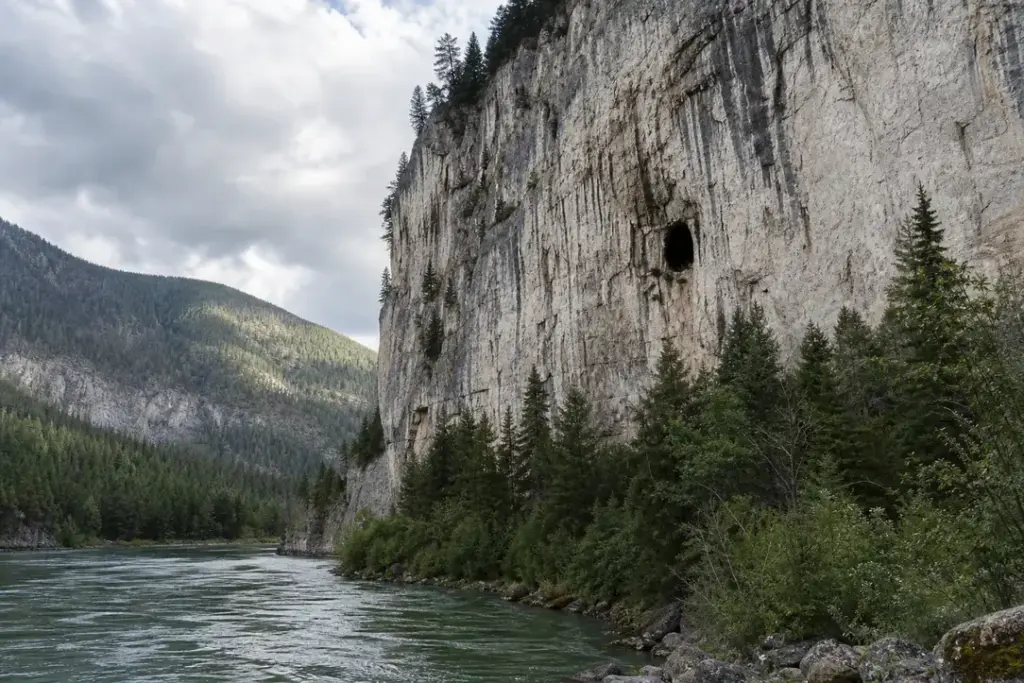
Denisova Cave in the Altai Mountains is one of the world’s most important archaeological sites for understanding human evolution. The cave, also known by its local name Aju-Tasch (meaning “bear rock”), lies in the upper Anui River valley about 100 km south of the city of Biysk in southern Siberia.
The site is unique as the only place where fossil remains of three distinct hominin groups have been found: Denisovans, Neanderthals and early modern humans. Paleoanthropological excavations at the site have revealed more than 20 layers of artifacts, indicating hominin occupation from 280,000 years ago to the Middle Ages.
Current access notice: As of October 2026: Public access to Denisova Cave has been restricted since 2002 due to preservation concerns. Check with local authorities or archaeological organizations in the Altai region for current information about research programs or guided scientific visits that may be available.
Quick Facts
| Russian name | Денисова пещера |
|---|---|
| Address | Soloneshensky District, Altai Krai, near Tog-Altai village, Anui River valley Google MapsApple MapsYandex Maps2GIS |
| District | Soloneshensky |
| Best time to visit | Summer (June to August) is the best time to visit. Temperatures are moderate, trails are passable, and archaeological excavations are typically active. Spring (May) and early autumn (September) are possible but may involve muddy terrain and cooler weather.Winter and early spring are challenging due to snow, ice, flooding in the river valley, and limited accommodation options in the remote area. Autumn rains can make the approach routes difficult. |
| Recommended duration | 1–2 hours |
What Is (and Isn't) Part of a Visit to Denisova Cave, Altai Mountains?
| Part | Status | Notes |
|---|---|---|
| Main chamber and gallery interiors | Not open to visitors | Not currently open to public visitors due to conservation restrictions implemented in 2002. |
| Archaeological excavation areas | Separate ticket or institution | Active ongoing research; access limited to accredited researchers and authorized participants in archaeological programs. |
| Exterior site and entrance area | Included in the standard ticket | The cave entrance and surrounding landscape remain accessible for viewing from outside, weather permitting. |
| Institute of Archaeology and Ethnography research programs | Separate ticket or institution | Guided scientific visits may be arranged through the Novosibirsk-based institute conducting excavations, subject to availability and academic affiliation. |
| Denis Cave Camp | Separate ticket or institution | A nearby research camp used by archaeologists; lodging and guided tours may be available through prior arrangement. |
| Altai Mountain landscape and Anui River valley | Outside / not part of it | The wider region is accessible; hiking and nature tourism in the surrounding Altai Mountains are available through other operators. |
Why Visit Denisova Cave, Altai Mountains?
Denisova Cave is essential for anyone interested in human prehistory and evolution. Genetic sequencing of specimens found in the cave led to the discovery of a previously unknown group of hominins called Denisovans. The site’s exceptional preservation of ancient DNA has transformed scientific understanding of how modern humans developed and spread across Eurasia. The landscape of the Altai foothills, with limestone cliffs rising above the Anui River, adds geological drama to the historical significance of the location.
How Denisova Cave, Altai Mountains Is Laid Out
The cave consists of three chambers (Main, East and South), with the archaeological assemblages and remains of hominins, fauna and flora recovered from Main and East Chambers being the most thoroughly investigated to date. The main entrance, positioned about 30 metres above the modern river level on a southwest-facing limestone cliff, leads into a spacious central chamber. The length of the cave is approximately 600 m, floor area roughly 270 m², and it consists of a spacious 9×11 m large central chamber with three smaller side galleries. Archaeological work has been ongoing for decades, with excavation layers revealing distinct periods of occupation separated by gaps of thousands of years.
Highlights of Denisova Cave, Altai Mountains
The Three-Species Timeline
Denisovans inhabited the cave, on and off, from 250,000 years ago until 60,000 years ago, and were responsible for the earliest stone tools found at the site. The first humans to visit the site were Denisovans about 250,000 years ago, followed by Neanderthals about 200,000 years ago. Only Neanderthal DNA was found in sediments deposited between 130,000 and 80,000 years ago. Visitors can see the stratified layers that tell this story of occupation, turnover and adaptation.
Tip: Understand that the three groups did not live here simultaneously; the cave witnessed changing populations separated by millennia, each adapted to different climates and hunting strategies.
The Denisova 3 Finger Bone Discovery
A phalanx (Denisova 3) had extraordinary DNA preservation allowing the sequencing of high quality nuclear and mitochondrial DNA genomes and has been shown to belong to a young girl from hereto unknown sister group of Neandertals, called Denisovans. This small bone, excavated in 2008, rewrote the understanding of human evolution by revealing a previously unknown hominin lineage. The cave's cold, dry conditions have preserved DNA in ways few other sites can match.
Tip: The actual fossils are in research collections, not on display at the site, but standing where they were found illustrates how fragments rather than complete skeletons tell the story here.
Karst Geology and Formation
The cave is situated above the right bank of the Anui River at a point where the valley narrows, penetrating into the Silurian limestone bedrock along a series of interconnected karstic chambers and tubes that are currently filled with both natural and cultural sediments. The limestone formation created the conditions necessary for both cave formation and exceptional preservation of organic material, including bone and ancient DNA.
Tip: Look at the pale grey Silurian limestone walls—they are hundreds of millions of years old, far older than the human remains inside.
The Neanderthal-Denisovan Offspring (Denisova 11)
The dozen hominin remains recovered from the deposits also include Neanderthals and the child of a Neanderthal and a Denisovan, which suggests that Denisova Cave was a contact zone between these archaic hominins. This hybrid individual's remains demonstrate that different human species met, interbred and produced offspring, adding a human dimension to the scientific story.
Tip: This find is particularly striking because it shows interaction between groups living tens of thousands of years apart—a rare window into ancient social contact.
The Hermit Denis and the 18th-Century Connection
Denisova Cave was named after a hermit, Saint Denis, in Russian called Dionisij, who lived in this cave during the second half of the 18th century. The cave was inhabited recently enough that locals remember a named resident. The topmost archaeological layers contain artifacts from the Middle Ages, showing continuous use for thousands of years after the Pleistocene ended.
Tip: The modern name links a 21st-century scientific discovery to an 18th-century hermit—the cave has always held significance for people living nearby.
Stone Tools and Cultural Layers
More than 20 layers of artifacts have been revealed, indicating hominin occupation from 280,000 years ago to the Middle Ages. Each layer represents a distinct period and contains stone tools, bone implements, adornments and animal remains that show changing hunting and manufacturing techniques adapted to fluctuating climates. Some layers span only a few centuries; others are separated by tens of thousands of years.
Tip: Excavation is ongoing; you may see active archaeological work, which reveals how fragmentary and challenging the process of discovery actually is.
Atmosphere
The cave entrance is an imposing sight: a dark opening in a pale limestone cliff rising high above the Anui River. The interior is cool, dim and archaeological in atmosphere—layers of earth and rock rather than tourist-friendly galleries. The presence of charcoal attests to the use of fire by hominins, connecting present-day visitors to ancient activities in the same space. Outside, the Altai mountain valley is quiet and forested, with a sense of remoteness appropriate to a place at the edge of human prehistory.
History of Denisova Cave, Altai Mountains
Denisovans inhabited the cave, on and off, from 250,000 years ago until 60,000 years ago, and were responsible for the earliest stone tools found at the site. These early people adapted to cold steppes and forests, hunting large animals and making increasingly sophisticated tools. The cave provided shelter during harsh glacial periods and was strategically located where the Anui River narrows through mountain valleys.
The first humans to visit the site were Denisovans about 250,000 years ago, followed by Neanderthals about 200,000 years ago. Archaeological and genetic evidence shows that both groups used the cave at different times, separated by intervals of thousands of years. One of the remains recovered from the deposits was the child of a Neanderthal and a Denisovan, suggesting that Denisova Cave was a contact zone between these archaic hominins. This hybrid individual, identified through DNA analysis, demonstrates that these populations encountered each other, at least occasionally.
The identification of ancient human DNA in 175 sediment samples greatly expands our knowledge of Denisovans and Neanderthals at the site, and also provides the first direct evidence of modern humans at Denisova Cave. Early modern humans arrived later, around 45,000 to 20,000 years ago, and the uppermost Pleistocene layers show their occupation patterns and tool kits. Throughout the Late Pleistocene, as climate shifted between glacial and interglacial phases, the cave attracted different human populations seeking shelter and hunting grounds.
Denisova Cave was named after a hermit, Saint Denis, in Russian called Dionisij, who lived in this cave during the second half of the 18th century. The Middle Ages and later periods saw continued use of the cave by local peoples. In the modern era, systematic archaeological excavation began in 1977 under Russian archaeologist Nikolai Ovodov, transforming the cave from a local landmark into a world-renowned research site.
Legends and Myths about Denisova Cave, Altai Mountains
The Hermit Denis and the Holy Recluse
Legend – historically unreliable. Local legend tells of a holy hermit named Denis (Dionisij in Russian) who chose Denisova Cave as his place of religious retreat in the 18th century. Some versions of the story describe him as seeking isolation for prayer and contemplation in the remote Altai Mountains. The cave's cool interior and protection from harsh winters made it a plausible refuge for a recluse, and locals remembered him well enough to name the cave after him centuries later.
The Bear Rock Name
Legend – historically unreliable. The local Altai peoples call the cave Aju-Tasch, meaning "bear rock" in their language. Whether this name refers to bears that sheltered in the cave during hibernation, claw marks left by ancient bears, or a legendary encounter with a great bear is unclear. The name persists in regional tradition and appears on maps and in local speech, suggesting a deep connection between the landscape and the communities living in the Anui River valley.
Tickets and Booking for Denisova Cave, Altai Mountains
Denisova Cave is not currently open to casual public visits. To explore this site, consider the following options:
- Organized archaeological programs: Contact the Institute of Archaeology and Ethnography in Novosibirsk to inquire about participation in supervised excavation or research visits.
- Denis Cave Camp: A research facility near the cave may offer accommodation and guided educational visits for groups and researchers. Arrangements should be made well in advance.
- Viewing the exterior: The cave entrance and surrounding landscape can be viewed from outside. Access to the valley requires a combination of car travel from Biysk and hiking or local transport.
- Regional tourism: Travel operators in the Altai region (Barnaul, Gorno-Altaysk) may offer general Altai mountain tours that include a visit to the exterior of the site or the nearby area.
No official public ticketing system currently exists. All inquiries about access should be directed to archaeological authorities or regional tourism organizations in Altai Krai.
Plan and Book
Suggested itineraries Denisova Cave, Altai Mountains
Day trip (exterior viewing)
Drive from Biysk (approximately 100 km south) to the Anui River valley. Spend 1–2 hours viewing the cave entrance and surrounding landscape from outside. Explore the forested riverbank area and photograph the limestone cliffs. Return to Biysk. This option is available without prior permission.
Half day (with local guide)
Depart Biysk early; travel to the site with a local guide familiar with the area. Spend 2–3 hours examining the exterior, learning the geological and archaeological history, and exploring nearby trails along the Anui River. Bring water and sturdy footwear. Return to Biysk by evening.
Multi-day research visit (by arrangement)
Contact the Institute of Archaeology and Ethnography in advance to arrange a guided visit during an active excavation season (typically summer months). Participate in a supervised site tour, learn directly from archaeologists, and stay at the nearby Denis Cave Camp. This experience offers insight into how ancient DNA and artifacts are excavated and recorded.
How to Get to Denisova Cave, Altai Mountains
From Biysk: Denisova Cave is approximately 100 km south of Biysk in southern Siberia. The most practical route is by car or arranged transport.
- Biysk is a regional transport hub accessible by train (Trans-Siberian Railway or regional services) or bus from Novosibirsk (approximately 250 km west), Barnaul (approximately 200 km south), or Gorno-Altaysk (approximately 150 km southeast).
- From Biysk, hire a car or join a tour group heading to the Altai Mountains. The road follows the Anui River valley southward.
- The final approach to the cave involves a combination of vehicle travel and hiking through forested terrain; sturdy footwear and water are essential.
- GPS coordinates (51.39750°N, 84.67611°E) can be used with offline maps or navigation apps, as cellular coverage may be limited in the remote valley.
Accessibility
The site presents significant accessibility challenges. The terrain involves hiking through forest and along the riverbank, with uneven ground and natural obstacles. The cave entrance is accessed via a steep path ascending 30 metres above the river level. There are no paved surfaces, railings, lifts or adapted facilities. Visitors with mobility limitations should carefully consider whether the site is feasible without assistance. Since public access is restricted, inquire directly with research organizations about any accommodations available for participants with specific access needs.
Food Nearby
The remote location offers no food services at or immediately near the cave. The nearest town with restaurants and shops is Biysk, approximately 100 km away. Visitors should bring adequate supplies: water, snacks, packed meals or lightweight camping food. If staying at the Denis Cave Camp, meals may be provided as part of an arranged research program. Local produce and basic supplies are available in smaller villages along the Anui River valley (such as Tog-Altai or Chernyy Anuy), but selection is limited.
What to Bring
Sturdy hiking boots or trail shoes with good grip; the terrain is uneven and can be muddy or wet. Bring plenty of water (at least 2 litres per person). Weatherproof jacket and layers, as mountain weather changes rapidly. Insect repellent (mosquitoes are active in summer). A headlamp or torch is essential if entering the cave or exploring near the entrance. Portable phone charger (cellular coverage is unreliable). Snacks and lunch, as no food services are nearby. Notebook and camera for documentation. No special security restrictions apply for the exterior viewing area.
Best Views and Photo Spots of Denisova Cave, Altai Mountains
Cave entrance from the Anui River valley floor
From the riverbank below, the pale limestone cliff rises sharply, with the dark cave entrance visible as a distinct opening about 30 metres up the face. The surrounding forest frames the cliff, and the Anui River provides a natural foreground. This perspective emphasizes the cave's dramatic position in the landscape.
Best time: Late morning, when light illuminates the cliff face without harsh shadows. Summer for vegetation; autumn for coloured foliage.
Looking across the Anui River toward the limestone ridge
From the opposite riverbank, the southwestern-facing cliff becomes a prominent landmark. The pale stone contrasts with dark forest on the ridge and surrounding mountains. The river in the foreground adds depth and scale.
Best time: Afternoon, when the sun illuminates the south-facing cliff. Clear days after rain, when the river is more visible and reflective.
Interior of the main chamber (if access is granted)
The spacious central chamber shows the layered stratigraphy of the excavation—different coloured soil layers visible in the exposed walls reveal the chronological sequence of human occupation. Limestone formations and the high vaulted ceiling create a sense of geological time.
Best time: Early in the day, when natural light from the entrance penetrates deepest into the chamber. Bring a headlamp to avoid disturbing the darkness.
The excavation grid and working areas
If visiting during active archaeological work, the carefully marked excavation squares show the systematic method used to recover and document artifacts. Tool marks on the limestone walls and exposed stratigraphy tell the story of both human and geological history.
Best time: Visit during excavation season (summer) when archaeologists are actively working and can explain their methods.
Photography Rules
Photography of the exterior landscape and cave entrance is generally permitted. Flash photography inside the cave (if access is granted) should be avoided to protect delicate archaeological deposits and prevent disturbing any sensitive environments. Tripods and drones are not recommended and may be prohibited on active excavation sites. Always ask archaeologists or guides for permission before photographing excavation areas, as certain research materials may be restricted. Photographing for scientific documentation may require special coordination with the research team.
Family Suitability
Denisova Cave is challenging for families with young children. The remote location, limited facilities, and restricted access mean standard family visits are not viable. The terrain requires hiking over uneven ground for considerable distances, and there are no designated children's areas or safety railings.Older children (10+) with hiking experience and parental supervision may manage the exterior landscape and valley exploration, especially if accompanied by a knowledgeable guide. However, entry to the cave itself is not currently open to public visitors, including families.If an authorized research program permits family participation, contact the organizing institution about age-appropriate activities and accessibility.
Russia Vibes Tips
- Plan well ahead: Denisova Cave is not a drop-in attraction. Contact the Institute of Archaeology and Ethnography in Novosibirsk or local Altai tourism operators 2–3 months in advance if you wish to arrange any form of visit or guided experience.
- Bring offline maps and GPS coordinates: Cell service is unreliable in the remote Anui River valley. Download detailed topographic maps or use a GPS device set to the coordinates 51.39750°N, 84.67611°E.
- Combine with wider Altai exploration: Rather than making a standalone pilgrimage to the cave, plan a broader Altai mountain trip. Visit the surrounding region for hiking, wildlife, and other geological sites. The landscape itself is the primary attraction for most visitors.
- Summer excavations are the best time: If possible, visit during June to August when archaeological work is active. You may meet researchers and learn directly about ongoing discoveries, rather than seeing only an empty site.
- Hire a local guide: The final approach to the cave can be confusing. A guide familiar with the valley, the current trail conditions, and local logistics will enhance safety and the experience significantly.
- Respect the research: This is a working archaeological site, not a tourist cave. Follow all instructions from researchers or guides, do not disturb marked areas, and remember that your visit supports important scientific work.
Explore Nearby Denisova Cave, Altai Mountains
Related guides
 Altai Mountains: Best Places, Scenic Routes and Travel Tips
Main image: AI-generated illustration. It may not show the place exactly as it looks.
Browse more: More in Soloneshensky · All Altai Mountains · All Landmarks · All Sightseeing · All Sightseeing in Altai Mountains
FAQ: Denisova Cave, Altai Mountains
Can I enter the cave interior?
No. Public access to the interior has been restricted since 2002 due to conservation concerns. You can view the exterior and landscape. Access to the interior may be possible through authorized archaeological research programs by prior arrangement with the Institute of Archaeology and Ethnography in Novosibirsk.
What exactly are Denisovans?
The cave is named for the Denisovans, a previously unknown group of hominins who were neither modern humans nor Neanderthals. They are known only from fragmentary fossils and DNA found at Denisova Cave and nowhere else on Earth. Genetic evidence shows they lived in Eurasia and interbred with both Neanderthals and modern humans.
Is there a museum or visitor centre at the site?
No. The site remains primarily a working archaeological excavation with minimal visitor infrastructure. The Denis Cave Camp, a research facility used by excavators, may accommodate authorized visitors by arrangement. The nearest museums with information about the discoveries are in Novosibirsk and Barnaul.
How do I get to Denisova Cave from Irkutsk or the Trans-Siberian Railway?
The closest Trans-Siberian route is via Novosibirsk or Biysk in the Altai region. From Irkutsk (about 1,200 km east), travel west by train to Biysk or Barnaul, then arrange ground transport south to the Anui River valley. The journey requires 2–3 days of travel.
What was the Neanderthal-Denisovan offspring (Denisova 11)?
One of the remains recovered was the child of a Neanderthal and a Denisovan, suggesting that Denisova Cave was a contact zone between these archaic hominins. This hybrid individual shows that different human species met and interbred, though fossil evidence of such interactions is extremely rare.
Can I see the fossils and stone tools excavated from the cave?
No. Fossils and artifacts are housed in research collections at Russian academic institutions, primarily the Institute of Archaeology and Ethnography in Novosibirsk. They are not displayed publicly at the site. Museums in Novosibirsk and Barnaul may have exhibits or information about discoveries from the cave.
What is the best season to visit?
Summer (June to August) offers the best weather, accessible trails, and active archaeological work. Spring and early autumn are possible but involve muddy terrain and cooler temperatures. Winter is impractical due to snow, ice and river flooding.
Is there accommodation near the cave?
The Denis Cave Camp, used by archaeologists, may provide lodging for research program participants by arrangement. Otherwise, the nearest towns with hotels are Biysk (100 km away) or Gorno-Altaysk (roughly 150 km southeast). Rural homestays may be available in small villages along the Anui River valley.
Russia Vibes is a one-person project. A coffee keeps it going
How we research and update our guides
About this guide: AI assistance and accuracy
This guide is created with the help of AI and is based on official sources where available. Mistakes can still happen. Opening hours, prices, rules and other details are given to the best of our knowledge as of the date shown and can change without notice. It offers general recommendations only, not professional, legal or travel advice. Please confirm important details with the official source before you travel; you are responsible for your own plans and decisions.
Packing for this trip
* Affiliate link: as an Amazon Associate we earn from qualifying purchases at no extra cost to you.

Take this guide with you
Get a free PDF of this guide to print or read offline: key facts, tips and a map link on a few clean pages.
Report an issue on this page
Paying for your trip: please read
International sanctions affect payments between Russia and many other countries. In practice, cards issued in the EU, the UK, the US and several other countries often do not work in Russia, Russian cards usually do not work abroad, and some booking platforms, airlines and payment providers limit or suspend their services for Russia. The situation changes frequently.
We do not give legal or financial advice, and this site does not encourage anyone to break or circumvent sanctions. Whatever you plan, you are responsible for following the laws and regulations that apply to you, including those of your country of residence and citizenship.
Many travelers still organise their stay lawfully. It is worth asking your bank or payment provider what is currently permitted, contacting hotels, tour operators and carriers directly about the payment methods they accept, and checking which services are open to customers from your country. Clarify payment, cancellation and refund terms before you commit to a booking, and keep your plans flexible.
Partner links on this site may not be available in every country, and prices, availability and rules in our guides can differ from what you see when you book.