
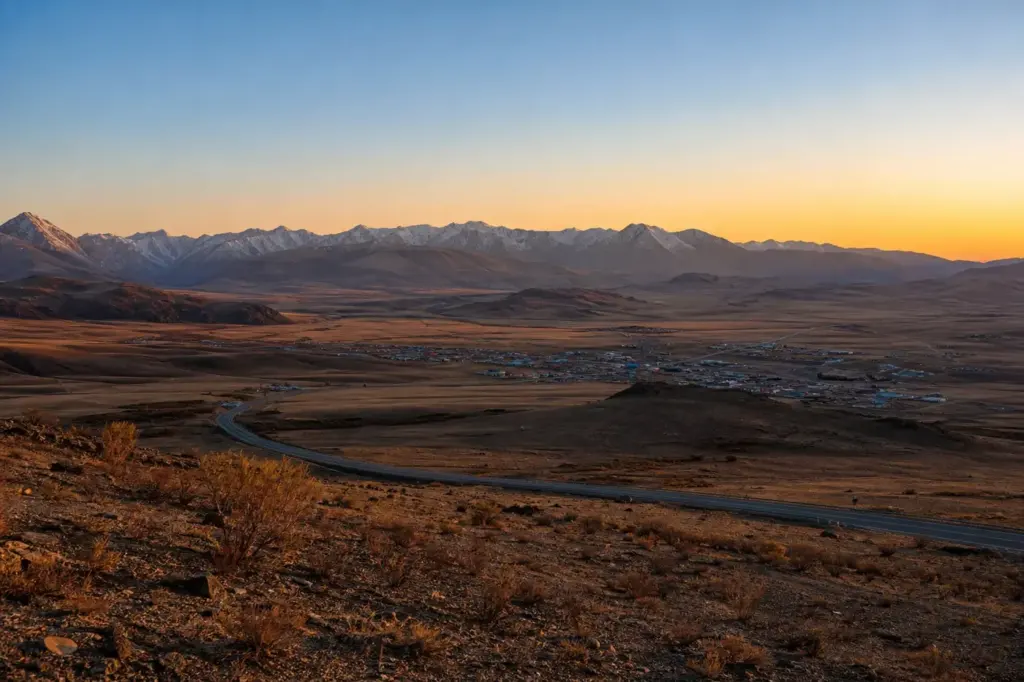
Aktash sits on the southern slope of the Kuray Mountains at the intersection of two major highways: the famous Chuysky Trakt and the Ulagansky Tract. The name comes from Turkic and means “white stone.” Though the village arose only in 1957 as a mining settlement, it has transformed into a practical base for travelers venturing into the high Altai plateau, where landscapes shift from forested valleys to stark, windswept ridges.
The settlement sits at an elevation where the climate turns harsh in winter but opens dramatically in summer. Most visitors stay briefly to access nearby attractions—geysers, ancient burial sites, and scenic drives—rather than treating Aktash itself as a destination. The village has become a gateway to some of the most remote and least visited corners of the Altai.
Quick Facts
| Russian name | Акташ |
|---|---|
| Built / opened | 1957 |
| Address | Ulagansky District, Altai Republic, Russia Google MapsApple MapsYandex Maps2GIS |
| Best time to visit | Summer (June to September): Best season. Roads are passable, weather is stable (though cold at night), and mountain trails are snow-free. July and August are warmest but also the busiest with tourists. Expect afternoon thunderstorms, especially in July. Late June and early September offer better light and fewer crowds but shorter daylight hours.
Autumn (September to October): Clear skies and vivid light. Snow typically does not arrive until late October at lower elevations, though mountain passes may see snow earlier. Days become short quickly. Winter (November to April): The Chuysky Trakt can be treacherous; the Ulagansky Tract is often closed. Temperatures drop to –20°C (–4°F) or lower. Only experienced winter travelers should visit. Spring (May): Transition season. Lower elevations are clear but mountain passes are still snowy. Roads can be muddy. Not ideal for most visitors. |
| Recommended duration | 2–4 hours |
What Is (and Isn't) Part of a Visit to Aktash, Altai Mountains?
| Part | Status | Notes |
|---|---|---|
| Aktash village and surrounding area | Included in the standard ticket | Free access to the village itself, roads, and most natural attractions within walking distance. |
| Geyser Lake | Included in the standard ticket | Free access; a short walk from the highway. No official entrance fee or registration required. |
| Pazyryk Burial Mounds archaeological site | Separate ticket or institution | Access rules vary; some areas are restricted archaeological reserves. Contact local authorities or guides for current access. A guide may be required or recommended. |
| Kyzylchin River Valley (Martian Valley) | Included in the standard ticket | Free access from roadside; no fee for stopping or brief exploration. Hiking into the valley may require local guidance. |
| Mountain treks into the Kuray Range | Separate ticket or institution | Free access to trails, but hiring a local guide is essential for safety and navigation. Guides can be arranged through accommodation bases in Aktash. |
| Ulagansky Tract and southern roads | Included in the standard ticket | Public roads; free to travel. Private accommodation and services along the route require payment. |
Why Visit Aktash, Altai Mountains?
Aktash serves as a practical stopping point on the long drive south along the Chuysky Trakt toward the Mongolian border. The nearby Geyser Lake offers an unusual natural phenomenon visible right from the highway. Pazyryk burial mounds—ancient Scythian tombs—lie nearby and attract archaeology enthusiasts. The Kyzylchin River valley with its rust-colored cliffs (called Martian Valley) lies just nine kilometers away. Most importantly, Aktash is nearly the last resupply point before the landscape becomes truly desolate; from here, roads lead deeper into the mountains toward Lake Teletskoye and the high plateau.
Highlights of Aktash, Altai Mountains
Geyser Lake (Aktashskoye or Blue Lake)
A small crater lake about 25–30 meters across sits just off the highway east of the village, hidden behind deciduous trees. The lake is notable for occasional underwater thermal vents that send sand and foam to the surface, creating visible rings of disturbed water—the "geysers" that give it its name. The phenomenon occurs sporadically; you might witness it or find only still water. The lake remains ice-free even in winter, a sign of underground thermal activity. A ten-minute walk from the road; check with locals for the exact trailhead.
Tip: Visit in the morning when light is best for photographing the water circles, if they appear. The walk is short but muddy in wet seasons—bring appropriate footwear.
Pazyryk Burial Mounds
Ancient Scythian tombs from around the 5th century BC lie near Aktash and mark an important archaeological site where elaborate frozen barials preserved textiles and artifacts now displayed in major museums. The mounds themselves are low earth structures, not visually dramatic, but the site carries historical weight for those interested in early steppe cultures. The actual excavation sites are archaeological reserves; visitors can see the mounds from a distance or with a guide familiar with site access rules.
Tip: Bring binoculars to view the mounds from a distance if close access is restricted. Ask locals or your accommodation about current access; archaeological rules change.
Kyzylchin River Valley (Martian Valley)
Nine kilometers southwest of Aktash, the Kyzylchin River cuts through mountain slopes of vivid rust-red and crimson stone, creating a landscape often compared to Mars. The colors come from iron oxide in exposed geological layers. The valley can be reached by car for a roadside stop or by hiking trails that descend into the gorge. In clear light, the color contrasts are striking; on overcast days the effect is muted.
Tip: Early morning or late afternoon light brings out the reds. Summer thunderstorms can make tracks muddy and difficult; check conditions before attempting a hike down into the gorge.
Chuysky Trakt at Aktash
The highway itself is worth noting as a scenic landmark. The Chuysky Trakt (State Route M–52) is one of Russia's most dramatic drives, linking the Siberian plain to the Altai plateau. At Aktash, you are roughly halfway along the most scenic section. The road at this point climbs onto the high Kurai Steppe and offers panoramic views of layered mountain ridges. Numerous pullouts allow for photos.
Tip: Stop at marked viewpoints rather than improvising; the road can be treacherous in winter and shoulders may be unstable. Spring and autumn storms can appear suddenly at this elevation.
Ulagansky Tract (Southern Alternative Route)
The Ulagansky Tract heads south from Aktash toward the remote Chulyshman Valley and eventually Lake Teletskoye. This road is less traveled than the Chuysky Trakt and passes through deeper forest and steeper terrain. It is a reasonable side route for travelers with time and off-road capability. The road becomes increasingly rough; a high-clearance vehicle is recommended for summer travel.
Tip: This route is snowbound in winter. Summer is navigable but slow. Fill up with fuel in Aktash; services become very sparse southward.
Kurai Mountain Range (Hiking Access)
The Kuray Mountains rise immediately south of the village and offer trekking routes for experienced hikers. The highest peaks exceed 3,100 meters; passes between them range from 2,500 to 2,800 meters. Trails are unmarked and weather can turn rapidly. Most organized hikes depart from Aktash or nearby bases, with routes ranging from day walks to multi-day treks. Snow persists into June at higher elevations.
Tip: Hire a local guide; self-navigation is risky in poor visibility. Bring detailed maps and a GPS device. No established shelter system exists on remote high trails.
Atmosphere
Aktash feels like a frontier outpost rather than a typical village. The architecture is plain Soviet-era housing and newer tourist base buildings; there is no historic core or town square. The village sits on a windswept open plain at significant elevation, which means the weather can be severe and sudden. Summer brings clear skies and intense light; winter is brutally cold with heavy snow. In summer, the village fills with transit travelers—truck drivers on the Chuysky Trakt, hikers preparing for mountain expeditions, and tour groups between buses. The atmosphere is practical rather than charming: a place to refuel, eat, sleep, and move on. The nearby landscape dominates the experience, not the settlement itself.
History of Aktash, Altai Mountains
Aktash emerged in the 1930s as a Soviet mining settlement, specifically to exploit mercury and other ore deposits in the Kuray Mountains. The area sits within the Kurai Mercury Zone, a geological region with significant mineral wealth. Mining and logging drove settlement; the official founding as a village occurred in 1957.
From 1957 until 1994, Aktash held the status of an “urban-type settlement” (посёлок городского типа), a Soviet administrative category for small industrial towns. This reflected its role as a mining center with planned infrastructure. When mineral extraction declined and mines closed, the settlement’s economic basis vanished.
In 1994, Aktash was reclassified as a rural locality (село), losing its urban-type designation. This administrative change reflected economic reality: the industrial function had ended. Since then, the settlement has transformed toward tourism. Its location at the crossroads of two major highways—the Chuysky Trakt and Ulagansky Tract—made it valuable as a stopping point for travelers heading toward Lake Teletskoye, the Mongolian border, and remote mountain regions. Tourist bases and accommodations have proliferated. Today, Aktash survives not on mining but on its role as a gateway and resupply hub for mountain travelers.
Legends and Myths about Aktash, Altai Mountains
Mercury in the Mountains
Legend – historically unreliable. Local lore attributes various ailments and unusual phenomena in Aktash to mercury contamination from the former mining operations. Residents and visitors report stories of discolored water, strange animal behavior, and persistent health complaints. While mining did leave traces of mercury in the environment (confirmed by modern scientific studies), the folklore often exaggerates or mystifies the geological reality. The actual hazard exists but is scientifically understood, not truly mysterious.
Geyser Lake's Thermal Heart
Disputed by historians. Local guides claim that Geyser Lake never freezes because it is fed by deep thermal springs, sometimes attributing the phenomenon to ancient geological forces or shamanic significance. The thermal explanation is geologically plausible—the water temperature does remain above freezing—but visitors often expect dramatic geyser displays that rarely materialize. The lake has become a symbol of hidden Altai power, though it is more often quiet than active.
Tickets and Booking for Aktash, Altai Mountains
Aktash has no paid admission as a destination. Attractions in and near the village are free to access. Accommodations and services (guesthouses, tourist bases, meals, guided excursions) are available at various price levels; book in advance during summer peak season or when traveling as part of an organized tour. No single official visitor website exists; ask your accommodation provider for current information on local activities and access to sights such as Pazyryk mounds or mountain trails. Mountain guides and hiking trips must be arranged locally through guesthouses or tour operators in Aktash; rates and availability vary. Road conditions: check local information before traveling the Ulagansky Tract southward in spring or autumn, as mudslides and flooding can affect access.
Plan and Book
Suggested itineraries Aktash, Altai Mountains
2 hours
Stop at Geyser Lake for a short walk (ten minutes each way), rest at a roadside café, and continue on the Chuysky Trakt. This is the minimum stop for travelers passing through.
Half day (3–4 hours)
Visit Geyser Lake in the morning, drive to the Kyzylchin River Valley (Martian Valley) in the afternoon, photograph the red cliffs, and return to Aktash. Stay overnight or continue on.
1 day
Morning: explore Geyser Lake and nearby forest trails. Afternoon: visit Martian Valley and walk partway into the gorge. Evening: return to Aktash for dinner and rest. This pace allows comfortable exploration of the two main natural sights without rushing.
2–3 days
Use Aktash as a base for a guided mountain trek into the Kuray Range, a visit to Pazyryk sites with a guide, and drives along both the Chuysky and Ulagansky tracts. Arrange guides and accommodation in advance. This allows a fuller experience of the region's geology and archaeology.
How to Get to Aktash, Altai Mountains
By car: Aktash lies on the Chuysky Trakt (State Route M–52) at kilometer marker approximately 798–800 from Novosibirsk, roughly 460 kilometers (285 miles) south of Gorno-Altaysk. The drive from Gorno-Altaysk takes approximately 7–8 hours on a paved highway with curves and altitude changes. The road is generally well maintained but can be snowbound or icy in winter (October to April). Many travelers break the journey in intermediate towns such as Chemal or Ust-Sema.
By public transport: Limited minibus services operate between Gorno-Altaysk and southern destinations; schedules change seasonally. Check with local transport terminals or hotels. These journeys are slow (12+ hours) and infrequent.
Within Aktash: The village is small enough to explore on foot. Main services (guesthouses, shops, cafés) are within a few hundred meters of the highway. Geyser Lake lies about one kilometer from the main road; ask locally for the exact trailhead or arrange a lift.
Accessibility
Aktash and its main attractions are not designed with accessibility in mind. The village has no formal public transportation, and roads leading to natural sights are unpaved or subject to weather damage. Geyser Lake requires a short walk on a dirt trail. Martian Valley involves either roadside viewing or hiking; trails are rough and steep in places. Mountain treks require fitness and are not suitable for mobility-limited visitors. Tourist bases in Aktash typically offer basic rooms without specific accessible features; ask when booking. No specific information about wheelchair access or accessible toilets is readily available; contact accommodation providers directly for specific needs.
Food Nearby
Aktash has a small number of cafés and small shops serving the highway traffic and resident population. Tourist bases often provide meals for guests. The selection is basic: soups, meat dishes, bread, tea, coffee. Fresh produce is limited; stocking up on supplies before arriving is wise if you have dietary preferences. Supplies should be purchased before heading south on the Ulagansky Tract or north along the Chuysky Trakt toward remote areas, as services become very sparse.
What to Bring
Layers are essential: high elevation and sudden weather shifts mean warm clothing is necessary even in summer. Bring a windbreaker, fleece, and rain jacket. Sturdy hiking boots are important for trail walks. Sunscreen and hat protect against intense high-altitude UV and reflection off rocks. A water bottle and snacks are important; facilities are minimal on trails. If hiking into mountains or remote areas, bring a detailed map and compass or GPS device. Insect repellent is useful in summer around forest areas. Carry cash; ATMs are few and unreliable. A medical kit is prudent if traveling into remote areas or planning serious hikes.
Best Views and Photo Spots of Aktash, Altai Mountains
Chuysky Trakt pullout north of Aktash
Panoramic view over the Kurai Steppe toward the North Chuysky ridge. Layered mountains in blues and greens recede into the distance. The road curves dramatically through the landscape. Best in clear weather when contrast is sharp.
Best time: Late afternoon light, early summer (June-July) when snow is off the peaks and vegetation is green.
Geyser Lake shore at sunrise or sunset
The small lake reflects sky and surrounding trees, framed by deciduous forest. The water surface may show thermal disturbance circles if active. The dense trees create a hidden-world atmosphere.
Best time: Early morning or golden hour at sunset when light is warm and soft. Visit after rain when the landscape is lush and wet surfaces reflective.
Kyzylchin River Valley (Martian Valley) from the roadside overlook
Rust-red and crimson canyon walls drop steeply to the river. The colors are intense in direct sunlight. Eroded slopes create abstract patterns. Distant blue mountains frame the foreground reds.
Best time: Morning to mid-afternoon when the sun illuminates the western-facing red cliffs. Late summer (August-September) has the clearest air and sharpest colors.
Kuray Mountain peaks above Aktash
Jagged summits rise south and west of the village, often catching early light. The foreground is sparse steppe vegetation; middleground is forest; background is bare rock peaks. Scale is vast.
Best time: Very early morning before cloud formation, late May or early June when snow is partly melted and contrasts are sharp.
Photography Rules
Photography is unrestricted in public areas. The landscape around Aktash and along the highways offers dramatic views, especially the Kyzylchin River Valley red cliffs in early morning or late afternoon light. No restrictions on personal photography exist at Geyser Lake. For Pazyryk burial mounds, ask your guide about photography policies; some archaeological sites restrict image use. No drones are permitted in protected or archaeological areas; check locally before flying.
Family Suitability
Aktash is suitable for families with school-age children interested in nature and outdoor activities. The short walk to Geyser Lake is manageable for children ages 8+. The Martian Valley drive and short hike can involve younger children if conditions are good. However, the village itself offers few activities designed for children; entertainment is outdoors in nature, not in museums or attractions. Very young children (under 5) may find extended travel on mountain roads tiring. Winter travel is not recommended for families. Accommodation is basic but adequate. The main appeal is scenery and outdoor exploration rather than child-oriented activities; families should come prepared to entertain children with nature walks and drives.
Russia Vibes Tips
- The Geyser Lake thermal vents are unpredictable. On some visits you will see active sand and foam rings; on others, the water will be still. Visit if you pass, but do not make it the sole focus of a trip. The lake is noteworthy more for geological interest than spectacle.
- Book mountain guides or hiking excursions in advance. Do not expect to arrange a serious trek spontaneously. Local bases can connect you with experienced guides, but availability in high season is limited. Multi-day treks require planning.
- The Ulagansky Tract southward becomes increasingly rough. Fill your fuel tank in Aktash before heading south toward Lake Teletskoye or the Chulyshman Valley. Services and fuel disappear rapidly.
- Weather at this elevation can change in hours. Even in summer, afternoon temperatures can drop and storms can form quickly. Do not rely on morning weather forecasts for afternoon plans.
- The Pazyryk archaeological sites are sensitive. Respect any restrictions, stay on marked trails, and do not touch or remove artifacts or stones. Access rules can be strict; ask locals before visiting.
- If traveling the Chuysky Trakt in shoulder seasons (May, September, October), check road conditions before departing. Snow, mud, and rockfalls can close sections unexpectedly. Winter travel requires serious preparation and is risky for unprepared travelers.
Explore Nearby Aktash, Altai Mountains
Related guides
 Altai Mountains: Best Places, Scenic Routes and Travel Tips
Main image: AI-generated illustration. It may not show the place exactly as it looks.
 Best Hiking Trails and Nature Walks, Lake Baikal: Coastal Routes and Alpine Treks
Main image: AI-generated illustration. It may not show the place exactly as it looks.
Browse more: All Altai Mountains · All Hidden Russia · All Sightseeing · All Sightseeing in Altai Mountains
FAQ: Aktash, Altai Mountains
Is there an admission fee to visit Aktash?
No. The village itself is free to visit. Attractions such as Geyser Lake and Martian Valley have no entrance fee. Accommodations, meals, guided tours, and mountain excursions are paid services; prices vary. Archaeological sites like Pazyryk mounds may have restrictions; check locally.
How long should I stay in Aktash?
Most travelers spend a few hours to one day here. A short stop covers Geyser Lake and Martian Valley. If you are doing a guided mountain trek or wish to explore the Pazyryk sites and surrounding region thoroughly, plan 2–3 days. Aktash is primarily a stopping point, not a destination for extended stays.
Can I reach Aktash without a car?
Yes, but with difficulty. Minibuses run sporadically between Gorno-Altaysk and southern destinations, with stops in Aktash. Schedules are seasonal and unreliable. Organized tours from Gorno-Altaysk or other towns often include Aktash as a stop. Without a car or tour, you may wait days for transport onward.
Is the Ulagansky Tract passable in summer?
Generally yes, though conditions vary. The road is unpaved, narrow, and steep in places. In wet weather, mud can block passage. Summer (July-August) is most reliable. Spring and autumn are uncertain. A high-clearance vehicle is recommended. Check with locals in Aktash before attempting this route; conditions change.
What is there to do if the weather is bad?
Options are limited. Tourist bases may offer indoor activities or meals. The highway itself is closed or dangerous in heavy rain or snow. Bad weather is a reason to stay in accommodation and wait it out, or to accelerate your journey onward. Aktash is not equipped for entertainment during poor weather.
Can I hire a guide for mountain treks from Aktash?
Yes. Tourist bases and guesthouses in Aktash can connect you with local guides experienced in the Kuray Mountains. Guides speak Russian; English-speaking guides are rare. Book in advance, especially in July-August. Rates and services vary; confirm details when booking.
Are there ATMs or places to change money in Aktash?
Aktash is a small settlement. ATM availability is unreliable. Bring sufficient cash (rubles) before arriving. Some tourist bases may accept card payments, but do not rely on it. Plan your budget conservatively.
Is Aktash safe for solo travelers?
Yes, generally. The village is small and peaceful. Hiking alone into remote areas requires experience and caution. Winter travel or traveling in bad weather increases risk. Book accommodation in advance so someone knows your whereabouts. Tell locals of your plans if hiking.
Russia Vibes is a one-person project. A coffee keeps it going
How we research and update our guides
About this guide: AI assistance and accuracy
This guide is created with the help of AI and is based on official sources where available. Mistakes can still happen. Opening hours, prices, rules and other details are given to the best of our knowledge as of the date shown and can change without notice. It offers general recommendations only, not professional, legal or travel advice. Please confirm important details with the official source before you travel; you are responsible for your own plans and decisions.
Packing for this trip
* Affiliate link: as an Amazon Associate we earn from qualifying purchases at no extra cost to you.

Take this guide with you
Get a free PDF of this guide to print or read offline: key facts, tips and a map link on a few clean pages.
Report an issue on this page
Paying for your trip: please read
International sanctions affect payments between Russia and many other countries. In practice, cards issued in the EU, the UK, the US and several other countries often do not work in Russia, Russian cards usually do not work abroad, and some booking platforms, airlines and payment providers limit or suspend their services for Russia. The situation changes frequently.
We do not give legal or financial advice, and this site does not encourage anyone to break or circumvent sanctions. Whatever you plan, you are responsible for following the laws and regulations that apply to you, including those of your country of residence and citizenship.
Many travelers still organise their stay lawfully. It is worth asking your bank or payment provider what is currently permitted, contacting hotels, tour operators and carriers directly about the payment methods they accept, and checking which services are open to customers from your country. Clarify payment, cancellation and refund terms before you commit to a booking, and keep your plans flexible.
Partner links on this site may not be available in every country, and prices, availability and rules in our guides can differ from what you see when you book.