
Last updated
Volgograd has earned a reputation for exceptional value: many of the city’s most important attractions cost nothing to visit, and the low cost of living means money goes far for food and transport. This guide covers the best budget-friendly attractions—entries you’ll pay little or nothing for, plus tips on timing, transport and how to make the most of a small travel budget in this city centered on World War II history.
The list includes 10 attractions chosen for free or minimal entry cost, accessibility by public transport, and genuine appeal to visitors on a tight budget. Budget travelers and history enthusiasts will find the most to explore here.
At a Glance
| # | Place | Best for | Good to know |
|---|---|---|---|
| 1 | Mamayev Kurgan Memorial Complex | Free, WWII landmark | Central Volgograd; free entry to grounds and Motherland Calls statue. Hall of Military Glory museum (inside complex) is paid. |
| 2 | The Ruins of the Mill (Grudinin Mill) | Free historic ruin | South Volgograd, near Lenin Square; free entry. Panorama Museum is separate and charged. |
| 3 | Central Embankment of Volgograd | Free riverside walk | City center, accessible throughout. Fully free. |
| 4 | Pavlov's House | Free historic building | City center on Sovetskaya Street; viewing is free (exterior only). |
| 5 | Volga-Don Canal Banks | Free waterway walk | West of city center; free to walk. No admission charges for the waterway itself. |
| 6 | The Eternal Flame | Free memorial | Central district; free entry. |
| 7 | Central Park of Culture and Recreation | Free park | Central Volgograd; free entry. |
| 8 | Heroes Alley (Alyeja Geroev) | Free outdoor memorial | City center; free access. |
| 9 | Volgograd Speed Tram | Budget transport experience | Throughout city; very low tram fare (paid like all public transport). Primarily a practical transport option, not a tourist ride. |
| 10 | Railway Station (Volgograd 1 Station) | Free architecture viewing | City center; free to enter and view (no ticket required to walk through). |
How We Chose
These attractions were selected based on official sources confirming free or low-cost entry, verified public accessibility, and their appeal to budget travelers. Most sites related to the Battle of Stalingrad can be explored without paid admission, though optional museums on the same grounds do charge entry. Entries are ordered by fit for budget travel—the most cost-effective and must-see sites first.
- Free entry: no admission fee to the main site or monument
- Paid but budget-level (₽): entry costs fall in the low range for visitors
- Verified currently open and accessible by tram or walking
- No tour or guide required to enjoy the site
1. Mamayev Kurgan Memorial Complex – Free, WWII landmark
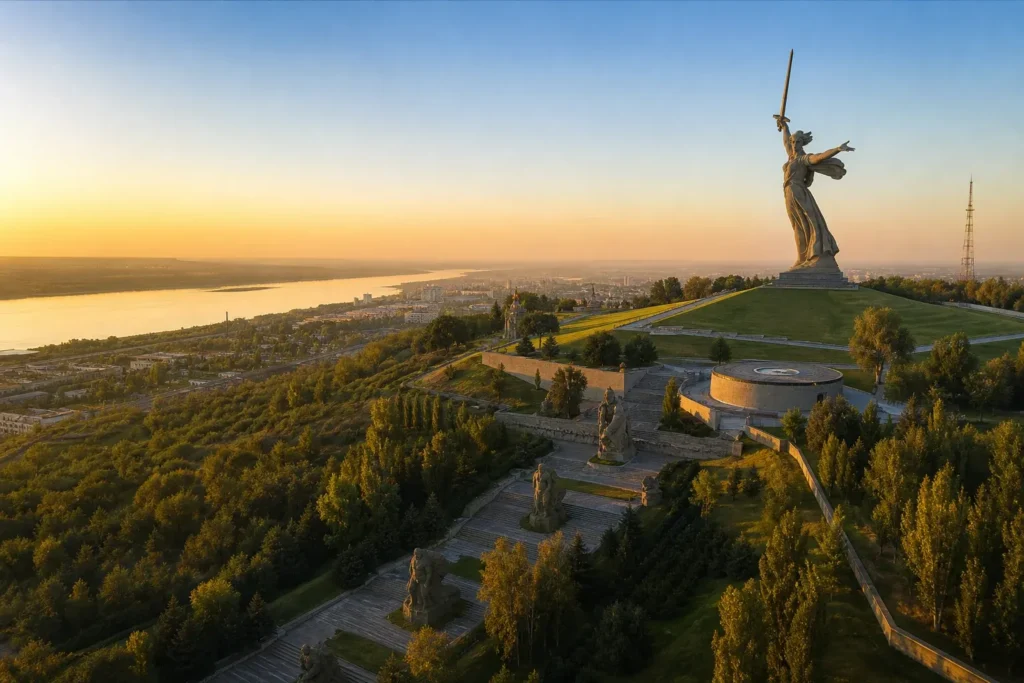
The heart of Volgograd's war memory sits on a strategic hill where Soviet forces held ground during the Battle of Stalingrad. The grounds are free to explore, with multiple sculptures and monuments spread across terraced paths leading upward. At the top stands the Motherland Calls statue, 85 meters tall, visible from across the city. Walking the complex takes 2–3 hours; bring sturdy shoes as paths involve steps and slopes.
Good to know: Central Volgograd; free entry to grounds and Motherland Calls statue. Hall of Military Glory museum (inside complex) is paid.
Tip: Visit early morning or late afternoon to avoid crowds and get the best light for photographs of the statue and Volga views from the hilltop.
2. The Ruins of the Mill (Grudinin Mill) – Free historic ruin
One of Russia's largest remaining WWII relics, this is what remains of a steam-powered mill built in 1903, badly damaged during the Battle of Stalingrad. The roofless brick walls still stand, their stark pattern of bullet holes and shelling marks visible across the facade. Visitors can walk around the exterior freely; the interior is fenced off for safety reasons. It lies just south of the Panorama Museum.
Good to know: South Volgograd, near Lenin Square; free entry. Panorama Museum is separate and charged.
Tip: Approach from different angles and times of day to see how light plays across the damaged walls—it's a powerful reminder of urban combat.
3. Central Embankment of Volgograd – Free riverside walk
A long promenade runs along the Volga River through the city center, offering open-air space to stroll, rest on benches, and watch the water. The embankment connects several free sites and was reconstructed after WWII. Wide pedestrian paths, views across the river, and periodic sculptures and memorials make it useful both as a route between attractions and as a place to sit and observe city life.
Good to know: City center, accessible throughout. Fully free.
Tip: Walk the embankment at sunset or dusk when crowds thin out and the river light is at its most photogenic.
4. Pavlov's House – Free historic building
This modest apartment building became a symbol of Soviet resistance during the Battle of Stalingrad, when a small group of soldiers held it against German attack for weeks. The exterior bears marks of combat—bullet holes and shelling damage are visible on the walls. The building is a functioning residential apartment block, so entry is not possible, but the facade and surrounding square are freely accessible and historically significant.
Good to know: City center on Sovetskaya Street; viewing is free (exterior only).
Tip: Stand directly across the street to see the damage patterns clearly. The Lenin Monument sits nearby, offering context and another vantage point.
5. Volga-Don Canal Banks – Free waterway walk
This canal, opened in 1952, connects the Volga and Don rivers—a major engineering feat. The banks are open to walk freely, offering a different perspective on Volgograd's infrastructure and landscape. Small museums and monuments nearby document the canal's history, though walking the banks themselves costs nothing. The area is less crowded than the central embankment.
Good to know: West of city center; free to walk. No admission charges for the waterway itself.
Tip: Walk in the early morning when the water is calm and reflective, and the area is quieter than during the day.
6. The Eternal Flame – Free memorial
A flame burns at a memorial site honoring fallen soldiers, one of several war remembrance sites throughout Volgograd. The flame is situated in a quiet area with inscriptions and modest surroundings. It fits into broader exploration of the city's many memorials and costs nothing to visit.
Good to know: Central district; free entry.
Tip: Visit this before heading to Mamayev Kurgan to understand the multiple layers of memorial sites across the city.
7. Central Park of Culture and Recreation – Free park
A large green space in the city center with gardens, walking paths, benches, and occasional sculptures. The park is free to enter and suitable for families, couples, or solo travelers looking for outdoor relaxation. Trees provide shade in summer, and the park offers a break from walking between museums and monuments.
Good to know: Central Volgograd; free entry.
Tip: Bring a picnic from a local market or supermarket—park benches make good lunch spots, and food from local stores costs very little.
8. Heroes Alley (Alyeja Geroev) – Free outdoor memorial
A boulevard in the heart of the city dedicated to local heroes, with sculptures and plaques. The site is pedestrian-friendly and free to walk. It combines open space with memorial elements and is less crowded than Mamayev Kurgan, offering a quieter way to reflect on the city's WWII history.
Good to know: City center; free access.
Tip: Walk Heroes Alley in the evening when it is lit and less busy, giving a different but equally atmospheric experience.
9. Volgograd Speed Tram – Budget transport experience
A scenic tram line runs through the city, and taking it is affordable public transport. Visitors ride the open-air tram to reach Mamayev Kurgan and other sites—it's one of the cheapest ways to move around while seeing the city. The ride itself becomes part of the experience, passing through neighborhoods and along the river.
Good to know: Throughout city; very low tram fare (paid like all public transport). Primarily a practical transport option, not a tourist ride.
Tip: Use the tram to reach Mamayev Kurgan rather than taking a taxi—it costs a fraction of the fare and offers city views.
10. Railway Station (Volgograd 1 Station) – Free architecture viewing
The main railway station is an example of Soviet-era architecture and a functional hub. The building itself is worth viewing for its design; the interior waiting areas are open to the public even if you are not traveling. The station reflects mid-20th-century construction and serves as a meeting point for understanding how the city was rebuilt after WWII.
Good to know: City center; free to enter and view (no ticket required to walk through).
Tip: The station is a good landmark for orientation and offers affordable cafes and shops; visit during quieter hours to appreciate the architecture without crowds.
Russia Vibes Tips
- Buy a Podorozhnik transport card (refillable transit card) at any metro booth or kiosk. It reduces tram and bus fares compared to single tickets and makes moving between free sites much cheaper. Most attractions are reachable by tram for a small fare.
- Spring (May) and autumn (September–October) are best for exploring free outdoor sites—summer heat can be intense, and winter brings cold, icy paths that make climbing Mamayev Kurgan difficult. Dress appropriately for the season.
- Don't confuse free grounds with paid museums. Mamayev Kurgan is free to walk around, but the Hall of Military Glory (museum inside) charges entry. The Panorama Museum and Planetarium are separate, paid attractions. Plan which paid sites—if any—fit your budget.
- Volgograd supermarkets (Pyaterochka, Magnit, Lenta) sell cheap prepared food, drinks, and snacks. Buy lunch here and eat in parks or on benches along the embankment instead of restaurants—a significant budget saving.
- Mamayev Kurgan can be very crowded on weekends and around war memorial dates. Weekday visits are quieter and allow more time to pause and reflect at sculptures along the path.
- The streets around the central embankment are walkable and relatively flat, making them easier than Mamayev Kurgan's slopes. Group free sites in the center into one day, then tackle the hill complex on another day to avoid fatigue.
Explore Nearby Budget-Friendly Attractions, Volgograd
Sights near Budget-Friendly Attractions, Volgograd
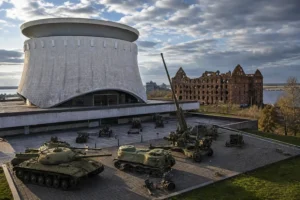 Volgograd Panorama Museum, Volgograd · typical visit: 2–3 hours
Main image: AI-generated illustration. It may not show the place exactly as it looks.
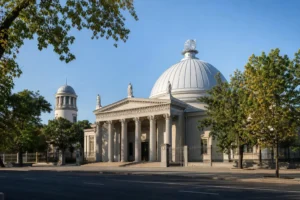 Volgograd Planetarium, Volgograd · typical visit: 1–2 hoursOpen daily 10:00–18:00
Main image: AI-generated illustration. It may not show the place exactly as it looks.
Browse more: All Free and Budget · All Guides · All Guides in Volgograd · All Volgograd
FAQ
Is entry to Mamayev Kurgan and the Motherland Calls statue really free?
Yes. The outdoor grounds and the base of the Motherland Calls statue are free to visit 24 hours a day. The Hall of Military Glory museum inside the complex charges entry, but you can see the main monument and walk the memorial sculptures without paying.
How do I get to Mamayev Kurgan by public transport?
Take a tram or bus from the city center. The tram to Mamayev Kurgan is the most affordable option—fares are very low. Ask locals for the current tram stop or check transport apps. The journey takes 15–20 minutes from downtown.
Can I visit all these free sites in one day?
Some yes, some no. Mamayev Kurgan alone takes 2–3 hours if you climb and rest. The central embankment, park, and surrounding memorials can fill another half-day. Spread them over 2–3 days to avoid fatigue and enjoy each site properly.
What should I wear when climbing Mamayev Kurgan?
Wear comfortable walking shoes with good grip. The paths involve steps and slopes. In winter, ice can make surfaces slippery—insulated, waterproof boots with good traction are essential. In summer, bring water and sun protection.
Are any of these sites currently closed?
The outdoor monuments and memorials are always accessible. The Hall of Military Glory inside Mamayev Kurgan has regular hours (closed Mondays). Check local sources before visiting during major holidays or unusual weather that might affect access to sloped outdoor areas.
Can I visit these sites without a guide?
Yes. All free sites are accessible without a guide. Multilingual plaques or signage explain some sites. For deeper historical context, consider renting an audio guide or joining a paid group tour at one of the paid museums (Panorama Museum).
Is there anywhere to eat or drink near free attractions?
Yes. The central embankment has cafes and small shops. Supermarkets (Pyaterochka, Magnit) near attractions sell snacks and drinks at low cost. There are no cafes on Mamayev Kurgan itself, so bring water and a snack.
Which free sites are best for photography?
Mamayev Kurgan at sunrise or sunset offers the best light. The Mill ruins photograph well from different angles throughout the day. The embankment at dusk reflects beautifully on the water. Avoid midday harsh sun for monuments.
Russia Vibes is a one-person project. A coffee keeps it going
How we research and update our guides
About this guide: AI assistance and accuracy
This guide is created with the help of AI and is based on official sources where available. Mistakes can still happen. Opening hours, prices, rules and other details are given to the best of our knowledge as of the date shown and can change without notice. It offers general recommendations only, not professional, legal or travel advice. Please confirm important details with the official source before you travel; you are responsible for your own plans and decisions.
International sanctions affect payments between Russia and many other countries. In practice, cards issued in the EU, the UK, the US and several other countries often do not work in Russia, Russian cards usually do not work abroad, and some booking platforms, airlines and payment providers limit or suspend their services for Russia. The situation changes frequently. We do not give legal or financial advice, and this site does not encourage anyone to break or circumvent sanctions. Whatever you plan, you are responsible for following the laws and regulations that apply to you, including those of your country of residence and citizenship. Many travelers still organise their stay lawfully. It is worth asking your bank or payment provider what is currently permitted, contacting hotels, tour operators and carriers directly about the payment methods they accept, and checking which services are open to customers from your country. Clarify payment, cancellation and refund terms before you commit to a booking, and keep your plans flexible. Partner links on this site may not be available in every country, and prices, availability and rules in our guides can differ from what you see when you book.Paying for your trip: please read
Report an issue on this page

Take this guide with you
Get a free PDF of this guide to print or read offline: key facts, tips and a map link on a few clean pages.