
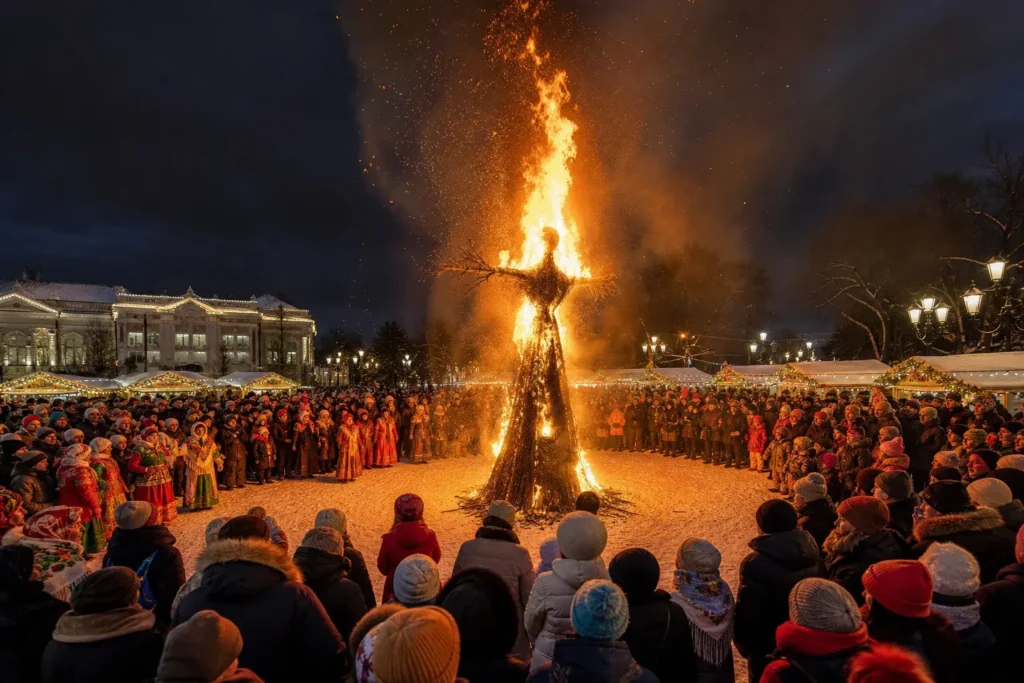
Maslenitsa in Volgograd is a week-long celebration of the end of winter and the arrival of spring. Known as Pancake Week or Butter Week, this ancient Slavic festival has been observed for thousands of years and remains one of Russia’s most joyful celebrations. In Volgograd, as throughout Russia, the holiday transforms public spaces into outdoor festivals filled with traditional music, dancing, games, and countless pancakes.
The festival falls in late February or early March each year, the timing determined by the Orthodox Christian Easter calendar. It serves as the final week of celebration before the 40-day Great Lent begins, making it a last opportunity for feasting and festivity. For visitors, Maslenitsa offers an authentic glimpse into Russian culture, tradition, and the warmth of community gathering after the long winter months.
Quick Facts
| Russian name | Масленица в Волгограде |
|---|---|
| Type | Recurring event |
| When | Every year in late February or early March |
| Typical duration | 7 days (one week) |
| Public holiday | No, an observance (regular working day) |
| District | Volgograd |
| Admission | Free (specific events may vary) |
| Best time to visit | Maslenitsa falls in late February or early March, depending on Easter. Dress warmly for late winter temperatures, typically ranging from -5°C to +5°C (23°F to 41°F), with heavy snow still possible. The final Sunday brings the largest crowds and most dramatic finale with the effigy burning. Late afternoon and evening times offer the liveliest atmospheres, particularly from Thursday onwards (Wide Maslenitsa). Overcast or snow conditions add to the traditional winter festival atmosphere. |
| Last updated | October 18, 2026 |
Dates, programs and prices change from year to year. Always check the official website for the current edition.
Why Visit Maslenitsa in Volgograd, Volgograd?
Maslenitsa showcases Russian folklore and traditions at their liveliest. You will experience centuries-old customs preserved through generations: pancakes symbolizing the sun, folk performances with traditional music and dance, and street games that bring together families and strangers alike. The atmosphere is welcoming and inclusive—markets and stalls offer opportunities to taste authentic blini with various toppings from sour cream to caviar, purchase handcrafted goods, and participate in outdoor festivities. The week culminates in the burning of a straw effigy of winter, a dramatic and symbolically meaningful finale that marks the farewell to the cold season and celebration of renewal.
What to Expect at Maslenitsa in Volgograd, Volgograd
Maslenitsa celebrations follow a traditional seven-day rhythm, with each day carrying its own customs and spirit. The week begins on Monday with the greeting of Maslenitsa itself, as communities prepare pancakes and set up outdoor celebrations. Pancakes become the centerpiece of daily life throughout the week, served with butter, sour cream, jam, caviar, and honey. Sledding, snowball fights, and traditional folk games fill public spaces, particularly during the latter half of the week known as ‘Wide Maslenitsa’ (Thursday through Sunday), when festivities intensify and people step away from regular work.
In Volgograd, as in cities across Russia, the celebration typically includes outdoor markets, folk performances, live music, dancing, theatrical performances, and craft workshops. Street stalls serve hot blini and traditional foods. The climax arrives on the final Sunday, called Forgiveness Sunday, when participants ask for forgiveness from loved ones and the straw effigy of winter is burned in a spectacular bonfire. This ritual symbolizes the farewell to winter and the triumph of spring, with crowds gathering to watch the flames and celebrate the turning of the season.
What It Means for Your Visit
During Maslenitsa week, Volgograd’s public spaces transform with temporary markets, stages, and gathering areas. City streets, parks, and squares typically host organized festivals with scheduled performances, games, and food vendors. While general city operations continue, many cultural institutions, museums, and theaters offer special Maslenitsa-themed programs and extended hours.
The festival draws significant crowds, particularly in the afternoons and evenings and especially during ‘Wide Maslenitsa’ (the latter four days). Families dominate daytime celebrations, while younger crowds typically arrive in the evening. Some streets may experience temporary closures or traffic restrictions to accommodate outdoor events and crowds.
For visitors, check the official Volgograd tourism website or local cultural institution announcements for the specific year’s schedule, which changes annually based on the Easter date. Most street celebrations and market stalls operate free of charge, though some special performances or premium food items may incur costs. Restaurants and cafes throughout the city often feature Maslenitsa specials and expanded menus with traditional dishes.
History of Maslenitsa in Volgograd, Volgograd
Maslenitsa is the oldest surviving Slavic holiday, with roots extending back to pagan times when pre-Christian Russian peoples marked the spring equinox with festivals celebrating the earth’s awakening. Originally celebrated around March 21, the seven-day festival featured bonfires, singing, games, and the consumption of foods believed to ensure fertility and abundance. The holiday venerated the pagan god Yarilo, god of fertility and vital force, and incorporated rituals designed to help the sun melt winter’s snow and banish the cold.
Following the Christianization of Kievan Rus in the 10th century, the Orthodox Church integrated Maslenitsa into its calendar, transforming it into the week immediately preceding Great Lent. The church adopted the holiday while preserving its essential character, establishing it as ‘Cheese Week’ or ‘Butter Week’ (from the Russian ‘maslo,’ meaning butter)—a final opportunity for the faithful to eat dairy products before the meat and dairy restrictions of the 40-day Lenten period leading to Easter. The week’s traditional structure crystallized over centuries, with each day acquiring specific names and associated customs.
During the Soviet era, the Communist regime initially treated Maslenitsa as a ‘bourgeois relic’ incompatible with socialist ideology. However, because Maslenitsa retained its essentially pagan character beneath its Christian overlay, it was never officially banned, unlike explicitly religious observances. Instead, the holiday was reimagined as a secular celebration called ‘Farewell to Russian Winter,’ stripped of religious language while preserving most of its traditional elements. The tradition was actively revived in the 1960s with renewed cultural programs and celebrations.
Today Maslenitsa stands as a robust cultural celebration throughout Russia and among diaspora communities worldwide. In cities like Volgograd, the week combines historical tradition with contemporary festivities, drawing both longtime residents and visitors to public celebrations. The holiday represents a unique fusion: ancient pagan sun-worship, Orthodox Christian observance, Soviet-era reinterpretation, and modern cultural preservation, all coexisting in a single joyful week.
Tickets and Booking for Maslenitsa in Volgograd, Volgograd
Maslenitsa is a free, publicly accessible celebration throughout Volgograd. Most outdoor festivals, markets, performances, and gatherings require no advance ticket purchase or registration. Street stalls, folk performances, and games are open to the public on a walk-in basis.
However, Maslenitsa dates change each year according to the Orthodox Christian Easter calendar, falling between late February and early March. Check the official city tourism website or local cultural institutions for the current year’s specific dates and event schedule. Some special performances or ticketed cultural events may be organized during the week; details are typically announced in December or January of the same year. General access to outdoor festivities and markets remains free throughout the week.
Get Tickets for Maslenitsa in Volgograd, Volgograd
How to Get to Maslenitsa in Volgograd, Volgograd
Maslenitsa celebrations occur throughout Volgograd’s public spaces, particularly in central areas and designated festival grounds. The main events and markets are typically concentrated in Volgograd’s central districts. Check with your hotel or the tourism information office for the specific locations of that year’s primary celebrations, which may vary annually.
Public transport—buses and marshrutkas (shared minivans)—serves all central areas. Taxis and ride-hailing services are widely available. If you are staying in central Volgograd, many festival sites are within walking distance of hotels and metro stations (Volgograd has a tram system rather than a metro in the traditional sense).
Accessibility
Outdoor public spaces hosting Maslenitsa are generally accessible to visitors of all mobility levels. However, traditional activities like sledding and rough terrain games may not suit those with limited mobility. Stalls and market areas are typically set up in accessible locations. No specific official accessibility information for Volgograd's Maslenitsa has been published, so contact local tourism services for details about specific year's event accessibility.
Food Nearby
During Maslenitsa, street vendors throughout festival areas serve traditional blini (pancakes) with various toppings—sour cream, jam, caviar, honey, mushrooms, and butter. Markets also offer traditional foods like pirozhki (filled pastries), meat pies, and hot beverages. Regular restaurants and cafes throughout Volgograd operate during the festival, often featuring special Maslenitsa menus with traditional dishes. Central shopping and dining areas remain open.
What to Bring
Dress in warm, layered clothing suitable for late winter temperatures (-5°C to +5°C / 23°F to 41°F), including a heavy coat, hat, gloves, and insulated boots. Many activities occur outdoors in cold conditions. Bring cash for street vendors and market stalls. Sunglasses are useful for snow glare. A small bag or backpack is practical for carrying food and purchases from markets.
Best Views and Photo Spots of Maslenitsa in Volgograd, Volgograd
Central festival grounds during the burning of the effigy (Forgiveness Sunday evening)
The dramatic finale of Maslenitsa as the large straw effigy representing winter is set alight, creating a spectacular scene with flames rising against the night sky and crowds of spectators gathered around the bonfire. This is the most visually striking moment of the entire week.
Best time: Sunday evening (the final day), as darkness falls, typically in the late afternoon or early evening. Check the specific time for that year's event.
Market stalls and food vendor areas during daytime
Vendors preparing hot blini at portable cooking stations, with colorful market stalls displaying traditional crafts, foods, and goods. The scene captures the texture of Russian folk culture with bright clothing, traditional craftsmanship, and the aroma of cooking.
Best time: Mid-afternoon when markets are in full operation and light is still good for photography, typically Saturday or Sunday when crowds are largest.
Folk performance stage areas
Performers in traditional Russian costumes dancing and singing, capturing the vivid colors of traditional dress, animated movement, and the energy of live cultural performances.
Best time: Scheduled performance times, typically afternoon and early evening. Check the event program for specific times.
Photography Rules
Photography is generally permitted throughout outdoor Maslenitsa celebrations and markets. No specific restrictions on cameras, phones, or tripods have been formally published. However, be respectful of performers and ask permission before photographing individuals closely. Avoid using flash during theatrical performances if they take place indoors.
Family Suitability
Maslenitsa is highly family-friendly and designed for all ages. The week features activities suited to children: games, sledding, craft workshops, and opportunities to watch performances and parades. Families dominate daytime celebrations (morning through mid-afternoon). Young children can participate in games and enjoy the festive atmosphere and food. Stroller access depends on venue setup, which varies by year; contact local tourism services for specific accessibility details if traveling with small children. The festival's joyful, inclusive character makes it welcoming to families.
Russia Vibes Tips
- Maslenitsa dates shift every year based on Easter. Before traveling, verify the exact dates for your visit year on the official Volgograd tourism website or a Russian Orthodox calendar—it can fall anywhere from mid-February to mid-March, dramatically affecting what you pack and how you plan.
- Wide Maslenitsa (Thursday through Sunday of the week) is when festivity peaks. If you have flexibility, plan to be in Volgograd during these four days rather than the earlier half of the week for the most vibrant atmosphere and largest selection of activities.
- The effigy burning on Forgiveness Sunday (the final Sunday) is the visual climax and draws crowds. Arrive early to secure a good viewing spot, especially if there's snow on the ground—standing room fills quickly as darkness falls.
- Bring cash. Street vendors and market stalls may not accept cards, particularly smaller operations. Having rubles on hand makes it easy to buy pancakes, crafts, and souvenirs without searching for ATMs.
- Winter clothing is essential. Even though spring is technically arriving, February and March in Volgograd remain bitterly cold with possible snow. Underdressing is a common visitor mistake that cuts your festival enjoyment short. Insulated boots with good traction are crucial for icy surfaces.
- Seek out local information upon arrival. The specific locations of that year's main celebrations, exact times of key events, and which streets will have markets vary annually. Tourist information offices, your hotel staff, or local residents can direct you to where festivities are happening in the current year.
Explore Nearby Maslenitsa in Volgograd, Volgograd
Related guides
 Tsentralny District: Historic Heart of Volgograd
Main image: AI-generated illustration. It may not show the place exactly as it looks.
 New Year Celebrations in Volgograd: Traditions and Public Festivities
Main image: AI-generated illustration. It may not show the place exactly as it looks.
 Volgograd City Day: Free Riverside Celebration in September
Main image: AI-generated illustration. It may not show the place exactly as it looks.
 Victory Day, Volgograd: Russia’s Most Solemn National Holiday
Main image: AI-generated illustration. It may not show the place exactly as it looks.
 Basilico, Volgograd: Italian Pasta, Pizza and Wine
Main image: AI-generated illustration. It may not show the place exactly as it looks.
Browse more: More in Volgograd · All Events & Holidays · All Events & Holidays · All Events & Holidays in Volgograd · All Volgograd
FAQ: Maslenitsa in Volgograd, Volgograd
What exactly is Maslenitsa and why is it celebrated?
Maslenitsa is an ancient Slavic holiday marking the end of winter and arrival of spring. Rooted in pagan sun-worship traditions, it was preserved by the Orthodox Church as the week before Lent begins. It combines pre-Christian and Christian customs, serving as a final week of celebration and feasting before the 40-day Lenten fasting period. The name comes from 'maslo' (butter), reflecting the tradition of eating dairy products during this week when meat is forbidden.
When is Maslenitsa celebrated each year?
Maslenitsa dates change annually because the holiday is tied to Easter in the Orthodox Christian calendar. It always falls in the seven days before the start of Great Lent (Clean Monday), typically occurring between mid-February and mid-March. For 2026, Maslenitsa runs February 16–22. Always check the official calendar or tourism website for your specific travel year.
What is the burning of the effigy about?
On Forgiveness Sunday (the final day), a large straw figure called the 'Maslenitsa scarecrow' or 'Lady Maslenitsa,' dressed in bright clothing, is ceremonially burned. This ritual symbolizes the farewell to winter and the triumph of spring. The tradition has roots in pagan fire rituals meant to help the sun warm the earth. Today it marks the joyful transition from the cold season and the approach of renewal.
Is Maslenitsa a public holiday in Russia?
Maslenitsa is not an official public holiday in Russia—it's a cultural celebration and observance rather than a non-working day. Offices, schools, and most businesses operate normally. However, many cultural institutions, museums, and theaters offer special Maslenitsa programs, and public spaces host festivals and markets. Tourism and hospitality sectors are particularly active during the week.
What should I expect to see and do at Maslenitsa celebrations?
Expect outdoor markets, food stalls serving pancakes (blini) with various toppings, folk performances with traditional music and dance, street games, sledding, theatrical performances, and craft workshops. The atmosphere is festive and family-friendly during the day, with larger crowds in the evenings. The week builds in intensity toward Sunday's effigy burning. Most activities are free and accessible to the public.
What are blini and why are they central to Maslenitsa?
Blini are thin pancakes made with butter, eggs, and milk. In Maslenitsa tradition, they symbolize the sun and its warmth. Russians consume blini throughout the week in enormous quantities, served with toppings like sour cream, jam, caviar, honey, mushrooms, and melted butter. There's a folk belief that eating many pancakes during Maslenitsa brings happiness and prosperity in the year ahead. They are served everywhere—at home, in restaurants, and at street stalls.
Do I need tickets or reservations to attend Maslenitsa?
No. Most Maslenitsa celebrations in public spaces—markets, performances, games, and the effigy burning—are free and open to the public on a walk-in basis. Food vendors and craft stalls sell items at standard prices but require no advance purchase. Some theaters or cultural institutions may offer special ticketed Maslenitsa programs; check locally for details. General street festivities require no booking or payment.
Is Maslenitsa celebrated throughout Russia or mainly in certain cities?
Maslenitsa is celebrated throughout Russia, from large cities to small villages. While major urban centers like Moscow and Saint Petersburg host large-scale public festivals, the holiday is observed nationwide with regional variations in customs and traditions. Smaller cities and towns often have more intimate, community-focused celebrations. Volgograd, as a major regional city, hosts organized public festivities open to all visitors and residents.
Russia Vibes is a one-person project. A coffee keeps it going
Last updated: October 18, 2026.
How we research and update our guides
About this guide: AI assistance and accuracy
This guide is created with the help of AI and is based on official sources where available. Mistakes can still happen. Opening hours, prices, rules and other details are given to the best of our knowledge as of the date shown and can change without notice. It offers general recommendations only, not professional, legal or travel advice. Please confirm important details with the official source before you travel; you are responsible for your own plans and decisions.
International sanctions affect payments between Russia and many other countries. In practice, cards issued in the EU, the UK, the US and several other countries often do not work in Russia, Russian cards usually do not work abroad, and some booking platforms, airlines and payment providers limit or suspend their services for Russia. The situation changes frequently. We do not give legal or financial advice, and this site does not encourage anyone to break or circumvent sanctions. Whatever you plan, you are responsible for following the laws and regulations that apply to you, including those of your country of residence and citizenship. Many travelers still organise their stay lawfully. It is worth asking your bank or payment provider what is currently permitted, contacting hotels, tour operators and carriers directly about the payment methods they accept, and checking which services are open to customers from your country. Clarify payment, cancellation and refund terms before you commit to a booking, and keep your plans flexible. Partner links on this site may not be available in every country, and prices, availability and rules in our guides can differ from what you see when you book.Paying for your trip: please read
Report an issue on this page

Take this guide with you
Get a free PDF of this guide to print or read offline: key facts, tips and a map link on a few clean pages.