
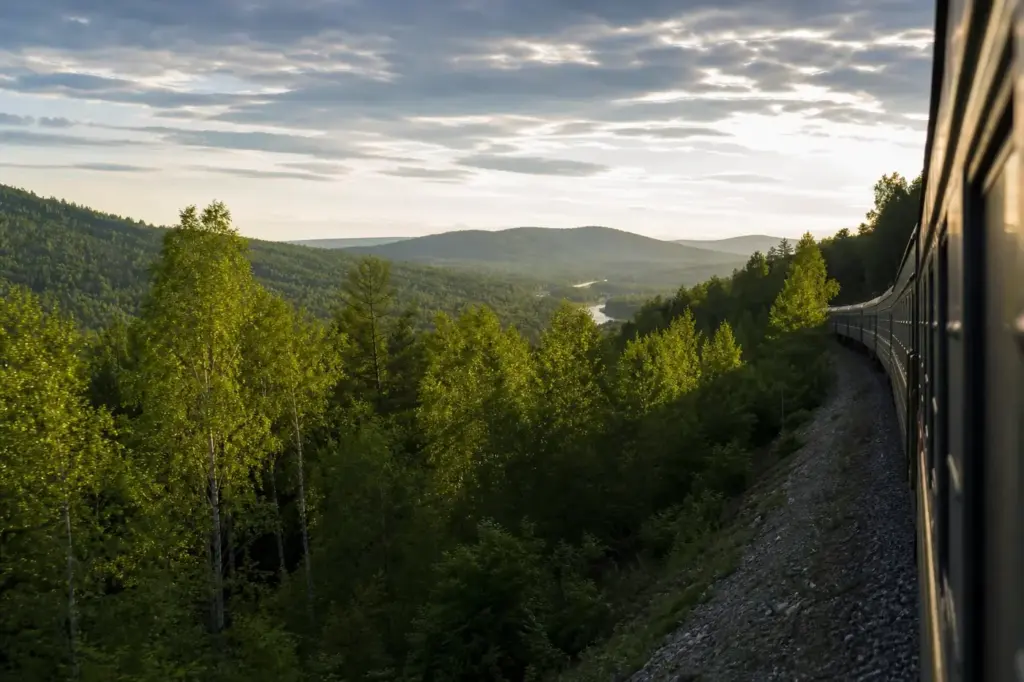
The Trans-Siberian Railway operates year-round, and the best time to travel depends on what you want to see and experience. Best time to travel the Trans-Siberian Railway varies: summer offers the warmest weather and longest daylight but attracts peak crowds; autumn and late spring bring milder conditions with fewer tourists; winter delivers a dramatic, frozen landscape but requires cold-weather experience and preparation.
This guide covers the five distinct seasons and what each offers visitors—from the practical details of weather and ticket availability to what landscapes and activities you’ll actually encounter at each time of year. Ten entries detail the characteristics, challenges and rewards of each seasonal window, plus practical tips for planning your journey.
At a Glance
| # | Place | Best for | Good to know |
|---|---|---|---|
| 1 | Late June to Early August | Peak season, warmest weather | Trans-Siberian Railway; book immediately when tickets go on sale (typically 45 days before departure). Buy early or risk sold-out berths. |
| 2 | May and Late September | Shoulder seasons, fewer tourists | Trans-Siberian Railway; tickets are easier to secure and moderately priced. Late spring and early autumn also see cheaper regional transport. |
| 3 | February and Early March | Frozen Lake Baikal, winter beauty | Trans-Siberian Railway; travel February or March, not December–January, for longer daylight (crucial for visibility of the landscape and your own morale). Bundle for extreme cold: -20 to -30°C. |
| 4 | June Specifically | Warm weather, fewer crowds than July–August | Trans-Siberian Railway; tickets moderately priced, available without the extreme competition of July–August. Check Olkhon Island ferry schedules if visiting Lake Baikal. |
| 5 | August | Late summer, easing crowds | Trans-Siberian Railway; tickets moderately priced, availability improving by late month. Still book in advance but pressure is less intense than July. |
| 6 | December and January | Winter extremes, limited daylight | Trans-Siberian Railway; book for late December around New Year if seeking festive holiday atmosphere in Moscow, or later for practical daylight. Prepare extreme cold gear. |
| 7 | April | Spring thaw, least advisable | Trans-Siberian Railway; weather and journey conditions are at their most unpredictable. Avoid if possible. |
| 8 | October and November | Early winter transition, unpredictable weather | Trans-Siberian Railway; tickets affordable and available. Bring flexible clothing for unpredictable temperatures. |
| 9 | July Peak Season | Warmest, busiest, most expensive | Trans-Siberian Railway; book exactly when sales open or use an agent. Expect prices 20–30% higher than other months. Expect company. |
| 10 | May: Early Spring for Lake Baikal | Spring freshness, Baikal access uncertain | Trans-Siberian Railway; tickets available, moderate pricing. Check Lake Baikal ferry status before booking stopovers involving island access. |
| 11 | Late September for Autumn Color | Autumn foliage, fewer tourists | Trans-Siberian Railway; tickets available and affordable. Daylight sufficient for viewing the landscape. Most regional activities and stopovers fully operational. |
How We Chose
Entries are arranged by climate appeal and practical advantage for first-time travelers, from most to least recommended. Each is verified against official travel guides and railway operator information. Information covers real weather conditions, daylight hours, ticket competition, crowding, costs and accessibility of key stopovers like Lake Baikal. Seasonal closures or restrictions that affect the entire route are noted; minor regional variations are acknowledged where they significantly alter the experience.
1. Late June to Early August – Peak season, warmest weather
The most popular window when daylight stretches to 20 hours in northern regions and temperatures across the route reach their warmest (typically 16–26°C). Lake Baikal is ice-free and swimmable. Train compartments stay comfortable without excessive heating. The landscape is lush green. However, tickets sell out quickly—book when sales open—and fares are highest. Station stops are busier, and crowds in major cities are at their peak. Most activities at stopovers are fully accessible.
Good to know: Trans-Siberian Railway; book immediately when tickets go on sale (typically 45 days before departure). Buy early or risk sold-out berths.
Tip: July is the busiest single month; consider traveling the first half of June or the last week of August for similar conditions with notably fewer competitors bidding for tickets and compartments.
2. May and Late September – Shoulder seasons, fewer tourists
Spring (May) brings warming temperatures (8–19°C), fresh greenery and wildflowers beginning to appear. Local mood is upbeat after winter. Autumn (September) mirrors this with color returning to birch forests and air cooling gradually (8–18°C). Both months see significantly fewer tourists than summer and offer cheaper tickets. Late September can still have comfortable train temperatures and accessible Lake Baikal conditions. Early May carries a small risk of remaining snow or ferry delays to island stopovers.
Good to know: Trans-Siberian Railway; tickets are easier to secure and moderately priced. Late spring and early autumn also see cheaper regional transport.
Tip: Late September offers an underrated advantage: late summer conditions with vastly fewer travelers, as peak season has ended but winter has not yet set in. Daylight is still substantial.
3. February and Early March – Frozen Lake Baikal, winter beauty
The winter landscape reaches its most photogenic state: Siberian forests snow-covered, rivers frozen solid, Lake Baikal transformed into transparent ice thick enough for walking and ice driving. Daylight begins lengthening noticeably (crucial compared to December–January). Temperatures average -20°C in Western Siberia, descending to -30°C in the Far East, but dry Siberian air makes cold more bearable than equivalent Moscow temperatures. Tickets and accommodation are cheapest all year. Fewer tourists mean quiet stations and intimate train compartments.
Good to know: Trans-Siberian Railway; travel February or March, not December–January, for longer daylight (crucial for visibility of the landscape and your own morale). Bundle for extreme cold: -20 to -30°C.
Tip: Aim for late February or early March specifically for Lake Baikal. By then ice is sufficiently thick for ice-driving tours, yet daylight has extended enough to photograph it. Winter trains are well-heated; the contrast between warm compartments and frozen landscape outside is part of the experience.
4. June Specifically – Warm weather, fewer crowds than July–August
June occupies a sweet spot: temperatures warm across the entire route (13–23°C), daylight extends dramatically, and crowds are noticeably smaller than July and August. Tickets are cheaper than peak summer months. White Nights festivals begin in Saint Petersburg (if your journey starts there). However, June is peak tick season in Siberia, especially for forest-based stopovers—pack insect repellent. Lake Baikal may still have remnant ice in early June, affecting some island ferry schedules.
Good to know: Trans-Siberian Railway; tickets moderately priced, available without the extreme competition of July–August. Check Olkhon Island ferry schedules if visiting Lake Baikal.
Tip: June travelers often describe the trip as having 'summer weather without summer crowding.' If you can travel only one month outside July–August, June is considered the best compromise by experienced travelers.
5. August – Late summer, easing crowds
Still warm (14–24°C) and offering extended daylight, August maintains summer comfort with slightly fewer tourists than July. Lake Baikal is at its warmest and most transparent for water activities. Ticket prices begin declining toward month's end. Local Russians finish their holidays mid-August, reducing competition. Train compartments stay warm enough. The landscape remains verdant.
Good to know: Trans-Siberian Railway; tickets moderately priced, availability improving by late month. Still book in advance but pressure is less intense than July.
Tip: Last week of August is particularly good: summer conditions persist, peak tourist season has subsided, and ticket availability improves, yet winter's transition chaos hasn't begun.
6. December and January – Winter extremes, limited daylight
The coldest and darkest months, with temperatures plunging to -30°C and only a few hours of daylight per day in December and early January. The landscape is undeniably frozen and photogenic, and tickets are cheapest. However, extreme limited daylight means you see little of the passing scenery—windows are often dark outside. Platforms and station stops are brutally cold; exiting the warm train to stretch your legs is challenging. New Year holidays (December 31–January 7) in Russia and January Lunar New Year in Mongolia/China can add festive atmosphere to Moscow and city stopovers but also bring unpredictable crowds.
Good to know: Trans-Siberian Railway; book for late December around New Year if seeking festive holiday atmosphere in Moscow, or later for practical daylight. Prepare extreme cold gear.
Tip: Avoid December–early January unless you specifically want winter darkness and extreme cold as part of your journey. February or March offer similar frozen landscapes with substantially more daylight and better visibility of the Siberian scenery.
7. April – Spring thaw, least advisable
April is widely considered the worst month for Trans-Siberian travel. Spring thaw creates slushy, muddy conditions across Russia—locals call this 'rasputitsa,' meaning impassable mud season. Snow melts but full greenery hasn't emerged. Temperatures hover unpredictably around freezing (0–13°C). Train compartments become uncomfortably hot once heating systems run, yet windows are still sealed shut. Stops are mushy and unattractive. The route lacks both winter's beauty and summer's accessibility.
Good to know: Trans-Siberian Railway; weather and journey conditions are at their most unpredictable. Avoid if possible.
Tip: Virtually every travel guide advises against April. Wait until May when conditions stabilize, or travel February–March for winter's advantages. April has no real compensating benefit.
8. October and November – Early winter transition, unpredictable weather
Autumn ends abruptly; there is little gradual fall season. October (2–11°C) begins cooling quickly, while November (−5 to +5°C) sees temperatures dropping below freezing. Conditions are unpredictable—wet leaves, sudden cold snaps, transitions between open windows and sealed compartments. Landscape colors fade rapidly. Days shorten noticeably. Tourist season has ended, so tickets are cheaper and trains emptier, but few organized activities operate at stopovers. Winter hasn't fully established its dramatic beauty yet.
Good to know: Trans-Siberian Railway; tickets affordable and available. Bring flexible clothing for unpredictable temperatures.
Tip: October–November are neglected months not for good reason. Consider September instead, which offers similar solitude with better weather, or push to December for winter's visual drama, despite the cold and darkness.
9. July Peak Season – Warmest, busiest, most expensive
July represents the absolute peak: temperatures peak (16–26°C), daylight maximal, and every section of track and every berth class sells out rapidly. Prices are highest of the year. Trains are packed with both international tourists and Russian domestic travelers (Russian school holidays fall in July). Tickets for the Rossiya (Moscow–Vladivostok main train) sell out within hours of sales opening. Compartments feel full; station platforms crowded. However, weather is reliably excellent and all activities and services operate at full capacity.
Good to know: Trans-Siberian Railway; book exactly when sales open or use an agent. Expect prices 20–30% higher than other months. Expect company.
Tip: If July is your only option, book flights and train tickets 3–4 months in advance. Consider alternative routes or slower regional trains if the main Rossiya is sold out. The experience is not notably better than June or August—just more expensive and crowded.
10. May: Early Spring for Lake Baikal – Spring freshness, Baikal access uncertain
May temperature ranges from 8–19°C. Winter snow melts, spring greenery and flowers emerge, and locals' mood lifts after months of cold. However, Lake Baikal is still thawing—ice is breaking up and ferry services to Olkhon Island and other island stopovers may be disrupted or delayed by unpredictable ice conditions. Snowfall occasionally occurs. Train compartments transition to open-window mode, creating inconsistent comfort. Tickets are moderately priced.
Good to know: Trans-Siberian Railway; tickets available, moderate pricing. Check Lake Baikal ferry status before booking stopovers involving island access.
Tip: May is excellent for reaching Moscow, Yekaterinburg and city sightseeing, but risky for Lake Baikal island plans. If Baikal is central to your itinerary, wait for June when ice has fully cleared and ferry schedules stabilize.
11. Late September for Autumn Color – Autumn foliage, fewer tourists
Late September (typically the last week) captures early autumn colors—birch and taiga species begin turning golden and crimson—while maintaining September's pleasant temperatures (8–18°C) and low tourist numbers. Daylight is still substantial (roughly 12 hours). The transition feels gradual rather than abrupt. Most services and activities still operate fully. Ticket prices are low.
Good to know: Trans-Siberian Railway; tickets available and affordable. Daylight sufficient for viewing the landscape. Most regional activities and stopovers fully operational.
Tip: Late September is a hidden advantage: combine late summer conditions with autumn color, minimal tourists, and cheaper pricing. It's less crowded than June but warmer and better-lit than October.
Russia Vibes Tips
- Book tickets as early as possible if traveling June–August. Domestic Russian tickets go on sale 45 days before departure and for summer travel (especially the popular Rossiya train Moscow–Vladivostok) berths sell out within hours. International travelers can book earlier through agents. Arriving late at the ticket window in summer means traveling in open-berth (platzkart) class or not traveling at all.
- Avoid April entirely. Every guidebook and experienced traveler warns against April's rasputitsa (muddy, slushy thaw), unpredictable weather, and overheated, sealed train compartments. Wait for May, or travel in February–March for winter's defined beauty.
- December–January offer frozen Lake Baikal ice but suffer extreme limited daylight. If you want to see the ice, choose February or March instead. Daylight extends significantly by February, allowing you to actually photograph the frozen landscape. You still get winter beauty without traveling in near-total darkness.
- Pack for multiple temperature zones and abrupt transitions. The Trans-Siberian crosses dramatically different climates, and train compartments are typically overheated while platforms are frigid. Layer extensively. Even in summer, upper-berth compartments overheat while ground-level platforms at major stops (Irkutsk, Novosibirsk, Yekaterinburg) can be surprisingly cold, especially in shoulder seasons.
- June and September are underrated compromises. Both offer near-peak conditions (warmth, daylight, landscape accessibility) with significantly fewer tourists and cheaper tickets than July–August. If your dates are flexible, these two months deliver better value and a less crowded experience than the perceived 'best' summer months.
- For Lake Baikal activities, timing matters. May–early June sees thawing and uncertain ferry schedules. By mid-June, ice has cleared and ferries stabilize. February–March offers frozen-lake experiences (ice diving, ice driving) unavailable other months. Late September brings cool temperatures ideal for hiking without the summer heat and crowds.
Explore Nearby Best Time of Year to Travel the Trans-Siberian Railway, Trans-Siberian Railway
Browse more: All Guides · All Guides in Trans-Siberian Railway · All Seasonal · All Trans-Siberian Railway
FAQ
Is it really necessary to travel in summer, or can I go other times?
The Trans-Siberian operates year-round. Summer (June–August) is most popular for warmth and daylight, but spring (May), early autumn (September), and winter (February–March) offer compelling alternatives: fewer tourists, cheaper tickets, different landscapes. April is the only month most travelers should avoid entirely. Your choice depends on whether you prioritize comfort or solitude.
When is Lake Baikal accessible and what can I actually do there by season?
Summer (June–August): ice-free, swimmable, excellent for hiking and boat trips. Late September: cooling but still accessible, with autumn colors. February–March: frozen thick enough for ice driving, ice diving, and walking on the surface. May and early June: ice thawing, ferry schedules disrupted. Choose the activity first, then the season.
Why do so many guides warn against April?
April is the spring thaw or rasputitsa—a slushy, muddy transition season. Snow melts but full greenery hasn't emerged. Temperatures hover unpredictably around freezing. Train windows are sealed shut while compartments overheat. The landscape looks neither like winter nor like summer. No compensating seasonal advantage exists in April.
Will I be cold? Is Siberian winter different from European winter?
Yes, Siberian winter is colder (often -20 to -30°C), but the air is very dry, which can feel less biting than equivalent temperatures in damp Moscow. However, wind amplifies the cold dramatically. Train compartments are well-heated. The hardest part is the platform stops where you step out into extreme cold. Layer extensively and prepare mentally for genuine cold.
How much more expensive is July than other months?
July–August ticket prices can rise 20–30% compared to off-season months. February–March and September–November offer the cheapest fares. May and June are mid-range. December and January are cheap but have extreme limited daylight, making April the only month to truly avoid.
What if my only available dates are October or November?
October–November are transition months with unpredictable weather (sometimes warm, suddenly frigid, occasionally wet). Tourist services at stopovers wind down. The landscape loses appeal as colors fade. If possible, shift to September (still pleasant) or push to December (winter's defined drama, despite darkness and cold). If locked into October–November, focus on city sightseeing rather than nature activities.
Can I see the scenery well in winter, or is it too dark?
December–January have only a few hours of daylight and are poor for viewing the landscape. February–March offer substantially more daylight (days lengthening noticeably) while preserving winter beauty. Travel February–March, not December–January, if seeing frozen Siberia is your goal.
Is June as busy and expensive as July?
No. June has noticeably fewer tourists, cheaper tickets, and better availability than July–August. It's often called the ideal compromise month by experienced travelers: warm enough, light enough, with summer landscape fully green, but without July's peak crowds and prices.
Russia Vibes is a one-person project. A coffee keeps it going

Take this guide with you
Get a free PDF of this guide to print or read offline: key facts, tips and a map link on a few clean pages.
Report an issue on this page
Paying for your trip: please read
Payments and bookings between Russia and many other countries are currently restricted. In practice, cards issued in the EU, the UK, the US and several other countries often cannot be used in Russia, Russian cards usually cannot be used abroad, and some booking platforms, airlines and payment providers limit or pause their services for Russia. The situation changes frequently.
We do not give legal or financial advice, and this site does not encourage anyone to break any rule that applies to them. Whatever you plan, you are responsible for following the laws and regulations that apply to you, including those of your country of residence and citizenship.
Many travelers still organise their stay without problems. It is worth asking your bank or payment provider what is currently possible, contacting hotels, tour operators and carriers directly about the payment methods they accept, and checking which services are open to customers from your country. Clarify payment, cancellation and refund terms before you commit to a booking, and keep your plans flexible.
Partner links on this site may not be available in every country, and prices, availability and rules in our guides can differ from what you see when you book.
How we research and update our guides
About this guide: AI assistance and accuracy
This guide is created with the help of AI and is based on official sources where available. Mistakes can still happen. Opening hours, prices, rules and other details are given to the best of our knowledge as of the date shown and can change without notice. It offers general recommendations only, not professional, legal or travel advice. Please confirm important details with the official source before you travel; you are responsible for your own plans and decisions.
* Affiliate link: as an Amazon Associate we earn from qualifying purchases at no extra cost to you.