
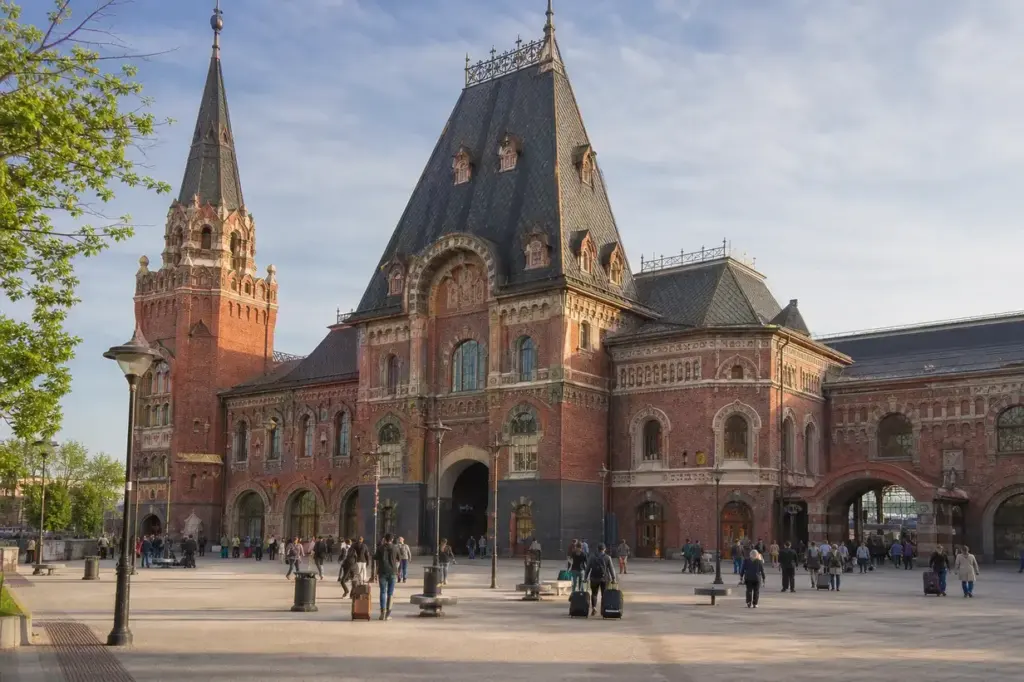
If you’re planning to ride the legendary Trans-Siberian Railway, you’ll want to know which cities deserve a stopover. The journey from Moscow to Vladivostok spans six to seven days of continuous travel—too long to stay on the train the entire time. This guide covers the eight essential cities along the classic Trans-Siberian route, from the cultural depths of Moscow through the Ural Mountains and across the Siberian taiga to the Pacific coast.
Each city offers something distinct: Moscow’s imperial grandeur, Yekaterinburg’s pivotal history, Novosibirsk’s urban Siberian energy, Irkutsk’s old-wood charm and access to Lake Baikal, and Vladivostok’s harbour geography. A typical stopover is 1–3 days, which allows you to see the city and rest from the train.
At a Glance
| # | Place | Best for | Good to know |
|---|---|---|---|
| 1 | Moscow | Starting point, Russian capital | Moscow, Yaroslavsky Station (Komsomolskaya metro); trains typically depart in evening hours |
| 2 | Yaroslavl | Golden Ring historic town | Yaroslavl, Yaroslavl-Glavny Station; 180 km northeast of Moscow, typically 3–4 hours by train |
| 3 | Yekaterinburg | Europe–Asia border, Romanov history | Yekaterinburg, railway station; approximately 1,800 km from Moscow, roughly 28 hours by train |
| 4 | Novosibirsk | Siberia's largest city | Novosibirsk, railway station; approximately 3,300 km from Moscow, roughly 45 hours by train |
| 5 | Krasnoyarsk | Yenisei River stop, taiga landscape | Krasnoyarsk, railway station; approximately 4,100 km from Moscow, roughly 60 hours by train |
| 6 | Irkutsk | Gateway to Lake Baikal | Irkutsk, railway station; approximately 4,100 km from Moscow, roughly 67 hours by train |
| 7 | Ulan-Ude | Buddhist culture, Lake Baikal's eastern shore | Ulan-Ude, railway station; approximately 5,600 km from Moscow, roughly 75 hours by train |
| 8 | Vladivostok | Pacific terminus, port city | Vladivostok, railway station; approximately 9,289 km from Moscow, roughly 167 hours (7 days) by train |
How We Chose
These eight cities are selected because they appear on the main Trans-Siberian Railway route from Moscow to Vladivostok, are confirmed operating destinations with visible infrastructure and visitor amenities, and represent the most widely recommended stops in travel planning sources. The selection is based on their geographic position along the line, cultural significance, and practical accessibility for travellers who need to break up the six-day journey. Each has functional rail infrastructure and accommodation options suitable for overnight stays.
1. Moscow – Starting point, Russian capital
The Trans-Siberian Railway departs from Moscow Yaroslavsky Station, the historic western terminus. Before boarding, spend 2–3 days exploring the Kremlin, Red Square, and its museums. Moscow sits on the threshold between European Russia and the vast Siberia beyond. Most trains leave in the evening, allowing a full day in the city.
Good to know: Moscow, Yaroslavsky Station (Komsomolskaya metro); trains typically depart in evening hours
Tip: Check your ticket carefully—some Trans-Siberian trains depart from Kazansky Station instead of Yaroslavsky. Both stations are adjacent in the same metro stop.
2. Yaroslavl – Golden Ring historic town
The train's first major stop north of Moscow, Yaroslavl sits on the Volga River and represents the older Russia of timber churches and merchant mansions. A 30-minute to 2-hour stop allows a quick look at the train station building or a walk to nearby churches. The city is an early section of the Golden Ring cultural route.
Good to know: Yaroslavl, Yaroslavl-Glavny Station; 180 km northeast of Moscow, typically 3–4 hours by train
Tip: This station is often a longer stop on the Trans-Siberian schedule (30+ minutes). Step out and stretch; you'll see the Volga embankment and 18th-century architecture from the platform.
3. Yekaterinburg – Europe–Asia border, Romanov history
Russia's fourth-largest city sits in the Ural Mountains and marks the cultural boundary between Europe and Siberia. Key sites include the Church Upon the Blood (built on the site where the last Tsar and his family were executed in 1918) and the monument at the Europe–Asia Border, about 80 kilometres outside the city. Most tourists spend 1–2 days here. The city shows Soviet urban planning alongside modern development.
Good to know: Yekaterinburg, railway station; approximately 1,800 km from Moscow, roughly 28 hours by train
Tip: The Europe–Asia Border monument is a popular day trip but lies well outside the city—plan for a guided tour or hire a car for the round trip, as public transport is limited.
4. Novosibirsk – Siberia's largest city
Novosibirsk is Russia's third-largest city and the true gateway into Siberia proper. It sits on the Ob River, the largest river the Trans-Siberian crosses. The city offers opera and ballet, museums, and a reminder that urban life flourishes even in the heart of Siberia. A 1–2 day stop is reasonable. The train station building itself is worth photographing.
Good to know: Novosibirsk, railway station; approximately 3,300 km from Moscow, roughly 45 hours by train
Tip: Novosibirsk's opera house is one of the largest in Russia and operates year-round. Check performance schedules if you have an evening free—tickets are affordable and the building is impressive.
5. Krasnoyarsk – Yenisei River stop, taiga landscape
Krasnoyarsk sits on the Yenisei River and marks the edge of deeper Siberia. The city has museums and a Soviet-era feel, but it is less visited by tourists than the major stops. The main appeal is the river gorge landscape and the sense of being far from European Russia. A half-day or overnight stop suffices. The Yenisei railway station sits about 4,100 kilometres from Moscow.
Good to know: Krasnoyarsk, railway station; approximately 4,100 km from Moscow, roughly 60 hours by train
Tip: Krasnoyarsk is often skipped by tourist itineraries, making it quieter. If you stop here, the Yenisei embankment offers good views of the river and surrounding taiga.
6. Irkutsk – Gateway to Lake Baikal
Irkutsk is the cultural heart of Siberia and the primary reason most travellers stop on the eastbound route. The city sits about 70 kilometres west of Lake Baikal, the world's deepest freshwater lake. Spend 2–3 days here to visit the lake (via Listvyanka or Olkhon Island), explore the city's wooden architecture, and rest properly. Trains from Irkutsk to Ulan-Ude travel along Lake Baikal's southern shore during daylight, offering some of the journey's finest views.
Good to know: Irkutsk, railway station; approximately 4,100 km from Moscow, roughly 67 hours by train
Tip: Time your train journey so you travel from Irkutsk to Ulan-Ude during daylight hours—take a day train (leaving around 09:30 or 13:30) rather than an overnight train, so you can see Lake Baikal's southern shore from the carriage.
7. Ulan-Ude – Buddhist culture, Lake Baikal's eastern shore
Ulan-Ude, capital of the Buryatia region, sits just east of Lake Baikal and marks a shift toward Asiatic culture and Buddhism. The Buryat people have a distinct heritage, and the city has Buddhist temples and a relaxed atmosphere compared to larger Siberian cities. An overnight or short stopover allows a walk through the city and a meal. This is the point where the Trans-Siberian splits: one branch continues to Vladivostok, the other branches south toward Mongolia and Beijing.
Good to know: Ulan-Ude, railway station; approximately 5,600 km from Moscow, roughly 75 hours by train
Tip: Ulan-Ude is less touristy than Irkutsk but offers genuine Buryat culture and cheaper accommodation. If time allows, spend an afternoon here rather than rushing through.
8. Vladivostok – Pacific terminus, port city
Vladivostok is the eastern endpoint of the Trans-Siberian Railway, sitting on the Pacific coast of Russia's Far East. The city has a compact centre with views of the Golden Horn Bay and the Zolotoy Rog bridge. Founded in 1860, it has survived Soviet industrial planning and emerged as a cosmopolitan port. After six days on the train, arriving here marks a genuine arrival—you've crossed an entire continent. Plan 2–3 days to explore the waterfront, museums, and local food.
Good to know: Vladivostok, railway station; approximately 9,289 km from Moscow, roughly 167 hours (7 days) by train
Tip: Vladivostok is on Russia's easternmost timezone (UTC+10). Upon arrival, reset your watch and adjust your body clock for the Pacific coast pace—the city feels closer to Japan and Korea than to Moscow in spirit.
Russia Vibes Tips
- Book your Trans-Siberian ticket 45 days in advance—they are released in batches and disappear quickly during summer. Check the official Russian Railways website or use an international booking service that displays real-time availability.
- Plan your stopovers before you buy your tickets. Your ticket specifies which cities you'll stop in. If you want to break the journey in Yekaterinburg, Irkutsk, and Vladivostok, book separate legs rather than one through-ticket, so you have flexibility to extend your stay.
- The Trans-Siberian crosses eight time zones. Trains run on Moscow Time regardless of local time. Carry a watch or phone app that shows both, and always check train departure times in Moscow Time, not local time—missing your connection by an hour because of timezone confusion is common.
- Sleeper cars lack showers; many travellers book a stopover specifically for a proper bath and clean clothes. Irkutsk and Yekaterinburg are ideal for this break. Plan a 1–2 night hotel stay rather than spending the entire journey in a 2-metre-wide bunk.
- Summer (June–August) is peak season; trains are full and tickets are expensive. Winter (December–February) is quieter and fares drop significantly. Winter on Lake Baikal (February) is spectacular—the lake freezes solid and clear—but requires warm clothing and confidence in cold weather.
- The train stops for 15–30 minutes in small towns where vendors sell local food (pelmeni, pies, berries) on the platform. These are genuine meals and usually cheap. Bring a small bag or backpack to carry snacks between major cities.
Explore Nearby Best Cities to Explore Along the Trans-Siberian Railway, Trans-Siberian Railway
Browse more: All Culture Lists · All Guides · All Guides in Trans-Siberian Railway · All Trans-Siberian Railway
FAQ
How long is the full Trans-Siberian Railway journey?
From Moscow to Vladivostok is approximately 9,289 kilometres and takes 6–7 days of continuous travel on the train. Most travellers add 4–10 extra days by stopping in 2–4 cities along the route, extending the total trip to 10–17 days depending on stopovers.
What is the best route if I want to see Lake Baikal?
Get off the train in Irkutsk, which sits 70 kilometres west of Lake Baikal. From there, take a hydrofoil, marshrutka (shared minibus), or tour to reach the lake directly. The most popular stop is Listvyanka village on the western shore. If you have more time, Olkhon Island in the centre of the lake offers deeper immersion.
Which cities can I skip if I'm short on time?
If you have 10–12 days total, prioritise Moscow, Yekaterinburg, Irkutsk (for Lake Baikal), and Vladivostok. Skip Krasnoyarsk and Ulan-Ude unless you have 14+ days or specific cultural interests. Yaroslavl is a quick stop (30 minutes) and not essential. Novosibirsk is optional but recommended if you want a feel for Siberian urban life.
Can I buy a single ticket for the entire Moscow–Vladivostok route?
Yes, you can buy a single through-ticket. However, this locks you into a specific arrival time in each city with limited stopover flexibility. Most independent travellers buy separate legs (Moscow to Yekaterinburg, Yekaterinburg to Irkutsk, etc.) so they can extend or shorten stops as desired.
What class of sleeper car should I book?
SV (sleeping carriage) offers private compartments but is expensive; Kupe (2nd class) is the standard choice with two bunks and more privacy than lower classes; Platzkart is the cheapest, with open berths but more social interaction. For a 6–7 day journey, Kupe is the most comfortable balance of comfort and cost.
Do I need a visa to travel the Trans-Siberian?
You need a Russian visa for any stop in Russia. If you are travelling from Beijing or Mongolia onward to Moscow, check visa requirements for all countries. Visa rules change and depend on your nationality—consult your country's Russian embassy or consulate before booking.
What language is spoken on the trains?
Conductors on long-distance trains speak Russian. English is rare. Carry a phrasebook or phone translation app. Tickets are printed in Cyrillic. Learning to read basic Russian station names and time (in 24-hour format) is helpful. Train staff are accustomed to international passengers but communication can be slow.
Is it safe to travel the Trans-Siberian as a solo traveller or couple?
The Trans-Siberian is generally safe. Trains are well-policed, and compartment doors lock. Stay alert with valuables in crowded stations. Solo travellers and couples are common. The communal nature of Kupe and Platzkart compartments means you'll meet other travellers. Personal security is straightforward; the main risks are petty theft in stations and train sickness from the motion.
Russia Vibes is a one-person project. A coffee keeps it going

Take this guide with you
Get a free PDF of this guide to print or read offline: key facts, tips and a map link on a few clean pages.
Report an issue on this page
Paying for your trip: please read
Payments and bookings between Russia and many other countries are currently restricted. In practice, cards issued in the EU, the UK, the US and several other countries often cannot be used in Russia, Russian cards usually cannot be used abroad, and some booking platforms, airlines and payment providers limit or pause their services for Russia. The situation changes frequently.
We do not give legal or financial advice, and this site does not encourage anyone to break any rule that applies to them. Whatever you plan, you are responsible for following the laws and regulations that apply to you, including those of your country of residence and citizenship.
Many travelers still organise their stay without problems. It is worth asking your bank or payment provider what is currently possible, contacting hotels, tour operators and carriers directly about the payment methods they accept, and checking which services are open to customers from your country. Clarify payment, cancellation and refund terms before you commit to a booking, and keep your plans flexible.
Partner links on this site may not be available in every country, and prices, availability and rules in our guides can differ from what you see when you book.
How we research and update our guides
About this guide: AI assistance and accuracy
This guide is created with the help of AI and is based on official sources where available. Mistakes can still happen. Opening hours, prices, rules and other details are given to the best of our knowledge as of the date shown and can change without notice. It offers general recommendations only, not professional, legal or travel advice. Please confirm important details with the official source before you travel; you are responsible for your own plans and decisions.
* Affiliate link: as an Amazon Associate we earn from qualifying purchases at no extra cost to you.