
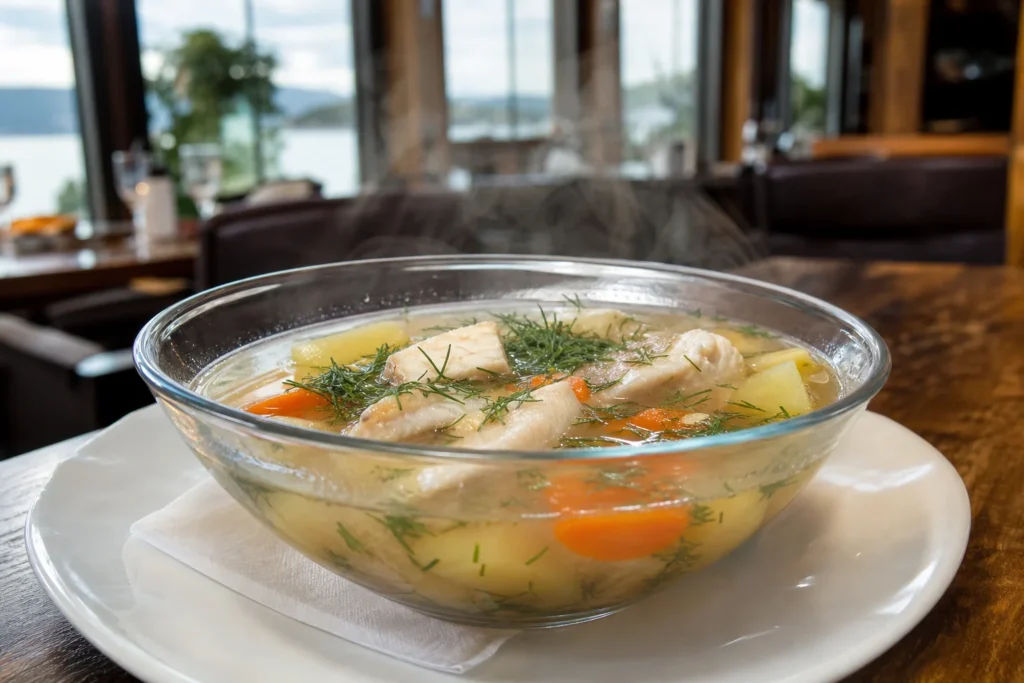
Ukha is a traditional Russian fish soup that travellers to Vladivostok encounter throughout the city. This article guides you through making ukha, Vladivostok fish soup recipe at home using local ingredients or any fresh fish available to you.
Making ukha is straightforward and requires no special skills. The recommended approach is to build a clear broth from the fish bones and aromatics first, then add vegetables and fish flesh in stages. This technique—separating the broth-making from the final cooking—ensures a clean, delicate flavour and transparent appearance. Most recipes take between 45 minutes and 1.5 hours total.
Quick answer: Simmer fish bones and aromatics for 30–40 minutes to build a clear broth. Add potatoes and other vegetables, cook for 10–12 minutes, then add fish flesh and simmer for a final 5–10 minutes until cooked through. Total time is roughly 1 hour.
At a Glance
| Type | Dishes |
|---|---|
| Local name | уха |
| Origin | Ukha is a traditional rustic fish dish that dates back to the 11th century. Originating as a simple game and vegetable broth, the Russians introduced fish to the recipe toward the end of the 16th and beginning of 17th century, and since then, fish has been the primary ingredient. Like other Slavic fish soups, ukha was a broth that fishermen made at the end of their day with whatever they had left of the catch, and historically was made with several types of fish – usually perch, pike, trout, and/or salmon – and was traditionally made with a fish head stock or even a stock made from a whole fish, with filleted fish pieces added later. |
| Servings | 2–4 servings |
| Total time | 1 hour–1 hour 15 minutes |
| Difficulty | Easy |
History and Story of Ukha, Vladivostok
Ukha comes from the word “ukho,” the Russian word for ear, which is odd since fish don’t have ears. Ukha originally had nothing to do with fish, but was rather a thick, rich stock made from the leftover parts of cows and pigs, including the ears, the feet, the sinews, and other trimmings. Initially in Russia all soups were called ukha – pea ukha, chicken ukha. Only in the 18th century this dish became the way we know it now – nourishing fish soup. At the Tsar’s table, “amber” ukha, redolent with precious saffron strands, was made with perch or sturgeon. The French chefs working in Russian noble kitchens concentrated on perfecting the flavor and appearance of the bouillon itself, clarifying it with egg whites and eggshells and experimenting with different kinds of fish.
Ingredients
- 600–700 g fresh fish (whole fish, or fish heads, tails and bones)
- 300 g potatoes, peeled
- 100 g carrots, peeled
- 1 onion (optional, for broth only)
- 2 litres water
- Salt to taste
- Black peppercorns (6–10)
- 2 bay leaves
- Fresh dill and parsley for garnish
How Ukha, Vladivostok Is Made
Step 1: Prepare and rinse the fish
Rinse the fish pieces under cold water. Remove any scales or blood to ensure a clean broth. Pat dry and set aside while preparing the stock base. If using a whole fish, remove the guts but keep the head, bones and tail; these deliver the flavour and clarity of the finished broth.
Tip: Clean fish thoroughly for the clearest broth; any sediment will cloud the soup.
Step 2: Simmer the fish broth
Place the fish, water, whole onion, bay leaves, peppercorns, and salt into a large pot. Bring to a gentle simmer over medium heat. Skim off any foam that surfaces for a clear broth. Cook for 40 minutes, until fish is completely falling apart. Weak fire and not covering the cooking pot is the optimal way to cook ukha.
Tip: Never boil hard; a gentle simmer keeps the broth transparent and prevents cloudiness.
Step 3: Strain and prepare vegetables
Drain the soup from the fish. Discard the fish bones, and return the broth to the pot. While the broth rests, cut potatoes into 4–6 cm pieces, slice carrots into rounds or half-moons, and set aside.
Tip: Larger vegetable pieces will hold their shape and look better in the finished soup.
Step 4: Cook vegetables
Add the potatoes, cover the pot and bring to a boil. Once boiling, uncover the pot and add the onion and carrots. Cover the lid and cook for 10 minutes on medium heat. The potatoes should begin to soften but not break apart.
Tip: Covering initially speeds cooking; uncovering prevents the vegetables from becoming mushy.
Step 5: Add fish and finish
Cook the vegetables in water until cooked through and add the fish fillets at the very end. Cook for just 5–7 minutes, until the fish is cooked though. Garnish with fresh herbs. Season with salt and pepper to taste. Fish cooks really quickly, so be careful not to overcook it.
Tip: Add fish last and watch carefully; overcooked fish becomes dry and falls apart into the broth.
Variants
- White ukha is cooked from fish with white meat: pike, whitefish, perch or bass.
- Black ukha is made from sazan, crucian or carp.
- Red ukha is cooked from salmon, trout and sturgeon.
- Vladivostok ukha often features Pacific salmon, halibut or other fresh seafood from the Sea of Japan, making it a regional variant that reflects the city's maritime abundance.
Common Mistakes to Avoid
- Boiling instead of simmering: A hard boil will cloud the broth and make it murky. Keep the heat gentle from start to finish so the liquid stays clear.
- Skipping the bone-cooking stage: Some recipes jump straight to vegetables. Missing this step gives you a weaker, less flavourful base. Always start by simmering bones and aromatics first.
- Stirring constantly: Agitation during cooking muddies the broth. Let it simmer undisturbed; use foam if the surface seems cloudy.
- Adding fish too early: Fish needs only 5–7 minutes to cook. Adding it during the vegetable stage will overcook it and cloud the broth.
- Using old or frozen fish: Fresh fish makes the best-tasting, cleanest broth. Thawed frozen fish releases extra liquid and impurities.
How to Order and Eat It
Serve hot in a deep bowl, letting the drinker enjoy the clear, fragrant broth before eating the soft fish and vegetables. Serve with sour cream and dark rye bread. In some regional traditions, lemon is squeezed over the soup just before eating to brighten the flavour. A spoonful of sour cream stirred in at the end is common in Russian kitchens.
To order: Уху, пожалуйста [Ukhu, pozhaluysta]
Diet and Allergens
- pescatarian
Where to Try Ukha, Vladivostok
Irkutsk
 Partizan, Irkutsk Siberian and Russian cuisine, with Baikal fish and local game
Main image: AI-generated illustration. It may not show the place exactly as it looks.
Kaliningrad
 Povareshka, Kaliningrad Russian
Main image: AI-generated illustration. It may not show the place exactly as it looks.
Kazan
 Dobraya Stolovaya, Kazan Home-style Russian and Tatar canteen food, with some European dishes
Main image: AI-generated illustration. It may not show the place exactly as it looks.
Russia Vibes Tips
- In Vladivostok, seek out fresh local fish at the market. Vladivostok is Russia's freshest seafood port. Crab and shrimp from the Sea of Japan reach the table within hours of the catch. Using fish caught within days guarantees the best flavour and the clearest broth.
- Timing matters: Weak fire and not covering the cooking pot is the optimal way to cook ukha. To keep ukha liquid try not to stir it's better not to interfere in boiling process of a fish soup. Patience and restraint produce the best results.
- Traditional ukha often calls for several types of fish to add depth. If you can find two varieties—a white fish and a richer fish like salmon—the combination creates a more complex broth than a single type alone.
- Make the broth a day ahead. A cooled, rested broth is easier to skim clean before the final cooking. Reheat gently the next day and proceed from the vegetable stage.
- The original Russian recipe called for only fish, onions, and salt, but it has since evolved to include more ingredients such as potatoes, carrots, celery, dill and parsley. If you want an austere, classical version, omit carrots and celery and rely on potatoes and onion alone.
Explore Nearby Ukha, Vladivostok
Browse more: All Food & Drink · All Food & Drink in Vladivostok · All Other · All Vladivostok
FAQ
What fish should I use for ukha?
Ukha is a clear Russian soup made from root vegetables and fish such as sturgeon, cod, salmon, and catfish, and seasoned with herbs and spices. Any firm white fish or salmon works. For the clearest broth, use fish heads, tails and bones; for the finished soup, add filleted fish flesh in the last few minutes.
Can I make ukha with frozen fish?
Fresh fish is strongly preferred because frozen fish releases excess liquid when thawed, clouding the broth and weakening the flavour. If you must use frozen fish, thaw it slowly in the refrigerator and pat it very dry before use.
Why is my ukha cloudy instead of clear?
Cloudiness comes from boiling too hard, stirring excessively, or not skimming foam in the early stages. Keep the heat gentle, avoid stirring, and skim the surface with a spoon as foam appears. Some cooks wipe the pot between the broth stage and vegetable stage for the clearest result.
How long does ukha keep?
Store cooled ukha in the refrigerator for up to 3 days. Reheat gently on the stove without boiling. You can also freeze the broth (without vegetables and fish) for up to 3 months and add fresh vegetables and fish when you want to serve it.
What's the difference between ukha and other fish soups?
Ukha is a clear Russian fish soup traditionally made with freshwater fish, root vegetables, herbs, and aromatics. It is simmered gently to preserve the light texture of the fish and deliver a broth that is both savoury and fragrant. The hallmark is its clarity and delicate flavour, achieved through gentle cooking and careful skimming.
Can I add vegetables other than potatoes and carrots?
Ukha is traditionally made with just onion, potatoes, carrots and fresh herbs. You can also add other vegetables, like garlic, bell peppers, tomatoes, zucchini, etc, but that will be a very different version, of course and won't have that iconic clear and simple flavor that Ukha is so well known for.
Is vodka or wine a traditional ingredient in ukha?
Some regional and noble versions historically contained vodka or wine, though neither is universal. A splash can brighten the flavour, but it is optional. If you add it, stir it in after removing from heat and let the soup rest for 25–30 minutes so the alcohol evaporates.
How much does it cost to make ukha at home?
Ukha is a budget-friendly dish. Fresh fish heads and bones (often free or very cheap at fishmongers), potatoes, and carrots are inexpensive staples. A pot of ukha serving 4–6 people costs far less than ordering it at a restaurant.
Russia Vibes is a one-person project. A coffee keeps it going
How we research and update our guides
About this guide: AI assistance and accuracy
This guide is created with the help of AI and is based on official sources where available. Mistakes can still happen. Opening hours, prices, rules and other details are given to the best of our knowledge as of the date shown and can change without notice. It offers general recommendations only, not professional, legal or travel advice. Please confirm important details with the official source before you travel; you are responsible for your own plans and decisions.

Take this guide with you
Get a free PDF of this guide to print or read offline: key facts, tips and a map link on a few clean pages.
Report an issue on this page
Paying for your trip: please read
International sanctions affect payments between Russia and many other countries. In practice, cards issued in the EU, the UK, the US and several other countries often do not work in Russia, Russian cards usually do not work abroad, and some booking platforms, airlines and payment providers limit or suspend their services for Russia. The situation changes frequently.
We do not give legal or financial advice, and this site does not encourage anyone to break or circumvent sanctions. Whatever you plan, you are responsible for following the laws and regulations that apply to you, including those of your country of residence and citizenship.
Many travelers still organise their stay lawfully. It is worth asking your bank or payment provider what is currently permitted, contacting hotels, tour operators and carriers directly about the payment methods they accept, and checking which services are open to customers from your country. Clarify payment, cancellation and refund terms before you commit to a booking, and keep your plans flexible.
Partner links on this site may not be available in every country, and prices, availability and rules in our guides can differ from what you see when you book.