
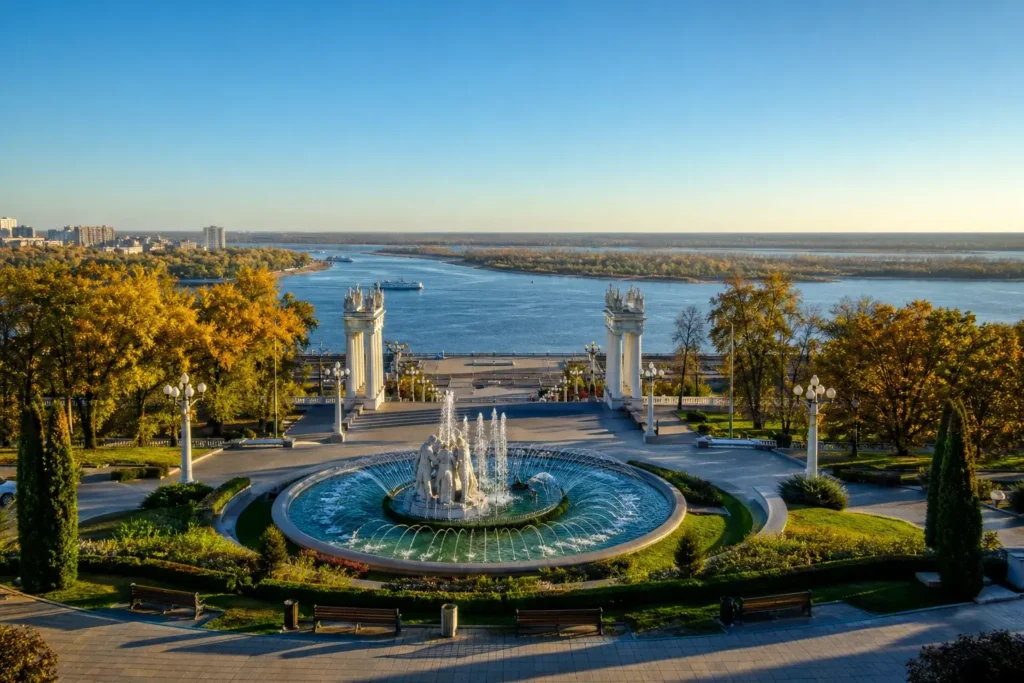
The Central Embankment is one of the best park areas at the Volga. The embankment (officially called 62nd Army Naberezhnaya Street) stretches for more than 3 km, from Volgograd River Station to Volgograd Bridge. The waterfront takes its name from the 62nd Army, which defended the city during the Battle of Stalingrad. The Central Embankment got its nowadays appearance after the war in 1952.
The promenade is divided into two terraces (upper and lower), which have everything you need for relaxation and a great walk – from the central staircase with eight-column propillae to the rotunda, from monuments and museums to the river station, from café-restaurants to the theatre.
Quick Facts
| Russian name | Центральная набережная |
|---|---|
| Built / opened | 1952 |
| Address | Naberezhnaya 62-y Armii, Volgograd OpenStreetMap · Google Maps |
| District | Tsentralny |
| Opening hours | Open 24 hours |
| Admission | free |
| Best time to visit | Spring (April–May) and autumn (September–October) offer mild temperatures and clear skies, making walking most comfortable. Summer (June–August) can be very hot, especially on the lower terrace with limited shade; early morning or evening visits are advisable. Winter (December–February) is cold but less crowded; the embankment remains accessible though some visitors find the cold challenging. Weekday mornings see fewer visitors than weekends and summer evenings when the embankment is most crowded. |
| Recommended duration | 1–2 hours |
| Last updated | October 18, 2026 |
What Is (and Isn't) Part of a Visit to Central Embankment, Volgograd?
| Part | Status | Notes |
|---|---|---|
| Upper terrace (Park of Victory) and walking paths | Included in the standard ticket | Free public access to landscaped park areas, monuments and benches along the entire length of the embankment. |
| Lower terrace walkways and river views | Included in the standard ticket | Free public access to lower promenade; subject to flooding during spring water release from the Volga Hydropower Station. |
| Cafés and restaurants | Separate ticket or institution | Food and beverage venues require separate payment; pricing varies by establishment. |
| Central Concert Hall | Separate ticket or institution | Ticketed performances and events; separate admission required. |
| River port and cruise terminal services | Separate ticket or institution | River cruises and passenger services require separate tickets; located at the eastern end of the lower terrace. |
| Battle of Stalingrad Museum Panorama | Separate ticket or institution | Museum attraction near the embankment; separate ticket required; not part of the embankment itself. |
| Mamayev Kurgan (The Motherland Calls monument) | Outside / not part of it | Historic war monument located south of the embankment; requires separate visit and transportation. |
Why Visit Central Embankment, Volgograd?
The embankment is a major gathering place in Volgograd and one of the city’s most beautiful public spaces. The most significant events of the city are organized here and the Volgograd citizens and guests adore this place. The setting offers striking views of the Volga River, monumental Soviet architecture, and historical significance tied to the city’s wartime past. It serves as an ideal starting point to explore other nearby attractions including museums, parks and historic monuments.
How Central Embankment, Volgograd Is Laid Out
The central embankment is divided into two levels: the upper and lower terraces. Located along the upper terrace there is Park Pobedy (Victory Park), the Mayak restaurant, the Battle of Stalingrad Museum Panorama. On the lower terrace there are quays, a river port, clubs, cafes and the Central Concert Hall. The upper terrace is called “The Park of Victory” (Park pobedy). At the low terrace there is the Concert Hall, River Port, cafés, restaurants and clubs.
Start your walk from the upper terrace and descend via the wide central staircase (featuring distinctive eight-column propillae) to the lower level. The heart of the embankment is occupied by Friendship fountain – a popular place, often used as a point for citizens to meet. The fountain itself is a pedestal with three graceful figures of girls performing a folk dance. From the lower terrace you can continue walking east toward the river station or explore the cafés and cultural venues along the way.
Highlights of Central Embankment, Volgograd
Central Staircase and Propillae
The grand descent from the upper to lower terrace features an iconic staircase framed by eight classical columns. This monumental structure marks the main crossing point where Soviet forces transported troops across the Volga during the Battle of Stalingrad in 1942. The propillae (columned gateway) style architecture reflects the formal postwar reconstruction design, making it both historically significant and visually striking.
Tip: The staircase and surrounding area offer excellent photo opportunities, especially in late afternoon light when shadows enhance the architectural details.
Friendship Fountain
The heart of the embankment is occupied by Friendship fountain. The fountain itself is a pedestal with three graceful figures of girls performing a folk dance. In 2012, there was a reconstruction of the fountain, now it is the central element of the Embankement. It sits in the middle of the upper terrace and serves as a popular meeting point.
Tip: The fountain attracts large crowds on weekends and summer evenings; visit on weekday mornings for a more peaceful experience.
Park of Victory (Upper Terrace)
The upper terrace is called "The Park of Victory" (Park pobedy). This landscaped area features trees, benches and monuments commemorating the wartime events. The park runs the full length of the embankment and offers shaded walking paths with views of the Volga.
Tip: The park is most pleasant in spring and autumn when temperatures are moderate; summer heat can be intense on the lower terraces where there is less shade.
River Port and Passenger Terminal
At the low terrace there is the Concert Hall, River Port, cafés, restaurants and clubs. The river port is visible from the lower promenade and serves regional passenger traffic. The river port of Volgograd is the largest river port in Europe. During the navigation period, cruise ships stop in Volgograd; there are also passenger river trams to holiday villages on the left bank of the Volga.
Tip: If you plan to take a river cruise or river tram, the port entrance is at the eastern end of the lower terrace near the wide stairs.
Heroes' Alley (Alyeja Geroev)
Located at the top of the embankment's central staircase, Heroes' Alley is a memorial pathway honoring those who died in the Battle of Stalingrad. The alley connects the embankment to other significant monuments and is lined with historical plaques and monuments recounting the wartime defense.
Tip: Combine a visit to Heroes' Alley with the embankment walk by ascending the stairs to see both together; the alley provides context for understanding the embankment's historical role.
Lower Terrace Cafés and Restaurants
At the low terrace there is the Concert Hall, River Port, cafés, restaurants and clubs. Multiple dining venues dot the lower terrace offering views of the river and people-watching opportunities. These range from casual cafés to more formal restaurants.
Tip: Restaurants and cafés on the lower terrace tend to be busier during peak hours (lunch 12–14:00 and evening 18–20:00); arrive early or late to avoid crowds.
Atmosphere
A special atmosphere is created by the lanterns designed in the classic style. Their soft light in the evening gives the place a romantic and mysterious feel. By day the embankment bustles with families, couples and groups of friends walking, sitting on benches or stopping at cafés. The upper terrace is noticeably greener and cooler with planted trees; in the lower part of the embankment, you can get quite hot because there is no greenery there. It is significantly greener at the top. The river breeze and views of the Volga create a sense of openness. Early morning and late evening see fewer crowds and a more contemplative mood, while weekends and summer bring families and outdoor dining. The architecture and monuments create a reverent atmosphere tied to the city’s wartime history.
History of Central Embankment, Volgograd
Its prewar history is a history of huge cargo port and riverstation where motor ships from different parts of Russia reached Volgograd. During the Second World War the embankment became a site of intense strategic importance. The two levels of the embankment indicate the place of the main crossing of the Volga in the distant year 1942. It is here where tank columns were transported to support the Soviet Army during the Battle of Stalingrad.
During the Russian Great Patriotic War there were cruel battles at the Volga banks. There was an evacuation of citizens and provision of the defenders of Stalingrad with munitions and foodstuffs. The soldiers of the 62nd Army stopped the enemy and saved the Volga. After the war the embankment was named Naberezhnaya 62-y Armii after the 62nd Army that could defend the riverside territory of the city.
After the war there was the reconstruction of the Central Embankment. According to the design, the Embankment was the main entrance to Volgograd where you can visit other sights of our city. The embankment as it appears today was completed in 1952, part of the postwar rebuilding effort. During the second restoration of the embankment in 1978, the railway was again dismantled. Major reconstruction work continued into the 2020s to expand parkland and improve public amenities.
Tickets and Booking for Central Embankment, Volgograd
The Central Embankment is free to access at all times. There is no booking system or advance reservation needed to walk the promenade, enjoy the parks, or use the benches. Vendors and interactive attractions (such as games, rides for children, temporary exhibitions) may charge fees, but these are optional. If you plan to dine at restaurants or cafés, payment is at the establishment. The river port and any organized cruises or river tram services operate separate ticketing systems available at the port entrance or through their official booking pages.
Plan and Book
Suggested itineraries Central Embankment, Volgograd
1 hour
Begin at the central staircase on the upper terrace. Walk slowly around the Friendship Fountain and explore the monuments and plaques along Heroes' Alley. Continue walking the upper terrace for views and park atmosphere. This covers the main public monuments and historical elements.
1.5–2 hours
Start at the upper terrace near Heroes' Alley. Descend the central staircase to the lower terrace and walk toward the river port, stopping to view the Volga. Return and explore the Park of Victory on the upper level. Stop at a cafés for a drink or light meal. This combines both terraces and allows time for photos and rest.
2–3 hours
Begin at the western end near the staircase. Explore the entire upper terrace walking east, noting monuments and architectural elements. Descend to the lower terrace and walk the full length toward the river port. Return via the upper level if energy permits. Include time for a meal or extended rest at a cafés overlooking the river.
Half day
Combine the embankment with nearby attractions: spend 1–2 hours on the embankment itself, then visit the Battle of Stalingrad Museum Panorama (separate ticket) near the embankment's eastern end, or walk to Heroes' Alley to view related monuments. End with a meal at one of the embankment restaurants.
How to Get to Central Embankment, Volgograd
The Central Embankment has no direct metro station; the nearest public transport is bus service along nearby streets. By foot: if arriving from central Volgograd (the city center is roughly 1.5 km south), walk north toward the river. The embankment begins near the main staircase with the distinctive eight-column propillae; this is the primary entrance and easiest to find. From Volgograd Railway Station (approximately 1.5 km south), walk north on Prospekt Lenina, then turn right onto Ulitsa 62-y Armii to reach the embankment. By car or taxi: direct yourself to Ulitsa Naberezhnaya 62-y Armii (the official street name). Limited paid parking exists near the embankment entrance. River transport: the river port is at the eastern end of the lower terrace and serves cruise ships and passenger trams during navigation season.
Accessibility
The upper terrace features level walking paths suitable for wheelchairs and strollers. The central staircase with eight columns is a major descent; no ramp is available at this location. The lower terrace is accessible via alternate routes (check with locals for accessible entry points). The embankment has benches placed throughout for rest. Accessible restrooms are not widely documented on the official channels; check with vendors or cafés for facilities.
Food Nearby
Multiple cafés and restaurants are located directly on the lower terrace of the embankment, offering river views and casual to moderate dining. The Mayak restaurant is noted on the upper terrace. Street food vendors and kiosks are present during warmer months. The embankment's central location means additional cafés and shops are within short walking distance in the surrounding downtown area.
What to Bring
Wear comfortable walking shoes suitable for long strolls on paved surfaces. Bring sun protection (hat, sunscreen) especially for the lower terrace which has minimal shade. In summer, carry water for hydration. Light layers are useful in spring and autumn when temperatures fluctuate. In winter, wear warm clothing appropriate for Russia's climate. A camera or phone for photography is recommended given the scenic river views and architectural details.
Best Views and Photo Spots of Central Embankment, Volgograd
Central staircase with eight-column propillae
The classical columned entrance frames the lower terrace and Volga River beyond. The symmetrical composition and monumental scale create a striking perspective looking either up from below or down from above.
Best time: Late afternoon when side light highlights the columns; early morning backlit photos also work well. Late evening with lantern lighting offers a different romantic mood.
Upper terrace near the Friendship Fountain
The fountain's three figures and surrounding landscaped park create a focused foreground, with the Volga visible in the distance. The angle captures both the monument and river scenery.
Best time: Golden hour (late afternoon) for warm light on the sculptures; overcast days reduce harsh shadows and provide even illumination.
Lower terrace facing the Volga
Open river views with the opposite bank visible. The vantage point emphasizes the scale of the waterway and provides unobstructed vista photography of the landscape.
Best time: Mid-morning or late afternoon for directional light across the water; sunset hours for dramatic sky colors reflected on the river.
Heroes' Alley upper entrance
Lined with monuments and plaques leading toward the river, creating depth and historical narrative in a single frame. The pathway composition draws the viewer's eye toward the river.
Best time: Overcast or soft light for even illumination of monuments without harsh shadows; early morning or late afternoon avoids midday glare on metal plaques.
Photography Rules
Photography is allowed throughout the embankment for personal use. Tripods, drones and commercial photography may be restricted in certain areas; check with embankment staff or local authorities before setting up equipment. The architectural details of the staircase and fountain, and river views, are the most popular photo subjects. Early morning and golden hour (late afternoon) provide the best natural light.
Family Suitability
The embankment is family-friendly with wide, level paths suitable for strollers on the upper terrace. Benches and rest areas are plentiful, allowing breaks during walks. The lower terrace is also accessible but less convenient for strollers due to the staircase descent. Older children and teens enjoy the historical monuments and river views. The embankment hosts family events and gatherings, particularly in summer. The proximity of cafés and restrooms (check locally) makes it convenient for families. Safety is generally good during daylight hours; families should avoid isolated sections in darkness.
Russia Vibes Tips
- Begin your walk on the upper terrace near Heroes' Alley and work eastward. This sequence naturally guides you to see the main monuments first before descending to the lower terrace, making historical context clearer.
- Avoid the lower terrace during spring when water is released from the Volga Hydropower Station upriver; this can cause temporary flooding. Check local news or with embankment staff before visiting in April–May if planning to access the lower level.
- Visit on a weekday morning if you prefer fewer crowds. Weekends and summer evenings attract large groups and families, making photos and peaceful walking difficult.
- Don't skip Heroes' Alley even if your time is limited. The alley's monuments and plaques directly explain the embankment's historical role in the Battle of Stalingrad and provide essential context for understanding the two-terrace layout.
- The central staircase is the main focal point but not the only access between terraces. Ask locals or embankment staff about alternative descents if you wish to avoid the crowds at the famous staircase.
- Bring comfortable shoes even though the embankment appears short; the 3+ km length means the full walk takes 1–2 hours depending on stops, and stiff or inappropriate footwear becomes uncomfortable partway through.
Explore Nearby Central Embankment, Volgograd
Sights near Central Embankment, Volgograd
 Volgograd Panorama Museum, Volgogradabout 1000 m away (~16 min walk) · typical visit: 2–3 hours
Main image: AI-generated illustration. It may not show the place exactly as it looks.
 Volgograd Planetarium, Volgograd – about 850 m away (~14 min walk) · typical visit: 1–2 hoursOpen daily 10:00–18:00
Main image: AI-generated illustration. It may not show the place exactly as it looks.
 Pavlov's House, Volgograd – about 1.0 km away (~17 min walk) · typical visit: 30–45 minutesOpen 24 hours
Main image: AI-generated illustration. It may not show the place exactly as it looks.
 Gerhardt's Mill, Volgograd – about 1.0 km away (~17 min walk) · typical visit: 30–45 minutesOpen 24 hours
Main image: AI-generated illustration. It may not show the place exactly as it looks.
 Volgograd Railway Station, Volgograd – about 1.2 km away (~19 min walk) · typical visit: 30 minutesOpen daily 00:00–23:59
Main image: AI-generated illustration. It may not show the place exactly as it looks.
Restaurants and cafes near Central Embankment, Volgograd
 Denver Burgers, Volgogradabout 500 m away (~8 min walk)
Main image: AI-generated illustration. It may not show the place exactly as it looks.
 Restaurant Marusya, Volgogradabout 600 m away (~10 min walk)
Main image: AI-generated illustration. It may not show the place exactly as it looks.
 Knyagininskiy Dvor, Volgograd – about 1.4 km away (~23 min walk)Open daily 11:00–23:00
Main image: AI-generated illustration. It may not show the place exactly as it looks.
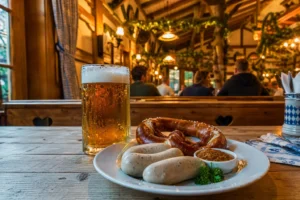 Bamberg, Volgograd – about 1.4 km away (~23 min walk)Open daily 11:00–23:00
Main image: AI-generated illustration. It may not show the place exactly as it looks.
Hotels near Central Embankment, Volgograd
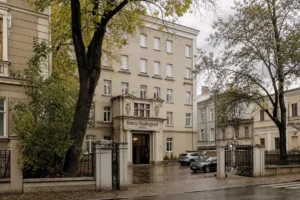 Stariy Stalingrad, Volgogradabout 750 m away (~12 min walk)
Main image: AI-generated illustration. It may not show the place exactly as it looks.
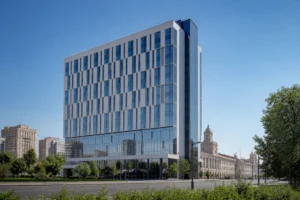 Cosmos Volgograd Hotel, Volgogradabout 1.3 km away (~21 min walk)
Main image: AI-generated illustration. It may not show the place exactly as it looks.
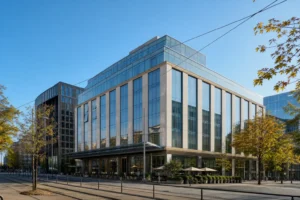 Hilton Garden Inn Volgograd, Volgogradabout 2.4 km away
Main image: AI-generated illustration. It may not show the place exactly as it looks.
Related guides
 Voronka: Volgograd’s Best Coffee, Wine, and All-Day Breakfast Café
Main image: AI-generated illustration. It may not show the place exactly as it looks.
 Mamayev Kurgan: The Motherland Calls and Battle of Stalingrad MemorialOpen daily 09:00–18:00
Main image: AI-generated illustration. It may not show the place exactly as it looks.
 Crystal Hotel, Kazan: Convenient Central Location Opposite the Railway Station
Main image: AI-generated illustration. It may not show the place exactly as it looks.
Browse more: More in Tsentralny · All Landmarks · All Sightseeing · All Sightseeing in Volgograd · All Volgograd
FAQ: Central Embankment, Volgograd
Is the Central Embankment the same as Mamayev Kurgan?
No. The Central Embankment is a 3+ km long promenade along the Volga River featuring parks, monuments, cafés and river views. Mamayev Kurgan is a separate historic hilltop complex south of the embankment with the famous 'Motherland Calls' statue and a war museum. Both are related to the Battle of Stalingrad but are different sites requiring separate visits.
Do I need to pay to walk the embankment?
No. The embankment and its parks are free to access 24 hours. You pay only if you use cafés, restaurants, or purchase items from vendors. River cruises from the port at the eastern end charge separate fees.
Can I access the lower terrace in spring?
Usually yes, but the lower terrace can flood temporarily during spring water release from the Volga Hydropower Station (typically April–May). Check local conditions before planning a visit to the lower level during this period.
What does the two-terrace layout mean?
The embankment is split into an upper level (Park of Victory with landscaping and green space) and a lower level (closer to the river with the port, cafés and restaurants). They commemorate the two main crossing points used during the Battle of Stalingrad in 1942 when Soviet forces transported troops and supplies across the Volga.
How long does it take to walk the entire embankment?
The embankment stretches 3+ km. A full walk takes 1.5–2 hours at a normal pace. If you visit both terraces and stop at cafés or monuments, allow 2–3 hours.
Are there restrooms on the embankment?
Dedicated public restrooms are not widely documented on official sources. Restrooms are typically available at cafés and restaurants (usually for customers) and at the river port terminal. Check with vendors or café staff during your visit.
Is a guide necessary to understand the embankment's history?
A guide is not required but is helpful. Heroes' Alley and the monuments feature plaques explaining the wartime events. If you want deeper context about the Battle of Stalingrad and the embankment's role, a guide or audio information (available at some local museums) adds significant value.
Can I take a river cruise from the embankment?
Yes. The river port at the eastern end of the lower terrace offers passenger services. During navigation season, cruise ships dock here and passenger river trams operate to nearby villages. Check the port's official schedule for current options and ticket prices.
Russia Vibes is a one-person project. A coffee keeps it going
Last updated: October 18, 2026.
How we research and update our guides
About this guide: AI assistance and accuracy
This guide is created with the help of AI and is based on official sources where available. Mistakes can still happen. Opening hours, prices, rules and other details are given to the best of our knowledge as of the date shown and can change without notice. It offers general recommendations only, not professional, legal or travel advice. Please confirm important details with the official source before you travel; you are responsible for your own plans and decisions.
International sanctions affect payments between Russia and many other countries. In practice, cards issued in the EU, the UK, the US and several other countries often do not work in Russia, Russian cards usually do not work abroad, and some booking platforms, airlines and payment providers limit or suspend their services for Russia. The situation changes frequently. We do not give legal or financial advice, and this site does not encourage anyone to break or circumvent sanctions. Whatever you plan, you are responsible for following the laws and regulations that apply to you, including those of your country of residence and citizenship. Many travelers still organise their stay lawfully. It is worth asking your bank or payment provider what is currently permitted, contacting hotels, tour operators and carriers directly about the payment methods they accept, and checking which services are open to customers from your country. Clarify payment, cancellation and refund terms before you commit to a booking, and keep your plans flexible. Partner links on this site may not be available in every country, and prices, availability and rules in our guides can differ from what you see when you book.Paying for your trip: please read
Report an issue on this page

Take this guide with you
Get a free PDF of this guide to print or read offline: key facts, tips and a map link on a few clean pages.