
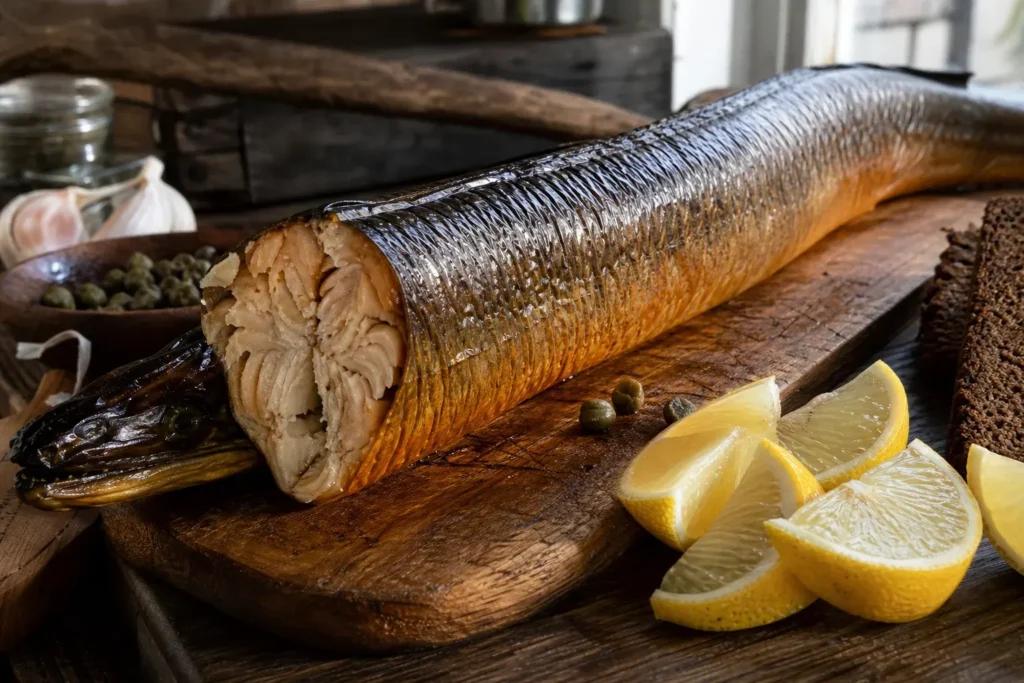
Smoked eel is the signature dish of Kaliningrad, the westernmost Russian city on the Baltic coast. This article is for visitors who want to understand how this local delicacy is prepared—either to order it confidently at restaurants like Seasons or Sunny Stone, or to appreciate how it differs from other smoked fish. By the end, you’ll know how to cook smoked eel at home, what to expect from the finished dish, and where to find authentic versions in the city.
Kaliningrad’s location between Poland and Lithuania, and its history as the German city of Königsberg, shaped a cuisine blending Russian, German, and Baltic traditions. How to cook smoked eel reveals this heritage: the technique is European, but the use of fresh Baltic eels makes it distinctly local. The recommended approach is hot-smoking, which preserves tenderness and creates the slightly sweet, rich flavor the region is known for.
Quick answer: Clean and gut fresh eel, brine it for 20–30 minutes, dry it for 1–2 hours, then hot-smoke at gradually increasing temperatures (starting around 35°C, finishing at 85°C) until the belly opens and flesh separates from the bone. Total time: 3–4 hours. Cost to purchase ready-smoked: ₽₽₽.
At a Glance
| Type | Dishes |
|---|---|
| Local name | Копчёный угорь |
| Origin | Kaliningrad and the Baltic region |
| Servings | 4 servings |
| Total time | 3–4 hours, including brining, drying, and smoking |
| Difficulty | Medium |
History and Story of Smoked Eel, Kaliningrad
Smoked eel became a signature of Kaliningrad because the region sits on the Baltic coast where European eels (Anguilla anguilla) were historically abundant in local lagoons and river estuaries. The smoking technique is rooted in German and Baltic preservation traditions dating back centuries. When Kaliningrad was the Prussian city of Königsberg, smoking eel was already well established among fishermen and merchants. After World War II, when the region became part of the Soviet Union, the tradition persisted, blended with Russian and Lithuanian culinary practices. Today, smoked eel remains the most prestigious fish dish of Kaliningrad, though much of what is sold commercially in the city is now imported from China.
Ingredients
- 1.2–1.5 kg fresh eel, whole and ungutted
- 1 kg salt
- 5 L water
- Wood chips for smoking (alder, apple, or hickory recommended)
- A home smoker or smoking apparatus
- Paper towels or cloth for drying
How Smoked Eel, Kaliningrad Is Made
Step 1: Clean and remove mucus
If the eel is fresh and still alive, place it in strong salt water until it stops moving. Remove all slime from the skin by wiping firmly with sand, sawdust, or paper towels. This is essential—eel has a protective mucous coating that must be removed completely for proper smoking.
Tip: If your eel is frozen, thaw it fully in the fridge. Fresh eel produces better results than previously frozen.
Step 2: Gut and prepare the carcass
Make a cut along the belly and remove all internal organs. Rinse the cavity thoroughly to remove any blood. Leave the head on for presentation; some traditionalists also leave the tail. This makes the finished smoked eel more visually appealing and is customary in Kaliningrad restaurants.
Tip: Work quickly and keep the eel as cold as possible to prevent spoilage.
Step 3: Prepare the brine
Dissolve 1 kg salt in 5 L cold water, or use the ratio 200 g salt per 1 L water. The brine should be approximately 80° salinity by traditional measures. Immerse the cleaned eel in this brine for 20–30 minutes. Do not oversalt—excessive salt causes white spots on the skin during smoking.
Tip: Prepare the brine in advance and chill it if possible. Cold brine helps preserve the fish.
Step 4: Dry the eel
Remove the eel from brine and pat it dry with cloth or paper towels. Hang it vertically in a cool, ventilated place (outdoors if possible, or in a draft indoors) for 1–2 hours. If insects are present, cover with fine netting. The surface should feel dry to the touch before smoking begins.
Tip: Drying at this stage creates a tacky surface that absorbs smoke flavor better and produces a more attractive finish.
Step 5: Set up the smoker and smoke gradually
Preheat your smoker. Traditional hot-smoking follows three temperature stages: 1 hour at 35°C, 1 hour at 50°C, and 1 hour at 85°C. Use alder, apple, or hickory chips (not coniferous wood). Place the eel on a rack so smoke circulates around it. The belly should be propped slightly open with small sticks to allow smoke penetration.
Tip: Gradual temperature increase prevents the eel from splitting and ensures even cooking through the thick flesh.
Step 6: Check for doneness
The eel is ready when the belly flaps open wide naturally and there are no red or translucent areas inside. Press gently on the sides: the flesh should separate easily from the backbone. Smoking time varies slightly with fish size, but expect 3–4 hours total.
Tip: If you have a meat thermometer, the internal temperature should reach 65°C.
Step 7: Cool and serve
Allow the smoked eel to cool to room temperature or chill in the refrigerator. Serve whole or in segments, with crusty bread, capers, lemon wedges, and a drizzle of good olive oil. In Kaliningrad, it is traditionally eaten warm or at room temperature as a main course or appetizer.
Tip: Wrap cooled smoked eel tightly and store in the refrigerator for up to 5 days, or freeze for up to 3 months. Reheat gently in a low oven to preserve texture.
Variants
- Cold-smoked eel (smoked at lower temperatures for longer, yielding a lighter flavor and longer shelf life)
- Grilled smoked eel (pre-smoked eel reheated on a grill with herb butter or caramelized pear sauce)
- Smoked eel pâté (flaked smoked eel blended with sour cream, lemon juice, chives, and dill, served on toast)
- Smoked eel salad (flaked smoked eel tossed with fresh greens, boiled potatoes, pickles, and caper vinaigrette)
Common Mistakes to Avoid
- Not removing all slime: Even trace amounts of eel mucus will affect the final taste and texture. This is the most common mistake. Take time to scrub the skin thoroughly until it feels clean, not slippery.
- Oversalting the brine: Too much salt causes white spots on the smoked eel and can make it inedibly salty. Stick to the 200 g per litre ratio and measure carefully.
- Skipping the drying step: Some home smokers jump straight from brining to smoking. The 1–2 hour drying creates a pellicle (tacky surface) that absorbs smoke properly and improves both flavor and appearance.
- Using coniferous wood: Pine, spruce, and fir chips contain resins that make the eel taste bitter and unpleasant. Always use hardwood—alder is traditional in Baltic regions, but apple or hickory work well.
- Inconsistent heat: Jumping between high and low temperatures causes the eel to cook unevenly. Stick to the graduated temperature schedule: 35°C, then 50°C, then 85°C, spending about 1 hour at each stage.
- Overcrowding the smoker: If eels are too close together, smoke cannot circulate evenly and the inside may remain undercooked while the outside chars. Space them apart on the racks.
How to Order and Eat It
Smoked eel is most often eaten whole or in thick cross-section cuts, bones and all. To eat, hold a piece in your fingers or on a small plate and bite or pull the tender flesh away from the backbone with your teeth—the bones separate easily from fully cooked eel. In formal settings, a small knife and fork can be used to lift flesh from bones. Serve with crusty dark bread to soak up the rich oils, fresh lemon to cut the richness, and capers or pickles for acidity. In Kaliningrad restaurants, it is accompanied by steamed rice, sautéed vegetables, or a fresh salad. A dry white wine or local beer complements the slight sweetness and oiliness of the fish.
To order: Копчёный угорь [kopcheniy ugor]
Diet and Allergens
- Contains fish
- High in fat and protein
Russia Vibes Tips
- Freshness matters enormously. If you are smoking your own eel at home, buy it from a fishmonger or market the same day you plan to smoke it, or use properly frozen eel. Kaliningrad's central market (Tsentralnyy rynok) sells fresh eel during fishing season (autumn and winter are peak months).
- For authentic Kaliningrad smoked eel, source your eel from the Curonian Spit if possible—local sources recommend traveling there to buy freshly caught and locally smoked fish. Most smoked eel sold in Kaliningrad city center shops is now imported and less distinctive.
- The temperature schedule is flexible by about 15 minutes per stage, but do not rush. The gradual increase ensures the flesh cooks evenly without the skin bursting. Many home mistakes come from impatience.
- Alder chips are traditional for Baltic eel but hard to find outside Northern Europe. Apple wood is a reliable substitute and adds subtle sweetness. Avoid mesquite or very strong woods that can overpower the delicate, slightly sweet eel flavor.
- A whole smoked eel is impressive as a centerpiece but large and oily. If feeding 4 people, prepare 1.2–1.5 kg (enough for 3–4 oz per person) or buy a ready-smoked eel and simply reheat it gently in a low oven with a drizzle of oil.
Explore Nearby Smoked Eel, Kaliningrad
Browse more: All Food & Drink · All Food & Drink in Kaliningrad · All Kaliningrad · All Other
FAQ
Is the eel eaten with bones in?
Yes. In hot-smoked eel, the bones become soft and are eaten along with the flesh. They are easy to separate with your tongue or teeth and are not a choking hazard. If you prefer boneless eel, wait until it is fully cooked and cool, then carefully separate the backbone before serving.
Can I buy already-smoked eel in Kaliningrad instead of smoking my own?
Yes. Restaurants like Seasons and Sunny Stone serve smoked eel as a signature dish. Markets and seafood shops sell ready-smoked eel, though much is imported. For authenticity, visit the Curonian Spit or local smoke houses on the coast, where freshly smoked Baltic eel is available year-round.
What does smoked eel taste like?
Smoked eel has a rich, slightly sweet, and tender flavor. The flesh is oily and delicate, with a subtle smoky taste that does not overpower. It is nothing like chicken or mild white fish—eel is distinctly fishy and luxurious. First-time eaters often find it an acquired taste.
How long does homemade smoked eel keep?
Refrigerated in an airtight container, smoked eel lasts 5–7 days. Wrapped tightly, it freezes for up to 3 months. When reheating, use a low oven (around 50°C) or serve at room temperature to preserve the delicate texture.
Is smoked eel expensive?
Yes, it is one of the most expensive fish dishes in Kaliningrad. Fresh eel is scarce, smoking is time-intensive, and traditional methods are labor-heavy. Budget-conscious visitors may prefer smoked Baltic herring or sprats, which are cheaper and similarly authentic.
Can I smoke eel without a professional smoker?
Yes, but it is challenging. A basic smoking box, drum smoker, or even a covered kettle grill can work if you can maintain steady low heat. However, temperature control is critical—invest in a reliable thermometer. Some Europeans use a makeshift cold-smoking chamber with a separate firebox for a simpler approach.
What is the difference between hot-smoked and cold-smoked eel?
Hot-smoked eel (described here) is cooked by heat and smoke, becoming tender and flaky; it keeps 5–7 days. Cold-smoked eel is smoked at 30–40°C and is only partially cooked or raw inside; it has a firmer texture, longer shelf life, and more delicate smoke flavor. Cold smoking requires more equipment and skill.
Is smoked eel safe to eat if I am pregnant or have health concerns?
Smoked eel is a nutritious fish rich in omega-3 fatty acids, vitamin D, and selenium. If you are pregnant, consult your doctor about mercury and bacterial safety in smoked fish. Eel is generally considered safe in moderation, but it is high in fat and calories. It contains no known allergens unless smoked alongside shellfish.
Russia Vibes is a one-person project. A coffee keeps it going
How we research and update our guides
About this guide: AI assistance and accuracy
This guide is created with the help of AI and is based on official sources where available. Mistakes can still happen. Opening hours, prices, rules and other details are given to the best of our knowledge as of the date shown and can change without notice. It offers general recommendations only, not professional, legal or travel advice. Please confirm important details with the official source before you travel; you are responsible for your own plans and decisions.

Take this guide with you
Get a free PDF of this guide to print or read offline: key facts, tips and a map link on a few clean pages.
Report an issue on this page
Paying for your trip: please read
International sanctions affect payments between Russia and many other countries. In practice, cards issued in the EU, the UK, the US and several other countries often do not work in Russia, Russian cards usually do not work abroad, and some booking platforms, airlines and payment providers limit or suspend their services for Russia. The situation changes frequently.
We do not give legal or financial advice, and this site does not encourage anyone to break or circumvent sanctions. Whatever you plan, you are responsible for following the laws and regulations that apply to you, including those of your country of residence and citizenship.
Many travelers still organise their stay lawfully. It is worth asking your bank or payment provider what is currently permitted, contacting hotels, tour operators and carriers directly about the payment methods they accept, and checking which services are open to customers from your country. Clarify payment, cancellation and refund terms before you commit to a booking, and keep your plans flexible.
Partner links on this site may not be available in every country, and prices, availability and rules in our guides can differ from what you see when you book.