
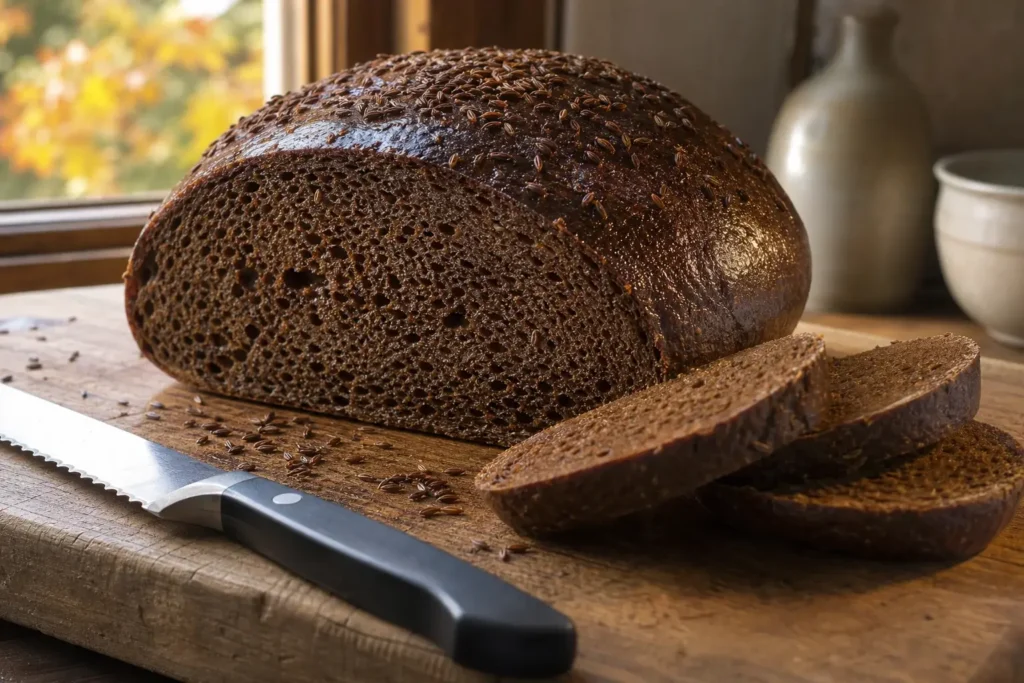
Dark rye bread is one of Russia’s most recognizable dishes, deeply rooted in the country’s culinary identity. This guide explains how to make an authentic dark rye bread at home, from preparing the dough to achieving the characteristic deep brown colour and slightly sour, complex flavour.
The recommended approach uses a simple starter method with rye flour, molasses, and spices. You’ll need about two hours of active time over two days, plus rising periods. This guide teaches you to make dark rye bread recipe Russian style, creating a loaf suitable for open sandwiches or everyday slicing.
Quick answer: Mix dark rye flour, bread flour, molasses, and caraway or coriander seeds into a wet dough. Let it rise in stages, then bake until hollow-sounding. Total time is about 3 to 4 hours of preparation and baking, plus overnight fermentation if using a starter.
At a Glance
| Type | Dishes |
|---|---|
| Local name | Чёрный хлеб |
| Origin | Rye has been grown in Russia since ancient times, well-suited to the harsh northern climate where other grains struggled. Black bread has been known in Russia since the 9th–10th centuries and was eaten by both peasants and nobility. The dark colour comes naturally from rye flour; the word 'black' refers to the bread's deep brown colour, especially in contrast to white wheat bread. |
| Servings | 2–4 servings (one loaf) |
| Total time | 3–4 hours active time plus overnight fermentation (optional) |
| Difficulty | Medium |
History and Story of Dark Rye Bread, Kaliningrad
Black bread stayed fresh longer compared to white (wheat) bread, making it practical for rural communities. A distinctive feature of traditional Russian bread was its sourdough base, which gave it a slightly tangy taste, and sourdough bread remains highly popular today. The most famous variety is Borodinsky bread: a dark, dense loaf fragrant with aromatic coriander seeds, first baked in the 19th century with its modern recipe developed in 1933. The legend holds that this dark rye sourdough was first baked before the Battle of Borodino, to give courage to Russian troops, or commemorated a Russian general fallen in the battle, baked by the grieving widow.
Ingredients
- 200 g dark rye flour
- 100 g bread flour
- 250 ml water
- 30 ml molasses
- 1 teaspoon active dry yeast (or rye sourdough starter)
- 1 teaspoon salt
- 1 teaspoon caraway or fennel seeds
- 1 teaspoon instant coffee or espresso powder
- 0.5 teaspoon unsweetened cocoa powder
How Dark Rye Bread, Kaliningrad Is Made
Step 1: Prepare the dough base
In a large bowl, whisk together 100 g bread flour, 1 teaspoon active dry yeast, salt, cocoa powder, instant coffee, and caraway or fennel seeds. In a separate bowl, mix 200 g dark rye flour with 250 ml warm water and 30 ml molasses. Let the rye mixture sit for 15 minutes to fully hydrate the flour.
Tip: A wetter dough is typical for rye bread; do not add extra flour even if the mixture seems loose.
Step 2: Combine wet and dry mixtures
Pour the rye flour mixture into the bowl with the dry ingredients. Mix thoroughly with a spoon until combined into a thick, sticky dough. The consistency should resemble wet clay rather than typical bread dough.
Tip: If using a sourdough starter instead of yeast, reduce the yeast to a pinch and let the dough develop flavour over 8–12 hours before proceeding.
Step 3: First rise
Cover the bowl with plastic wrap or a damp towel. Let it rest at warm room temperature (around 24–26°C) for 60 to 90 minutes, until the dough has noticeably risen and become slightly puffy.
Tip: Place the bowl in a turned-off oven with the light on, or near a warm radiator, for steady temperature.
Step 4: Shape the loaf
Punch down the risen dough and transfer it to a greased or lined loaf pan (roughly 20 cm × 10 cm). Smooth the top with a damp hand, pressing gently to remove large air pockets. Dust the top lightly with rye flour if desired.
Tip: Rectangular loaves are traditional; avoid round shapes which dry out too quickly.
Step 5: Second rise
Cover the pan loosely with plastic wrap or a tea towel. Let the dough rise again for 45 minutes to 90 minutes at room temperature, until it rises noticeably above the rim of the pan but does not double completely.
Tip: Do not let it over-rise, as rye doughs can collapse if left too long.
Step 6: Bake the bread
Preheat the oven to 375°F (190°C). Spray or brush the top of the dough lightly with water. Score (slash) the top with a knife to help steam escape. Bake for 35 to 45 minutes until the loaf sounds hollow when tapped on the bottom.
Tip: If the top browns too quickly, tent it loosely with foil for the last 10 minutes of baking.
Step 7: Cool and serve
Remove the bread from the pan and cool on a wire rack for at least 30 minutes before slicing. The crust will firm as it cools. Slice with a serrated knife using a gentle sawing motion to avoid compressing the dense crumb.
Tip: Dark rye bread keeps for several days wrapped at room temperature, and slices more cleanly after cooling completely.
Variants
- Borodinsky bread: includes coriander and caraway seeds, molasses, and sometimes a malt-based sweetness
- Darnitsky bread: a lighter Soviet-era blend of 60% rye and 40% wheat flour with a more neutral flavour
- Black bread with cocoa: deepens colour and adds subtle bitterness using unsweetened cocoa powder or instant coffee
Common Mistakes to Avoid
- Adding extra flour because the dough looks too wet. Rye dough is naturally wetter than wheat dough; adding flour produces a dry, dense, unpleasant loaf.
- Skipping the soaking step for rye flour. Rye absorbs water slowly; pre-soaking ensures even hydration and better texture.
- Over-rising the dough. Unlike wheat dough, rye dough can collapse if left to rise too long; aim for obvious rise, not doubling.
- Using instant yeast without enough fermentation time. Dark rye bread benefits from slow fermentation; rushing the rises produces a flat, sour loaf.
- Slicing the bread while hot. Warm rye bread crumbles; cooling completely before slicing yields clean slices.
- Baking in too hot an oven. High temperatures can char the crust before the interior cooks through; 375°F is the standard.
How to Order and Eat It
Dark rye bread is often used for open sandwiches or small snacks served with cured salmon, salted pork fat (salo) or salted/marinated herring. Since Soviet times, many consider the ultimate sandwich to be made with this bread, slathered with butter and sprinkled with salt. Slice thickly and serve at room temperature alongside cold meats, cheese, or pickled vegetables. The bread’s slight sourness and dense texture make it ideal for absorbing the flavours of accompaniments.
To order: Тёмный ржаной хлеб, пожалуйста [Tyomniy rzhanoy khleb, pozhaluysta]
Diet and Allergens
- vegan
- dairy-free
Where to Try Dark Rye Bread, Kaliningrad
Yekaterinburg
 Stolovaya Maslenitsa, Yekaterinburg Russian Cuisine
Main image: AI-generated illustration. It may not show the place exactly as it looks.
Russia Vibes Tips
- If you don't have a sourdough starter but want authentic flavour, add 1 teaspoon of apple cider vinegar or sour pickle juice to the dough to mimic sourdough tang without waiting days for fermentation.
- Make a 'mash' by steeping rye flour in boiling water (80 g flour to 250 ml water) with ground coriander, then cooling and mixing into the dough. This step, used in traditional recipes, deepens flavour and helps the rye flour hydrate more evenly.
- The bread's colour deepens after a day or two of cooling; do not judge the final result immediately after baking. Store in a paper bag (not plastic) to keep the crust crisp.
- Typically contains gluten. For a sourdough version, long fermentation breaks down gluten more completely, though it does not eliminate it entirely.
- Scale the recipe up easily by multiplying all ingredients by the same factor, but do not exceed 500 g of flour in a single batch if mixing by hand—the dough becomes difficult to handle.
- A loaf thermometer reading 205–210°F (96–99°C) in the centre indicates the bread is fully baked, regardless of how hollow it sounds when tapped.
Explore Nearby Dark Rye Bread, Kaliningrad
Related guides
 Kaliningrad Beer: Local Brews, History and Tasting Tips
Main image: AI-generated illustration. It may not show the place exactly as it looks.
Browse more: All Food & Drink · All Food & Drink in Kaliningrad · All Kaliningrad · All Other
FAQ
What is the difference between dark rye bread and pumpernickel?
Dark rye bread is usually sourdough-based and relies on fermentation for its tangy flavour, with a firmer crust. Pumpernickel is a German style baked much longer at lower temperatures, creating an even darker, denser crumb with a slightly sweet finish.
Can I make dark rye bread without a sourdough starter?
Yes. Active dry yeast works well and produces a lighter, less sour loaf. For more complex flavour without a starter, add instant coffee, cocoa powder, and a small amount of apple cider vinegar or sour pickle juice to mimic sourdough character.
Why is my rye dough so sticky?
Rye flour absorbs water differently than wheat flour and produces a naturally wet dough. This is normal and necessary for a moist, tender crumb. Resist the urge to add extra flour, as it will dry out the final loaf.
How long does dark rye bread stay fresh?
Dark rye bread keeps for 3–5 days at room temperature in a paper bag or bread box. The dense crumb and sourdough fermentation help it age without drying as quickly as wheat bread. Do not refrigerate, as cold accelerates staling.
What seeds are traditional in dark rye bread?
Caraway seeds are classic in Russian black bread, adding an earthy, slightly spicy note. Coriander seeds are used in Borodinsky bread, providing a warmer, citrusy flavour. Fennel seeds are a lighter alternative with a subtle anise character.
Is dark rye bread suitable for a gluten-free diet?
No. Dark rye bread is made primarily from rye flour, which contains gluten. Those with celiac disease or non-celiac gluten sensitivity cannot safely eat it.
Can I freeze dark rye bread?
Yes. Wrap the cooled loaf tightly in plastic wrap and freeze for up to 3 months. Thaw at room temperature for 2–3 hours, or slice while frozen and toast directly from the freezer.
Why does my bread have a gummy centre?
The loaf was likely under-baked or sliced while still warm. Rye bread continues to set as it cools; always cool completely before slicing. Bake until the internal temperature reaches 205–210°F and the loaf sounds hollow when tapped.
Russia Vibes is a one-person project. A coffee keeps it going
How we research and update our guides
About this guide: AI assistance and accuracy
This guide is created with the help of AI and is based on official sources where available. Mistakes can still happen. Opening hours, prices, rules and other details are given to the best of our knowledge as of the date shown and can change without notice. It offers general recommendations only, not professional, legal or travel advice. Please confirm important details with the official source before you travel; you are responsible for your own plans and decisions.

Take this guide with you
Get a free PDF of this guide to print or read offline: key facts, tips and a map link on a few clean pages.
Report an issue on this page
Paying for your trip: please read
International sanctions affect payments between Russia and many other countries. In practice, cards issued in the EU, the UK, the US and several other countries often do not work in Russia, Russian cards usually do not work abroad, and some booking platforms, airlines and payment providers limit or suspend their services for Russia. The situation changes frequently.
We do not give legal or financial advice, and this site does not encourage anyone to break or circumvent sanctions. Whatever you plan, you are responsible for following the laws and regulations that apply to you, including those of your country of residence and citizenship.
Many travelers still organise their stay lawfully. It is worth asking your bank or payment provider what is currently permitted, contacting hotels, tour operators and carriers directly about the payment methods they accept, and checking which services are open to customers from your country. Clarify payment, cancellation and refund terms before you commit to a booking, and keep your plans flexible.
Partner links on this site may not be available in every country, and prices, availability and rules in our guides can differ from what you see when you book.