
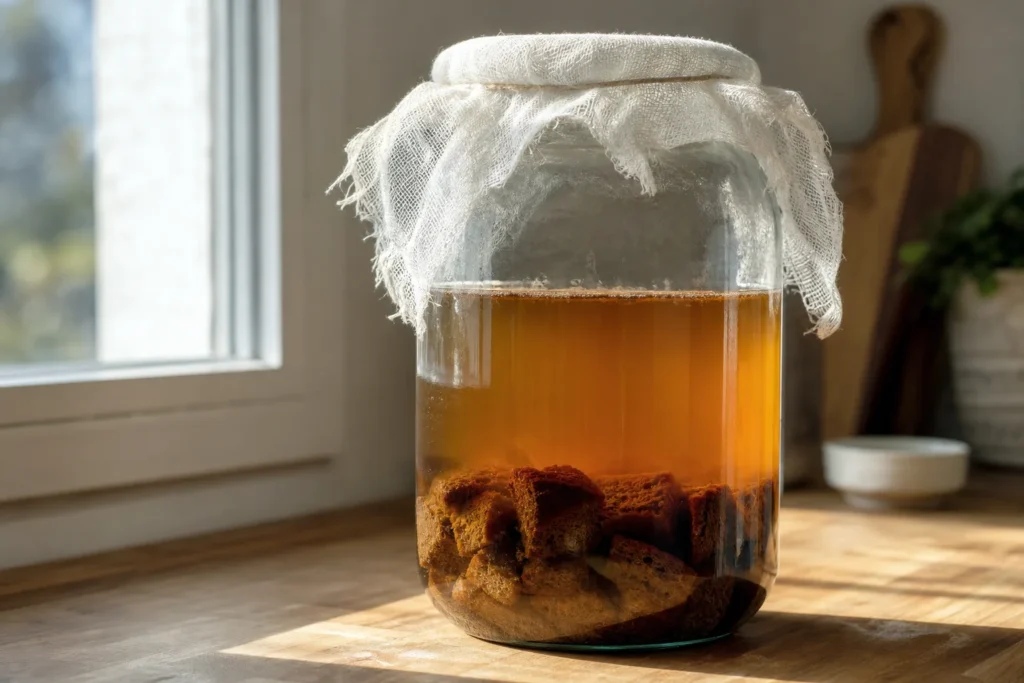
Visitors to Kaliningrad often encounter kvass (квас), a fermented drink with over a thousand years of history across Eastern Europe. This article explains how to make kvass—the traditional way to prepare this refreshing drink at home.
Whether you’re curious about Russian culinary traditions or want to recreate this drink after your travels, the basic method is surprisingly simple: toast rye bread, steep it in water, add sugar and fermentation culture, then wait a few days for wild fermentation to transform the ingredients into fizzy, slightly sour kvass. The recommended option uses the traditional bread-based method with natural fermentation.
Quick answer: Toast dark rye bread until very dark, steep it in hot water for 3–4 hours, strain and cool, dissolve sugar, add yeast or sourdough starter, ferment for 1–2 days at room temperature until fizzy, then bottle with optional raisins or mint for a secondary fermentation lasting 2–3 days. Total time: 4–6 days.
At a Glance
| Type | Drinks |
|---|---|
| Local name | квас |
| Origin | Kvass was documented in the Russian Primary Chronicle compiled around 1113 AD, recording that Grand Prince Vladimir of Kiev distributed food, honey and kvass to celebrate the Christianisation of Kievan Rus in 988 AD. Kvass belongs to a wider Eastern European drinking tradition, with versions found across Belarus, Ukraine, Russia, Lithuania, Latvia, Estonia, Poland and Finland. |
| Servings | 2–4 servings (about 1 litre) |
| Total time | 4–6 days total (including fermentation and carbonation) |
| Difficulty | Easy |
History and Story of Kvass, Kaliningrad
That a fermented rye bread drink appears in the earliest surviving chronicle of Russian history, mentioned alongside honey as a celebratory provision for an entire population, tells you everything about the cultural status of kvass in the medieval Slavic world. It was what people drank. The recipe did not change with the social status of the drinker. The vessel might have been finer, the ingredients might have been of slightly better quality, but the fundamental drink, toasted rye bread fermented in water with a sweetener, was universal in a way that wine, mead and imported beverages never were. The drink was made using such grain as rye, oats, millet, barley. Firstly, the grain was soaked, then sprouted, dried, ground, then the kvass was made. Kvass brewers experimented with the drink, adding various fruits and berries such as apples, pears, cranberries, etc. to it, and then currant, raspberry, strawberry, and mint leaves were added.
Ingredients
- 400 g dark rye bread, stale or fresh
- 4 litres filtered water
- 150–200 g sugar or honey
- ¼ tsp dried yeast or 1–2 tbsp sourdough starter (active culture)
- Optional: 3–5 raisins per bottle, fresh mint sprigs
- Large glass jar (2 litres or larger)
- Cheesecloth or clean kitchen towel
- Glass bottles with caps for storage
How Kvass, Kaliningrad Is Made
Step 1: Toast the bread
Toast the bread in the oven at 350°F (175°C) for 15–25 minutes, until very dark but not burnt. The darker the toast, the deeper the malty flavour. Dark toasting creates fermentable sugars similar to malted grain for beer. Let the toasted bread cool to room temperature.
Tip: Stale rye bread works as well as fresh, so this is an excellent way to use up old bread.
Step 2: Steep the bread in hot water
Bring the water to a boil, take it off the heat and add the toasted bread. Cover and leave for 3–4 hours, until lukewarm. This soaking time extracts the flavour and sugars from the bread into the water.
Tip: Keep the pot covered to preserve the heat and prevent contamination. A 3-hour steep is sufficient in warm kitchens; 4 hours works well in cooler environments.
Step 3: Strain and dissolve sugar
Strain the liquid into your jar, pressing the bread gently. Stir in the sugar until dissolved. Discard the bread solids. The sugar feeds both the yeast and beneficial bacteria, allowing fermentation to proceed.
Tip: Use filtered water if possible, as chlorine in tap water can inhibit fermentation. Honey can replace sugar for a slightly different flavour.
Step 4: Cool and inoculate
Once it's below about 95°F (35°C), stir in the yeast. Cover with a cloth. Yeast added to hot liquid will die, so patience here is essential. Active sourdough starter also works well; use roughly equal volume (1–2 tablespoons starter to 1 litre of liquid).
Tip: Natural fermentation without commercial yeast takes longer but produces a more traditional, less harsh result.
Step 5: Primary fermentation
Leave at 68–75°F (20–24°C) for 12–48 hours, tasting from 12 hours. It's ready when it's fizzy, lightly sour and still a little sweet. The duration depends on room temperature and fermentation culture strength. Warmer environments ferment faster. The drink should show slight carbonation and a pleasant sour-sweet balance.
Tip: Taste the kvass after 12 hours and then every 6–12 hours. Stop fermentation when the balance of sweetness and sourness suits your taste.
Step 6: Bottle and carbonate
After the primary fermentation, the kvass is bottled and left to ferment for another 2-3 days to carbonate. Pour the kvass into clean glass bottles. Add 3–5 raisins or a mint sprig to each bottle for extra carbonation and flavour. Seal the bottles loosely (not airtight) to allow pressure to build gradually.
Tip: If you seal bottles completely and pressure builds too much, you risk them exploding. Use bottles designed for carbonated beverages (swing-cap or sturdy glass bottles), not thin glass.
Step 7: Chill and serve
After 2–3 days of bottle fermentation at room temperature, refrigerate the sealed bottles. The alcohol content is so low (0.05-1.44%) that it is considered acceptable for consumption by children. It is often flavoured with fruits or herbs such as strawberries or mint. Kvass is best served cold, straight from the bottle or poured into a glass.
Tip: Cold fermentation in the fridge slows the carbonation process further and develops flavour complexity. Store sealed bottles in the refrigerator for up to 2 weeks.
Variants
- Beet kvass: Made by fermenting diced beets with rye bread, water and salt instead of sugar, producing a deep red colour and earthy flavour.
- Honey kvass: Historically the most expensive version, using honey as the primary sweetener instead of cane or beet sugar.
- Herbal kvass: Infused with caraway seeds, coriander, mint, lemon verbena or other herbs during fermentation for regional variations.
- Fruit kvass: Fermented with apple slices, pear pieces, berries or dried fruit for sweetness and complexity.
- Lithuanian gira: A regional variant using caraway tea, beetroot juice and berries alongside bread.
Common Mistakes to Avoid
- Adding yeast to liquid hotter than 95°F (35°C) kills the culture and halts fermentation. Always cool the liquid to room temperature before inoculating.
- Sealing bottles completely during primary fermentation can cause excess pressure and shatter the glass. Use cloth covers or loose-fitting lids during the first 1–2 days of fermentation.
- Using tap water with high chlorine content inhibits fermentation; filtered or boiled-and-cooled water works better.
- Tasting or stirring the kvass too frequently introduces oxygen and wild yeasts, which can spoil the batch. Leave it undisturbed once you've added the starter culture.
- Fermenting in direct sunlight or near heat sources accelerates fermentation unevenly and can produce off-flavours. Room-temperature, shaded locations work best.
- Not toasting the bread dark enough produces a weak, pale flavour lacking the malty depth characteristic of good kvass. Dark toast is essential.
How to Order and Eat It
In the past, kvass was drunk with radish, rye bread, and green onions. This meal was believed to have satisfied hunger. Russians also use kvass for cooking a special summer cold soup, okroshka. The drink is typically served cold as a refreshing beverage on warm days. A glass of kvass is enough on its own, though some serve it with traditional Russian rye bread or as an ingredient in soups.
To order: Кв?с, пожалуйста. [Kvas, pozhaluysta.]
Russia Vibes Tips
- Kvass ferments fastest at room temperature (68–75°F / 20–24°C). If your kitchen is cooler, fermentation can take 3–4 days instead of 1–2. Conversely, warmer kitchens may finish primary fermentation in 12–18 hours.
- The starter culture (yeast or sourdough starter) is critical. Old or inactive cultures ferment slowly or not at all. Store dried yeast in the freezer and keep sourdough starters well-fed if you plan to make kvass regularly.
- A slight white or brown foam that forms during fermentation is normal and indicates active wild yeast and lactic acid bacteria. Skim it off gently if desired, but it is not harmful.
- Kvass made without commercial yeast (pure wild fermentation) takes longer but develops a more complex sour flavour closer to traditional versions. This requires patience but rewards you with authentic taste.
- Always use glass jars and bottles, never plastic, as the fermentation's mild alcohol and acidity can leach chemicals from plastic over time.
- If kvass smells vinegary or shows pink or black mold (not white yeast foam), discard the batch immediately. Proper fermentation smells pleasantly sour and yeasty, never putrid.
Explore Nearby Kvass, Kaliningrad
Browse more: All Food & Drink · All Food & Drink in Kaliningrad · All Kaliningrad · All Other
FAQ
Is kvass alcoholic?
Kvass is of very low alcoholic content (0.7 to 2.2%). The alcohol content is so low (0.05-1.44%) that it is considered acceptable for consumption by children. Modern kvass sold in stores is typically non-alcoholic or contains minimal alcohol.
Can I make kvass without yeast?
Yes. Wild fermentation using natural bacteria and yeast from the bread and environment works but takes 3–5 days. Using a sourdough starter or a pinch of dried yeast speeds fermentation to 1–2 days and gives more predictable results. Both methods produce authentic kvass.
What does kvass taste like?
It's lightly sour, malty, fizzy and slightly alcoholic. It tastes malty with a slight sweetness and when cold it is genuinely refreshing. The flavour is closer to a non-alcoholic, tangy ginger ale or weak beer than to soda.
Do I need special equipment to make kvass?
No. A large glass jar, cheesecloth or a kitchen towel, and glass bottles are sufficient. A large pot for steeping the bread, a strainer, and basic kitchen items complete the setup. Professional fermentation vessels are optional.
How long does homemade kvass keep?
Refrigerated kvass in sealed bottles lasts 2–3 weeks. The carbonation gradually decreases and the flavour sharpens as acidity increases over time. Unopened bottles at cool room temperature last up to 1 week but continue to ferment slowly.
What if my kvass is too sour?
Taste the kvass after 12 hours of primary fermentation and stop fermentation by refrigerating before it becomes too acidic. Next time, use less fermentation culture or shorten fermentation time. Adding a bit of sugar when serving can also balance sourness.
Can I use bread other than rye?
It is usually made of wheat, rye, rye bread, or barley and buckwheat meal. Rye bread is traditional and produces the most authentic malty flavour. Wheat bread works but produces a lighter result. A mix of bread types creates complex flavours.
Is homemade kvass safe to drink?
Yes, when made with clean equipment and proper fermentation. The acidic environment and fermentation process prevent harmful bacteria. If kvass smells putrid, shows pink or black mold, or tastes unpleasant, discard it. Use filtered water and sealed jars to minimize contamination risk.
Russia Vibes is a one-person project. A coffee keeps it going
How we research and update our guides
About this guide: AI assistance and accuracy
This guide is created with the help of AI and is based on official sources where available. Mistakes can still happen. Opening hours, prices, rules and other details are given to the best of our knowledge as of the date shown and can change without notice. It offers general recommendations only, not professional, legal or travel advice. Please confirm important details with the official source before you travel; you are responsible for your own plans and decisions.

Take this guide with you
Get a free PDF of this guide to print or read offline: key facts, tips and a map link on a few clean pages.
Report an issue on this page
Paying for your trip: please read
International sanctions affect payments between Russia and many other countries. In practice, cards issued in the EU, the UK, the US and several other countries often do not work in Russia, Russian cards usually do not work abroad, and some booking platforms, airlines and payment providers limit or suspend their services for Russia. The situation changes frequently.
We do not give legal or financial advice, and this site does not encourage anyone to break or circumvent sanctions. Whatever you plan, you are responsible for following the laws and regulations that apply to you, including those of your country of residence and citizenship.
Many travelers still organise their stay lawfully. It is worth asking your bank or payment provider what is currently permitted, contacting hotels, tour operators and carriers directly about the payment methods they accept, and checking which services are open to customers from your country. Clarify payment, cancellation and refund terms before you commit to a booking, and keep your plans flexible.
Partner links on this site may not be available in every country, and prices, availability and rules in our guides can differ from what you see when you book.