
Updated
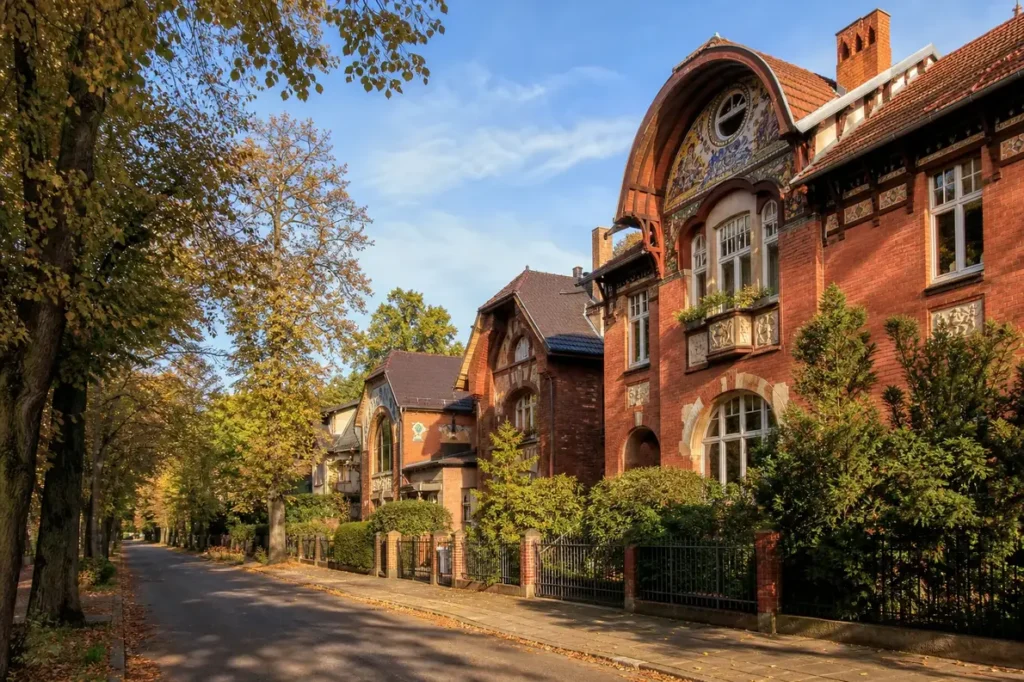
Amalienau District, in central Kaliningrad‘s Tsentralny District, is one of the few neighborhoods where pre-1945 German architecture remains almost intact. Unlike most of Königsberg (the city’s former German name), which was destroyed or rebuilt, Amalienau’s quiet streets preserve a dreamlike snapshot of early 20th-century suburban life, with hundreds of original villas, apartment buildings and garden fences.
The neighborhood invites long, unhurried walks to photograph the decorative details—stained-glass windows, ceramic tiles, carved wooden doors, ornamental ironwork—on buildings that span Jugendstil (German Art Nouveau), Neo-Renaissance, Neo-Gothic and other contemporary styles. Most villas remain private residences, but the street-level architecture itself is the attraction for visitors.
Quick Facts
| Russian name | Амалиенау |
|---|---|
| Built / opened | 1901 |
| Address | Аmalienau, Калининград OpenStreetMap · Google Maps |
| District | Tsentralny |
| Best time to visit | Spring (April–May) and autumn (September–October) offer mild weather, clear light for photography, and fewer summer tourists. Summer (June–August) is warm but often crowded. Winter (November–February) is cold, but bare trees reveal architectural details and snow can add atmosphere. Weekday mornings are quieter than weekends. Morning light is best for south- and east-facing facades; afternoon light works for west-facing buildings. |
| Recommended duration | 2–3 hours |
What Is (and Isn't) Part of a Visit to Amalienau District, Kaliningrad?
| Part | Status | Notes |
|---|---|---|
| Amalienau District neighborhood (streets and facades) | Included in the standard ticket | The entire public street network and building exteriors are free to explore. There are no entrance gates or admission barriers to the neighborhood. |
| Gustav Grossmann Coffee Shop (interior) | Separate ticket or institution | Freely accessible as a working cafe; no separate admission, but beverages or food must be purchased to enter. |
| Prussian Apartment Museum | Separate ticket or institution | A private museum requiring advance arrangement or scheduled visits; separate entrance and modest admission applies. |
| Private villa interiors | Not open to visitors | Almost all villas remain private residences; interiors are not open to visitors. Photography is from public streets only. |
| Central Kaliningrad (Kant Island, cathedral, city center) | Outside / not part of it | The historic city center is separate from Amalienau, roughly 1.5–2 km away; requires separate transport or a long walk. |
Why Visit Amalienau District, Kaliningrad?
Amalienau offers something rare in Russia: an entire preserved European neighborhood of the pre-war era, untouched by the wartime destruction that reshaped the rest of Kaliningrad. The architectural styles and materials—red brick, decorative plasterwork, ornate ironwork, painted shutters—reveal the wealth and taste of Königsberg’s merchant and professional classes in the early 1900s.
For architecture enthusiasts, historians and photographers, wandering these streets is like time travel. For casual visitors, it’s a pleasant alternative to typical city sightseeing: there are no crowds, no admission fees, no rigid routes—just a maze of beautiful streets to discover at your own pace, punctuated by cafes and small shops in historic buildings.
How Amalienau District, Kaliningrad Is Laid Out
Amalienau is not a single venue but a residential neighborhood spread across roughly 150 city blocks. The core area, bounded by Lenin Avenue (west), Zheleznodorozhny Street (south), Lenin Street (east) and various streets to the north, contains the densest concentration of well-preserved villas.
The easiest navigation strategy is to pick a starting point near the center—such as the intersection of Königsberg Street (formerly Gertraudenstrasse) and Lenin Street—and work outward in expanding loops. Streets slope gently downward toward the Pregolya River to the south. Major landmarks like the Gustav Grossmann coffee shop (in a restored 1920s building on Gertraudenstrasse) or the Friedrichsburger Tor arch serve as reference points. Most visitors spend 2–3 hours walking 2–3 km of streets.
Highlights of Amalienau District, Kaliningrad
Jugendstil Villas along Gertraudenstrasse
Gertraudenstrasse (now Königsberg Street) is the commercial heart of Amalienau and showcases the most intact stretch of early 20th-century architecture. The street runs roughly north-south and features elegant multi-story apartment buildings and townhouses built between 1900 and 1914, most in Jugendstil style with curved windows, decorative plasterwork and vibrant paint colors. Walk the entire length to see how the designs vary—some are exuberant with ceramic panels and ornamental ironwork, others more restrained.
Tip: Photograph south-facing facades in morning light, when the colors are most vivid. The street is pedestrian-friendly and lined with small shops and cafes where you can rest.
Villa Leo (1902)
Located on the street grid of Amalienau, Villa Leo is one of the neighborhood's most photographed private residences, representing the affluence of Königsberg's early 20th-century bourgeoisie. Built in 1902, it exemplifies the careful blend of Neo-Renaissance and Jugendstil elements—arched windows, decorative brickwork and ornamental details—that characterize the finest Amalienau villas. The building remains private but is clearly visible from the street.
Tip: Villa Leo does not have a public interior; observe and photograph from the street. Its address is Zhukovskogo Street; ask locals or use a map to locate it precisely.
Friedrichsburger Tor (Friedrichsburger Gate)
At the southern edge of Amalienau stands a restored 19th-century defensive gate arch, a remnant of Königsberg's old fortifications. Though modest in size, the gate marks a threshold between the city center and Amalienau and symbolizes the boundary between the old walled city and the newer suburban development. The gate was part of the city's historic defensive belt.
Tip: The gate is best seen from street level. It serves as a good landmark for orienting yourself within the neighborhood and a natural stopping point on a walking route.
Gustav Grossmann Coffee Shop
In a carefully restored building on Gertraudenstrasse (Königsberg Street), the Gustav Grossmann coffee shop occupies a former grocery store from the 1920s. The shop itself is modest but showcases the mix of commercial and residential use that characterized Amalienau in its heyday. Visitors can step inside to experience a period interior and take refreshment while exploring the neighborhood.
Tip: This is one of the few interiors of an original Amalienau-era building that visitors can access freely. It's a good place to rest during a walking tour and absorb the atmosphere of early 20th-century daily life.
Prussian Apartment Museum
A small private museum within a restored Prussian apartment on or near Gertraudenstrasse offers a rare glimpse of how a typical middle-class family lived in early 20th-century Königsberg. The museum recreates domestic furnishings, decor and everyday objects from the period, providing context for the exteriors you see throughout Amalienau. Access is by prior arrangement or during scheduled hours.
Tip: Entry to the Prussian Apartment Museum requires advance contact; check with local tourism information or your hotel. This is a small, intimate space—not a grand museum—but invaluable for understanding the history behind the facades.
Villa-Lined Residential Streets (Zhukovskogo, Oktyabrskaya, and surrounding streets)
Beyond the commercial heart of Gertraudenstrasse, Amalienau's quieter residential streets—such as Zhukovskogo, Oktyabrskaya and smaller lanes—are lined with single-family villas set back behind gardens and fences. Here the architectural diversity is even more apparent: Neo-Gothic cottages with steep gables, Neoclassical facades, brick houses with tile roofs, and numerous variations on the garden-city ideal. These streets are leafy, peaceful and rarely crowded.
Tip: These streets are best explored without a rigid plan. Wander, look upward at roof lines and decorative details, and photograph building corners and door entries. The smaller streets are where the authentic neighborhood feel is strongest.
Early 20th-Century Brick Architecture and Details
Throughout Amalienau, the craftsmanship of pre-war German building is evident in details often missed by casual visitors: decorative ceramic tiles on building corners, carved wooden door surrounds, cast-iron grilles on basement windows, hand-painted street-number plaques, ornamental ridge tiles on roofs. These elements reflect not just aesthetic ambition but also the skills of craftsmen and the abundance of materials in the Königsberg of that era.
Tip: Carry a camera with a macro or zoom lens; many of the most striking details are at eye level but small. A printed or digital map with building-by-building architectural notes (available from tourism offices) helps identify styles and builders.
Atmosphere
Amalienau feels quiet and introspective, a bubble of nostalgia in a modern city. The streets are tree-lined and spacious, with little traffic beyond residents’ cars and the occasional delivery vehicle. Most buildings are residential, so you encounter people going about daily life rather than crowds of tourists. In good weather, the neighborhood has a leisurely, almost timeless quality—you could be walking through a 1920s photograph.
The architectural styles vary building by building, which creates visual interest without chaos. Reds, creams, pale greens and ochres dominate the color palette. The air is relatively quiet; you hear birds, the occasional church bell from the city center, and the footsteps of other walkers. In autumn and early spring, when trees are bare, the building details are most visible. In summer, gardens are lush and soften the streetscapes.
History of Amalienau District, Kaliningrad
The origins of Amalienau trace back to 1558, when a suburban settlement called Dalny Hufen (Far Hoofen) was first documented near Königsberg. In 1820, a commercial advisor named G. Schnel bought the entire estate and renamed it Amalienau after his wife, Amalia. For most of the 19th century, the area remained quiet countryside, used for estates and orchards.
The transformation came after 1901, when the Königsberg Society for Building and Real Estate purchased the Amalienau estate and launched an ambitious suburban development. The society was influenced by the “garden city” concept, formulated in 1898 by English sociologist Ebenezer Howard, which emphasized suburban living combined with abundant green space, tree-lined streets and affordable housing for the rising middle class. Amalienau was designed along these principles.
From 1901 to 1914, villas and apartment buildings rose rapidly throughout the neighborhood. Architects and builders employed contemporary European styles: Jugendstil (German Art Nouveau), Neo-Renaissance, Neo-Gothic, Neoclassical and various hybrid forms. Each building was individually designed, creating a diverse streetscape while maintaining a unified aesthetic of quality craftsmanship and materials—red and yellow brick, ornamental plasterwork, ceramic tiles, wrought iron.
The outbreak of the First World War in 1914 halted construction. Amalienau sustained some damage during the war, but the neighborhood survived relatively intact through the 1920s and 1930s, becoming a prosperous residential enclave for Königsberg’s merchants, professionals and families. During the Second World War, much of Königsberg was flattened by bombing and the 1945 Battle of Königsberg, but Amalienau, on the periphery, escaped the worst destruction.
After 1945, when Königsberg became Kaliningrad and was incorporated into the Soviet Union, the neighborhood was absorbed into the city. Soviet authorities left many Amalienau buildings standing, though they converted them to apartments and communal use. Over decades, some buildings were damaged by neglect or poor repairs, but many survived because the sturdy pre-war construction and valuable materials made demolition impractical. Since the 1990s, and especially in the 2000s and 2010s, local and private restoration efforts have gradually renewed facades, repaired roofs and restored decorative elements, making Amalienau one of the most recognizable pre-war German neighborhoods open to visitors in modern Russia.
Legends and Myths about Amalienau District, Kaliningrad
The Ghost of Amalia
Legend – historically unreliable. Local folklore suggests that Amalia, the wife after whom the neighborhood was named, walks the streets of Amalienau on quiet evenings, watching over the villas her husband built. Though no credible historical sources support this tale, it persists in Russian tourist guides and local storytelling, likely romanticizing the historical connection between the woman's name and the enduring neighborhood.
The Königsberg Time Capsule
Legend – historically unreliable. A widely repeated but unverified claim suggests that builders of Amalienau sealed time capsules—containing newspapers, coins and photographs of the period—inside walls and foundations of certain villas as blessings for future inhabitants. Some claim that during Soviet restoration work, capsules were supposedly discovered, though no museum or archive displays authenticated examples.
Tickets and Booking for Amalienau District, Kaliningrad
There is no admission or booking required to walk through Amalienau District. The neighborhood is free and open at all times; you may explore at your own pace without reservations or tickets.
If you wish to visit the Prussian Apartment Museum, contact local tourism offices or your accommodation for current opening times and how to arrange access. The Gustav Grossmann coffee shop operates standard cafe hours and welcomes walk-in customers; no advance booking is necessary.
Plan and Book
Suggested itineraries Amalienau District, Kaliningrad
1.5–2 hours
Start at Lenin Street near Königsberg Street (or Gertraudenstrasse). Walk south along Königsberg Street, photographing facades and visiting Gustav Grossmann coffee shop. Continue west onto Zhukovskogo Street to see Villa Leo and surrounding villas. Return northward via smaller streets. Total distance roughly 2 km.
2.5–3 hours
Begin at Friedrichsburger Tor arch (southern boundary). Walk northward through residential streets (Oktyabrskaya, Tolstogo) to reach Königsberg Street. Turn east to explore the commercial heart and side streets. Continue west toward the Pregolya River where possible. End at Gustav Grossmann for refreshment. This route covers the full extent of well-preserved architecture.
3+ hours (half day)
Combine a full Amalienau walk with the Prussian Apartment Museum visit (1–1.5 hours including travel and time inside). Start with museum orientation, then dedicate remaining time to street exploration. Consider visiting during off-peak hours (weekday mornings) to minimize crowds and photograph in better light.
How to Get to Amalienau District, Kaliningrad
By tram: Take Tram Line 1 or 5 from the city center toward Pionerskaya. Get off at Zhukovskogo Street or nearby stops. Walk a few minutes into the neighborhood. Tram stops serve the western edge; map your stop based on which part of Amalienau you wish to enter first.
By bus: Multiple bus routes serve streets bordering or running through Amalienau. Use Yandex Maps to identify the best route and stop for your entry point. Buses are frequent and reliable.
By foot from city center: From Victory Square (Ploshchad Pobedy) in central Kaliningrad, walk westward for roughly 20–25 minutes. Head toward the Pregolya River and follow street signs toward Amalienau or use a mobile map app.
By taxi or ride-hailing: Ride-hailing services (Yandex Taxi, Uber where available) are quick and affordable. Provide the driver with a street name (Königsberg Street, Zhukovskogo Street) as your destination.
Accessibility
Amalienau's streets are uneven in places, with cobblestone (bruk) sidewalks and occasional brick paving. Some areas are not fully accessible to wheelchairs or strollers due to uneven ground and narrow sections. There are no ramps or elevators (the neighborhood is entirely outdoors). Comfortable walking shoes are essential. Benches are few. The Gustav Grossmann coffee shop ground floor is accessible to those with mobility aids; other interior spaces may not be. Contact the Prussian Apartment Museum directly about wheelchair access before visiting.
Food Nearby
Scattered cafes and small restaurants operate on and near Königsberg Street (Gertraudenstrasse), serving light meals, coffee and snacks. The Gustav Grossmann coffee shop offers refreshment in a period setting. A few small shops sell groceries and drinks. Kaliningrad's main restaurant district is in the central city 1.5–2 km away; consider dining there before or after exploring Amalienau.
What to Bring
Comfortable walking shoes (essential for uneven sidewalks). A camera or smartphone for photography. A hat and sunscreen for sunny days. A light layer or umbrella for changeable weather. A map or GPS-enabled phone (Yandex Maps is most accurate locally). Bring water, as there are few facilities. In winter, warm clothing and clear paths after snow may be limited.
Best Views and Photo Spots of Amalienau District, Kaliningrad
Königsberg Street (Gertraudenstrasse), south-facing facades
The main commercial street of Amalienau showcases the finest surviving Jugendstil and Neo-Renaissance buildings. Ornamental facades, varied window designs and painted details create a picturesque streetscape reminiscent of early 20th-century Königsberg.
Best time: Morning (7–10 a.m.) for warm, directional light illuminating south-facing facades. Weekday mornings before commercial activity begins.
Zhukovskogo Street corner with Villa Leo backdrop
A quieter residential street with villa-lined gardens and fences. The combination of well-maintained facades, mature trees and the architectural detail of Villa Leo creates a serene, timeless scene.
Best time: Late morning or early afternoon when dappled tree shade softens harsh sunlight. Spring or autumn when foliage frames facades attractively.
Friedrichsburger Tor (gate arch) from southern approach
The restored defensive gate serves as a visual anchor and symbolic boundary. Photographed from street level with surrounding residential buildings, it captures the architectural context of the neighborhood's edges.
Best time: Midday when the arch is well lit and shadows are minimal. Overcast days reduce harsh contrasts.
Narrow residential streets (Oktyabrskaya, Tolstogo) with garden fences
Intimate, tree-lined passages with villas set back behind wrought-iron fences and hedges. These quiet streets evoke the garden-city aesthetic and the private world of Amalienau residents.
Best time: Golden hour (late afternoon, 4–6 p.m.) when low sunlight creates warm tones and long shadows accentuate architectural details.
Building corners and doorways on Königsberg Street for detail shots
Ornamental tiles, carved wood surrounds, stained-glass windows, house-number plaques and ironwork. Close-up photography reveals the craftsmanship and individual character of each building.
Best time: Any time with clear, directional light. Cloudy days reduce glare on reflective tiles and glass.
Photography Rules
Photography from public streets is unrestricted. Tripods and professional equipment may attract attention but are generally tolerated on quiet residential streets. Flash is not necessary due to ample natural light. Drones are not permitted in urban Kaliningrad. Respect privacy: avoid focusing on windows where residents are visible, and do not photograph people without permission.
Family Suitability
Amalienau is suitable for families with children old enough to walk 2–3 km without fatigue (roughly age 5+). Strollers are challenging due to uneven cobblestone and brick sidewalks; a sturdy, off-road stroller is advisable, though many parents find carrying a toddler easier. Older children enjoy the peaceful streets and searching for architectural details. Few specific attractions hold children's attention for long; the appeal lies in the overall environment. Bring water and snacks; few facilities exist. The neighborhood is safe and relatively quiet, making it comfortable for families.
Russia Vibes Tips
- Amalienau is best discovered without a rigid itinerary. Print a neighborhood map with major streets labeled and wander slowly; the joy lies in stumbling upon hidden details—a carved lintel, a stained-glass window, an ornamental gate—rather than checking boxes.
- Many Amalienau buildings are described in Russian-language architecture guides and local blogs with building-by-building histories and architects' names. Bring a translation app or find an English-language architectural guide at your hotel to deepen understanding as you walk.
- Locals are generally friendly and may offer impromptu information if you ask politely about a particular building or street. Learning a few Russian phrases ("Excuse me," "Very beautiful building," "Thank you") opens doors to small conversations.
- Photograph building details—doors, windows, roof lines, corner tiles—as well as whole facades. These close-ups capture the craftwork that makes Amalienau special and often make for more compelling images than distant street views.
- Visit in the morning on a weekday to avoid weekend crowds and enjoy softer light. Weekday mornings are nearly deserted, allowing unhurried exploration and better photography.
- Do not expect to complete a perfect 'tour' of Amalienau in a single visit. Many streets are easily missed or require backtracking. Return to favorite spots in different seasons or light conditions; the neighborhood reveals new aspects each time.
Explore Nearby Amalienau District, Kaliningrad
Sights near Amalienau District, Kaliningrad
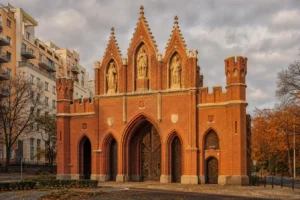 King's Gate, Kaliningradabout 800 m away (~13 min walk) · typical visit: 45 minutes to 1 hour
Main image: AI-generated illustration. It may not show the place exactly as it looks.
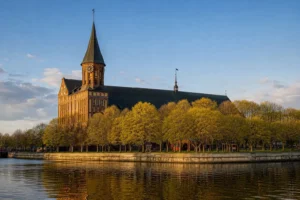 Königsberg Cathedral, Kaliningrad – about 950 m away (~15 min walk) · typical visit: 2–3 hoursOpen daily 10:00–19:00
Main image: AI-generated illustration. It may not show the place exactly as it looks.
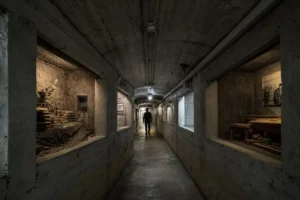 Bunker Museum, Kaliningrad – about 1.0 km away (~17 min walk) · typical visit: 1–2 hoursOpen daily 10:00–19:00
Main image: AI-generated illustration. It may not show the place exactly as it looks.
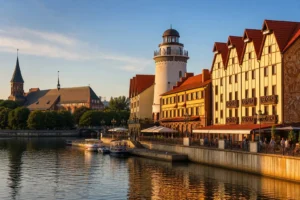 Fishing Village, Kaliningrad – about 1.1 km away (~17 min walk) · typical visit: 1.5–2 hoursOpen 24 hours
Main image: AI-generated illustration. It may not show the place exactly as it looks.
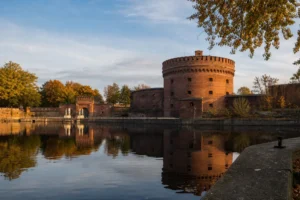 Amber Museum, Kaliningradabout 1.4 km away (~22 min walk) · typical visit: 2–3 hours
Main image: AI-generated illustration. It may not show the place exactly as it looks.
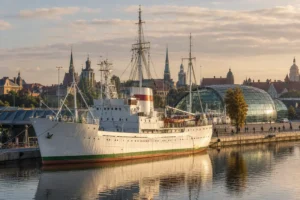 Museum of the World Ocean, Kaliningrad – about 1.6 km away (~26 min walk) · typical visit: 2–3 hoursOpen 10:00–18:00, closed Mon
Main image: AI-generated illustration. It may not show the place exactly as it looks.
Restaurants and cafes near Amalienau District, Kaliningrad
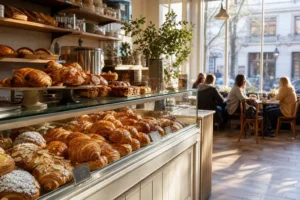 Konigsbacker, Kaliningradabout 850 m away (~14 min walk)
Main image: AI-generated illustration. It may not show the place exactly as it looks.
 Madame Bushe, Kaliningrad – about 1000 m away (~16 min walk)Open daily 11:00–23:00
Main image: AI-generated illustration. It may not show the place exactly as it looks.
 Korchma Borsch & Salo, Kaliningradabout 1000 m away (~16 min walk)
Main image: AI-generated illustration. It may not show the place exactly as it looks.
 Steindamm 99, Kaliningrad – about 1.2 km away (~19 min walk)Open daily 11:00–23:00
Main image: AI-generated illustration. It may not show the place exactly as it looks.
Hotels near Amalienau District, Kaliningrad
 Crystal House Suite Hotel & Spa, Kaliningradabout 850 m away (~14 min walk)
Main image: AI-generated illustration. It may not show the place exactly as it looks.
 Hotel Kaiserhof, Kaliningradabout 950 m away (~15 min walk)
Main image: AI-generated illustration. It may not show the place exactly as it looks.
 Holiday Inn Kaliningrad, Kaliningradabout 1.3 km away (~21 min walk)
Main image: AI-generated illustration. It may not show the place exactly as it looks.
Events and traditions near Amalienau District, Kaliningrad
 Kaliningrad City Picnic, Kaliningradabout 950 m away (~16 min walk)
Main image: AI-generated illustration. It may not show the place exactly as it looks.
 New Year Fair on Kant's Island, Kaliningradabout 1.2 km away (~19 min walk)
Main image: AI-generated illustration. It may not show the place exactly as it looks.
Related guides
 Beeline, Kaliningrad: Where to Buy SIM Cards and Phone Accessories
Main image: AI-generated illustration. It may not show the place exactly as it looks.
 MTS, Kaliningrad: Prepaid SIM Cards and Mobile Services
Main image: AI-generated illustration. It may not show the place exactly as it looks.
 Kaliningrad North Railway Station: Trains to the Baltic Coast
Main image: AI-generated illustration. It may not show the place exactly as it looks.
 Decembrist Evenings Festival: Winter Classical Music and Performances in Kaliningrad
Main image: AI-generated illustration. It may not show the place exactly as it looks.
 SEASONS Restaurant: Modern Baltic Cuisine in Central KaliningradOpen daily 10:00–23:00
Main image: AI-generated illustration. It may not show the place exactly as it looks.
Browse more: More in Tsentralny · All Architecture · All Kaliningrad · All Sightseeing · All Sightseeing in Kaliningrad
FAQ: Amalienau District, Kaliningrad
Is Amalienau free to visit?
Yes. Walking through the neighborhood streets and photographing building exteriors is completely free. There are no gates or entrance fees. If you visit the Prussian Apartment Museum or purchase food at cafes, those involve separate costs.
Can I go inside the villas?
No. Almost all villas in Amalienau are private residences and are not open to visitors. You can only admire exteriors and take photographs from public streets. The Gustav Grossmann coffee shop and Prussian Apartment Museum are the only interiors accessible to visitors.
What is the best time to visit Amalienau?
Spring and autumn offer ideal weather and light. Summer is pleasant but can be crowded. Winter reveals building details when trees are bare but is cold. Weekday mornings are quieter and better for photography than weekends.
How is Amalienau different from the central Kaliningrad city center?
Amalienau is a residential suburb that survived wartime destruction relatively intact and preserves turn-of-the-century German architecture. The central city center (around Kant Island and Victory Square) was heavily bombed and rebuilt. Amalienau offers a slower, more atmospheric experience; the city center has more museums and major attractions.
Do I need a guide to explore Amalienau?
No. A printed map, mobile phone map, or simple wandering suffices. The streets are safe, clearly laid out and easy to navigate. A local guide can add depth if you wish to learn detailed architectural history or unusual stories.
How long should I spend in Amalienau?
Plan 1.5–3 hours depending on your pace and photography interest. Some visitors spend 2 hours; architecture enthusiasts may linger half a day. The neighborhood rewards slow, unhurried exploration.
What should I photograph in Amalienau?
Building facades, roof lines, ornamental details (tiles, carved woodwork, ironwork), door and window surrounds, street perspectives and corners. Close-up detail shots are often more interesting than wide street views.
Is Amalienau accessible by public transport?
Yes. Tram Lines 1 and 5 serve the area, as do multiple buses. Yandex Maps shows current routes and stops. Walking from the city center takes 20–25 minutes. Ride-hailing services are also convenient.
Russia Vibes is a one-person project. A coffee keeps it going
How we research and update our guides
About this guide: AI assistance and accuracy
This guide is created with the help of AI and is based on official sources where available. Mistakes can still happen. Opening hours, prices, rules and other details are given to the best of our knowledge as of the date shown and can change without notice. It offers general recommendations only, not professional, legal or travel advice. Please confirm important details with the official source before you travel; you are responsible for your own plans and decisions.

Take this guide with you
Get a free PDF of this guide to print or read offline: key facts, tips and a map link on a few clean pages.
Report an issue on this page
Paying for your trip: please read
International sanctions affect payments between Russia and many other countries. In practice, cards issued in the EU, the UK, the US and several other countries often do not work in Russia, Russian cards usually do not work abroad, and some booking platforms, airlines and payment providers limit or suspend their services for Russia. The situation changes frequently.
We do not give legal or financial advice, and this site does not encourage anyone to break or circumvent sanctions. Whatever you plan, you are responsible for following the laws and regulations that apply to you, including those of your country of residence and citizenship.
Many travelers still organise their stay lawfully. It is worth asking your bank or payment provider what is currently permitted, contacting hotels, tour operators and carriers directly about the payment methods they accept, and checking which services are open to customers from your country. Clarify payment, cancellation and refund terms before you commit to a booking, and keep your plans flexible.
Partner links on this site may not be available in every country, and prices, availability and rules in our guides can differ from what you see when you book.