
Updated
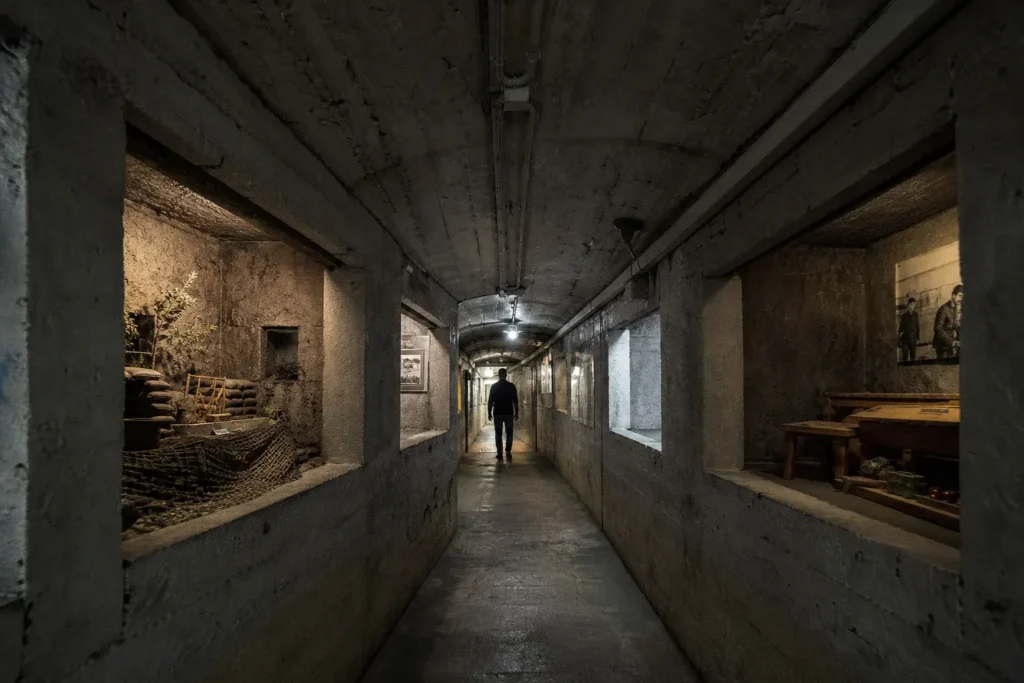
The Bunker Museum is a unique historical and memorial complex located in the very heart of Kaliningrad. The structure is a massive reinforced concrete shelter 42 meters long, 15 meters wide, and 7 meters deep, containing 21 rooms, each of which has preserved the atmosphere of that time.
The Bunker Museum is a branch of the Kaliningrad Regional Museum of History and Art and is rightfully considered one of the city’s most iconic tourist attractions. The exhibition immerses visitors in the events of the storming of Königsberg, introduces the layout of the military headquarters, and allows them to imagine what life was like in an underground shelter during those tense days.
Current access notice: As of October 2026: The museum operates daily without weekly closures. The ticket office closes at 18:00, one hour before the museum closes at 19:00; visitors should arrive with sufficient time to purchase tickets.
Quick Facts
| Russian name | Музей «Бункер» |
|---|---|
| Built / opened | 1968 |
| Address | Улица Университетская, 2А, Калининград OpenStreetMap · Google Maps |
| District | Kaliningrad |
| Opening hours | Daily 10:00-19:00 |
| Admission | ₽ |
| Best time to visit | Visit on weekday mornings (10:00–12:00) to avoid school groups and weekend crowds. Mid-afternoon (after 15:00) is quieter but allows less time before the ticket office closes at 18:00. Any day of the week is open; winter (November–March) brings fewer tourists, while summer (June–August) sees peak visitor numbers. The bunker's constant underground temperature makes seasonal variation minimal for comfort. |
| Recommended duration | 1–2 hours |
| Website | koihm.ru |
What Is (and Isn't) Part of a Visit to Bunker Museum, Kaliningrad?
| Part | Status | Notes |
|---|---|---|
| Main bunker exhibition | Included in the standard ticket | The museum consists of one relatively short corridor with 15 tiny cells, displaying photos, models and room mock-ups. |
| Artillery pieces outside | Included in the standard ticket | Two anti-aircraft guns are visible at the bunker entrance and serve as landmarks for finding the museum. |
| Runic gate at entrance | Included in the standard ticket | The decorative metal gate is visible and part of the museum's historical display. |
| Other branches of Kaliningrad Regional Museum of History and Art | Separate ticket or institution | The main museum (Klinicheskaya Street) and Fort №5 are separate institutions requiring separate tickets. |
| Kaliningrad State University nearby | Outside / not part of it | The Immanuel Kant Baltic Federal University and the monument to the philosopher himself serve as nearby landmarks but are not part of the museum. |
| Wheelchair access | Not open to visitors | The underground bunker with narrow corridors and steps is not accessible to wheelchair users. |
Why Visit Bunker Museum, Kaliningrad?
The bunker’s construction began in early 1945 as the command post of the German forces’ headquarters, led by General Otto Lasch, and when the front line approached Königsberg in March 1945, this underground structure became the final refuge and command center for the German leadership.
It was here in Room 13 shortly before midnight on 9th April 1945 that Lasch went directly against Hitler’s orders to “fight to the last soldier” and signed a treaty of surrender. Visitors gain direct access to the site where this historic capitulation occurred, making it an essential stop for understanding the Eastern Front’s final chapter.
How Bunker Museum, Kaliningrad Is Laid Out
The museum consists of one relatively short corridor with 15 tiny cells, displaying photos, models and room mock-ups. The layout follows the bunker’s original structure—a linear underground passage with compartments branching off on either side, each representing different functions of the command post. Indoors, the situation of wartime was restored; dioramas and materials telling about the capture of the city by Soviet troops and the fate of German prisoners of war were posted. Visitors enter through a single access point and progress through the narrow corridor at a deliberate pace, experiencing the confined atmosphere the occupants endured during the final days of battle.
Highlights of Bunker Museum, Kaliningrad
The Surrender Room (Room 13)
Room 13 is where, shortly before midnight on 9th April 1945, General Lasch signed a treaty of surrender. This small chamber marks the exact location of the capitulation that ended the Battle of Königsberg. The room's historical significance as the site where German command accepted Soviet victory makes it the emotional and historical center of the visit. Look for period furnishings and documentation explaining the circumstances of the surrender.
Tip: Ask staff if an English-language guide or information sheet is available, as Room 13 deserves focused attention.
Communications Equipment Display
Original telephone lines and communication equipment used by commanders to stay in contact with other positions offer a direct connection to how orders were transmitted during the fighting. These functional objects show the technological constraints and challenges the German command faced during the siege. The displays include period switchboards, field telephones, and wiring systems embedded in concrete walls.
Tip: Spend time examining the communication infrastructure; it reveals how isolated and overwhelmed the headquarters became as Soviet forces closed in.
Dioramas of the Königsberg Battle
The museum features dioramas and photographic material depicting events during the battle. These three-dimensional miniature scenes recreate key moments of the 1945 storming, with detailed models of buildings, vehicles, and troops. The dioramas help visitors visualize the scale and chaos of urban combat during the final Soviet offensive.
Tip: The dioramas are small and densely detailed; step close and use natural light from any available source to appreciate the craftsmanship.
Runic Gate at the Bunker Entrance
The museum has a bunker gate with runic symbols, which previously closed the entrance to the bunker and, according to one version, were intended for the magical protection of the German headquarters. This distinctive metal gate visible at the bunker entrance reflects the ideological symbols of Nazi command and adds a striking visual marker for identifying the museum's location.
Tip: The runic symbols are clearly visible from the surface; photographers should capture this element from the street level above.
Underground Concrete Structure and Engineering
The bunker measures 42 meters in length, 15 meters in width and 7 meters in depth, and includes systems for communications, water supply, sewage and fresh-air supply. Walking through the narrow corridors and observing the reinforced concrete walls, visitors gain appreciation for the engineering effort required to construct this shelter in just weeks. The depth—seven meters below ground—provides a tangible sense of being cut off from the world above.
Tip: The corridors are quite narrow and the ceilings low in places; wear comfortable shoes and avoid visiting if you have claustrophobia.
Photographic Record of the Siege
Materials telling about the capture of the city by Soviet troops and the fate of German prisoners of war were posted. Black-and-white photographs line the corridor walls, documenting the destruction of Königsberg, Soviet advance, and the aftermath. These period images ground the visitor's experience in the human reality of the siege.
Tip: Most captions are in Russian; consider an AR app or guide to understand the photographs' context.
Atmosphere
The museum occupies a surprisingly intimate space. Upon descending below street level, visitors enter a narrow underground corridor where concrete walls press close and artificial light illuminates small exhibition cells. The air is cool and still, with the faint sound of ventilation systems maintaining a wartime atmosphere without claustrophobia. The confined passages echo footsteps, creating an almost solitary experience even when other visitors are present.
Daytime brings small groups of tourists and school parties; mid-morning (around 11:00) is busiest. The exhibits are deliberately serious—dioramas, photographs, and sparse furnishings create a respectful, contemplative mood. There is no music or theatrical presentation; the silence and stark lighting draw attention to the material evidence of conflict and capitulation. Visitors typically move slowly, pausing at each cell to read information and examine displays.
History of Bunker Museum, Kaliningrad
Construction began in early 1945 as the command post of the German forces’ headquarters, led by General Otto Lasch, and when the front line approached Königsberg in March 1945, this underground structure became the final refuge and command center for the German leadership. The construction was done by slave labor, and it took a few weeks to finish.
By April 1945, the bunker served as the nerve center of German resistance during the catastrophic Soviet assault. Following the final massive 4-day Soviet onslaught during the Battle of Königsberg, it was here in Room 13 shortly before midnight on 9th April 1945 that Lasch went directly against Hitler’s orders to “fight to the last soldier” and signed a treaty of surrender. This act of capitulation marked the effective end of the battle and the loss of Königsberg to Soviet forces.
The bunker was opened to the public in 1967 to share its historical significance. In 1968, the museum was opened in the former command post, and the Bunker Museum became the first memorial site of its kind in Kaliningrad dedicated to the storming of Königsberg. Since 2010 it is a part of the Kaliningrad Regional Museum of History and Art, and it now stands as Kaliningrad’s principal site for understanding the final days of German East Prussia and the transition to Soviet rule.
Legends and Myths about Bunker Museum, Kaliningrad
The Amber Room Connection
Legend – historically unreliable. Local tradition associates the bunker with the famous Amber Room, the ornate 18th-century chamber that disappeared from the Russian imperial palace during World War II. Some accounts claim that looted treasures, possibly including fragments of the Amber Room, passed through the bunker or were hidden nearby before the Soviet capture. This remains unproven speculation, but the bunker's role as a command post for retreating German forces has made it a focus of treasure-hunting legends.
The Runic Protection Spell
Disputed by historians. The bunker gate bears runic symbols, which previously closed the entrance and, according to one version, were intended for the magical protection of the German headquarters. Local accounts suggest these symbols were believed to offer supernatural protection against Soviet forces. This reflects the Nazi regime's documented interest in occult symbols and the bunker's status as a symbol of Nazi power.
Tickets and Booking for Bunker Museum, Kaliningrad
| Ticket | Price | Includes |
|---|---|---|
| Adult admission | ₽ | Access to all 15 exhibition rooms, dioramas, photographs, and artifacts; full tour of the main bunker corridor. |
| Child admission | Children under 7 enter free; rates for older children and students differ (contact museum for current rates). | |
| Guided tour | ₽₽ | Professional guide in Russian; English-language guides available on request (confirm in advance with the museum). |
₽ budget · ₽₽ moderate · ₽₽₽ upscale · ₽₽₽₽ splurge. Price levels are estimates compared with typical prices for visitors.
The Bunker Museum is located at Universitetskaya Street, 2A, Kaliningrad, with opening hours 10:00–19:00 and the ticket window open 10:00–18:00. Tickets may be purchased on-site at the ticket office; advance online booking is not widely publicized. Same-day entry is typically available except during peak times (mid-morning to early afternoon). Most information is in Russian with limited English translations; visitors can learn from signs on walls or an AR app. Concession rates and audio guides differ for Russian citizens; see the official koihm.ru website for all categories and current prices.
Plan and Book
Suggested itineraries Bunker Museum, Kaliningrad
1 hour
Enter the bunker and proceed through the main corridor at a steady pace, stopping briefly at dioramas of the Königsberg battle and key historical displays. Focus on Room 13 (the Surrender Room) and the communications equipment. Exit via the main entrance.
1.5–2 hours
Take a more deliberate route: begin at the entrance artilleries, descend into the bunker, and move slowly through each exhibition cell. Read available signage carefully (or use an AR app or guide), examine the bunker's concrete engineering, study photographs, and spend focused time at Room 13 and the communications displays. Allow time for the atmosphere to register before exiting.
Half day (including surrounding area)
Start with the bunker (1.5–2 hours), then walk to nearby Kaliningrad State University and its monument to Immanuel Kant (10 minutes). Proceed to Victory Square and the City Hall (15 minutes from the bunker). Finish with a visit to the main Kaliningrad Regional Museum of History and Art if time permits (separate ticket; located on Klinicheskaya Street, about 15 minutes by foot or public transport).
How to Get to Bunker Museum, Kaliningrad
Kaliningrad has no metro system. The Bunker Museum is located at Universitetskaya, 2A, in the central residential district near Kaliningrad State University. From Victory Square (Ploschad Pobedy), walk east past the City Hall for approximately 5–8 minutes to reach the museum. The Immanuel Kant Baltic Federal University and the monument to the philosopher himself serve as nearby landmarks. Look for two artillery pieces flanking the bunker entrance; the museum is accessed through a discrete archway in a residential courtyard.
By bus or taxi: from central Kaliningrad, take any bus heading toward the university district, or use a taxi app. The address (Universitetskaya, 2A) is well-known to drivers. Parking on nearby streets is available but limited. The museum entrance is not prominently marked from the street; approach from the archway on the university side.
Accessibility
The Bunker Museum is not accessible to wheelchair users. The entrance requires descending stairs to reach the bunker level, and the interior features narrow corridors, tight passages, and uneven concrete floors. Visitors with mobility issues should avoid this site. Visitors with claustrophobia may find the confined underground spaces challenging. No companion discounts or special facilities are published; contact the museum directly for any accessibility questions.
Food Nearby
Food options are limited in the immediate residential area. The nearest cafes and restaurants are located along Prospekt Lenina (the main avenue), about 10–15 minutes' walk from the museum, or in Victory Square, approximately 8 minutes away. Bring water and snacks if planning a 1–2 hour visit, as there are no facilities inside the bunker.
What to Bring
Wear comfortable walking shoes with good grip, as the bunker floor is concrete and can be slippery. Bring a light jacket or sweater—the underground bunker is cool year-round (around 10–12°C). A small flashlight or phone torch is useful for reading details on photographs and exhibits in dimly lit sections. A camera is permitted; bring extra batteries. Security is minimal; bags are not checked, but theft is a minor concern—keep valuables secure.
Best Views and Photo Spots of Bunker Museum, Kaliningrad
Bunker entrance with artillery pieces
The two anti-aircraft guns frame the archway entrance, with the museum entrance visible beyond. This is the clearest exterior landmark and best for establishing context.
Best time: Morning light (08:00–11:00) when the sun illuminates the archway and weapons clearly.
Main corridor with dioramas
The narrow central passage with exhibition cells on both sides demonstrates the bunker's confined layout. The corridor lighting casts dramatic shadows on the concrete walls.
Best time: Any time; artificial lighting is consistent, but visit mid-morning when fewer crowds allow unobstructed shots.
Room 13 (Surrender Room)
The small chamber where the capitulation was signed, with period furnishings and historical markers. This room is historically significant and visually distinct from the corridor.
Best time: Early morning (just after opening) when the room is likely to be less crowded and shadows are minimal.
Runic gate detail
Close-up of the metal bunker gate with inscribed runic symbols, showing the ideological artifacts of the Nazi command post.
Best time: Daylight from the entrance illuminates the gate's surface; early or late in the opening hours provides softer, raking light.
Photography Rules
Photography is permitted throughout the bunker without flash or tripods. Indoor photography of exhibits, dioramas, and corridors is allowed for personal use. No commercial or drone photography is permitted. Refrain from using flash to avoid disturbing other visitors and damaging light-sensitive displays.
Family Suitability
The Bunker Museum is moderately suitable for families with children aged 10 and older who have some understanding of World War II. Younger children may find the cramped underground spaces intimidating and the historical content difficult to engage with. The museum's serious tone and focus on military history make it less interactive than child-oriented attractions. Strollers cannot be used in the narrow bunker corridors; parents with toddlers should avoid this venue. School groups are common, making the site educational for older children studying the Eastern Front or WWII history. Allow 1–2 hours and prepare children for a somewhat somber atmosphere.
Russia Vibes Tips
- Arrive between 10:00 and 12:00 on a weekday (Tuesday–Thursday) to avoid school groups and weekend crowds while allowing ample time before the ticket office closes at 18:00.
- Bring a smartphone with an AR app or access to offline translation; most exhibit labels are in Russian, and AR apps help decode content and photographs.
- Do not expect a modern museum experience: exhibits are modest, lighting is dim in some areas, and English-language support is minimal. Come for the historical authenticity, not for polished presentation.
- If your camera has manual focus, pre-focus for the low-light interior photography; autofocus struggles in the bunker's dim corridors.
- The Runic gate at the entrance is an unmistakable landmark if you are lost finding the museum in the residential courtyard; ask locals for 'Universitetskaya, 2A' or look for the anti-aircraft gun markers.
- Combine a visit with a walk to nearby Kaliningrad State University and its Kant monument, or to Victory Square's City Hall, for a broader understanding of the city's East Prussian heritage.
Explore Nearby Bunker Museum, Kaliningrad
Sights near Bunker Museum, Kaliningrad
 Königsberg Cathedral, Kaliningrad – about 750 m away (~12 min walk) · typical visit: 2–3 hoursOpen daily 10:00–19:00
Main image: AI-generated illustration. It may not show the place exactly as it looks.
 Museum of the World Ocean, Kaliningrad – about 950 m away (~15 min walk) · typical visit: 2–3 hoursOpen 10:00–18:00, closed Mon
Main image: AI-generated illustration. It may not show the place exactly as it looks.
 Amalienau District, Kaliningradabout 1.0 km away (~17 min walk) · typical visit: 2–3 hours
Main image: AI-generated illustration. It may not show the place exactly as it looks.
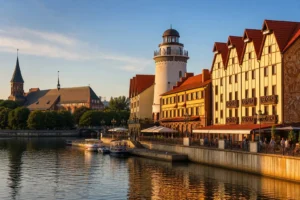 Fishing Village, Kaliningrad – about 1.3 km away (~21 min walk) · typical visit: 1.5–2 hoursOpen 24 hours
Main image: AI-generated illustration. It may not show the place exactly as it looks.
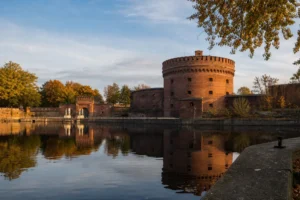 Amber Museum, Kaliningradabout 1.3 km away (~22 min walk) · typical visit: 2–3 hours
Main image: AI-generated illustration. It may not show the place exactly as it looks.
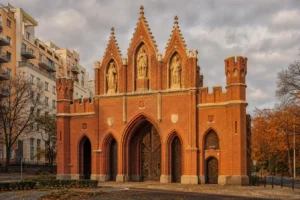 King's Gate, Kaliningradabout 1.7 km away (~27 min walk) · typical visit: 45 minutes to 1 hour
Main image: AI-generated illustration. It may not show the place exactly as it looks.
Restaurants and cafes near Bunker Museum, Kaliningrad
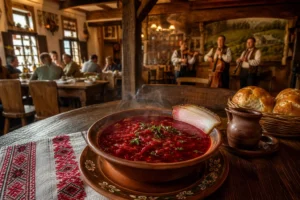 Korchma Borsch & Salo, Kaliningradabout 100 m away (~2 min walk)
Main image: AI-generated illustration. It may not show the place exactly as it looks.
 Konigsbacker, Kaliningradabout 250 m away (~4 min walk)
Main image: AI-generated illustration. It may not show the place exactly as it looks.
 Steindamm 99, Kaliningrad – about 350 m away (~6 min walk)Open daily 11:00–23:00
Main image: AI-generated illustration. It may not show the place exactly as it looks.
 Povareshka, Kaliningrad – about 450 m away (~8 min walk)Open daily 09:00–22:00
Main image: AI-generated illustration. It may not show the place exactly as it looks.
Hotels near Bunker Museum, Kaliningrad
 Crystal House Suite Hotel & Spa, Kaliningradabout 450 m away (~7 min walk)
Main image: AI-generated illustration. It may not show the place exactly as it looks.
 Ibis Kaliningrad Center, Kaliningradabout 500 m away (~8 min walk)
Main image: AI-generated illustration. It may not show the place exactly as it looks.
 Holiday Inn Kaliningrad, Kaliningradabout 600 m away (~10 min walk)
Main image: AI-generated illustration. It may not show the place exactly as it looks.
Events and traditions near Bunker Museum, Kaliningrad
 Kaliningrad City Picnic, Kaliningradabout 350 m away (~6 min walk)
Main image: AI-generated illustration. It may not show the place exactly as it looks.
 New Year Fair on Kant's Island, Kaliningradabout 700 m away (~12 min walk)
Main image: AI-generated illustration. It may not show the place exactly as it looks.
 Koroche Film Festival, Kaliningradabout 1.8 km away (~29 min walk)
Main image: AI-generated illustration. It may not show the place exactly as it looks.
Related guides
 Herring Day, Kaliningrad: Spring Festival and Fishing Heritage
Main image: AI-generated illustration. It may not show the place exactly as it looks.
 Kaliningrad City Day: Fireworks, Concerts and Local Celebrations in Early July
Main image: AI-generated illustration. It may not show the place exactly as it looks.
 Amber Necklace Festival: Kaliningrad’s International Arts Festival
Main image: AI-generated illustration. It may not show the place exactly as it looks.
 Chaika Hotel, Kaliningrad: Historic 1927 Property in Quiet Amalienau
Main image: AI-generated illustration. It may not show the place exactly as it looks.
 Mercure Kaliningrad Center: Lake Views and Modern Comfort
Main image: AI-generated illustration. It may not show the place exactly as it looks.
Browse more: More in Kaliningrad · All Kaliningrad · All Museums · All Sightseeing · All Sightseeing in Kaliningrad
FAQ: Bunker Museum, Kaliningrad
Is the Bunker Museum open every day?
The Bunker Museum welcomes visitors daily, without days off. Hours are 10:00–19:00, but the ticket office closes at 18:00, so plan your visit accordingly.
Is the museum wheelchair accessible?
No. The bunker is underground with narrow corridors, stairs, and uneven concrete floors, making it inaccessible for wheelchair users or those with significant mobility restrictions.
How long does a typical visit take?
The average visitor sets aside about 1 to 1.5 hours, which is usually enough time for a leisurely look at all the exhibitions and halls, though history enthusiasts may spend longer.
Is English available, or are exhibits only in Russian?
Most information is in Russian with limited English translations; visitors can learn from signs on walls or an AR app. Guided tours in English are available on request but must be arranged in advance.
Can I take photographs inside?
Yes. Photography is permitted without flash or tripods. Interior photography of exhibits and displays is allowed for personal use; commercial photography requires permission.
What should I know before visiting as a non-Russian speaker?
Bring a translation app, download an offline translation tool, or hire a guide in advance. Understanding the context of the Battle of Königsberg and General Lasch's role before visiting will enrich your experience. The museum's visual layout and dioramas tell the story even without text translation.
Is the bunker claustrophobic?
Yes, potentially. The corridors are narrow, ceilings are low in some sections, and the bunker is 7 meters below ground. Visitors with claustrophobia or anxiety in confined spaces should consider whether they are comfortable with this environment.
Can I visit other museums run by the same organization?
The Bunker Museum is part of the Kaliningrad Regional Museum of History and Art. The main museum on Klinicheskaya Street and Fort №5 require separate tickets and are located at different addresses.
Russia Vibes is a one-person project. A coffee keeps it going
How we research and update our guides
About this guide: AI assistance and accuracy
This guide is created with the help of AI and is based on official sources where available. Mistakes can still happen. Opening hours, prices, rules and other details are given to the best of our knowledge as of the date shown and can change without notice. It offers general recommendations only, not professional, legal or travel advice. Please confirm important details with the official source before you travel; you are responsible for your own plans and decisions.

Take this guide with you
Get a free PDF of this guide to print or read offline: key facts, tips and a map link on a few clean pages.
Report an issue on this page
Paying for your trip: please read
International sanctions affect payments between Russia and many other countries. In practice, cards issued in the EU, the UK, the US and several other countries often do not work in Russia, Russian cards usually do not work abroad, and some booking platforms, airlines and payment providers limit or suspend their services for Russia. The situation changes frequently.
We do not give legal or financial advice, and this site does not encourage anyone to break or circumvent sanctions. Whatever you plan, you are responsible for following the laws and regulations that apply to you, including those of your country of residence and citizenship.
Many travelers still organise their stay lawfully. It is worth asking your bank or payment provider what is currently permitted, contacting hotels, tour operators and carriers directly about the payment methods they accept, and checking which services are open to customers from your country. Clarify payment, cancellation and refund terms before you commit to a booking, and keep your plans flexible.
Partner links on this site may not be available in every country, and prices, availability and rules in our guides can differ from what you see when you book.