
Updated
The Museum of the World Ocean in Kaliningrad is one of Russia’s premier maritime institutions, anchored on the Pregolya River embankment in the heart of the city. Founded officially in 1990 and opened to the public in 1994, this sprawling complex offers visitors something rare: the chance to board actual research vessels, explore a working submarine, and walk through galleries dedicated to ocean science and seafaring heritage.
The museum is far more than a conventional building—it’s an ensemble of historic ships, specialized exhibition halls and an aquarium pavilion that together tell the story of human exploration of the world’s oceans. Most visitors spend 2–3 hours here, though the full complex can occupy an entire day if you linger aboard the ships or watch demonstrations.
Quick Facts
| Russian name | Музей Мирового океана |
|---|---|
| Built / opened | 1990 |
| Address | Набережная Петра Великого, 1 OpenStreetMap · Google Maps |
| District | Kaliningrad |
| Opening hours | Tue-Sun 10:00-18:00; Mon closed |
| Admission | ₽₽ |
| Best time to visit | Visit on a weekday morning or early afternoon to avoid crowds, particularly families and school groups who tend to visit on weekends and Russian school holidays. Summer (June–August) and early autumn (September) are peak tourist seasons, so expect more people but also more comfortable outdoor walking conditions.Winter visits (December–February) mean shorter daylight hours but far fewer tourists. Spring (April–May) offers pleasant weather and moderate crowds. The museum operates year-round, but indoor spaces can feel crowded on rainy summer days when visitors seek shelter. Afternoon (after 2 p.m.) is generally quieter than morning. |
| Recommended duration | 2–3 hours |
| Website | world-ocean.ru |
What Is (and Isn't) Part of a Visit to Museum of the World Ocean, Kaliningrad?
| Part | Status | Notes |
|---|---|---|
| Main exhibition building with aquariums | Included in the standard ticket | Central hall with 14 aquariums, marine skeleton displays, coral and shell collections. Typically included in standard admission. |
| Vityaz research vessel | Included in the standard ticket | Exploration of bridge, laboratories, and crew quarters aboard the research ship. Usually included in standard admission. |
| B-413 submarine | Included in the standard ticket | Walking tour through the Soviet submarine's interior, control room, and quarters. Typically included in standard admission. |
| Kosmonaut Viktor Patsaev space communication ship | Included in the standard ticket | Access to the bridge and communications rooms of this specialized research vessel. Included in standard admission. |
| Royal Gate—The Great Embassy exhibition | Separate ticket or institution | Exhibition in a restored 19th-century building focusing on maritime and cultural history. Separate ticket may be required. |
| Guided tours and demonstrations | Separate ticket or institution | Specialized tours with guides and live demonstrations may be available for an additional fee. Check at the ticket office. |
| Kaliningrad Amber Museum | Outside / not part of it | Located separately in the city; this is a different institution and requires its own visit and ticket. |
| Kaliningrad Regional Museum of History and Arts | Outside / not part of it | Housed in the restored Stadthalle building at the Lower Pond; a separate museum with distinct collections. |
Why Visit Museum of the World Ocean, Kaliningrad?
The museum’s main draw is its fleet of historic vessels. The research ship Vityaz, originally built as the German passenger liner Mars in 1939, serves as the centerpiece and offers a rare glimpse into how oceanographic expeditions were conducted. The B-413 submarine, the country’s only floating submarine museum, lets you experience the cramped reality of Cold War underwater life. The space communication ship Kosmonaut Viktor Patsaev adds another dimension to maritime history.
Beyond the ships, the main building houses aquariums with over 130 species of marine life, from tropical fish to sharks and rays, alongside skeletal remains of whales and coral specimens. The museum’s setting on the embankment, within walking distance of Kaliningrad’s Old Town, makes it easy to combine with other sightseeing.
How Museum of the World Ocean, Kaliningrad Is Laid Out
The museum occupies a linear stretch of the Pregolya River quay. The main exhibition building, a modern structure with glass elements, sits at the center. To one side lie the moored historic vessels: the Vityaz research ship, the B-413 submarine, and the Kosmonaut Viktor Patsaev. Exhibition buildings branch off from the main quay, including the Pakgauz (warehouse) building and specialized galleries.
Visitors typically start at the ticket office near the main entrance, then move between the central aquarium hall and the ships as they prefer. The outdoor Quay of Historical Fleet allows you to walk between vessels and photograph them from various angles. A single ticket generally covers access to the main building and the ships, though some vessels or special exhibitions may require additional fees.
Highlights of Museum of the World Ocean, Kaliningrad
Vityaz Research Vessel
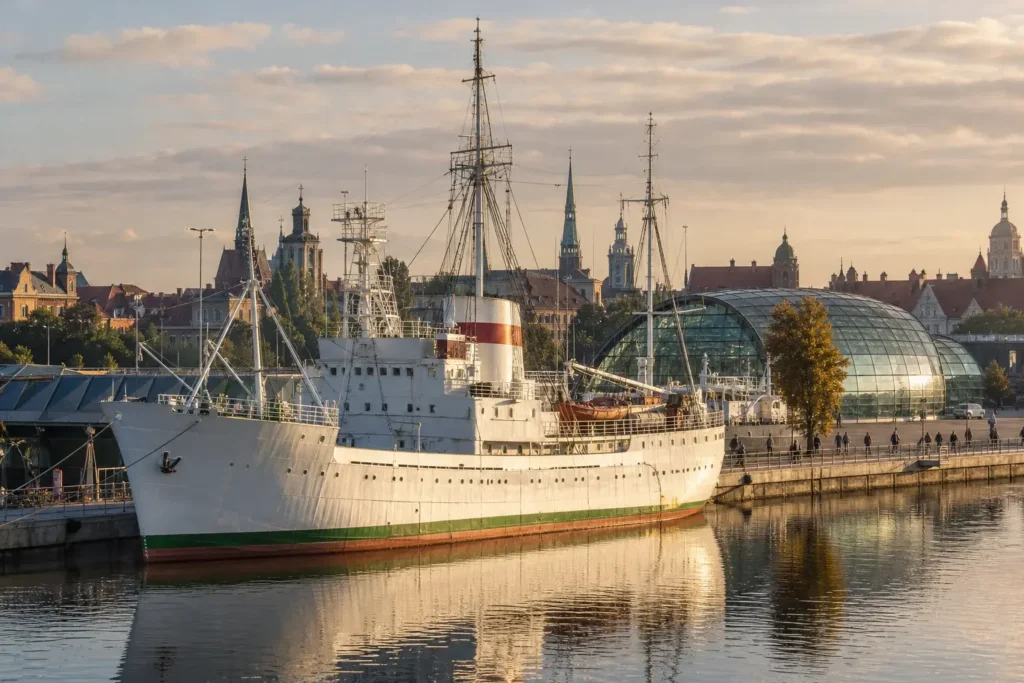
The 112-metre research ship Vityaz dominates the museum's waterfront. Originally launched as the German passenger liner Mars in 1939, it was converted into a Soviet oceanographic vessel after World War II and conducted thousands of research voyages. Today, visitors can explore the bridge, laboratories, and crew quarters, gaining insight into how oceanographers lived and worked at sea during the Cold War and beyond. A guided tour aboard is highly recommended for navigating the narrow corridors and understanding the ship's history.
Tip: Arrive early to avoid crowds, and wear comfortable shoes—the metal staircases are steep and the spaces confined. The bridge offers the best views of the river.
B-413 Submarine Museum
This Soviet-era submarine, one of the few you can actually board, offers an extraordinary visceral experience. You descend through the narrow hatches and walk past the control room, torpedo tubes, and sleeping quarters to understand the claustrophobic reality of submarine duty. The museum's interpretation explains navigation systems and the vessel's operational history, making it accessible to non-specialists. Children particularly find this exhibit memorable, though very young or claustrophobic visitors may find it challenging.
Tip: The submarine interior is tight—avoid bringing large backpacks. Tours move slowly because of the confined space, so patience is essential. Visit mid-week to avoid holiday crowds.
Planet of the Ocean Aquarium
Located in the main exhibition building, this section features 14 aquariums displaying over 130 species of marine life from tropical and temperate waters. You'll see piranha, rays, sharks, sea turtles, and an impressive variety of fish and invertebrates. The tanks are well-maintained and positioned at comfortable viewing heights. Displays explain the habitat and behavior of each species, connecting them to broader themes of ocean ecosystems and conservation.
Tip: Visit the aquarium during off-peak hours (weekday mornings) when fewer visitors cluster around the tanks and reflections on the glass are minimized for photography.
Marine Skeleton Gallery
The museum houses an extraordinary collection of whale skeletons, including a massive sperm whale specimen. Accompanying displays explain cetacean anatomy, migration routes, and the history of whaling. Corals, shells and paleontological specimens fill adjacent galleries, illustrating the diversity of ocean life across geological time. These galleries provide context for understanding why ocean research and conservation matter.
Tip: The skeleton displays are visually striking but can feel somber—the museum's interpretation touches on whaling and marine conservation, so expect some heavy themes.
Kosmonaut Viktor Patsaev Space Communication Ship
This specialized research vessel, moored alongside the others, originally tracked space missions and communicated with cosmonauts. The ship's bridge and communications rooms have been preserved, offering a unique intersection of maritime and space history. Visitors can explore the vessel and learn how ocean-based infrastructure supported the Soviet space program—a less well-known aspect of Cold War technology.
Tip: This vessel attracts fewer visitors than the Vityaz, making it a quieter option if you want to linger and absorb the details.
Royal Gate Exhibition—The Great Embassy
An adjacent exhibition space housed in the Royal Gate, a restored 19th-century architectural monument, presents 'The Great Embassy' exhibition focusing on maritime and cultural history. This gallery broadens the museum's scope beyond oceanography to encompass Kaliningrad's role in Baltic trade and diplomatic exchanges. The Royal Gate building itself is worth seeing as an example of German Königsberg architecture that survived or was carefully reconstructed.
Tip: Combine a visit here with a walk through Kaliningrad's Old Town just steps away—the museum's central location makes it a natural hub for a full day of sightseeing.
Atmosphere
The museum feels like stepping into maritime history from multiple eras. On the quay, the hulking Vityaz dominates the skyline and creates an immediate sense of scale and gravitas. Inside the main building, natural light filters through modern glass architecture, giving the aquariums an ethereal glow. The narrow corridors and close air inside the submarine contrast sharply with the open river views outside.
During peak hours (weekends, school holidays), the main building and popular ships fill with families and tour groups, especially around the aquariums. Weekday afternoons are noticeably quieter. In summer, the embankment attracts local joggers and casual walkers, adding a neighborhood feel to your visit. The temperature inside the ships can be cool, particularly below decks, so bring a light jacket even in warm weather.
History of Museum of the World Ocean, Kaliningrad
The Museum of the World Ocean was founded by decree of the RSFSR Council of Ministers on April 12, 1990, just as the Soviet Union was collapsing. The timing meant that the museum’s mission—to preserve Russia’s maritime heritage—took on added urgency as Cold War technologies and institutions faced an uncertain future. The museum did not open its doors to the public immediately; the first visitors were admitted in 1994, by which time Russia itself had become an independent nation.
The permanent mooring of the Vityaz research ship in 1994 marked the museum’s public debut. Originally built in Germany and renamed after the Soviet takeover, the Vityaz had conducted decades of oceanographic expeditions and represented precisely the kind of sophisticated maritime knowledge the new Russian state wanted to celebrate and preserve. From 1996 onward, the museum entered a phase of active development, adding the B-413 submarine, the Kosmonaut Viktor Patsaev, exhibition halls, and the aquariums. Each addition expanded the museum’s ability to tell stories about ocean research, naval history, and maritime technology.
The Royal Gate exhibition center, housed in a restored 19th-century building from the German Königsberg era, was added later as part of a broader effort to revive Kaliningrad’s architectural heritage. Its ‘Great Embassy’ exhibition broadens the museum’s scope to include diplomatic and trade history. The location on the Pregolya River embankment—historically one of Königsberg’s most important commercial and naval centers—reinforces the museum’s role as heir to centuries of Baltic maritime activity.
Tickets and Booking for Museum of the World Ocean, Kaliningrad
| Ticket | Price | Includes |
|---|---|---|
| General admission (main building and vessels) | ₽₽ | Access to the main exhibition building with aquariums, marine specimens and galleries, plus exploration of the Vityaz research ship, B-413 submarine, and Kosmonaut Viktor Patsaev. |
| Child ticket (ages 3–17) | ₽ | Same access as general admission at a reduced rate for children within the specified age group. |
| Family or group ticket | ₽₽ | Reduced per-person rate for families or groups of a certain size. Exact group size thresholds vary; ask at the ticket office. |
| Combined ticket with Royal Gate exhibition | ₽₽₽ | All main museum access plus entry to The Great Embassy exhibition in the Royal Gate building. |
₽ budget · ₽₽ moderate · ₽₽₽ upscale · ₽₽₽₽ splurge. Price levels are estimates compared with typical prices for visitors.
Tickets are purchased at the main ticket office near the entrance to the museum complex on the embankment. Online booking is available through the official website (world-ocean.ru); check whether advance purchase is required or recommended for your travel dates. Same-day tickets are typically available, though weekend and holiday visits may sell out, particularly for families. During off-peak weekdays, you can usually walk up and buy a ticket without waiting.
Rates for Russian citizens and concession categories (students, pensioners, military) differ from international visitor prices. Children under 3 are usually admitted free. For all categories, rates, current opening hours, and any temporary closures or special exhibitions, consult the official ticket page on the museum’s website (world-ocean.ru).
Plan and Book
Suggested itineraries Museum of the World Ocean, Kaliningrad
1.5–2 hours
Focus on the main building's aquariums and the Vityaz research ship. Start with the aquariums to get a visual overview of ocean life, then board the Vityaz and explore the bridge and a few key spaces. This covers the museum's highlights without attempting the submarine or all three vessels.
2.5–3 hours
Visit the aquariums, board the Vityaz, and descend into the B-413 submarine. This sequence captures the museum's most iconic elements—living ocean specimens, a working research vessel, and the intimate interior of a Cold War submarine. Skip or briefly visit the Kosmonaut Viktor Patsaev unless you have specific interest in space history.
Half day (4–5 hours)
Explore all three moored vessels (Vityaz, B-413, Kosmonaut Viktor Patsaev), the aquariums, and the marine skeleton galleries. If energy and interest remain, visit the Royal Gate exhibition. Take a break at a nearby café midway through to avoid fatigue.
Full day (6+ hours)
Dedicate the morning to the vessels and main building. Have lunch at a nearby restaurant on the embankment or in the Old Town. Return for the Royal Gate exhibition and any special displays or demonstrations. Use late afternoon for a leisurely embankment walk or photography before closing.
How to Get to Museum of the World Ocean, Kaliningrad
The Museum of the World Ocean sits on Naberezhnaya Petra Velikogo (Peter the Great Embankment), a central waterfront location in Kaliningrad.
- By metro: Kaliningrad has no metro system. Use the city’s tram, bus, or marshrutka network instead.
- By bus or tram: From Kaliningrad’s central train station (Kaliningrad Railway Station), take tram 4 or 5 toward the city center. Get off at Teatralnaya or Prospekt Mira stops, both within 10 minutes’ walk of the museum. Alternatively, take any bus heading toward the riverside embankment and ask the driver to point you toward Petra Velikogo.
- On foot: If staying in Kaliningrad’s Old Town or city center, the museum is within a 15–20 minute walk along the Pregolya River embankment. Follow signs toward the river and look for the distinctive silhouette of the Vityaz research ship.
- By taxi or ride-hailing: Use Yandex Taxi or Uber (where available) and request Naberezhnaya Petra Velikogo, 1. The embankment location is clearly marked on all mapping apps.
Accessibility
The main exhibition building has wheelchair ramps and accessible entrances. The ground-floor aquarium sections are navigable by wheelchair. However, the historic vessels (Vityaz, B-413, Kosmonaut Viktor Patsaev) have steep metal staircases, narrow corridors, and no elevator access—they are not accessible to wheelchair users or people with limited mobility. Verify specific accessibility details on the official website or by phone before your visit, as ongoing renovations may affect access.
Food Nearby
The embankment and nearby Old Town district offer cafés and casual restaurants within a 5–10 minute walk. Waterfront cafés near the museum serve coffee, snacks, and light meals. The Old Town area (Altstadt), immediately adjacent to the museum, has numerous restaurants and cafés ranging from casual to upscale. Many serve traditional Russian fare or contemporary European cuisine. Options include quick grab-and-go venues for lunch breaks and sit-down restaurants suitable for a more relaxed meal between museum visits.
What to Bring
Wear comfortable walking shoes—you'll navigate metal staircases, ship decks, and uneven embankment surfaces. Bring a light jacket even in summer; the submarine and ship interiors are noticeably cooler than the outside air. A camera is recommended for the impressive riverfront views and historic vessels, though large tripods may not be permitted inside tight spaces. If visiting in summer, sunscreen and sunglasses are useful for the open embankment. Small backpacks are preferable to large ones when boarding the submarines or exploring the vessels.
Best Views and Photo Spots of Museum of the World Ocean, Kaliningrad
Embankment across from Vityaz
A full-length profile of the research ship against the Pregolya River and the Old Town skyline. The perspective captures the scale of the vessel and works especially well at golden hour (morning or late afternoon) when side-lighting defines the ship's contours and rigging.
Best time: Early morning (8–10 a.m.) or late afternoon (5–7 p.m.) for warm, directional light that accentuates the ship's structure.
Museum main building exterior with glass cube aquarium
The modern glass pavilion hosting the aquariums creates striking reflections and contrasts with the historic vessels. The interior aquarium lighting visible through the glass at dusk creates a luminous effect.
Best time: Golden hour or dusk (5–7 p.m.) for dynamic light and shadow interplay between the glass surfaces and surrounding embankment.
B-413 submarine from the quay
The narrow profile and rust-red hull of the Soviet submarine are visually distinctive and tell a historical story in a single frame. Best captured from ground level on the embankment to emphasize its compact design.
Best time: Midday or afternoon when the submarine is clearly lit and visitors are sparse.
River embankment promenade with all three vessels
A wide shot down the quay shows the museum's ensemble—the three historic vessels lined up together create a powerful visual narrative of maritime heritage spanning decades.
Best time: Early morning before crowds arrive, or late afternoon when shadows add depth to the composition.
Vityaz bridge and command center (interior deck)
The ship's bridge, viewed from the wheelhouse, overlooks the river and embankment. Interior framing with portholes creates layered compositional depth.
Best time: Midday for even interior lighting through the portholes; overcast days eliminate harsh shadows indoors.
Photography Rules
Photography is generally permitted throughout the museum. Avoid using flash in the aquarium areas to prevent disturbing the fish and to reduce reflections in glass tanks. Large tripods are restricted in tight spaces aboard the vessels. Drones are not permitted on the museum grounds or above the Pregolya River in this area. The best outdoor light for photographing the ships is in the morning or late afternoon when the sun is lower and shadows are less harsh.
Family Suitability
The museum is excellent for families with children aged 5 and older. The aquariums are visually engaging for younger children, and boarding the ships and submarine appeals to school-age kids interested in history or science. Stroller access is possible in the main exhibition building, though navigating the outdoor embankment and ship staircases with a stroller is impractical. Children under 3 enter free. The submarine's tight spaces may frighten very young or claustrophobic children. Interactive elements and hands-on discovery opportunities vary by age group. Allow at least 2–3 hours for a family visit; expect to spend longer if children are particularly engaged with the vessels.
Russia Vibes Tips
- Arrive at opening (10 a.m. on Tuesday) to secure the quietest experience and best light for photography. The morning crowds are lightest, and you'll have more elbow room in the submarine and aboard the Vityaz.
- Buy a combined ticket if offered rather than separate tickets for each vessel. It's generally better value and simplifies the visit process. Ask the ticket clerk about package options.
- Skip the Kosmonaut Viktor Patsaev unless you have a specific interest in space history or have extra time. The Vityaz and B-413 are the museum's flagship exhibits and deserve more attention.
- Use the outdoor embankment as a natural pacing break between indoor spaces. The river views and fresh air help orient you and reduce fatigue, especially on a longer visit.
- Check for guided tour availability at the ticket office. A focused 45-minute tour can provide context and stories you wouldn't discover independently, especially aboard the Vityaz.
- Combine your visit with the adjacent Old Town (Altstadt) district. The museum's central location makes it a natural hub for a full day of Kaliningrad sightseeing, with restaurants and shops minutes away on foot.
Explore Nearby Museum of the World Ocean, Kaliningrad
Sights near Museum of the World Ocean, Kaliningrad
 Königsberg Cathedral, Kaliningrad – about 750 m away (~12 min walk) · typical visit: 2–3 hoursOpen daily 10:00–19:00
Main image: AI-generated illustration. It may not show the place exactly as it looks.
 Bunker Museum, Kaliningrad – about 950 m away (~15 min walk) · typical visit: 1–2 hoursOpen daily 10:00–19:00
Main image: AI-generated illustration. It may not show the place exactly as it looks.
 Fishing Village, Kaliningrad – about 1.1 km away (~18 min walk) · typical visit: 1.5–2 hoursOpen 24 hours
Main image: AI-generated illustration. It may not show the place exactly as it looks.
 Brandenburg Gate, Kaliningradabout 1.1 km away (~18 min walk) · typical visit: 30–45 minutes
Main image: AI-generated illustration. It may not show the place exactly as it looks.
 Amalienau District, Kaliningradabout 1.6 km away (~26 min walk) · typical visit: 2–3 hours
Main image: AI-generated illustration. It may not show the place exactly as it looks.
 Amber Museum, Kaliningradabout 2.3 km away · typical visit: 2–3 hours
Main image: AI-generated illustration. It may not show the place exactly as it looks.
Restaurants and cafes near Museum of the World Ocean, Kaliningrad
 Steindamm 99, Kaliningrad – about 600 m away (~10 min walk)Open daily 11:00–23:00
Main image: AI-generated illustration. It may not show the place exactly as it looks.
 Konigsbacker, Kaliningradabout 950 m away (~15 min walk)
Main image: AI-generated illustration. It may not show the place exactly as it looks.
 Povareshka, Kaliningrad – about 1.0 km away (~16 min walk)Open daily 09:00–22:00
Main image: AI-generated illustration. It may not show the place exactly as it looks.
 Korchma Borsch & Salo, Kaliningradabout 1.1 km away (~17 min walk)
Main image: AI-generated illustration. It may not show the place exactly as it looks.
Hotels near Museum of the World Ocean, Kaliningrad
 Holiday Inn Kaliningrad, Kaliningradabout 400 m away (~6 min walk)
Main image: AI-generated illustration. It may not show the place exactly as it looks.
 Ibis Kaliningrad Center, Kaliningradabout 450 m away (~7 min walk)
Main image: AI-generated illustration. It may not show the place exactly as it looks.
 Hotel Kaiserhof, Kaliningradabout 1.1 km away (~18 min walk)
Main image: AI-generated illustration. It may not show the place exactly as it looks.
Events and traditions near Museum of the World Ocean, Kaliningrad
 New Year Fair on Kant's Island, Kaliningradabout 450 m away (~8 min walk)
Main image: AI-generated illustration. It may not show the place exactly as it looks.
 Kaliningrad City Picnic, Kaliningradabout 700 m away (~12 min walk)
Main image: AI-generated illustration. It may not show the place exactly as it looks.
 Koroche Film Festival, Kaliningradabout 1.0 km away (~16 min walk)
Main image: AI-generated illustration. It may not show the place exactly as it looks.
Related guides
 Herring Day, Kaliningrad: Spring Festival and Fishing Heritage
Main image: AI-generated illustration. It may not show the place exactly as it looks.
 Kaliningrad City Day: Fireworks, Concerts and Local Celebrations in Early July
Main image: AI-generated illustration. It may not show the place exactly as it looks.
 Amber Necklace Festival: Kaliningrad’s International Arts Festival
Main image: AI-generated illustration. It may not show the place exactly as it looks.
 Chaika Hotel, Kaliningrad: Historic 1927 Property in Quiet Amalienau
Main image: AI-generated illustration. It may not show the place exactly as it looks.
 Mercure Kaliningrad Center: Lake Views and Modern Comfort
Main image: AI-generated illustration. It may not show the place exactly as it looks.
Browse more: More in Kaliningrad · All Kaliningrad · All Museums · All Sightseeing · All Sightseeing in Kaliningrad
FAQ: Museum of the World Ocean, Kaliningrad
Is the submarine B-413 really open to visitors, or do you just view it from outside?
You can board and walk through the interior of the B-413. It's a hands-on experience where you descend through actual hatches, see the control room and torpedo tubes, and walk the narrow corridors where the crew lived. It's one of the museum's most memorable features, though not accessible to wheelchair users or those with severe claustrophobia.
What's included in the standard admission ticket?
Standard admission typically covers the main exhibition building (with aquariums and marine specimens), the Vityaz research ship, the B-413 submarine, and the Kosmonaut Viktor Patsaev. Some special exhibitions or Royal Gate access may require a separate ticket. Ask at the ticket office about exactly what your ticket covers.
Can I bring my young child into the submarine?
Yes, children can visit the B-413, but very young children (under 5) may find the steep staircases and tight spaces challenging or frightening. Use your judgment based on your child's comfort with enclosed spaces. You may need to carry small children on the metal stairs for safety.
How long should I plan to spend at the museum?
Minimum 2 hours for the highlights (aquariums and one ship). Allow 2.5–3 hours to visit the aquariums, Vityaz, and B-413. A full leisurely visit with all vessels and the Royal Gate exhibition can easily take 5–6 hours or a full day.
Is the museum accessible for wheelchair users?
The main exhibition building has ramp access and wheelchair-friendly ground floors with aquariums. However, the historic vessels (Vityaz, B-413, Kosmonaut Viktor Patsaev) are not wheelchair accessible due to steep metal staircases and narrow corridors. Confirm specific accessibility details on the official website or by phone before your visit.
What is the best time of day to visit to avoid crowds?
Weekday mornings, especially Tuesday through Thursday between 10 a.m. and noon, are quietest. Avoid weekends, Russian school holidays (late May, early September, late December to early January), and summer peak season if you prefer fewer crowds. Afternoons are typically calmer than mornings.
Can I take photos and videos inside the museum?
Photography is generally permitted throughout. Avoid using flash in the aquariums to prevent disturbing fish and reducing glass reflections. Large tripods are restricted in tight vessel spaces. Drones are not allowed on the museum grounds. For filming or commercial photography, confirm rules with the ticket office.
Is there food at the museum, or should I eat elsewhere?
The museum itself has limited food options. Bring snacks or plan a meal break at one of the many cafés on the nearby embankment or in the adjacent Old Town. Allow time between your museum visit and eating to avoid fatigue.
Russia Vibes is a one-person project. A coffee keeps it going
How we research and update our guides
About this guide: AI assistance and accuracy
This guide is created with the help of AI and is based on official sources where available. Mistakes can still happen. Opening hours, prices, rules and other details are given to the best of our knowledge as of the date shown and can change without notice. It offers general recommendations only, not professional, legal or travel advice. Please confirm important details with the official source before you travel; you are responsible for your own plans and decisions.

Take this guide with you
Get a free PDF of this guide to print or read offline: key facts, tips and a map link on a few clean pages.
Report an issue on this page
Paying for your trip: please read
International sanctions affect payments between Russia and many other countries. In practice, cards issued in the EU, the UK, the US and several other countries often do not work in Russia, Russian cards usually do not work abroad, and some booking platforms, airlines and payment providers limit or suspend their services for Russia. The situation changes frequently.
We do not give legal or financial advice, and this site does not encourage anyone to break or circumvent sanctions. Whatever you plan, you are responsible for following the laws and regulations that apply to you, including those of your country of residence and citizenship.
Many travelers still organise their stay lawfully. It is worth asking your bank or payment provider what is currently permitted, contacting hotels, tour operators and carriers directly about the payment methods they accept, and checking which services are open to customers from your country. Clarify payment, cancellation and refund terms before you commit to a booking, and keep your plans flexible.
Partner links on this site may not be available in every country, and prices, availability and rules in our guides can differ from what you see when you book.