

This guide is for photographers, nature lovers, and visitors seeking the most visually stunning locations around Lake Baikal. Whether you arrive with a camera or smartphone, these viewpoints offer the dramatic compositions Lake Baikal is famous for—vast expanses of crystalline ice in winter, transparent water and towering rock formations in summer, and light effects that shift throughout the day.
The list covers eleven verified viewpoints across Olkhon Island, Listvyanka, and the surrounding region. Each location demands different timing, weather conditions, and physical effort. First-time visitors often miss the best angles by not knowing where to position themselves, when to arrive, and which season transforms each view into something entirely different.
Route: 4 stops, about 111.5–116 hours including walking (estimate)
At a Glance
| # | Place | Best for | Good to know |
|---|---|---|---|
| 1 | Cape Khoboy, Lake Baikal | Iconic northern cape, ice grottoes | Olkhon Island (Khuzhir); full-day scenic bus tour from Khuzhir with unsealed, bumpy road; paid |
| 2 | Shamanka Rock, Lake Baikal | Sacred rock formation, sunrise/sunset | Khuzhir, Olkhon Island; short walk from village center; free access to viewpoint |
| 3 | Chersky Rock Viewpoint, Listvyanka | Cable car ascent, panoramic lake views | Listvyanka; cable car/chairlift access in winter, hiking trail in summer; paid for chairlift |
| 4 | Uzury Cape, Lake Baikal | Bird's-eye views, ice hummocks | Eastern Olkhon Island; accessible from village of Uzury; paid tour or self-drive with 4WD |
| 5 | Ogoy Island, Lake Baikal | Buddhist stupa, sunset reflections | Small Sea strait west of Olkhon; winter accessible by snowmobile or ice vehicle tour; paid tour required |
| 6 | Oltrec Island, Lake Baikal | Sokui icicles, winter formations | Small Sea, west of Olkhon Island; winter access only; paid tour |
| 7 | Khorin-Igri Bay, Lake Baikal | Frozen methane bubbles, clear ice | Small Sea, accessible from Olkhon Island; winter only; paid ice tour |
| 8 | Budun Cape, Lake Baikal | Ice mounds, geometric patterns | North of Olkhon Island; winter accessible by snowmobile tour; paid tour |
| 9 | Three Brothers Rock (Sagaan-Khushun Cape), Lake Baikal | Three rock pyramids, grottoes | Southern Olkhon Island; accessible by boat in summer, frozen lake in winter; paid tour or self-arrange |
| 10 | Peschanaya Bay, Lake Baikal | Sandy shores, summer clarity | Western shore of Lake Baikal; accessible by road from Listvyanka; free access |
| 11 | Mount Zhima Viewpoint, Olkhon Island | Highest point, panoramic vistas | Central Olkhon Island; hiking trail from Khuzhir; free access but requires full-day hike |
How We Chose
These viewpoints were selected based on:
- Verified geographic accessibility and current operating status (as of October 2026)
- Suitability for photographers: composition variety, unique natural features, and dramatic lighting conditions
- Seasonal variations: what changes between summer, autumn, winter, and spring
- Mix of effort levels: from chairlift views to full-day hiking expeditions
- Confirmed presence in official travel guides and photography documentation
1. Cape Khoboy, Lake Baikal – Iconic northern cape, ice grottoes
Cape Khoboy is the northernmost point of Olkhon Island and a foremost spiritual place of the Buryat people in this region. The cape contains a labyrinth of grottoes where sunlight dances off ceilings jagged with icy stalactites. From here you can view both the 'big sea' of Lake Baikal to the east as well as the 'small sea' to the west. The view is especially beautiful at sunrise.
Good to know: Olkhon Island (Khuzhir); full-day scenic bus tour from Khuzhir with unsealed, bumpy road; paid
Tip: Bring sturdy footwear and warm clothing; the caves are accessible but uneven. The 79 km width of lake at this point means you'll only see the opposite shore in perfectly clear weather.
2. Shamanka Rock, Lake Baikal – Sacred rock formation, sunrise/sunset
Shamanka Rock, also called Cape Burhan or Shaman Rock, is a rock on Olkhon Island located in Pribaikalsky National Park near Khuzhir. The rock is considered one of the Nine Holy Sites of Asia. The sacred place is believed to have supernatural powers and is especially mesmerizing at sunrise or sunset. Thirteen shaman pillars (Serge Poles) are located on Cape Burhan next to Shamanka Rock.
Good to know: Khuzhir, Olkhon Island; short walk from village center; free access to viewpoint
Tip: Best photographed from the frozen lake shore in winter or during early morning light in summer. Arrive 30 minutes before sunrise or sunset for golden hour. Respect sacred sites: step around, not on, the shaman pillars.
3. Chersky Rock Viewpoint, Listvyanka – Cable car ascent, panoramic lake views
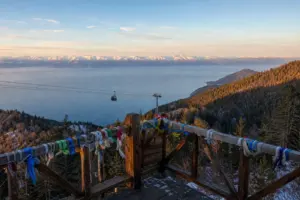
Take a chairlift to enjoy panoramic views of Angara River and Lake Baikal from the Cherskogo Rock viewpoint. The lift takes you to Chersky rock 728 meters above sea level, offering a breathtaking panorama: Listvyanka village, Angara river's source, port Baikal and the skyline flowing with the Baikal waters. The viewpoint offers 360° lake and mountain panoramas, with summer wildflowers and alpine meadows.
Good to know: Listvyanka; cable car/chairlift access in winter, hiking trail in summer; paid for chairlift
Tip: In winter, check that the cable car is running before making the journey. On clear days, arrive midday for the best light; on overcast days, go early for dramatic cloud formations. The walk down in summer offers photo stops at different elevations.
4. Uzury Cape, Lake Baikal – Bird's-eye views, ice hummocks
Cape Uzur offers a spectacular bird's-eye view of Lake Baikal, with vistas over Olkhon Island and the Baruzinsky mountain range in the distance. Close to Uzury are numerous ice grottoes and natural ice hummocks—giant blocks formed by the movement of ice floes that shimmer like precious stones on the surface of the lake. If you hike from here, after climbing the mountain in 1.5-2 hours there opens a magnificent view of Lake Baikal that takes your breath.
Good to know: Eastern Olkhon Island; accessible from village of Uzury; paid tour or self-drive with 4WD
Tip: Winter access is easier on the frozen road. The view changes dramatically depending on your height—shoot from the base with ice blocks in foreground, then again from the top for the panoramic sweep.
5. Ogoy Island, Lake Baikal – Buddhist stupa, sunset reflections
Ogoy Island is the largest island in the Maloe More (Small Sea) strait of Lake Baikal, with a Buddhist Stupa of Enlightenment situated at its highest point and shores scattered with interesting shapes. The island has incredibly sharp shore shapes best photographed in the reflection of the pure ice of Baikal at sunset. Long icicles of incredible shapes called 'sokui' are formed when water splashes onto rocks, freezing with air chill.
Good to know: Small Sea strait west of Olkhon; winter accessible by snowmobile or ice vehicle tour; paid tour required
Tip: Ice conditions vary yearly; confirm accessibility before traveling. Bring a polarizing filter to cut glare off the ice and enhance the stupa structure against the sky.
6. Oltrec Island, Lake Baikal – Sokui icicles, winter formations
At Oltrec Island, long icicles of incredible shapes called 'sokui' are formed when the water from Lake Baikal splashes onto the rocks, freezing with the chill of the air. You'll photograph their intricate shapes between trips to numerous enchanting ice caves around the islands and by the capes. The capes and grottoes of the Small Sea are incredibly picturesque.
Good to know: Small Sea, west of Olkhon Island; winter access only; paid tour
Tip: These formations exist only in winter and early spring (roughly December to March). Bring macro lens capability to capture the icicle detail. Visit in the morning before wind disturbs loose ice crystals.
7. Khorin-Igri Bay, Lake Baikal – Frozen methane bubbles, clear ice
Khorin-Igri Bay is an ideal spot to photograph the natural phenomenon of frozen bubbles under Lake Baikal, rising to the surface in perfect discs suspended in the clear, dark water. In the bay of Zuun-Khagun, the ice is often so transparent that the bottom of Lake Baikal is clearly seen. This is one of the best places to capture iconic images of Baikal—the inky black lake surface split with vein-like cracks in the ice that can stretch for dozens of kilometres.
Good to know: Small Sea, accessible from Olkhon Island; winter only; paid ice tour
Tip: Bubbles are most visible in January and February after the lake has frozen completely. Shoot from directly above; lie flat on the ice to position the camera for maximum bubble detail against the dark water visible below.
8. Budun Cape, Lake Baikal – Ice mounds, geometric patterns
Budun Cape is a rugged natural monument surrounded by shard-like ice mounds, creating an unreal sight with a huge variety of shapes, lines and geometry allowing for some creative perspectives. Around Olkhon are ice hummocks—huge shards of ice that form out of cracks in the surface of the lake and shimmer with a transparent, turquoise hue.
Good to know: North of Olkhon Island; winter accessible by snowmobile tour; paid tour
Tip: These jagged formations are best shot in low-angle morning light that creates deep shadows between the ice shards. The turquoise color intensifies when photographed against overcast skies.
9. Three Brothers Rock (Sagaan-Khushun Cape), Lake Baikal – Three rock pyramids, grottoes
Three Brothers Rock, or Sagaan-Khushun Cape, is one of Baikal's natural monuments and is easily recognized as three big rocks standing in a row overlooking Lake Baikal. It consists of three spectacular rocks-pyramids with a cave and grottos, one of which is rather large for entering by boat. Red lichen clings to the white marble cove, adding to its unforgettable appearance.
Good to know: Southern Olkhon Island; accessible by boat in summer, frozen lake in winter; paid tour or self-arrange
Tip: Approach from the water or ice to see the full profile of all three rocks. In summer, shoot from the east side in morning light; in winter, photograph both the rocks and their ice formations below.
10. Peschanaya Bay, Lake Baikal – Sandy shores, summer clarity
Peschanaya Bay is known for its sandy shores and is among the natural features of Lake Baikal. Traveling north along the western shore of Lake Baikal, Peschanaya and Ayia Bays offer clear ice of Baikal for photoshooting. In summer, the bay's sandy beach contrasts strikingly with the deep blue water and distant mountains, making it ideal for wide-angle landscape photography.
Good to know: Western shore of Lake Baikal; accessible by road from Listvyanka; free access
Tip: Best visited in summer when the contrast between sand and water is most dramatic. Arrive at sunset for warm light reflected off the sand and water.
11. Mount Zhima Viewpoint, Olkhon Island – Highest point, panoramic vistas
Mount Zhima is the highest point on Olkhon Island, at 1,276 meters above sea level and peaking 818 meters above the water level of Lake Baikal. From the summit, the island's varied terrain—taiga, steppe, and the surrounding mountain ranges—unfolds in multiple directions, offering 360-degree photography opportunities. The elevation gain provides dramatic perspective on the lake's scale.
Good to know: Central Olkhon Island; hiking trail from Khuzhir; free access but requires full-day hike
Tip: Start early to reach the summit by noon for overhead light and minimal shadows. Bring a wide-angle lens for panoramic views and a telephoto for compressed distant ranges.
Russia Vibes Tips
- Winter photography (December–March) captures frozen methane bubbles, sokui icicles, and transparent ice that reveal the lake bottom—phenomena unique to Baikal's extreme freeze. Summer (June–August) offers warm sunlight and rock detail, but loses the ice formations entirely. Plan your trip according to which phenomena you want to photograph.
- Cloud cover and wind dramatically change what you see. On clear days, distant shores and mountains are visible from Cape Khoboy. On overcast days, dramatic cloud formations and moody light over the ice create different but equally striking images. Check the forecast but don't skip a location solely for clouds—often the light is better, not worse.
- First light (sunrise) and last light (sunset) last much longer at Baikal's latitude than at lower latitudes. In midsummer, twilight extends from 4 a.m. to 11 p.m. Use dawn and dusk to photograph the same location in completely different moods. In winter, the sun barely clears the horizon, creating long shadows that define the ice formations.
- Ice color changes with light angle. Midday sun creates white, overexposed ice; low-angle morning or evening light reveals the transparent turquoise inside and the texture of pressure ridges. Frozen bubbles are invisible from most angles—shoot from directly above for best results. Bracketed exposure (one underexposed, one normal, one overexposed) helps capture both the bright ice and the dark water below.
- Most viewpoints on Olkhon require paid tours or private transport; very few can be reached by public transport. Arrange tours at least one day ahead. Check road and ice conditions with your guide; winter access depends on ice thickness (usually safe after mid-December). Spring thaw (April–May) closes many access roads.
- Bring polarizing and neutral-density filters. Polarizers cut glare off ice and water, and deepen sky color. ND filters allow long exposures of moving clouds or water even in bright daylight. The extreme light reflection off white ice and snow can fool your camera's meter—use exposure compensation or manual mode.
Explore Nearby Best Viewpoints and Photography Spots, Lake Baikal
Sights near Best Viewpoints and Photography Spots, Lake Baikal
 Cape Khoboy, Lake Baikal · typical visit: 3–4 hours
Main image: AI-generated illustration. It may not show the place exactly as it looks.
 Shamanka Rock, Lake Baikal · typical visit: 30–45 minutesOpen 24 hours
Main image: AI-generated illustration. It may not show the place exactly as it looks.
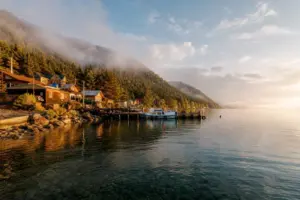 Listvyanka, Lake Baikal · typical visit: 2–3 days
Main image: AI-generated illustration. It may not show the place exactly as it looks.
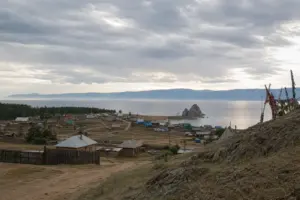 Khuzhir, Lake Baikal · typical visit: 2–3 days
Main image: AI-generated illustration. It may not show the place exactly as it looks.
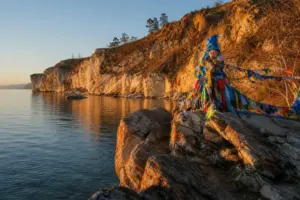 Olkhon Island, Lake Baikal · typical visit: 2–3 days
Main image: AI-generated illustration. It may not show the place exactly as it looks.
Related guides
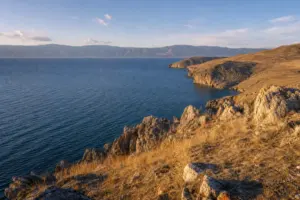 Lake Baikal: Where to Go, What to See and How to Visit
Main image: AI-generated illustration. It may not show the place exactly as it looks.
 Chulyshman Valley and Katu-Yaryk Pass Route: A 5-Day Mountain Adventure
Main image: AI-generated illustration. It may not show the place exactly as it looks.
 Chersky Stone: Panoramic Viewpoint Over Lake Baikal
Main image: AI-generated illustration. It may not show the place exactly as it looks.
Browse more: All Guides · All Guides in Lake Baikal · All Lake Baikal · All Viewpoints and Photo Spots
FAQ
Which viewpoint is best for first-time visitors with limited time?
Chersky Rock viewpoint in Listvyanka is accessible by chairlift and offers panoramic views of the lake and surrounding ridges. The same village also has the Baikal Limnological Museum with 11 aquariums. This requires only a few hours and is reachable by public transport from Irkutsk.
Can you visit these viewpoints in summer, or only in winter?
Most viewpoints are accessible year-round, but the landscape changes completely. Winter offers frozen formations (ice hummocks, sokui icicles, methane bubbles) and clear ice. Summer reveals rock formations, sandy shores, and mountain detail with water access. Cape Khoboy and Chersky Rock work well in both seasons; the Small Sea ice formations exist only December–March.
Do I need a guide to visit these locations?
Chersky Rock in Listvyanka is self-accessible by chairlift. Shamanka Rock is a short walk from Khuzhir village. All other locations on Olkhon Island require either a paid guided tour or private transport; roads are remote and seasonal, and winter ice safety requires local knowledge.
What is the difference between Cape Khoboy and Shamanka Rock?
Cape Khoboy is at the northern tip of Olkhon Island and features dramatic ice grottoes, panoramic views in two directions, and rocky formations. Shamanka Rock is near Khuzhir (south Olkhon) and is smaller—a single distinctive rock close to shore with sacred significance. Both are iconic but very different in appearance and accessibility.
Which viewpoint is best for sunset photography?
Shamanka Rock is especially mesmerizing at sunrise or sunset. Ogoy Island and the Small Sea viewpoints also offer exceptional sunset light reflected off ice. Sunset timing varies from 4 p.m. in December to 11 p.m. in June.
Can you see wildlife from these viewpoints?
From Cape Khoboy, you can see the panorama of the lake, cliffs, seagulls, and sometimes, if you're lucky, even Baikal seals. Wildlife sightings are unpredictable and seasonal. Most viewpoints offer scenic rock, ice, and water rather than reliable wildlife viewing.
Are these viewpoints in protected areas? Are there restrictions?
Shamanka Rock is in Pribaikalsky National Park. Cape Khoboy is in a protected area. Respect marked trails, do not remove rocks or ice, and follow local guide instructions. Sacred sites like Shamanka Rock require respectful behavior around shaman pillars.
What equipment do I need for photography at Lake Baikal?
Wide-angle lenses capture the lake's scale; telephoto lenses compress distant mountains. Polarizing and neutral-density filters are highly useful. In winter, bring extra batteries (cold drains them faster) and lens cloths to prevent condensation when moving between cold and warm spaces. A tripod stabilizes long exposures and framing.
Russia Vibes is a one-person project. A coffee keeps it going
How we research and update our guides
About this guide: AI assistance and accuracy
This guide is created with the help of AI and is based on official sources where available. Mistakes can still happen. Opening hours, prices, rules and other details are given to the best of our knowledge as of the date shown and can change without notice. It offers general recommendations only, not professional, legal or travel advice. Please confirm important details with the official source before you travel; you are responsible for your own plans and decisions.
Packing for this trip
* Affiliate link: as an Amazon Associate we earn from qualifying purchases at no extra cost to you.

Take this guide with you
Get a free PDF of this guide to print or read offline: key facts, tips and a map link on a few clean pages.
Report an issue on this page
Paying for your trip: please read
International sanctions affect payments between Russia and many other countries. In practice, cards issued in the EU, the UK, the US and several other countries often do not work in Russia, Russian cards usually do not work abroad, and some booking platforms, airlines and payment providers limit or suspend their services for Russia. The situation changes frequently.
We do not give legal or financial advice, and this site does not encourage anyone to break or circumvent sanctions. Whatever you plan, you are responsible for following the laws and regulations that apply to you, including those of your country of residence and citizenship.
Many travelers still organise their stay lawfully. It is worth asking your bank or payment provider what is currently permitted, contacting hotels, tour operators and carriers directly about the payment methods they accept, and checking which services are open to customers from your country. Clarify payment, cancellation and refund terms before you commit to a booking, and keep your plans flexible.
Partner links on this site may not be available in every country, and prices, availability and rules in our guides can differ from what you see when you book.